

Learning essential baby care skills is important for every new parent. Bringing a newborn home is an exciting experience, but caring for a little one also comes with new responsibilities. From feeding and changing nappies to bathing, safe sleeping and soothing a crying baby, parents gradually learn many things along the way.
The first few weeks can feel challenging, especially when you are adjusting to interrupted sleep and your baby’s changing needs. However, with patience, reliable information and a little practice, you can become more confident in caring for your newborn.
Whether you are a first-time parent or preparing to welcome another baby, these 10 essential baby care skills will help you understand the basics of newborn care and create a safer, more comfortable environment for your little one.
10 Essential Baby Care Skills for New Parents
The information in this article is intended for general educational purposes and is not a substitute for professional medical advice. Newborns have specific care and safety needs, and recommendations may vary depending on their age and health. Always follow your paediatrician’s guidance. If you notice unusual symptoms or have concerns about your baby’s health, seek advice from a qualified healthcare professional.
Caring for a newborn involves learning several important skills, from ensuring safe sleep and feeding to maintaining hygiene and building a strong emotional bond. The following infographic provides an overview of ten essential baby care skills every new parent should understand.
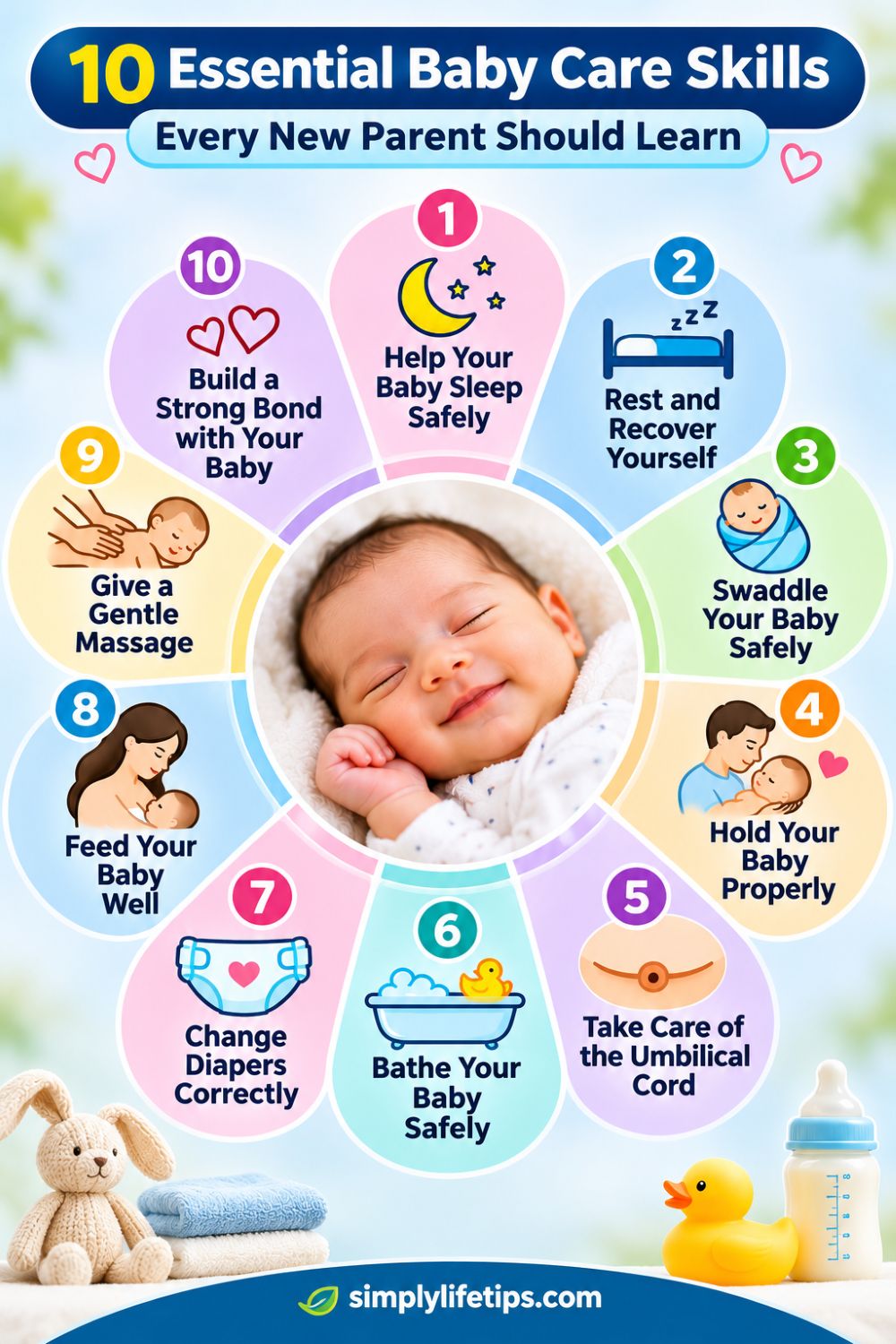
Each of these baby care skills plays a role in your newborn’s daily care and comfort. Let’s explore them one by one, with practical guidance to help you care for your baby safely and confidently.
1. Help Your Baby Sleep Safely
Newborns spend much of their time sleeping, but they do not yet have a regular day-and-night sleep pattern. During the first few weeks, your baby may wake frequently for feeding and comfort. This is a normal part of newborn development.

The most important thing is to create a safe sleeping environment. Follow these essential precautions:
- Always place your baby on their back: Put your baby on their back for every sleep, including daytime naps.
- Choose a safe sleeping surface: Use a firm, flat mattress in a cot or bassinet designed for infant sleep.
- Keep the sleeping area clear: Do not place pillows, soft toys, quilts, loose blankets or other soft objects in the baby’s sleeping space.
- Keep your baby close: Ideally, let your baby sleep in their own cot or bassinet in the same room as you for at least the first six months.
- Avoid overheating: Dress your baby appropriately for the room temperature and keep their head uncovered during sleep.
- Follow a gentle bedtime routine: During the day, allow natural daylight and normal household activity. At night, keep the lights dim and interactions calm during feeding and nappy changes.
Never leave your baby unattended on an adult bed, sofa or other raised surface. Avoid falling asleep with your baby on a sofa or armchair.
Remember that newborns need frequent feeding and comfort. Do not expect them to sleep through the night immediately. Be patient as they gradually develop their sleep patterns.
For more guidance, read the NHS advice on safer sleep for babies and the American Academy of Pediatrics safe-sleep recommendations.
2. Get Enough Rest as a New Parent
Caring for a newborn can be physically and emotionally demanding. Babies often wake during the night for feeding, nappy changes and comfort. As a result, many new parents experience interrupted sleep and feel exhausted during the first few weeks.
Although getting enough rest may be difficult, looking after your own health is also important. Consider these practical suggestions:
- Rest when possible: If your baby is sleeping and you have an opportunity to rest, use some of that time to relax or take a short nap.
- Share responsibilities: If possible, ask your partner or a trusted family member to help with household tasks and baby care.
- Accept support: Do not hesitate to ask relatives or friends for help with meals, shopping or other daily responsibilities.
- Keep essentials nearby: Arrange feeding supplies, clean nappies and other necessary items in convenient places to reduce unnecessary effort.
- Look after yourself: Eat regular, nutritious meals, drink enough water and take short breaks whenever possible.
New parents do not have to manage everything alone. Sharing responsibilities and accepting practical support can make the adjustment to life with a newborn easier.
If you experience persistent exhaustion, overwhelming sadness or difficulty coping, speak with a healthcare professional. Your physical and emotional well-being deserve attention too.
3. Swaddle Your Baby Safely
Swaddling involves wrapping a newborn in a light blanket to provide a gentle feeling of security. Some babies find it soothing, but swaddling must be done correctly to avoid restricting movement or creating safety risks.

Follow these precautions when swaddling your baby:
- Choose a light blanket: Use a thin, breathable fabric and avoid heavy or thick materials.
- Keep the face uncovered: Never cover your baby’s head, nose or mouth with the blanket.
- Allow hip movement: Wrap the upper body securely but leave enough room around the hips and legs for natural movement.
- Avoid overheating: Do not use too many clothing layers underneath the swaddle. Check your baby’s chest or back to ensure they are not too hot.
- Always place your baby on their back: A swaddled baby must be placed on their back for sleep, never on their side or stomach.
- Stop swaddling at the right time: Stop as soon as your baby shows signs of trying to roll over. Do not use weighted swaddles or weighted blankets.
Never use tight wrapping that restricts breathing or leg movement. If you are unsure how to swaddle safely, ask your midwife, paediatrician or other qualified healthcare professional to demonstrate the technique.
Remember that swaddling is optional. A properly fitted, non-weighted baby sleep sack can be an alternative when appropriate for your baby’s age and development.
For more information, read the American Academy of Pediatrics guidance on swaddling.
4. Hold Your Baby Properly
Holding a newborn for the first time can make new parents feel nervous. Babies are delicate, and their neck muscles are not yet strong enough to support their heads independently. Therefore, supporting the baby’s head and neck is essential whenever you lift, carry or hold them.

Follow these simple steps when picking up your newborn:
- Wash your hands before handling your baby, especially if you have been outdoors or handling food.
- Gently slide one hand under the baby’s head and neck.
- Place your other hand under the baby’s bottom and hips.
- Lift your baby slowly, keeping their head and neck supported.
- Bring your baby close to your chest and hold them securely and comfortably.
You can hold your newborn in a cradle position, with their head resting in the bend of your arm and their body supported along your forearm. You can also hold them against your chest while supporting their head and neck.
Never shake a baby, even during play or when trying to stop crying. Always handle your newborn gently and make sure their airway remains clear.
As you become more familiar with your baby’s movements and needs, holding them will gradually feel more natural.
For more guidance, read our related article: How to Hold a Newborn Baby – 5 Easy Baby Holds for New Parents.
5. Take Care of Your Baby’s Umbilical Cord
After birth, the umbilical cord is clamped and cut, leaving a small stump attached to your baby’s belly button. This stump usually dries, changes colour and falls off naturally within one to three weeks.
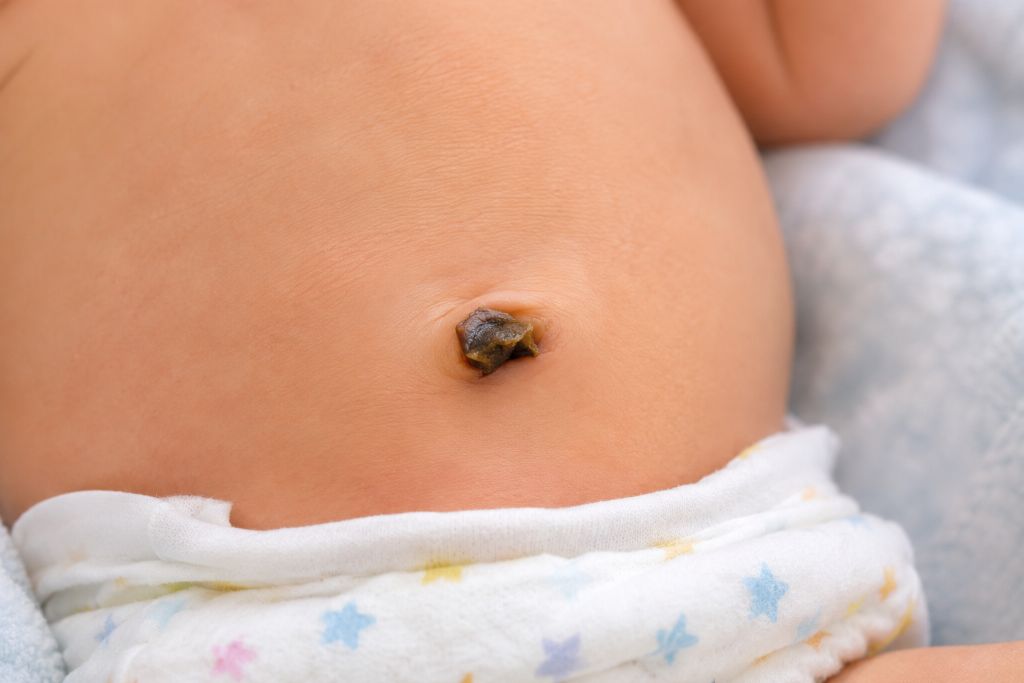
Proper umbilical cord care helps reduce the risk of infection. Follow these simple precautions:
- Keep the stump clean and dry: Allow it to dry naturally and avoid covering it with tight clothing or the nappy.
- Fold the nappy down: Keep the top edge of the nappy below the stump to prevent rubbing and allow air to reach the area.
- Avoid pulling the stump: Let it fall off naturally, even if it appears almost detached.
- Clean gently when necessary: If the stump becomes dirty, follow your healthcare professional’s instructions for cleaning it. Wash your hands before and after handling the area.
- Avoid applying products: Do not apply oil, powder, creams, traditional remedies or other substances unless recommended by a healthcare professional.
Until the stump falls off and the area heals, follow your healthcare professional’s advice about bathing your baby.
Watch for possible signs of infection, such as redness spreading onto the surrounding skin, swelling, pus, a foul smell or tenderness. If your baby develops a fever, feeds poorly or appears unusually sleepy, seek medical attention promptly.
Remember that the umbilical stump needs time to heal. Gentle care and regular observation are usually sufficient.
For further guidance, read the NHS advice on caring for your baby’s umbilical cord.
6. Bathe Your Baby Safely
Bathing your newborn can be a lovely bonding experience, but it may feel challenging when you are a first-time parent. Babies have delicate skin and need gentle handling during bath time. Preparing everything beforehand makes the process easier and safer.

Follow these essential bathing precautions:
- Choose the right time: Bathe your baby when they are comfortable and alert, rather than immediately after feeding or when they are hungry or tired.
- Prepare everything beforehand: Keep a clean towel, fresh nappy, clean clothes, a soft washcloth and any necessary baby-care products within reach.
- Check the water temperature: Use comfortably warm water, not hot water. Mix it thoroughly and check the temperature before placing your baby in it.
- Support your baby carefully: Keep one hand supporting the head and neck while gently washing with the other hand.
- Clean gently: Use a soft washcloth and, if needed, a mild cleanser suitable for newborn skin. Pay attention to the neck folds, behind the ears and the nappy area.
- Keep your baby warm: Avoid unnecessarily long baths. Gently pour warm water over the body when appropriate to prevent chilling.
- Dry thoroughly: Lift your baby carefully, wrap them in a soft towel and gently pat the skin dry, including the folds.
Never leave your baby alone in the bath, even for a moment. If you need to reach something or answer the door, take your baby out and carry them with you. A baby can drown in a very small amount of water.
Newborns generally do not need a daily bath. Two or three baths a week are usually enough, while you can gently clean the face, neck, hands and nappy area as needed.
Until the umbilical cord stump falls off and heals, follow your healthcare professional’s advice about bathing. A sponge bath may be recommended during this period.
For more detailed instructions, read our guide: How to Bathe a Newborn Baby.
7. Change Your Baby’s Nappy Properly
Changing nappies is one of the most frequent tasks for new parents. It may seem difficult at first, but with a little practice, you will become more confident. Keeping your baby’s nappy area clean and dry helps prevent irritation and nappy rash.
Follow these practical steps when changing your baby’s nappy:
- Prepare everything: Keep a clean nappy, soft cotton wool or fragrance-free wipes, and a clean towel within reach.
- Wash your hands: Clean your hands before and after every nappy change.
- Remove the soiled nappy: Open it carefully and use the clean part of the nappy to remove any loose stool.
- Clean gently: Wipe from front to back, especially when cleaning a baby girl, to help reduce the risk of infection.
- Allow the skin to dry: Gently pat the area dry or allow it to air-dry briefly before putting on a fresh nappy.
- Apply barrier cream if needed: If your baby is prone to nappy rash, ask your healthcare professional about a suitable barrier cream.
- Fit a clean nappy: Fasten it comfortably without making it too tight. If the umbilical cord stump is still attached, keep the nappy folded below it.
Change your baby’s nappy regularly and as soon as possible after a bowel movement. Check the skin for redness, irritation or broken areas.
Avoid using talcum powder or fragranced products around your baby’s nappy area. If a rash becomes severe, spreads, develops blisters or does not improve, consult your paediatrician.
Never leave your baby unattended on a changing table or raised surface. Keep one hand on your baby whenever they are on an elevated changing surface.
8. Feed Your Baby Properly
Feeding is one of the most important parts of newborn care. During the first months, your baby depends on breast milk or infant formula for nutrition, hydration and healthy growth. Learning your baby’s feeding cues and choosing a comfortable feeding position can make feeding easier for both of you.
Breastfeeding
Breast milk is recommended as the ideal source of nutrition for infants. The World Health Organisation (WHO) and UNICEF recommend exclusive breastfeeding for the first six months, followed by the introduction of suitable complementary foods while continuing breastfeeding up to two years or beyond.
Keep these points in mind:
- Begin breastfeeding as early as possible after birth, ideally within the first hour, when circumstances allow.
- Feed your baby whenever they show signs of hunger rather than following a rigid timetable.
- Choose a comfortable position that allows your baby’s head and body to remain well supported.
- Make sure your baby is properly attached to the breast. Their mouth should take in a good portion of the breast, and feeding should not cause persistent nipple pain.
- Seek help from a midwife, lactation consultant or healthcare professional if breastfeeding is painful or you are concerned about milk supply.
Formula feeding
If breastfeeding is not possible or you choose to use infant formula, ask your healthcare professional which suitable formula to use. Follow the manufacturer’s preparation instructions and local health guidance carefully.
- Wash your hands and clean feeding equipment properly.
- Prepare formula exactly as directed. Do not add extra water or powder.
- Hold your baby comfortably and keep their head supported during feeding.
- Watch for signs that your baby is full. Never force your baby to finish a bottle.
- Follow safe storage and disposal instructions for prepared formula.
Recognise your baby’s hunger cues
Your baby may show signs of hunger by sucking their fingers, moving their head towards the breast or bottle, opening their mouth or becoming restless. Crying is often a later sign of hunger, so try to respond to earlier cues.
Know whether your baby is feeding well
Regular wet nappies, steady weight gain and signs of contentment after feeds can help indicate that your baby is receiving enough milk. If your baby feeds poorly, has fewer wet nappies than expected or is not gaining weight appropriately, contact your healthcare professional.
Remember that every baby is different. Do not force a fixed feeding schedule or use methods such as tickling your baby’s feet to keep them feeding. If your newborn is unusually sleepy and difficult to wake for feeds, seek medical advice.
For more information, read our article on The Benefits of Breastfeeding for the Mother and Baby.
9. Give Your Baby a Gentle Massage
Baby massage can be a gentle way to interact with your newborn and strengthen the bond between parent and child. In many Indian families, gentle baby massage is also a traditional part of newborn care. When done carefully, it can provide a calming experience and an opportunity for loving touch.
Follow these precautions before giving your baby a massage:
- Choose a comfortable time: Massage your baby when they are calm, awake and alert. Avoid massage when your baby is hungry, crying, unwell or immediately after feeding.
- Prepare a warm space: Choose a comfortable room and place your baby on a clean, stable surface covered with a soft towel.
- Wash your hands: Make sure your hands are clean and comfortably warm before touching your baby.
- Use gentle movements: Begin with slow, gentle strokes on the legs and arms. Never press hard, pull the limbs or stretch the joints.
- Be careful with oils: Oil is not essential for baby massage. If you choose to use one, ask your paediatrician about a suitable product for your baby’s skin. Avoid perfumed oils and essential oils.
- Watch your baby’s reactions: Continue only while your baby appears comfortable. Stop if your baby cries, becomes unsettled or develops skin redness.
You can gently massage your baby’s legs, arms, back and tummy, but avoid pressing on the spine, joints or soft spots on the head. Never massage over an injury, rash or irritated skin.
Remember that baby massage is optional. It should be a pleasant experience, not a routine you force your baby to follow. If your baby was born prematurely or has a medical or skin condition, seek advice from your healthcare professional before starting massage.
The most important part of baby massage is not the technique or oil you use, but the gentle touch, attention and affection you share with your little one.
References for this section
- Indian Academy of Pediatrics – Guidelines for Pediatric Skin Care
- WHO – Recommendations on Maternal and Newborn Care
- Cambridge University Hospitals – Infant Massage Guidance
10. Bond with Your Baby
Bonding with your baby is an important part of newborn care. It helps your little one feel safe, loved and comforted. In the early weeks, simple everyday activities such as cuddling, talking, singing and making eye contact can help you build a close relationship with your baby. These small interactions are the foundation of emotional bonding with children.
You do not need special equipment or complicated activities to bond with your newborn. Your attention, gentle touch and responsive care are what matter most.
Here are some simple ways to strengthen your bond:
- Hold your baby close: Cuddle your baby gently while supporting their head and neck. Holding your baby close can provide comfort and reassurance.
- Try skin-to-skin contact: When you and your baby are comfortable, place your baby against your bare chest while awake and supervised. Keep your baby’s face visible and ensure their breathing is not restricted.
- Talk and sing: Speak softly, sing lullabies or read a short story. Your baby gradually becomes familiar with your voice.
- Make gentle eye contact: When your baby is calm and alert, look at them, smile and respond to their facial expressions.
- Respond to your baby’s cries: Check whether your baby is hungry, tired, uncomfortable or needs a nappy change. Comforting your baby helps them learn that you are there when they need you.
- Enjoy everyday care: Feeding, bathing, changing nappies and cuddling are all opportunities to interact with your baby.
- Involve other family members: Your partner and other trusted caregivers can also build a loving relationship with your baby through gentle handling, talking and comforting. These everyday interactions are part of positive parenting that builds lasting connections.
Remember that bonding does not always happen instantly. Some parents feel an immediate connection, while others develop it gradually over time. This is normal. Be patient with yourself and your baby, and seek support from a healthcare professional if you are struggling emotionally or feeling persistently disconnected.
For more ideas, explore our guide to positive parenting tips based on Erikson’s theory
Conclusion
Learning essential baby care skills can help new parents feel more confident and prepared for the responsibilities of raising a newborn. From safe sleeping and swaddling to holding, bathing, feeding and changing nappies, every little task becomes easier with patience and practice.
Remember that newborns need gentle handling, regular feeding, proper hygiene and a safe environment. Pay attention to your baby’s needs, learn to recognise their cues and seek professional advice whenever you have concerns about their health or development.
You do not have to become an expert overnight. Take one step at a time, accept support from family members and healthcare professionals, and enjoy the special moments you share with your little one.
Every baby is different, and learning to care for your baby is a journey that develops day by day. With love, patience and reliable guidance, you can build confidence and provide the care your newborn needs.
Which baby care skill did you find most challenging as a new parent? Share your experience in the comments.
Frequently Asked Questions
1. What are the most important baby care skills for new parents?
Some essential baby care skills include feeding, changing nappies, bathing, safe sleeping, swaddling, holding a newborn correctly, umbilical cord care and recognising signs of illness. Learning these basics can help parents care for their babies more confidently.
2. How often should I bathe my newborn baby?
Newborns generally do not need a daily bath. Two or three baths a week are usually sufficient. You can gently clean your baby’s face, neck, hands and nappy area as needed. Always follow your healthcare professional’s advice, especially while the umbilical cord stump is healing.
3. What is the safest sleeping position for a newborn?
Always place your newborn on their back for every sleep, including daytime naps. Use a firm, flat mattress in a separate cot or bassinet, and keep pillows, loose blankets and soft toys out of the sleeping area.
4. How can I tell whether my newborn is getting enough milk?
Regular wet nappies, appropriate weight gain and signs of contentment after feeding can help indicate that your baby is receiving enough milk. If your baby feeds poorly, has fewer wet nappies than expected or is not gaining weight appropriately, consult your healthcare professional.
5. How should I hold a newborn baby safely?
Always support your newborn’s head and neck when lifting or holding them. Slide one hand under the head and neck and the other under the bottom and hips. Hold your baby close to your body and handle them gently.
Reliable references
- WHO – Infant and Young Child Feeding
- NHS – Is My Baby Getting Enough Milk?
- NHS – Formula Milk: Common Questions

Mathukutty P. V. is the founder of Simply Life Tips. He shares practical advice and useful insights on personal growth, health, well-being, technology, and everyday living. His goal is to help readers build positive habits and make informed decisions. He believes in continuous learning and sharing knowledge to help people live healthier, happier, and more meaningful lives.