
Emotional wellness plays an important role in how we think, feel, communicate and respond to everyday challenges. It influences our relationships, decision-making, confidence and ability to cope with stress. Although we cannot avoid every difficult situation in life, we can develop healthy habits that help us maintain emotional balance and build resilience.
The good news is that improving emotional wellness does not always require major lifestyle changes. Simple daily practices, such as getting enough sleep, spending time in nature, maintaining supportive relationships and understanding our emotions, can make a meaningful difference.
Let’s understand what emotional wellness means, why it matters and how to improve it naturally.
What Is Emotional Wellness?
Emotional wellness is the ability to understand, recognise, express and manage our emotions in healthy ways. It involves accepting both positive and negative feelings while developing the skills needed to deal with life’s ups and downs.
It does not mean being happy all the time or avoiding sadness, anger, disappointment and fear. These are normal human emotions. Emotional wellness means recognising these feelings and responding constructively rather than allowing them to control our behaviour.
For example, imagine that you receive criticism at work. You might initially feel disappointed or frustrated. Instead of reacting angrily, you take time to understand the feedback, identify what you can learn from it and decide how to improve. That ability to recognise emotions and respond thoughtfully is an important part of emotional wellness.
Why Is Emotional Wellness Important?
Emotional wellness affects several aspects of everyday life. It helps us maintain healthier relationships, handle pressure and make thoughtful decisions. People who develop emotional awareness may find it easier to understand their reactions, communicate their feelings and adapt to unexpected situations.
Good emotional wellness also supports self-confidence and resilience. When we understand our emotions, we can respond more calmly to disagreements, recover from disappointments and approach challenges with a balanced perspective.
Emotional wellness also encourages us to develop positive daily routines and take better care of ourselves. Explore these healthy habits to support a more balanced lifestyle.
Emotional well-being is also connected to social relationships. Supportive friendships, healthy family connections and a sense of belonging can help people feel understood and valued. The Centers for Disease Control and Prevention (CDC) explains the importance of emotional well-being and its connection with our ability to manage life’s challenges.
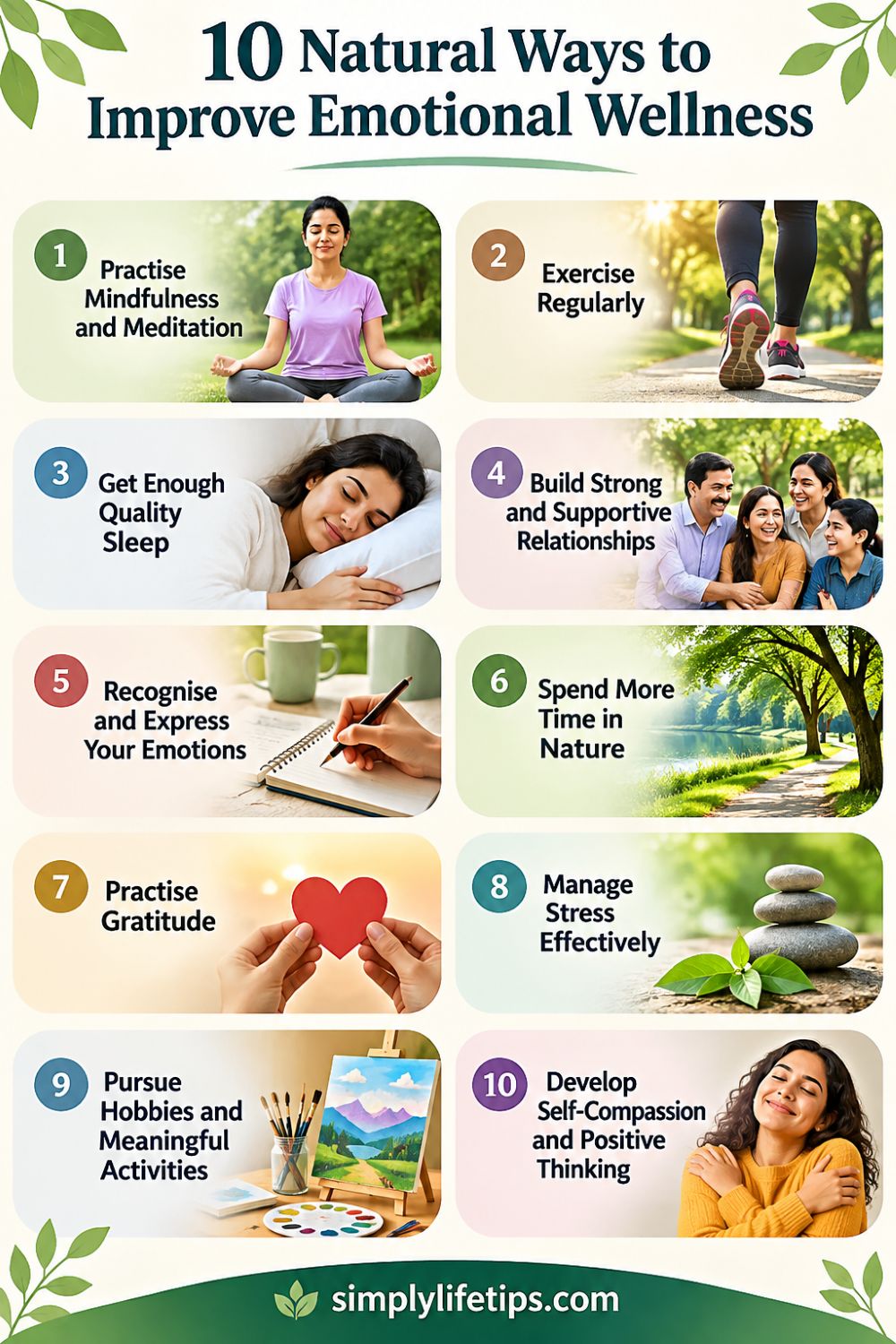
10 Natural Ways to Improve Emotional Wellness
Improving emotional wellness is a gradual process. You do not need to change everything at once. Start with small, manageable habits and practise them consistently.
1. Practise Mindfulness and Meditation
Mindfulness means paying attention to the present moment without immediately judging your thoughts or feelings. It can help you become more aware of emotional reactions and avoid responding impulsively.
You can practise mindfulness by sitting quietly and observing your breathing, spending a few minutes meditating or paying attention to your surroundings while walking. Even taking a short break when you feel overwhelmed can help you regain a sense of calm.
For example, suppose you have had a stressful day at work. Instead of immediately reacting to every problem at home, spend a few minutes breathing slowly and calming your thoughts. This short pause can help you respond more thoughtfully.
You do not need to meditate for an hour. Even a few minutes of regular practice can help develop greater awareness of your emotions. The NIH Emotional Wellness Toolkit provides additional guidance on mindfulness, resilience, stress management and social connections.
2. Exercise Regularly
Physical activity supports both physical and emotional health. Exercise can improve mood, reduce stress and help you feel more energetic. Regular movement also provides a healthy break from work and everyday responsibilities.
You do not necessarily need an expensive gym membership or a complicated workout programme. Walking, cycling, yoga, stretching, dancing and gardening are simple activities that can become part of your routine.
For example, if you spend most of your day sitting at a desk, take a short walk during your lunch break. Regular movement can help you feel refreshed and reduce mental tension.
Choose an activity you enjoy so that exercise becomes a sustainable habit rather than another responsibility.
3. Get Enough Quality Sleep
Sleep plays an important role in emotional regulation. Poor sleep can make it harder to concentrate, manage stress and respond calmly to everyday situations. A regular sleep routine can support better mood and overall well-being.
Try to maintain consistent bedtime and waking times. Keep your bedroom comfortable, quiet and dark, and reduce excessive screen use before sleeping. Reading a book, listening to relaxing music or practising gentle breathing can help you prepare for rest.
For example, if you regularly stay awake late watching videos or scrolling through social media, gradually reduce your screen time before bed. Replace it with a relaxing activity that helps your mind settle.
Most adults need 7–9 hours of sleep each night to support their health and well-being. The National Institute of Mental Health (NIMH) recommends making sleep a priority as part of regular self-care. Maintaining a consistent sleep schedule and reducing screen exposure before bedtime can also help improve sleep quality.
4. Build Strong and Supportive Relationships
Human connections are essential for emotional wellness. Spending time with people who respect, encourage and understand you can provide emotional support during difficult situations.
Healthy relationships allow you to express your feelings without constantly worrying about criticism or rejection. They also create opportunities to share experiences, learn from others and develop a sense of belonging.
Make time for family and friends, listen without interrupting and express appreciation for the people who support you. Even simple activities such as sharing a meal, having a conversation or going for a walk together can strengthen relationships.
For example, if you are worried about a personal problem, talking to a trusted friend or family member may help you see the situation from a different perspective. Meaningful relationships are not about having a large social circle. A few supportive connections can be more valuable than numerous superficial interactions.
5. Learn to Recognise and Express Your Emotions
Understanding your emotions is an important part of emotional wellness. Instead of ignoring unpleasant feelings, learn to recognise what you are experiencing and why. Anger, for example, may sometimes hide disappointment, fear or feelings of being misunderstood.
Try to identify what triggers your emotions and consider how you normally respond. Writing down your thoughts in a journal can help you recognise recurring patterns. Talking to someone you trust can also make it easier to understand difficult feelings.
Imagine that a family member makes a comment that hurts your feelings. Instead of responding immediately with anger, take some time to understand why the comment affected you. Later, explain your feelings calmly and respectfully.
Accepting your emotions does not mean allowing them to control your behaviour. It means understanding them and choosing healthier responses. You can also explore these practical ideas in our article on how to feel better.
6. Spend More Time in Nature
Spending time outdoors can provide a refreshing break from daily responsibilities and digital distractions. Natural surroundings may help reduce stress and support relaxation.
You do not need to travel to a distant destination to enjoy the benefits of nature. Walking in a nearby park, spending time in your garden, watching the sunrise or sunset and caring for plants are simple ways to connect with your surroundings.
For example, if you spend most of your day indoors, try sitting in your garden or taking a short evening walk. Observing trees, birds and fresh surroundings can provide a welcome change from your usual routine.
7. Practise Gratitude
Gratitude means recognising and appreciating the positive aspects of your life. It does not mean ignoring difficulties or pretending that everything is perfect. Instead, it helps you develop a more balanced perspective.
Take a few moments each day to think about the things you appreciate. You might be thankful for a supportive family member, a helpful friend, a comfortable home or the opportunity to learn something new.
For example, at the end of the day, you might appreciate having a healthy meal, completing an important task or receiving encouragement from someone. These small moments can help you pay attention to the positive experiences that are sometimes overlooked in a busy routine.
8. Develop Healthy Ways to Manage Stress
Stress is a normal part of life, but prolonged or overwhelming stress can affect emotional and physical well-being. Learning to recognise stress triggers and respond constructively is important.
Start by identifying the situations that create unnecessary pressure. Break large tasks into smaller steps, take regular breaks during work and avoid accepting more responsibilities than you can reasonably manage. Practising deep breathing and limiting excessive exposure to stressful news and social media may also help.
For example, if you have several deadlines approaching, trying to complete everything simultaneously may increase anxiety. Instead, list your tasks, identify priorities and complete them one at a time.
Managing time effectively can also reduce unnecessary pressure. Our guide to effective time management offers practical ideas for organising responsibilities and making better use of your time.
You may not be able to eliminate every source of stress, but you can develop healthier ways to manage it.
9. Pursue Hobbies and Meaningful Activities
Daily responsibilities can sometimes leave little time for personal interests. However, engaging in enjoyable activities can provide satisfaction, relaxation and a sense of accomplishment.
Reading books, listening to music, gardening, cooking, painting, learning a new skill and volunteering are examples of meaningful activities that can bring enjoyment to everyday life.
For example, someone who enjoys gardening might spend 15 minutes each evening caring for plants. This simple activity can provide a sense of purpose and a pleasant break from work-related pressure.
Choose activities because you enjoy them, not because you feel pressured to be productive all the time. Making time for personal interests is a healthy way to maintain balance.
10. Develop Self-Compassion and Positive Thinking
The way you speak to yourself can influence your emotional well-being. Constant self-criticism, unrealistic expectations and negative self-talk can increase emotional pressure.
Self-compassion means treating yourself with the same understanding and kindness you would offer someone you care about. It involves accepting that everyone makes mistakes and that personal growth takes time.
For example, if you make a mistake at work, avoid thinking, “I am not good at anything.” Instead, consider what went wrong, what you can learn and how you can handle a similar situation better next time.
Recognise your progress, set realistic expectations and avoid comparing your life with others. Positive thinking does not mean ignoring problems. It means approaching challenges with a realistic and constructive attitude.
Daily Habits to Maintain Emotional Wellness
Emotional wellness becomes easier to maintain when healthy practices are incorporated into everyday life. You do not need a strict schedule or a complicated routine. Choose activities that fit your lifestyle and responsibilities.
You might begin your morning with a few minutes of mindfulness, followed by a healthy breakfast and some physical activity. During the day, take short breaks, organise your responsibilities and make time for meaningful conversations. In the evening, enjoy a hobby, spend time with family or take a relaxing walk. Before going to bed, reflect on the positive moments of your day and prepare for a restful night’s sleep.
Emotional wellness is not something we achieve once and maintain forever. Our emotions change with our experiences, relationships, responsibilities and life circumstances. Therefore, developing healthy habits requires patience and consistent effort.
Start with two or three practices that feel manageable, such as taking a daily walk, maintaining regular sleep patterns and spending quality time with family. Gradually introduce other positive habits as they become part of your routine.
Avoid comparing your emotional progress with others. Everyone faces different challenges, and what works for one person may not work equally well for another. Most importantly, allow yourself to experience different emotions. You do not have to feel positive every day to live a healthy and meaningful life.
Common Habits That Can Affect Emotional Wellness
While developing healthy habits, it is equally important to recognise behaviours that may negatively affect emotional well-being.
Constant negative self-talk can damage confidence and increase emotional pressure. Comparing your life with carefully selected social media posts may create unnecessary dissatisfaction. Ignoring emotions instead of understanding them can make it harder to deal with problems.
Poor sleep habits, social isolation and taking on more responsibilities than you can manage may also affect emotional balance. Depending excessively on screen time or other unhealthy coping behaviours to escape difficult emotions can prevent you from addressing the underlying problems.
Recognising these patterns is the first step towards making healthier choices. Rather than trying to change everything immediately, focus on one behaviour at a time.
When Should You Seek Professional Help?
Natural self-care practices can support emotional wellness, but they are not a replacement for professional mental health care when it is needed.
Consider speaking with a qualified mental health professional if you experience persistent sadness, anxiety or emotional distress, major changes in sleep or appetite, loss of interest in activities you previously enjoyed or difficulty managing everyday responsibilities.
You do not need to wait until problems become severe before asking for help. Counselling and appropriate professional support can help you understand your emotions and develop effective coping strategies.
The National Institute of Mental Health (NIMH) guide to caring for your mental health provides further information about self-care and recognising when professional support may be helpful.
If you experience thoughts of self-harm or suicide, seek immediate support from local emergency services or a qualified healthcare professional.
The Connection Between Emotional Wellness and Healthy Relationships
Emotional wellness helps us communicate more effectively, understand others’ feelings and handle disagreements calmly. When we recognise our emotions, we are less likely to react impulsively or allow misunderstandings to damage our relationships.
For example, instead of responding angrily during a disagreement, we can pause, listen and express our concerns respectfully. Understanding how to handle disrespect can also help us maintain healthy boundaries.
Ultimately, emotional wellness helps us build more understanding, respectful and meaningful relationships.
Conclusion
Emotional wellness is an important part of living a balanced and fulfilling life. It helps us understand our emotions, manage stress, maintain healthy relationships and respond to challenges with greater resilience.
You do not need expensive programmes or complicated routines to begin improving your emotional well-being. Simple habits such as regular exercise, quality sleep, mindfulness, gratitude, supportive relationships and self-compassion can make a meaningful difference.
Remember that emotional wellness is a continuous journey. Be patient with yourself, celebrate small improvements and seek support when necessary.
What small daily habit are you willing to develop to improve your emotional wellness?
Frequently Asked Questions About Emotional Wellness
1. What is emotional wellness?
Emotional wellness is the ability to recognise, understand, express and manage emotions in healthy ways. It helps people cope with stress, adapt to changes and maintain meaningful relationships.
2. How can I improve emotional wellness naturally?
You can improve emotional wellness through regular exercise, sufficient sleep, mindfulness, healthy relationships, gratitude, spending time in nature and developing positive coping strategies.
3. Why is emotional wellness important?
Emotional wellness supports stress management, healthy relationships, self-confidence, resilience and better everyday functioning. It also contributes to overall mental and physical well-being.
4. What is the difference between emotional wellness and mental health?
Mental health is a broader concept that includes emotional, psychological and social well-being. Emotional wellness focuses particularly on recognising and managing feelings and responding constructively to emotional challenges.
5. What are the signs of good emotional wellness?
Some common signs include understanding your emotions, managing everyday stress, maintaining supportive relationships, accepting personal limitations, adapting to change and seeking help when needed.
Disclaimer
This article is intended for general educational and informational purposes. It is not a substitute for professional medical advice, diagnosis or treatment. Consult a qualified healthcare professional if you have persistent emotional or mental health concerns.

Mathukutty P. V. is the founder of Simply Life Tips. He shares practical advice and useful insights on personal growth, health, well-being, technology, and everyday living. His goal is to help readers build positive habits and make informed decisions. He believes in continuous learning and sharing knowledge to help people live healthier, happier, and more meaningful lives.