
Healthy Habits for a Better Life are not about following a perfect routine or making dramatic changes overnight. They are about the small, consistent choices we make every day that support our physical health, mental well-being, relationships, energy, and overall quality of life. These everyday choices can also help us develop healthy habits for a happy life.
Modern life can make it easy to put health at the bottom of the list. Work becomes busy, sleep gets sacrificed, meals become rushed, movement gets forgotten, and stress gradually becomes part of the routine. Over time, these patterns can leave us feeling tired, overwhelmed, and disconnected from the things that matter most.
The good news is that a healthier life does not require perfection. A few practical habits, repeated consistently, can make a meaningful difference.
8 Healthy Habits for a Better Life
A healthier and more balanced life is built through everyday choices. The habits you practise regularly can influence your energy, sleep, nutrition, stress levels, relationships, mindset, and ability to recover from daily demands.
These eight healthy lifestyle habits cover different areas of well-being. You do not need to master them all at once. Start with the areas that need the most attention and gradually build a routine that works for your life.
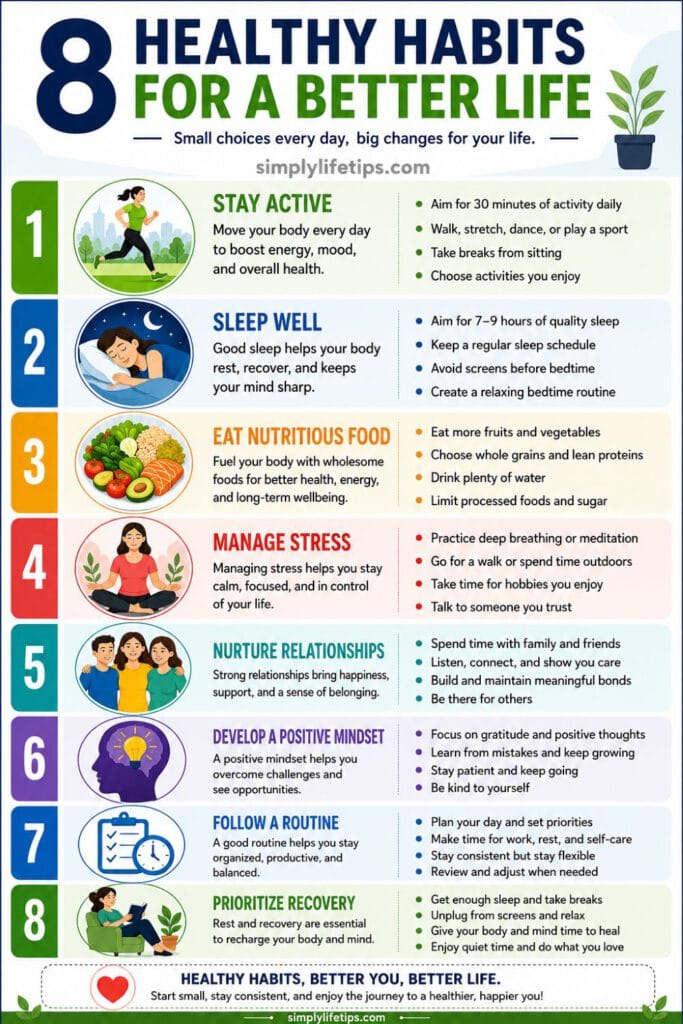
You do not need to master all eight habits at once. Start with the area that needs the most attention and build from there, one consistent step at a time.
1. Make Physical Movement a Regular Habit
Regular physical activity is one of the most important healthy habits for a better life. However, many people spend much of their day sitting at a desk, driving, working on a computer, or using a mobile phone.
Moving your body regularly can support cardiovascular health, muscle strength, mobility, energy levels, and mental well-being. You do not need to spend hours at the gym to become more active.
Walking, cycling, swimming, stretching, dancing, gardening, or playing a sport can all become part of an active lifestyle.
The best physical activity is one you enjoy and can maintain consistently.
How to Make Movement Easier
Choose activities that fit your interests, daily schedule, and fitness level. Making physical activity part of your daily healthy habits does not require an expensive gym membership or a demanding exercise routine.
For example:
- Take a 20-minute walk after dinner.
- Use the stairs instead of the lift when practical.
- Stretch gently after sitting for long periods.
- Walk while talking on the phone.
- Do some gardening or household activities.
- Choose an enjoyable physical activity for the weekend.
If you work at a desk, take short movement breaks throughout the day instead of remaining seated for several hours.
You do not have to become an athlete or follow a demanding exercise routine. Start with manageable activities and gradually increase your movement as your fitness improves.
Consistency matters more than intensity when you are building a sustainable active lifestyle.
For further guidance, read the World Health Organization’s recommendations on physical activity.
2. Protect Your Sleep
Protecting your sleep is one of the essential healthy habits for a better life. Good sleep supports physical health, mental well-being, concentration, and emotional balance.
A good night’s sleep gives your body and mind time to rest and recover. Poor sleep can leave you feeling tired, irritable, unfocused, and less prepared to deal with everyday challenges.
Most adults generally need around 7 to 9 hours of sleep each night, although individual needs can vary. Developing healthy sleep habits can help you get better-quality rest and maintain a more consistent sleep schedule.
How to Build a Healthy Sleep Routine
Improving your sleep does not always require major lifestyle changes. Small adjustments to your daily routine can make it easier to fall asleep and wake up feeling refreshed.
Try these practical sleep tips:
- Maintain a regular sleep schedule: Go to bed and wake up at approximately the same time every day, including weekends.
- Reduce screen time before bed: Avoid unnecessary mobile phone, computer, and television use close to bedtime.
- Create a comfortable bedroom: Keep your sleeping environment quiet, dark, and comfortable.
- Avoid late-night caffeine: Reduce coffee, tea, and other caffeinated drinks in the hours before bedtime.
- Follow a relaxing bedtime routine: Read a book, listen to gentle music, or practise relaxation before sleeping.
- Avoid heavy meals late at night: Give yourself enough time to digest your food before going to bed.
- Get regular physical activity: Staying active during the day can support better sleep.
Do not treat sleep as something you do only after finishing all your work. Give it the same importance as healthy eating and regular physical activity.
If you regularly struggle to fall asleep, stay asleep, or feel rested during the day, consider discussing the problem with a healthcare professional.
For more practical suggestions, explore our guide to better sleep at night and learn how simple changes can help improve your sleep routine.
3. Choose Nourishing Food
Choosing nourishing food is essential for maintaining good health and developing healthy eating habits. You do not need to follow a complicated diet or make dramatic changes to your meals. Start with simple, balanced food choices that you can maintain consistently.
Simple, balanced food choices can make a meaningful difference.
Try to include a variety of vegetables, fruits, whole grains, protein-rich foods, and healthy fats in your daily meals. Traditional Indian foods such as rice, chapati, dal, vegetables, fruits, beans, and curd can all be part of a balanced diet.
How to Develop Healthy Eating Habits
You do not need to change your entire diet overnight. Start with small improvements that are realistic and easy to maintain.
For example:
- Eat more vegetables: Include different seasonal vegetables in your lunch and dinner.
- Choose fresh fruits: Enjoy fruits such as bananas, apples, oranges, papaya, or guava as part of your daily diet.
- Include protein-rich foods: Add dal, beans, pulses, eggs, fish, or other suitable protein sources to your meals.
- Choose whole grains: Include whole grains such as oats, brown rice, or whole-wheat chapati when suitable.
- Drink enough water: Stay hydrated throughout the day.
- Prepare meals at home: Home-cooked meals can help you make more informed food choices.
- Pay attention to portions: Eat according to your needs rather than habitually overeating.
- Limit highly processed foods: Avoid making sugary drinks and heavily processed snacks a regular part of your diet.
Healthy eating is about the overall pattern of your diet, not one particular meal. You can enjoy your favourite foods occasionally while maintaining a balanced approach to nutrition.
Start with one simple improvement, such as adding an extra serving of vegetables or choosing fruit instead of a sugary snack. Gradually, these small changes can become lasting healthy eating habits.
For reliable guidance, refer to the World Health Organization’s recommendations on healthy diet
4. Build Stress Resilience
Stress is a normal part of life. Work pressure, family responsibilities, financial concerns, health challenges, and unexpected situations can all contribute to stress. The problem begins when stress becomes constant and you do not allow yourself enough time to recover.
Stress resilience does not mean never feeling stressed. It means learning healthier ways to respond to life’s challenges. Developing stress resilience supports mental well-being and helps you maintain a healthier, more balanced lifestyle.
Walking, physical activity, breathing exercises, hobbies, spending time outdoors, relaxation, and talking with someone you trust can all help you manage stressful periods.
Building stress resilience is an important part of a healthier life. Explore our guide to stress resilience to learn practical ways to manage pressure and recover from difficult situations.
Natural Ways to Manage Everyday Stress
Different approaches work for different people. You can try these simple activities to manage everyday stress:
- Go for a walk: A peaceful walk outdoors can provide a break from daily pressures.
- Practise deep breathing: Slow, controlled breathing can help you relax when you feel overwhelmed.
- Exercise regularly: Choose an activity you enjoy, such as cycling, swimming, or yoga.
- Listen to music: Relaxing music can help create a calmer atmosphere.
- Enjoy a hobby: Reading, gardening, cooking, painting, or listening to music can provide a refreshing break.
- Spend time with loved ones: Talking with family members or friends can provide emotional support.
- Write down your thoughts: Journalling can help you organise your thoughts and identify sources of stress.
- Take a break from technology: Reduce unnecessary screen time and give yourself some quiet time.
These natural approaches may help with everyday stress, but they are not substitutes for professional care when stress becomes persistent or overwhelming.
Do not wait until stress affects your sleep, relationships, work, or daily activities before taking steps to manage it. If you are struggling to cope, consider speaking with a qualified mental health professional.
5. Invest in Relationships
A better life is not measured only by money, achievements, or productivity. Meaningful relationships are equally important for happiness, emotional well-being, and a sense of belonging.
Family members, friends, partners, colleagues, and other supportive people can provide connection, encouragement, laughter, perspective, and companionship.
In a busy life, relationships can easily become something we plan to maintain later. Unfortunately, later can keep getting postponed. Making time for people who matter is one of the simplest but most valuable healthy lifestyle habits.
How to Build Stronger Relationships
You do not need a huge social circle. Focus on developing meaningful connections and giving the people around you genuine attention.
For example:
- Stay in touch: Call or message someone you have not spoken to for a while.
- Spend quality time together: Share a meal or enjoy an activity without constantly checking your phone.
- Listen carefully: Give others your full attention when they are talking.
- Show appreciation: Express gratitude for the people who support and encourage you.
- Offer help: Be available when family members or friends need support.
- Respect differences: Accept that people may have different opinions, interests, and priorities.
- Celebrate important moments: Remember birthdays, achievements, and other meaningful occasions.
Healthy relationships require mutual respect, trust, understanding, and effort. They also involve setting appropriate boundaries and recognising relationships that consistently affect your well-being negatively.
Small acts of kindness and connection can strengthen relationships over time. Make time for the people who matter instead of allowing everyday busyness to push them aside.
6. Develop a Healthy Mindset
Your mindset influences how you think, feel, and respond to everyday challenges. Developing a healthy mindset can help you approach difficulties with greater confidence, patience, and emotional balance.
A difficult situation can feel even worse when your thoughts immediately move towards the worst possible outcome. Learning to pause and look at a problem from another perspective can help you respond more calmly.
This does not mean pretending that problems do not exist. It means separating the actual situation from the negative assumptions or frightening thoughts your mind may create around it.
A healthy mindset can change the way you approach challenges. These practical steps to build a success mindset can help you develop more positive and purposeful thinking.
How to Develop a Healthier Mindset
You do not need to think positively all the time. Instead, practise recognising unhelpful thoughts and responding to situations more realistically.
For example:
- Challenge negative thoughts: Ask yourself whether your assumptions are based on facts or fear.
- Focus on what you can control: Avoid wasting energy worrying about things beyond your control.
- Learn from mistakes: Treat setbacks as opportunities to improve rather than reasons to give up.
- Practise gratitude: Notice and appreciate the positive things in your everyday life.
- Avoid constant comparison: Focus on your own progress instead of measuring your life against others.
- Be kind to yourself: Treat yourself with the same understanding you would offer a friend.
- Seek another perspective: Talk with someone you trust when a problem feels difficult to manage.
Questions to Ask Yourself When Facing a Challenge
When something goes wrong, pause and consider these questions:
- What is actually happening?
- What part of this situation can I control?
- Am I assuming the worst?
- What can I learn from this experience?
- What is one useful step I can take next?
Talking with someone you trust can also help you see a situation from a different perspective.
A healthy mindset is not about being positive all the time. It is about developing a balanced way of dealing with both good and difficult experiences.
7. Create a Supportive Routine
A good daily routine can help you manage your time, reduce unnecessary decisions, and make space for the things that matter. It is one of the practical healthy lifestyle habits that can support a more balanced and organised life.
Without some structure, the day can easily become a collection of interruptions. Work expands, screen time increases, meals become irregular, and important personal activities get pushed aside.
A simple routine can help you maintain balance without making your life feel restrictive.
How to Build a Healthy Daily Routine
Your routine does not need to be complicated or follow a strict timetable. Build it around your responsibilities, priorities, and personal needs.
Consider setting aside regular time for:
- Sleep: Maintain reasonably consistent sleeping and waking times.
- Physical activity: Include walking, exercise, stretching, or another activity you enjoy.
- Healthy meals: Make time for balanced meals instead of regularly skipping them.
- Work or study: Organise your important tasks and avoid unnecessary distractions.
- Relationships: Set aside time for family members and friends.
- Relaxation: Include activities that help you unwind.
- Hobbies: Make time for interests that bring enjoyment and satisfaction.
- Personal reflection: Review your day, recognise your progress, and plan for tomorrow.
For example, you could begin your morning with a glass of water, a short walk, and a healthy breakfast. During the day, organise your work into manageable tasks. In the evening, spend time with family, enjoy a relaxing activity, and prepare for a good night’s sleep.
Leave some flexibility as well. Unexpected responsibilities and changes are part of everyday life. A healthy routine should support your life rather than control it.
Start with a few manageable activities and gradually develop a daily schedule that you can maintain consistently.
8. Make Recovery Part of Your Life
Rest is not laziness. Making recovery part of your routine is essential for maintaining healthy habits for a better life.
Your body and mind need time to recover, especially after physical activity, demanding work, emotional stress, or long periods of concentration.
Many people continue pushing themselves until they are completely exhausted and then treat rest as a reward. A healthier approach is to make recovery part of your everyday routine.
How to Make Recovery a Healthy Habit
You do not have to be productive every minute of the day. Give yourself permission to slow down and recharge.
Recovery can include:
- Get enough sleep: Allow your body and mind sufficient time to rest each night.
- Take regular breaks: Step away from demanding tasks to refresh your concentration.
- Spend time in nature: Enjoy a walk in a garden, park, or other peaceful outdoor setting.
- Enjoy a quiet hobby: Reading, gardening, listening to music, or painting can help you relax.
- Disconnect from technology: Take breaks from mobile phones, computers, and social media.
- Spend relaxed time with loved ones: Enjoy meaningful conversations and activities without rushing.
- Avoid overloading your schedule: Leave some free time for rest and unexpected responsibilities.
For example, after a busy working day, spend some time outdoors, enjoy a relaxed meal with your family, or read a book instead of immediately moving on to another demanding task.
Remember that recovery does not mean avoiding responsibilities. It means recognising your limits and giving yourself enough time to recharge.
Sometimes doing less is exactly what allows you to return with more energy, focus, and motivation.
How to Turn Healthy Habits Into a Lifestyle?
Knowing what to do is easier than practising it consistently. The key to developing healthy lifestyle habits is to start small, set realistic goals, and make gradual improvements.
One common mistake is trying to change everything at once. This can make the process overwhelming and difficult to maintain.
Instead, choose one or two habits and make them manageable.
Practical Ways to Build Lasting Healthy Habits
- Start small: If you rarely exercise, begin with a 20-minute walk several times a week rather than following an unrealistic workout schedule.
- Set realistic goals: If you want to improve your sleep, start by establishing a consistent bedtime.
- Make gradual food changes: Add one nutritious food to your daily meals instead of completely changing your diet overnight.
- Create reminders: Use a calendar or phone reminder to help you follow your new routine.
- Track your progress: Record your achievements and notice how small improvements affect your daily life.
- Be patient: Give yourself time to adjust. Building lasting habits is a gradual process.
For example, if you want to develop a healthier morning routine, begin by waking up at a consistent time and taking a short walk. Once these activities become easier, introduce another positive habit.
Small improvements can lead to meaningful changes when you practise them regularly.
The goal is not to follow a perfect routine but to create healthy habits that fit naturally into your everyday life.
The Power of Consistency
Healthy habits work best when they become part of your everyday life. Practising daily healthy habits consistently can help you build a healthier lifestyle and maintain positive changes over time.
The important thing is not to be perfect every day but to keep making progress.
Missing one workout does not mean you have failed. Having an unhealthy meal does not cancel all your healthy choices. Going to bed late once does not destroy your sleep routine.
What matters most is what you do regularly.
Think of healthy living as a long-term process rather than a short-term challenge.
A simple walk today, a nutritious meal tomorrow, an extra hour of sleep, a meaningful conversation, or a few minutes of quiet time may seem insignificant on its own. However, when repeated over weeks, months, and years, these choices can positively influence your quality of life.
Building healthy habits for a better life is a gradual process. Small actions become more powerful when you repeat them consistently.
Healthy habits become easier to maintain when you understand the power of consistency and make small, positive actions part of your daily routine.
A Simple Healthy Habits Framework
You can remember the eight healthy habits for a better life with this simple framework:
- Move your body through regular physical activity.
- Sleep enough to allow your body and mind to recover.
- Nourish yourself with balanced and nutritious food.
- Manage stress through healthy coping strategies.
- Connect with people who bring support and encouragement.
- Strengthen your mindset by developing balanced and positive thinking.
- Structure your day with a supportive daily routine.
- Recover regularly by making time for rest and relaxation.
These eight areas work together to support physical health, mental well-being, relationships, and overall quality of life.
None of these habits needs to be perfect. The goal is to create a healthy lifestyle that leaves room for work, family, enjoyment, relaxation, and the unexpected events that make life interesting.
Start with one or two habits that need attention and gradually build from there. Consistent small improvements can help you develop a healthier and more balanced life.
Conclusion
Healthy Habits for a Better Life do not require a perfect lifestyle or dramatic changes. They begin with small, practical choices that you can maintain consistently.
Move your body regularly. Protect your sleep. Choose nourishing foods. Learn healthier ways to manage stress. Make time for meaningful relationships. Develop a balanced mindset. Create a supportive routine, and remember that recovery is an essential part of a healthy life.
You do not have to change your entire life today. Start with one healthy habit, practise it consistently, and gradually introduce other positive changes.
A better life is often created through ordinary choices repeated every day.
What is one healthy habit you would like to start practising today?
Frequently Asked Questions: Healthy Habits for a Better Life
1. What are the most important healthy habits for a better life?
The most important healthy habits for a better life include regular physical activity, sufficient sleep, nutritious food, stress management, meaningful relationships, a healthy mindset, a supportive daily routine, and adequate recovery. Practising these habits consistently can support overall physical and mental well-being.
2. How can I start developing healthy habits for a better life?
Start with one or two simple changes that feel realistic. You could take a daily walk, drink more water, eat more vegetables, or establish a consistent bedtime. Once these activities become part of your routine, gradually introduce other healthy habits.
3. Do healthy habits need to be followed every day?
Not necessarily. Consistency over time is more important than perfection every day. Missing a workout or occasionally eating an unhealthy meal does not mean you have failed. The important thing is to return to your routine and continue making positive choices.
4. How long does it take to build a healthy habit?
There is no fixed number of days that applies to everyone. Some habits become easier relatively quickly, while others take longer. Regular practice, realistic goals, patience, and a supportive environment can make new habits easier to maintain.
5. Can small lifestyle changes really improve quality of life?
Yes. Small lifestyle changes can influence daily energy, sleep, physical activity, nutrition, stress management, and relationships. When these improvements are maintained over time, they can contribute to a healthier and more balanced lifestyle.

Mathukutty P. V. is the founder of Simply Life Tips. He shares practical advice and useful insights on personal growth, health, well-being, technology, and everyday living. His goal is to help readers build positive habits and make informed decisions. He believes in continuous learning and sharing knowledge to help people live healthier, happier, and more meaningful lives.