

Suppressing emotions can leave people smiling on the outside while silently struggling with sadness, anxiety, frustration or emotional exhaustion. Have you ever smiled in front of others while hiding what you are really feeling? Many people suppress their emotions without realising how this habit may affect their mental well-being, relationships and quality of life.
Some people hide their feelings because they do not want to burden others. Others believe that showing sadness is a sign of weakness. Many continue to support their families, help friends and fulfil their responsibilities while quietly ignoring their own emotional needs.
But is keeping everything inside always a sign of strength? What happens when you repeatedly hide your feelings instead of understanding and addressing them?
Learning why people suppress emotions, recognising the possible warning signs and finding healthier ways to express feelings can help protect emotional well-being.
The Hidden Pain Behind a Smiling Face
Think about the people around you.
A mother listens to everyone’s problems but rarely talks about her own worries. A father carries the family’s financial responsibilities while hiding his fears. A partner tries to keep everyone happy despite feeling emotionally exhausted. A young person struggles with academic pressure, career uncertainty or relationship difficulties but pretends everything is fine.
These individuals may repeatedly say:
“I’m fine. Don’t worry about me.”
Sometimes, they genuinely feel fine. At other times, those words hide feelings they find difficult to express.
There are several reasons why people hide their emotions. These reasons may develop through childhood experiences, personal relationships, social expectations or the fear of being misunderstood.
Fear of judgement: Some people hide their emotions because they worry about how others will react. They may fear being criticised, misunderstood or considered weak for expressing sadness, fear or disappointment. As a result, they prefer to keep their struggles private rather than risk negative reactions. Negative thinking can make it even harder to recognise and express difficult feelings. Read our guide on the negative effects of negative self-talk and how to overcome it to understand how your inner dialogue can influence emotional well-being.
Fear of becoming a burden: Some individuals avoid sharing their problems because they do not want to add to the worries of their family members or friends. For example, a parent struggling with financial difficulties may hide personal anxiety to protect the family from additional stress. Although this intention may come from love and concern, constantly carrying emotional burdens alone can become exhausting. Everyone needs understanding and support sometimes.
Social expectations: Family traditions, cultural beliefs and social expectations can influence how people express their feelings. Some grow up hearing that crying is a sign of weakness or that strong people should never show sadness. Men, in particular, may sometimes face pressure to appear emotionally strong and avoid discussing their vulnerabilities. Over time, these expectations can make people uncomfortable with expressing genuine emotions.
Past experiences: Previous experiences of rejection, criticism, betrayal or emotional neglect can make it difficult to trust others. Someone who once shared personal feelings but received an insensitive response may hesitate to open up again. They may believe that remaining silent is safer than risking further disappointment. However, avoiding emotional conversations indefinitely can make it harder to develop supportive and meaningful relationships.
Responsibility: People who carry significant family or professional responsibilities may feel that they must always remain strong. A parent may hide personal worries to protect their children, while someone managing a family business may avoid discussing financial pressure with loved ones. They may believe that expressing their struggles will make others lose confidence in them. However, being responsible does not mean ignoring personal emotional needs or handling every difficulty alone.
Over time, repeatedly hiding emotional distress can make it harder to recognise personal needs, communicate feelings and seek support. Understanding why you suppress your emotions is an important first step towards developing healthier emotional habits.
What Does Suppressing Emotions Mean?
Suppressing emotions refers to deliberately holding back or hiding the outward expression of feelings such as sadness, anger, fear, disappointment or frustration. The meaning of suppressed emotions is closely related to the deliberate act of hiding or holding back feelings rather than expressing them openly.
For example, someone may feel deeply hurt by a comment but continue smiling to avoid an argument. Another person may feel overwhelmed by work pressure but refuse to discuss it with anyone.
Psychologists often refer to this as expressive suppression, a strategy used to control visible emotional responses.
It is important to distinguish emotional suppression from emotional regulation.
Emotional regulation means recognising, understanding and managing feelings in healthy ways. It does not mean pretending that difficult emotions do not exist.
For instance, taking a moment to calm yourself before responding angrily is healthy emotional regulation. Repeatedly denying that you are hurt, even when the issue continues to affect you, may become an unhealthy pattern.
Suppressed emotions vs repressed emotions
These terms are sometimes used interchangeably, but they have different meanings.
Suppressed emotions: A person consciously tries to hide or control feelings.
Repressed emotions: In psychological theory, this refers to feelings or thoughts kept outside conscious awareness through an unconscious process.
Understanding this distinction helps when researching emotional health and looking for appropriate support.
What Happens When You Suppress Your Emotions?
Emotions involve complex interactions between the brain, nervous system, thoughts and physical responses.
When you experience fear, sadness, anger or anxiety, different brain networks participate in recognising and responding to those emotions.
Two important brain regions involved in emotional processing are the amygdala and the prefrontal cortex.
1. The amygdala and emotional responses
The amygdala is a group of structures in the brain involved in processing emotionally significant information, including potential threats.
When you encounter a stressful situation, the amygdala helps the brain identify and respond to it.
For example, if someone criticises you unfairly, you may experience anger, embarrassment or sadness. These emotional responses involve several interconnected brain systems, including the amygdala.
2. The prefrontal cortex and emotional regulation
The prefrontal cortex is involved in decision-making, planning, attention and regulating behaviour.
It helps you consider a situation before reacting emotionally.
For example, instead of immediately responding angrily during an argument, you may pause, consider the consequences and choose a calmer response.
Healthy emotional regulation involves several brain networks working together.
3. The body’s stress response
When you repeatedly experience stressful situations, the body’s stress response systems become involved.
Hormones such as cortisol and adrenaline help the body respond to challenges.
These responses are useful in the short term. However, prolonged stress can affect sleep, concentration, mood and general well-being.
Prolonged stress and emotional difficulties may also contribute to mental exhaustion. Read our guide to 10 common mental fatigue symptoms and their warning signs.
Research suggests that emotional suppression may increase certain physiological responses during stressful situations. However, the effects vary between individuals and depend on the circumstances.
An important distinction: Suppressing emotions does not automatically cause brain damage. Research is still examining how different forms of emotional suppression affect brain activity and physical health.
The concern is not that you occasionally choose to hide your feelings. It is the possibility that continually avoiding emotional difficulties may contribute to psychological distress and interfere with healthy relationships.
A 2024 systematic review and meta-analysis published in Health Psychology Review examined how emotional suppression influences physiological responses during stressful situations. The findings suggested that deliberately suppressing emotional expression can increase certain stress-related physiological responses, although the results differ depending on how suppression is measured. Read the research on emotional suppression and stress responses
7 Signs You May Be Suppressing Your Emotions
Sometimes, people do not recognise that they are hiding their feelings. They may simply assume that feeling exhausted, irritated or disconnected is part of everyday life.
The following signs may indicate that you are struggling emotionally.
1. You frequently say, “I’m fine” when you are not
You may automatically tell everyone that everything is fine, even when you feel sad, disappointed or overwhelmed.
You might avoid conversations about your problems because you do not know how to explain what you are experiencing.
2. You experience unexplained irritability
Small inconveniences may trigger unusually strong reactions.
You may become impatient with family members, colleagues or friends. Sometimes, unresolved frustration can make ordinary situations feel more difficult to manage.
3. You struggle to sleep because of constant thoughts
When the day becomes quiet, thoughts and worries may become more noticeable.
You may repeatedly think about past conversations, personal disappointments, financial difficulties or future uncertainties.
Persistent stress can interfere with sleep and make it harder to relax.
4. You feel lonely even when surrounded by people
You may have family members, friends and colleagues around you but still feel that nobody understands what you are going through.
This emotional disconnection can become particularly difficult when you believe you cannot share your true feelings with anyone.
5. You lose interest in things you previously enjoyed
Activities that once made you happy may no longer feel enjoyable.
You might gradually withdraw from hobbies, social gatherings and conversations.
A persistent loss of interest can also be a symptom of depression and should not automatically be attributed to emotional suppression.
6. You feel emotionally and physically exhausted
You may feel tired even after completing ordinary activities.
Stress can also be associated with headaches, muscle tension, changes in appetite and difficulty concentrating.
However, persistent physical exhaustion can have several causes and may require medical assessment.
7. You find it difficult to ask for help
You may believe that asking for support makes you weak or dependent.
Even when someone offers to listen, you may change the subject or insist that you can manage everything yourself.
Remember that accepting support is not a failure. Everyone needs help sometimes.
These signs do not establish a diagnosis. If they persist or interfere with everyday life, consider speaking with a qualified healthcare professional.
You may smile, laugh and appear perfectly happy while silently struggling with emotional stress. Suppressing emotions can make it difficult to recognise your feelings and communicate your needs. The following infographic highlights seven possible signs that you may be keeping your emotions inside and some healthy ways to manage them.
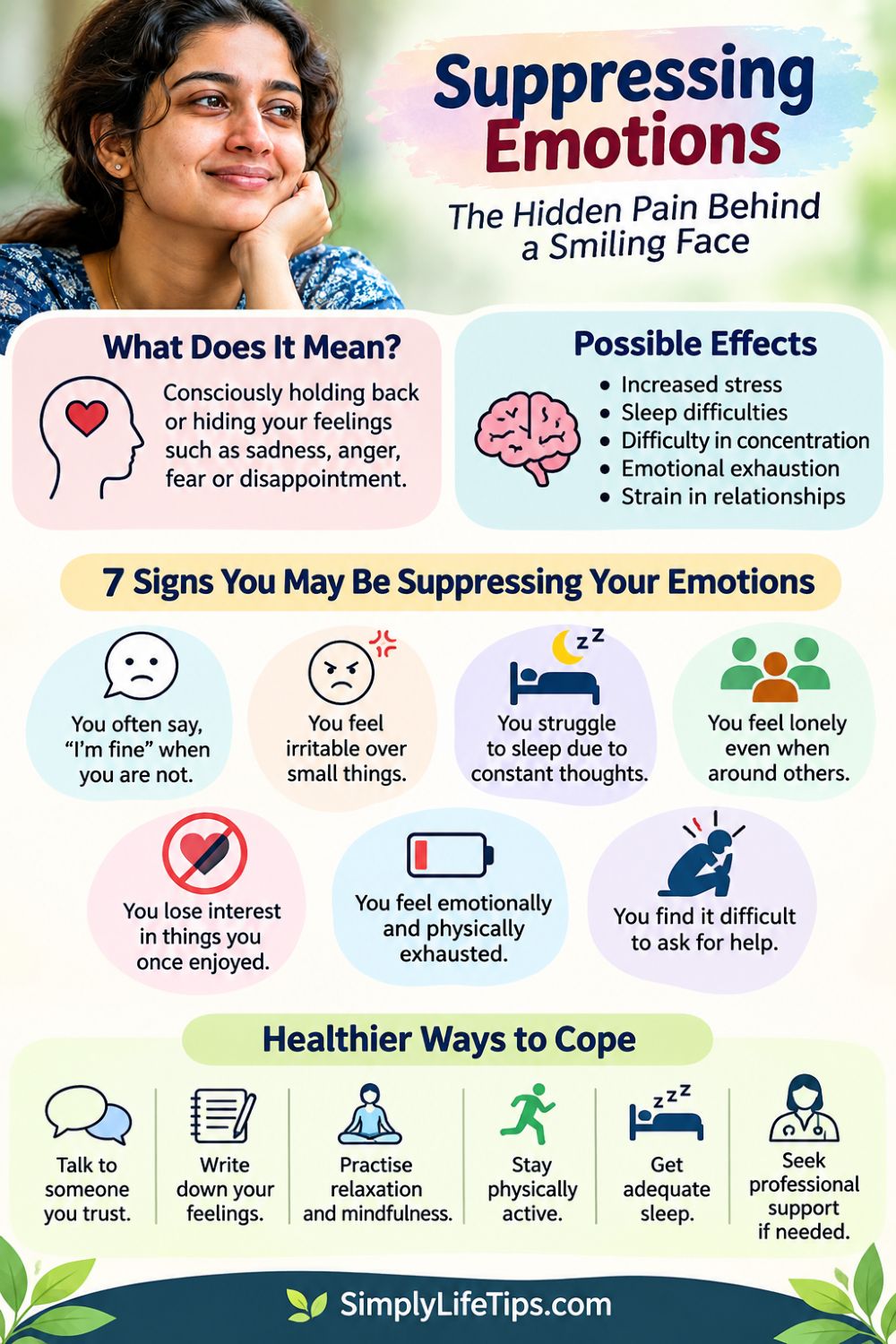
Remember that you do not have to handle every difficulty alone. Talk to someone you trust, express your feelings without judging yourself and seek professional support if emotional difficulties persist.
Causes and Consequences of Emotional Suppression
Why do some people find it so difficult to express their feelings?
The reasons often develop through personal experiences, family environments, relationships and social expectations.
Common causes
- Childhood experiences: People who grew up in environments where emotional expression was discouraged may struggle to discuss feelings as adults.
- Fear of rejection: Some avoid sharing personal difficulties because they worry about losing relationships or being misunderstood.
- Cultural expectations: Certain social expectations encourage people to hide vulnerability and maintain a strong public image.
- Unhealthy relationships: Repeated criticism, emotional neglect or lack of understanding can discourage honest communication.
- Workplace pressure: Employees may hide frustration or anxiety because they fear appearing unprofessional or incapable.
Research published in the journal Emotion found associations between habitual emotional suppression, greater depressed mood, fatigue and lower relationship satisfaction. Explore the research on emotional suppression and interpersonal well-being
Possible consequences
Habitual emotional suppression has been associated with several difficulties.
Emotional distress: Constantly hiding feelings may make it harder to process difficult experiences.
Relationship difficulties: People who rarely communicate their emotions may struggle to build emotional closeness and mutual understanding.
Reduced life satisfaction: Research has linked frequent emotional suppression with lower self-esteem, greater fatigue and reduced relationship satisfaction.
Stress-related difficulties: Some studies suggest that emotional suppression may intensify physiological responses during stressful situations.
These associations do not mean that every person who hides their emotions will experience these problems. Individual circumstances, available support and coping strategies all matter.
How to Stop Suppressing Your Emotions
Learning to express emotions does not mean sharing every personal thought with everyone. It means understanding your feelings and finding appropriate, healthy ways to manage them.
Learning how to release suppressed emotions in healthy ways begins with recognising your feelings, expressing them safely and seeking support when necessary.
Here are seven practical approaches.
1. Recognise and accept your feelings
The first step is acknowledging what you feel.
Instead of telling yourself that you should not be sad or angry, try identifying the emotion.
Ask yourself:
- What am I feeling right now?
- What situation triggered this feeling?
- Why is this experience affecting me?
- What do I need at this moment?
Recognising emotions helps you understand your needs instead of automatically ignoring them.
2. Talk to someone you trust
You do not have to carry every problem alone.
Choose someone who listens without immediately judging, criticising or offering unwanted advice.
You might begin with a simple statement:
“I have been feeling overwhelmed lately. I don’t necessarily need advice, but I would like someone to listen.”
A supportive conversation can help you feel understood and less isolated.
3. Learn to establish healthy boundaries
Some people constantly prioritise others while neglecting their own needs.
They agree to requests even when they are exhausted. They accept responsibilities they cannot reasonably manage.
Learning to say no when necessary is an important part of emotional well-being.
For example, if a friend asks you to take on another responsibility when you are already overwhelmed, you can politely explain that you cannot help at that moment.
Healthy boundaries protect your time, energy and emotional health.
4. Express your feelings through writing
Writing can help organise thoughts that seem confusing when kept inside your mind.
Consider maintaining a personal journal.
Write about:
- What made you happy today.
- What disappointed or upset you.
- What situations caused stress.
- What you wish you could communicate to someone.
- What you would like to change.
You do not need perfect sentences or polished language. Honest reflection is more important.
5. Practise relaxation and mindfulness
Relaxation techniques may help you manage everyday stress. Consider practising slow, controlled breathing, meditation and mindfulness exercises. Gentle stretching and spending time in nature can also provide opportunities to relax and reconnect with yourself. These activities are not substitutes for professional treatment when needed, but they may support emotional well-being.
6. Make physical health a priority
Mental and physical well-being are closely connected.
Regular physical activity, adequate sleep and balanced meals can support your ability to cope with everyday stress.
Try to establish a consistent sleep routine, take regular walks and make time for activities that help you relax.
Avoid using excessive caffeine or other unhealthy habits as a way of managing emotional difficulties.
7. Seek professional support when necessary
Sometimes, talking to friends or practising self-care may not be enough.
If persistent sadness, anxiety, emotional exhaustion or sleep difficulties interfere with your daily activities, consider consulting a psychologist, psychiatrist or another qualified mental health professional.
Psychotherapy can help people understand emotional patterns, develop healthier coping strategies and communicate their needs more effectively.
Seeking help is a positive step towards taking care of yourself.
A meta-analysis examining 48 studies explored the relationship between emotion regulation strategies and mental health outcomes. Read the meta-analysis on emotion regulation and mental health.
Why Listening to Others Matters More Than We Realise
We often ask our loved ones practical questions.
Have you eaten? Have you taken your medicine? How was your day? Did you finish your work?
But how often do we look into their eyes and genuinely ask:
“Are you really happy? Is something troubling you? Would you like to talk about it? I’m here to listen.”
Think about the person in your family who always supports everyone. The friend who is available whenever someone needs help. The colleague who smiles every day despite facing personal challenges.
They may also need someone who listens without judgement.
Sometimes, people do not need immediate solutions. They simply need a safe space where they can express their feelings without being criticised.
When someone shares an emotional struggle with you:
- Listen patiently without interrupting.
- Avoid comparing their problems with someone else’s.
- Do not dismiss their feelings by saying, “You are overthinking.”
- Ask what kind of support they need.
- Respect their privacy.
- Encourage professional help when appropriate.
A compassionate conversation can make a meaningful difference in someone’s life.
Conclusion
Suppressing emotions may sometimes seem like the easiest way to avoid conflict, protect relationships or prevent others from worrying. However, constantly hiding your feelings can make it difficult to recognise your emotional needs and seek the support you deserve.
Remember that being strong does not mean silently enduring every difficulty.
Real strength also means acknowledging your feelings, communicating honestly, establishing healthy boundaries and asking for help when necessary.
You do not have to pretend to be happy every day. You are allowed to feel sad, disappointed, frustrated or overwhelmed. These emotions are part of being human.
Those who become a shelter for everyone sometimes need a shelter of their own.
And sometimes, the greatest gift you can offer another person is not money or advice, but a listening ear, a compassionate heart and the reassurance that they are not alone.
Today, ask someone you care about: “Are you really okay? Is there anything troubling you? I’m here to listen.”
That simple question may open the door to a conversation someone has been waiting to have.
If you have been keeping everything inside, perhaps today is a good time to take the first step towards expressing how you feel.
Frequently Asked Questions About Suppressing Emotions
1. What does suppressing emotions mean?
Suppressing emotions means consciously hiding or controlling the outward expression of feelings such as sadness, anger, fear or disappointment. It may happen because of fear of judgement, social expectations or a desire to avoid conflict.
2. What happens when you suppress your emotions?
Habitually suppressing emotions may contribute to emotional distress, relationship difficulties and increased physiological responses during stressful situations. It may also make it harder to communicate personal needs and seek support.
3. How can you tell if you have suppressed emotions?
Possible signs include difficulty expressing feelings, frequent irritability, emotional exhaustion, loneliness, sleep difficulties and avoiding conversations about personal problems. These symptoms can have other causes, so they should not be treated as a diagnosis.
4. How can I stop suppressing my emotions?
Start by recognising and accepting your feelings. Talk to someone you trust, write down your thoughts, establish healthy boundaries and practise relaxation techniques. Consider professional support if emotional difficulties persist.
5. Is suppressing emotions the same as repressing emotions?
No. Emotional suppression generally involves consciously hiding emotional expressions, whereas repression traditionally refers to an unconscious process in which distressing thoughts or feelings are kept outside conscious awareness.
Disclaimer: This article is intended for general educational purposes and is not a substitute for professional medical or psychological advice. Consult a qualified healthcare professional if emotional difficulties persist or affect your daily life.

Mathukutty P. V. is the founder of Simply Life Tips. He shares practical advice and useful insights on personal growth, health, well-being, technology, and everyday living. His goal is to help readers build positive habits and make informed decisions. He believes in continuous learning and sharing knowledge to help people live healthier, happier, and more meaningful lives.