
The power of words can shape our relationships, reputation, opportunities, and peace of mind. Words may seem simple, but once spoken, they can have consequences that are difficult to reverse. A thoughtful sentence can encourage someone, heal emotional pain, and strengthen trust. On the other hand, careless words spoken in anger can damage relationships and create problems that last for years.
This is why your own mouth can sometimes become your biggest enemy. The problem is not speaking itself, but speaking without thinking, revealing what should remain private, or allowing anger and frustration to control what you say.
Why Your Mouth Can Become Your Biggest Enemy
We often think of an enemy as someone who deliberately wants to harm us. Yet, some of the greatest problems in life can begin with our own words. A careless comment can offend someone, an angry response can turn a small disagreement into a serious conflict, and revealing private information can destroy someone’s trust. In some situations, the consequences do not come from what another person did to us but from what we chose to say.
People sometimes speak quickly because they want to defend themselves, prove that they are right, or express frustration. However, the desire to win a conversation can lead to words that cause much greater damage than the original disagreement. Once spoken, those words may continue to affect a relationship long after the argument has ended.
The Power of Words
Words have the ability to influence emotions, relationships, decisions, and the way people perceive us. A few carefully chosen words can change someone’s mood, restore confidence, or provide comfort during a difficult period. At the same time, negative words can create fear, anger, embarrassment, or resentment.
The power of words is not limited to dramatic conversations. Everyday comments also matter. The way we speak to a spouse, child, parent, friend, colleague, or stranger gradually shapes our relationships and reputation. This is why responsible communication is an important part of personal development.
Words Can Heal
Kind and encouraging words can provide comfort when someone is experiencing disappointment, grief, failure, or loneliness. A sincere expression of support can remind a person that they are not alone and that their difficulties do not define their worth.
Sometimes, we underestimate the value of simple words. Saying “I understand,” “I am here for you,” or “You can get through this” may take only a few seconds, but such words can remain meaningful to someone for a long time. Compassionate communication can strengthen emotional connections and give people the confidence to keep moving forward.
Words Can Build Relationships
Strong relationships require more than spending time together. They also depend on respectful and meaningful communication. Expressing appreciation, acknowledging another person’s efforts, listening carefully, and communicating honestly can strengthen relationships over time.
People are more likely to feel valued when they are spoken to with respect. Even during disagreements, choosing calm and considerate language can prevent unnecessary damage. Healthy communication does not mean avoiding difficult conversations; it means handling those conversations without deliberately hurting the other person.
Strong communication is one part of developing healthy relationships. Building relationship skills such as communication, empathy, active listening, and respect can help create stronger connections.
Words Can Destroy Trust
Trust can take years to build but can be damaged in a very short time. A lie, cruel remark, false accusation, or private conversation repeated to someone else can make a person question whether they can trust us again.
The damage becomes even greater when hurtful words are repeated or when someone refuses to accept responsibility for what they said. Although sincere apologies and consistent actions can sometimes rebuild trust, the process may take considerable time. This is why preventing unnecessary damage through thoughtful speech is often better than trying to repair it later.
Communication has a major influence on how people understand one another and maintain trust. The power of communication in relationships becomes especially important when misunderstandings or emotional difficulties arise.
Think Before You Speak
Thinking before speaking is one of the simplest ways to use the power of words responsibly. A brief pause allows you to consider what you are about to say and how the other person might receive it.
Before speaking, ask yourself whether your words are true, necessary, respectful, and appropriate for the situation. Consider whether you are trying to solve a problem or simply trying to win an argument. This small habit can prevent many misunderstandings and reduce the number of things you later wish you had never said.
Thinking before speaking is one of the simplest ways to use the power of words responsibly. A brief pause allows you to consider what you are about to say and how the other person might receive it. Learn more about why thinking before you speak can improve everyday conversations and relationships.
Speaking in Anger Can Create Lasting Problems
Anger can temporarily affect our ability to communicate calmly. When emotions are intense, we may exaggerate, insult others, bring up old mistakes, or say things specifically intended to hurt. At the moment, such words may feel like an expression of our anger, but their consequences can remain long after the anger disappears.
This is particularly important during disagreements with family members, close friends, spouses, and colleagues. A heated argument may last only a few minutes, but the emotional impact of harsh words can last much longer. Learning to manage anger before responding is therefore an important part of responsible communication.
Angry Words Are Difficult to Take Back
An apology can help repair some of the damage caused by angry words, but it cannot completely erase what another person has heard or felt. People may forgive a hurtful statement while still remembering how it made them feel.
For this reason, it is better to control our words before they are spoken rather than depend on an apology afterward. Winning an argument may provide temporary satisfaction, but protecting an important relationship is often far more valuable.
Give Yourself Time to Calm Down
When emotions are running high, taking a short break can be wiser than continuing a difficult conversation. Walking away temporarily does not necessarily mean avoiding the problem. It can give both people enough time to calm down and think more clearly.
Once emotions have settled, the same issue can often be discussed more rationally. A calm conversation is much more likely to produce a useful solution than an argument driven by anger.
Not Every Thought Needs to Be Spoken
We all have thoughts and opinions that do not necessarily need to become words. Having an opinion does not create an obligation to express it, particularly when doing so would serve no useful purpose.
Being honest does not mean saying everything that comes into our minds. Good communication requires judgment, timing, empathy, and self-control. Sometimes, choosing not to comment is a sign of maturity rather than weakness.
Be Careful With Secrets and Private Information
Another important part of controlling our words is understanding what should remain private. When someone shares personal information with us, they may be trusting us with something they do not want others to know.
Repeating that information, even casually, can damage the relationship and make the person reluctant to trust us again. Before sharing something about another person, consider whether you have permission to disclose it and whether there is a legitimate reason for doing so.
Words Can Affect Your Reputation
People often form opinions about our character based on the way we communicate. Someone who regularly insults others, spreads gossip, exaggerates stories, or speaks negatively about people may eventually develop a reputation for being unreliable or difficult to trust.
On the other hand, people who communicate respectfully and thoughtfully often earn greater respect. Our words therefore influence more than individual conversations. Over time, they contribute to the reputation we build among our family, friends, colleagues, and wider community.
Silence Can Be a Form of Wisdom
Silence is not always the answer, but knowing when to remain silent is an important life skill. Sometimes an explanation can resolve a misunderstanding, while at other times continuing to talk only makes the situation worse.
A wise person does not speak simply because there is an opportunity to speak. They consider whether their words will add value. Choosing silence when emotions are high can prevent unnecessary conflict and give everyone an opportunity to think.
How to Use the Power of Words Wisely
Pause Before Responding
Developing the habit of pausing before responding can make a significant difference in difficult conversations. Even a few seconds can give you enough time to move from an emotional reaction to a thoughtful response.
This is especially useful when someone has criticized, insulted, or disappointed you. Instead of immediately responding with equally harsh words, take a moment to decide what outcome you actually want from the conversation.
Choose Kindness
Being honest does not require being cruel. There are situations in which difficult truths need to be communicated, but they can usually be expressed without unnecessary insults, humiliation, or hostility.
Kindness does not mean agreeing with everyone or avoiding disagreement. It means respecting another person’s dignity even when you have a different opinion. This approach can make difficult conversations more productive and less destructive.
Avoid Gossip
Gossip can seem harmless when it is presented as casual conversation, but repeating personal information or negative stories about others can cause considerable damage. Information may also become distorted as it passes from one person to another.
People who regularly participate in gossip can eventually lose the trust of others because people may wonder whether their own private conversations will also be repeated. Avoiding unnecessary gossip protects both other people’s privacy and your own reputation.
Keep Confidential Information Private
When someone tells you something in confidence, treat that information as a responsibility rather than an opportunity to share it. Not everything you know needs to become public knowledge.
Protecting another person’s privacy demonstrates reliability and integrity. People are more likely to trust someone who knows how to keep sensitive information confidential.
Apologize When You Make a Mistake
Everyone says things they later regret. The important issue is how we respond when we realize that our words have caused harm. A sincere apology should acknowledge what happened rather than simply trying to end the disagreement.
Taking responsibility and changing the way we communicate afterward can help rebuild damaged trust. An apology cannot erase the past, but it can demonstrate that we understand the impact of our words and are willing to do better.
Know When Silence Is Better
There are moments when speaking is necessary, but there are also moments when silence is the wiser choice. If continuing a conversation will only increase anger, humiliation, or confusion, waiting until everyone is calmer may produce a better result.
Silence should not be used to manipulate or punish another person. Instead, it can be a deliberate choice to avoid saying something that may cause unnecessary harm.
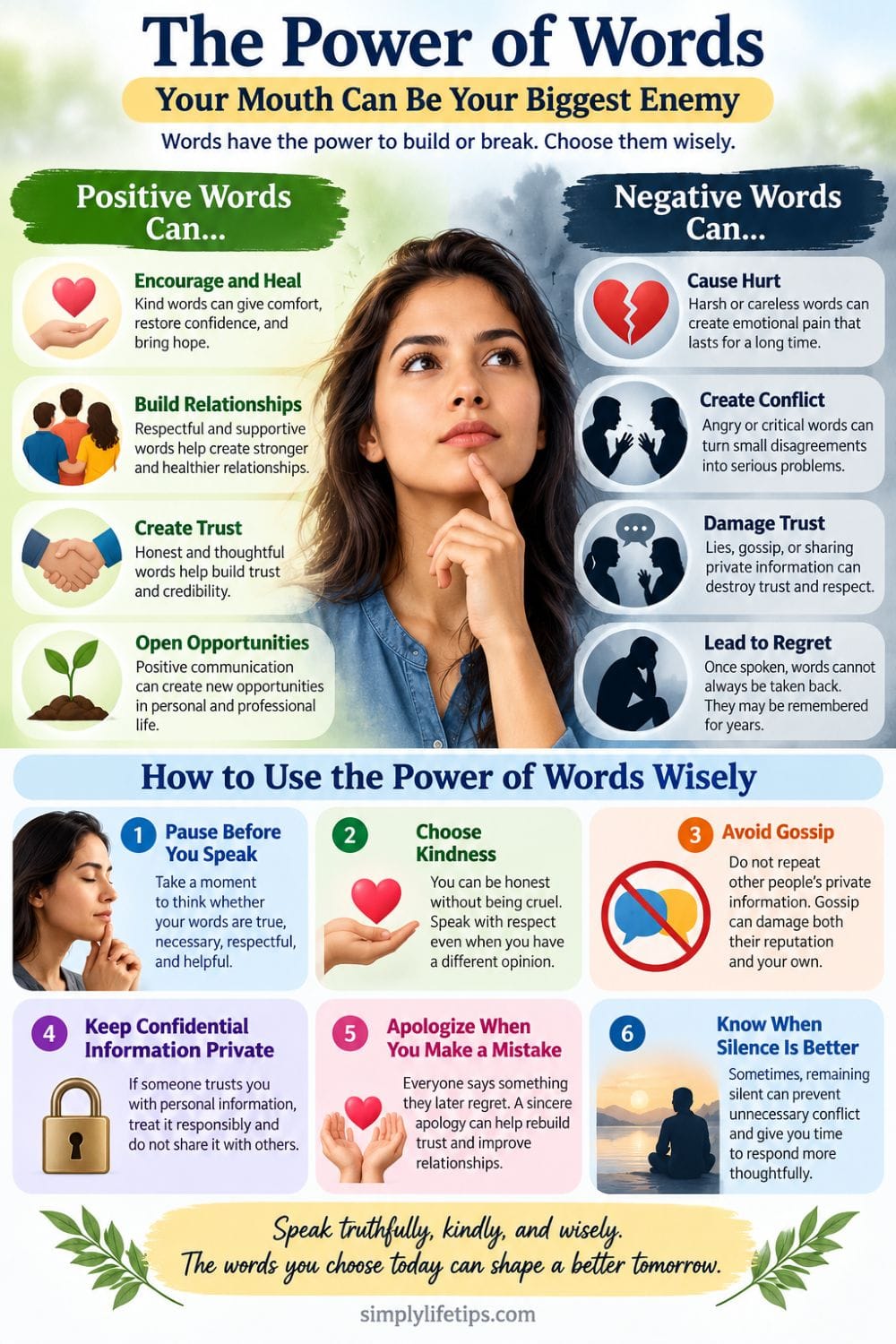
Words Cannot Always Be Taken Back
Once words leave our mouths, we cannot retrieve them. We may forget something we said after a few minutes, but the person who heard it may remember it for years. A careless sentence can become a lasting memory for someone else.
This does not mean we should be afraid to speak. It means we should understand the responsibility that comes with communication. The goal is not to speak less simply for the sake of speaking less, but to speak with greater awareness and purpose.
Conclusion
The power of words is greater than we often realize. Our words can encourage people, strengthen relationships, build trust, and create opportunities. They can also cause conflict, destroy confidence, damage reputations, and leave emotional wounds.
That is why your mouth can sometimes become your biggest enemy—not because speaking is harmful, but because words spoken without thought can create consequences that are difficult to undo.
Before you speak, pause and consider the effect your words may have. Speak truthfully, kindly, and wisely. When your words can make a situation better, speak. When they can only make the situation worse, silence may be the wiser choice.
The words you speak today can shape the relationships, reputation, and peace you experience tomorrow.
FAQs About the Power of Words
What is the power of words?
The power of words is the ability of language to influence people’s thoughts, feelings, relationships, and actions. Words can encourage, comfort, and strengthen trust, but they can also hurt, mislead, and create conflict.
Can your own words become your biggest enemy?
Yes. Careless words spoken in anger, gossip, lies, insults, or the unnecessary sharing of private information can damage relationships and reputation. In this way, our own words can sometimes create problems that an outside enemy could not.
Why is it important to think before speaking?
Thinking before speaking gives you time to consider whether your words are true, necessary, respectful, and helpful. A short pause can prevent misunderstandings, arguments, and words that you may later regret.
Can words damage relationships?
Yes. Hurtful criticism, insults, accusations, lies, and broken promises can weaken or destroy trust. Although relationships can sometimes recover through sincere apologies and changed behavior, preventing unnecessary harm is better than repairing it later.
Is silence sometimes better than speaking?
Yes. Silence can be wise when speaking would only increase anger, conflict, or misunderstanding. However, silence should not be used to avoid important conversations. The goal is to know when speaking can help and when waiting is wiser.

Mathukutty P V is a Blogger, YouTuber, and Content Writer and the founder of Simply Life Tips. After taking voluntary retirement in 2017, he embraced a free lifestyle focused on learning, personal growth, and sharing practical wisdom to help others live with more purpose and positivity.