
Good habits for children begin with simple lessons that help them understand themselves, make better choices, and develop self-discipline. As parents, we often teach children how to study, behave, and succeed, but some of the most important lessons are about learning to control their words, emotions, desires, habits, and time.
A child who learns these habits early can gradually develop greater self-control and responsibility. These lessons do not require complicated parenting techniques. They can be taught through everyday conversations, examples, and patient guidance.
5 Good Habits for Children
Here are five good habits for children that parents can encourage from an early age.
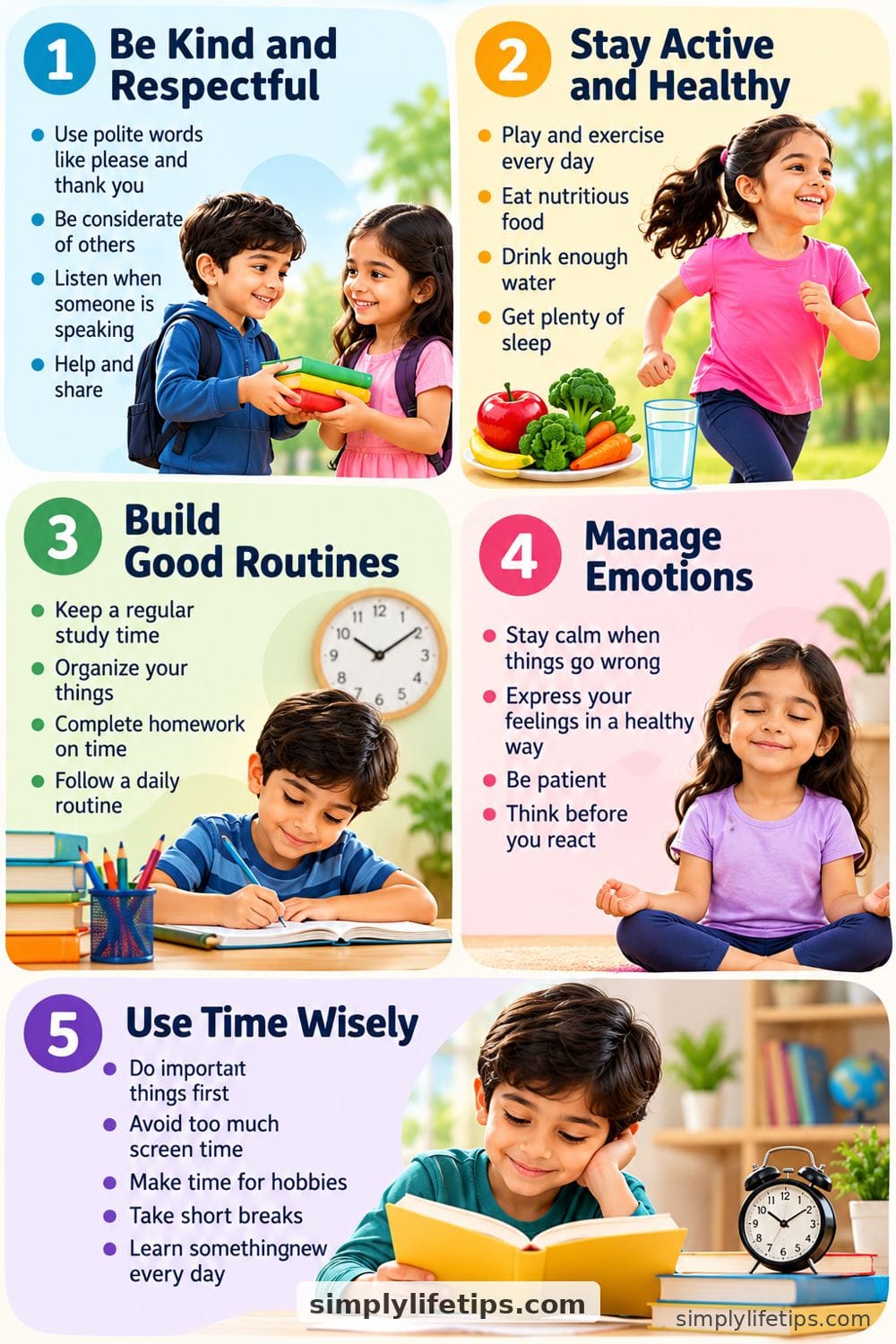
1. Develop the Habit of Thinking Before Speaking
Words are powerful. Children naturally say what they are thinking or feeling, but learning to pause before speaking is an important habit that can help them throughout life.
Teach Children to Choose Their Words Carefully
Not everything that comes into a child’s mind needs to be spoken immediately. Children can learn to ask themselves whether their words are necessary, kind, and appropriate before saying them.
For example, if a child becomes angry with a friend, they may immediately want to say something hurtful. Teaching them to pause, calm down, and think before speaking can prevent unnecessary arguments.
Parents can teach this habit by saying, “Before you speak, think about how your words might make the other person feel.”
Teach Children When to Speak and When to Stay Silent
Good communication is not only about speaking. It is also about knowing when to listen and when silence is more appropriate.
A child who learns to listen carefully can understand others better and avoid many misunderstandings. Over time, this simple habit can improve relationships at home, at school, and later in the workplace.
2. Develop the Habit of Managing Emotions
Children experience many emotions, including happiness, anger, jealousy, disappointment, fear, and frustration. Feeling these emotions is normal. The important lesson is learning how to respond to them appropriately.
Help Children Understand Their Feelings
Parents should not expect children to remain calm all the time. Instead, they can help children identify what they are feeling and understand why they feel that way.
For example, a child who loses a game may become angry or disappointed. Instead of immediately dismissing those feelings, a parent can help the child recognize the emotion and find a healthy way to deal with it.
Teach Children That Staying Calm Is a Strength
A child does not have to act on every emotion immediately. Taking a few deep breaths, walking away from an argument, talking to a trusted adult, or waiting before making a decision can help.
Staying calm does not mean ignoring emotions. It means learning not to let temporary emotions control important decisions.
3. Develop the Habit of Controlling Impulses and Desires
Children naturally want things. They may want another toy, more screen time, a particular food, or permission to do something immediately. Learning to wait and think before acting is an important part of growing up.
Teach Children to Think Before Acting
Sometimes children know that something is wrong but still do it because they want to satisfy an immediate desire.
Parents can encourage children to pause and ask themselves a simple question: “Is this the right thing to do?”
For example, a child may want to take something that belongs to someone else. Helping the child understand the difference between wanting something and having the right to take it teaches an important lesson about self-control.
Help Children Understand That Every Desire Does Not Need to Be Satisfied
Learning to wait is a valuable habit. Children who understand that they cannot always have what they want immediately can gradually develop patience and better decision-making skills.
Parents can practice this through everyday situations, such as waiting for a special occasion before buying something a child wants or finishing homework before using a device.
4. Develop Good Daily Habits
The habits children practice every day can gradually influence how they behave and approach life. Good habits are usually built through repetition rather than through one-time instructions.
Encourage Positive Habits Every Day
Simple habits such as keeping things organized, completing responsibilities, speaking honestly, showing respect, and following a reasonable routine can help children become more responsible.
Parents should remember that children learn not only from what they are told but also from what they see. When parents demonstrate honesty, patience, respect, and responsibility in everyday life, children have a real-life example to follow.
Help Children Recognize Unhelpful Habits
Some habits may seem harmless at first but can become difficult to change when repeated for years.
Laziness, lying, disrespectful behavior, and spending excessive time on screens can become unhelpful habits, so parents should also teach children how to use technology safely and responsibly. Parents can help children recognize these behaviors early and replace them with healthier routines.
The goal is not to expect perfection. The goal is to help children make small improvements consistently.
Learning to complete small responsibilities every day can help children become more dependable and independent.
5. Develop the Habit of Using Time Wisely
Time is one of the most valuable things children can learn to manage. Once time has passed, it cannot be recovered.
Teaching children to use their time wisely can help them balance schoolwork, play, family responsibilities, hobbies, rest, and other activities.
Teach Children to Prioritize Important Things
Children may naturally choose the most entertaining activity first. Parents can teach them to complete important responsibilities before moving on to leisure activities.
For example, a child might finish homework and organize their school bag before spending time on a video game or watching television.
This does not mean children should spend every minute being productive. Play and relaxation are also important. The lesson is to help children understand how to balance different activities.
Help Children Understand the Value of Time
A simple daily routine can help children understand how time is used. When children learn to plan their day, complete responsibilities, and avoid unnecessary distractions, they gradually develop better time-management habits.
These habits can become increasingly valuable as children grow older and face greater responsibilities.
Why Good Habits for Children Matter
Good habits for children are not about making them perfect or controlling every part of their lives. They are about giving children practical skills that can help them make thoughtful choices as they grow.
A child who learns to think before speaking may communicate better. A child who learns to manage emotions may handle disappointment more calmly. A child who learns to control impulses may make more thoughtful decisions. A child who develops positive daily habits may become more responsible. And a child who learns to value time may become better prepared for future responsibilities.
These habits develop gradually. Parents should focus on consistent guidance rather than expecting immediate results.
Parents Are the Most Important Role Models
Children learn many good habits by watching the adults around them.
If parents expect children to speak respectfully but frequently speak harshly themselves, the lesson becomes confusing. If parents tell children to control their screen time while constantly using their own phones, children may find it difficult to understand the message.
Therefore, one of the most effective ways to teach good habits for children is to demonstrate those habits at home.
Children do not need perfect parents. They need parents who are willing to model healthy behavior, explain their choices, and guide them patiently.
A Simple Conversation Every Parent Can Have
One mother explained these lessons to her child in a simple way.
“Learn to control your words. Not everything you think needs to be said immediately.”
“Learn to control your emotions. Life will not always go the way you want, but you can choose how you respond.”
“Learn to control your desires. Before doing something, stop and ask whether it is right.”
“Learn to control your habits. Small habits repeated every day can gradually shape your future.”
“Learn to control your time. Time that is lost cannot be brought back.”
The child listened carefully and replied, “I understand, Mom. I will always remember your words.”
That simple conversation contains an important parenting lesson: children need more than instructions about what to do. They also need guidance on how to control themselves when making choices.
Conclusion
Good habits for children are built through small lessons repeated consistently at home. Teaching children to think before speaking, manage emotions, control impulses, develop positive habits, and use time wisely can help them become more responsible and self-disciplined.
Parents cannot control every choice their children will make as they grow older. But they can give them the understanding and habits they need to make better choices for themselves.
Discipline protects the things that emotions can sometimes destroy. When children learn self-control alongside kindness, responsibility, and respect, they gain life skills that can serve them well for years to come.
FAQs About Good Habits for Children
What are the most important good habits for children?
Some important habits include thinking before speaking, managing emotions, controlling impulses, developing positive daily routines, and using time wisely.
How can parents teach good habits to children?
Parents can teach good habits through consistent guidance, simple explanations, routines, encouragement, and—most importantly—by demonstrating the behavior they expect from their children.
Why is self-control important for children?
Self-control can help children pause before reacting, manage difficult emotions, resist unhealthy impulses, and make more thoughtful decisions.
How can children develop better habits?
Children can develop better habits by practicing small positive behaviors consistently. Parents can make this easier by setting realistic expectations and providing regular encouragement.
At what age should parents start teaching good habits?
Parents can begin teaching simple habits from early childhood. The expectations should become more age-appropriate as children grow and become more independent.

Mathukutty P V is a Blogger, YouTuber, and Content Writer and the founder of Simply Life Tips. After taking voluntary retirement in 2017, he embraced a free lifestyle focused on learning, personal growth, and sharing practical wisdom to help others live with more purpose and positivity.



