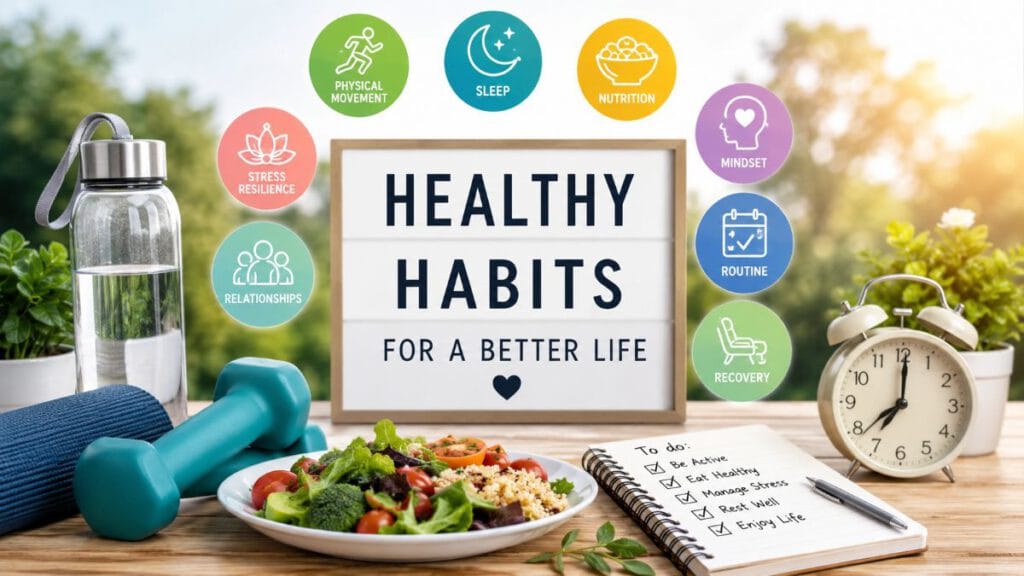
Healthy Habits for a Better Life are not about following a perfect routine or making dramatic changes overnight. They are about the small, consistent choices we make every day that support our physical health, mental well-being, relationships, energy, and overall quality of life.
Modern life can make it easy to put health at the bottom of the list. Work becomes busy, sleep gets sacrificed, meals become rushed, movement gets forgotten, and stress gradually becomes part of the routine. Over time, these patterns can leave us feeling tired, overwhelmed, and disconnected from the things that matter most.
The good news is that a healthier life does not require perfection. A few practical habits, repeated consistently, can make a meaningful difference.
8 Healthy Habits for a Better Life
A healthier and more balanced life is built through everyday choices. The habits you practice regularly can influence your energy, sleep, nutrition, stress levels, relationships, mindset, and ability to recover from the demands of daily life. You do not need to change everything at once. Start with small, realistic improvements and gradually build a routine that supports the life you want to live.
Healthy Habits for a Better Life work best when different areas of wellbeing support each other. Physical activity, quality sleep, nutritious food, stress management, relationships, mindset, routine, and recovery can all contribute to a healthier and more balanced everyday life.
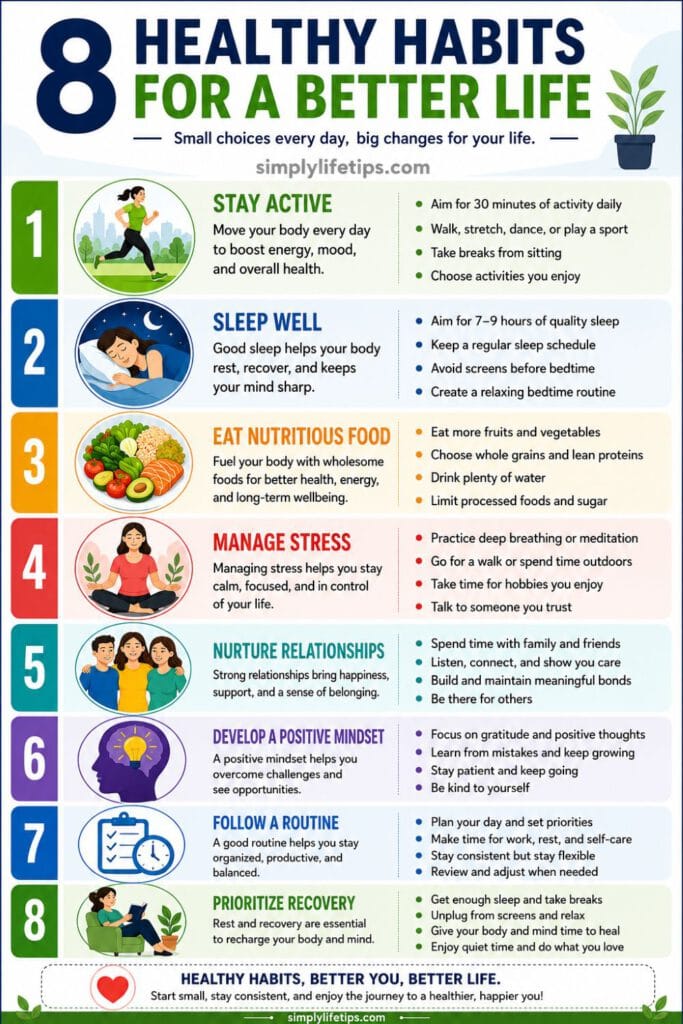
You do not need to master all eight habits at once. Start with the area that needs the most attention and build from there, one consistent step at a time.
1. Make Physical Movement a Regular Habit
Our bodies are designed to move, yet many people spend much of the day sitting at a desk, driving, working on a computer, or using a phone.
Regular physical movement can support energy, mobility, mood, and overall health. It does not always have to mean spending an hour at the gym.
Walking, cycling, swimming, stretching, dancing, gardening, or playing a sport can all become part of an active lifestyle.
The most useful form of exercise is often the one you will actually continue doing.
How to make movement easier
Choose an activity you enjoy and make it part of your weekly routine.
For example:
- Take a walk after dinner.
- Use the stairs when practical.
- Stretch after sitting for a long period.
- Walk while talking on the phone.
- Spend some time outdoors each day.
- Choose an enjoyable physical activity for the weekend.
The goal is not to become an athlete. The goal is to avoid allowing inactivity to become your normal routine.
2. Protect Your Sleep
Sleep is one of the most important healthy habits for a better life, yet it is often the first thing people sacrifice when life becomes busy.
A good night’s sleep gives the body and mind time to rest and recover. Poor sleep can leave you feeling tired, irritable, unfocused, and less prepared to deal with everyday challenges.
Adults generally need around 7 to 9 hours of sleep each night, although individual needs can vary.
Build a better sleep routine
Try to keep your sleeping and waking times reasonably consistent.
You can also:
- Reduce unnecessary screen time before bed.
- Keep your bedroom comfortable and quiet.
- Avoid making late-night work a regular habit.
- Give yourself time to wind down.
- Avoid relying on caffeine late in the day.
- Create a relaxing bedtime routine.
Treat sleep as part of your health routine rather than something you do only after everything else is finished.
If you want to improve your sleep routine, explore these practical ways to get better sleep at night with simple habits that can help you rest more comfortably.
3. Choose Nourishing Food
Food provides the energy and nutrients your body needs throughout the day. A healthy diet does not have to mean following a complicated meal plan.
Simple, balanced choices can go a long way.
Try to include a variety of vegetables, fruits, whole grains, protein-rich foods, and healthy fats in your meals. Drink enough water and avoid making highly processed foods, sugary drinks, or excessive alcohol a regular part of your routine.
Keep healthy eating practical
You do not need to completely change your diet overnight.
Start with simple improvements:
- Add more vegetables to your meals.
- Choose fruit instead of sweets sometimes.
- Include a source of protein in your meals.
- Drink more water.
- Prepare some meals at home.
- Pay attention to portion sizes.
- Enjoy treats occasionally without making them everyday habits.
Healthy eating is about the overall pattern of your diet, not one particular meal.
4. Build Stress Resilience
Stress is a normal part of life. The problem begins when stress becomes constant, and you never allow yourself to recover.
Stress resilience does not mean never feeling stressed. It means developing healthier ways to respond when life becomes difficult.
Walking, exercise, breathing exercises, hobbies, time outdoors, relaxation, and talking with someone you trust can all help you manage stressful periods.
Building stress resilience is an important part of a healthier life, and you can learn practical ways to manage pressure and recover from difficult situations in our guide to stress resilience
Find your healthy way to release stress
Different approaches work for different people.
You might find relief through:
- A quiet walk.
- Exercise.
- Deep breathing.
- Listening to music.
- Reading.
- Gardening.
- Spending time with people you care about.
- Writing down your thoughts.
- Taking a short break from technology.
Do not wait until stress becomes overwhelming before giving yourself time to recover.
5. Invest in Relationships
A better life is not measured only by money, achievements, or productivity.
Relationships matter.
Family members, friends, partners, colleagues, and other supportive people can provide connection, encouragement, laughter, perspective, and companionship.
In a busy life, relationships can easily become something we plan to maintain “later.” Unfortunately, later can keep getting postponed.
Make time for people who matter
You do not need a huge social circle.
Focus on meaningful connections.
Call someone you have not spoken to for a while. Have a meal together without constantly checking your phone. Listen when someone is talking. Celebrate important moments. Be available when someone needs support.
Small acts of connection can strengthen relationships over time.
6. Develop a Healthy Mindset
Your mindset influences how you respond to everyday challenges.
A difficult situation can feel even worse when your thoughts immediately move toward the worst possible outcome. Learning to pause and look at a problem from another perspective can help you respond more calmly.
This does not mean pretending that problems do not exist. It means separating the problem itself from the frightening story your mind may create around it.
A healthy mindset can change the way you approach challenges, and these practical steps to build a success mindset can help you develop more positive and purposeful thinking.
Practice healthier thinking
When something goes wrong, ask yourself:
- What is actually happening?
- What part of this situation can I control?
- Am I assuming the worst?
- What can I learn from this experience?
- What is one useful step I can take next?
Talking with someone you trust can also help you see a situation from a different perspective.
A healthy mindset is not about being positive all the time. It is about developing a more balanced way of dealing with both good and difficult experiences.
7. Create a Supportive Routine
A good routine can reduce unnecessary decisions and help you protect time for the things that matter.
Without some structure, the day can easily become a collection of interruptions. Work expands, screen time increases, meals become irregular, and important personal activities get pushed aside.
A simple routine can create balance.
Build your routine around what matters
Your routine does not need to be complicated.
Consider setting aside regular time for:
- Sleep.
- Movement.
- Healthy meals.
- Work or study.
- Relationships.
- Relaxation.
- Hobbies.
- Personal reflection.
Leave some flexibility as well. Life does not always follow a schedule, and a healthy routine should support your life rather than control it.
8. Make Recovery Part of Your Life
Rest is not laziness.
Your body and mind need periods of recovery, especially after physical activity, demanding work, emotional stress, or long periods of concentration.
Many people continue pushing themselves until they are completely exhausted and then treat rest as a reward. A healthier approach is to make recovery part of the routine.
Permit yourself to slow down
Recovery can include:
- Getting enough sleep.
- Taking short breaks during demanding days.
- Spending time in nature.
- Enjoying a quiet hobby.
- Taking a day away from unnecessary work.
- Disconnecting from technology for a while.
- Spending relaxed time with loved ones.
You do not have to be productive every minute of the day.
Sometimes doing less is exactly what allows you to return with more energy.
How to Turn Healthy Habits Into a Lifestyle?
Knowing what to do is easier than doing it consistently.
The biggest mistake is trying to change everything at once.
Instead, choose one or two habits and make them manageable.
For example, if you rarely exercise, do not immediately create an unrealistic seven-day workout schedule. Start with a 20-minute walk several times a week.
If your sleep schedule is inconsistent, begin by creating a regular bedtime.
If your diet needs improvement, start by adding one nutritious food to your daily meals rather than trying to completely redesign your diet overnight.
Small improvements can become larger changes when they are repeated consistently.
The Power of Consistency
Healthy habits work best when they become part of everyday life.
Missing one workout does not mean you have failed. Having an unhealthy meal does not cancel all your healthy choices. Going to bed late once does not destroy your sleep routine.
The important question is what you do most of the time.
Think of healthy living as a long-term process rather than a short-term challenge.
A simple walk today, a nutritious meal tomorrow, an extra hour of sleep, a meaningful conversation, or a few minutes of quiet time may seem insignificant on its own. But repeated over weeks, months, and years, these choices can shape your quality of life.
Building Healthy Habits for a Better Life is a long-term process rather than a short-term challenge. Small actions become more powerful when you repeat them consistently.
Healthy habits become much easier to maintain when you understand the power of consistency and make small, positive actions part of your daily routine.
A Simple Healthy Habits Framework
You can remember the eight areas with a simple framework:
Move your body.
Sleep enough.
Nourish yourself well.
Manage stress.
Connect with people.
Strengthen your mindset.
Structure your routine.
Recover regularly.
None of these habits needs to be perfect. The goal is to create a lifestyle that supports your health while still leaving room for work, family, enjoyment, and the unexpected events that make life interesting.
Conclusion
Healthy Habits for a Better Life do not require a perfect lifestyle. They begin with practical choices that you can realistically maintain.
Move your body regularly. Protect your sleep. Choose nourishing foods. Learn healthier ways to handle stress. Make time for meaningful relationships. Develop a balanced mindset. Create a supportive routine. And remember that recovery is part of a healthy life, not something you earn only after exhaustion.
You do not have to change your entire life today.
Start with one healthy habit, make it consistent, and then build from there.
A better life is often created through ordinary choices repeated every day.
FAQs – Healthy Habits for a Better Life
What are the most important healthy habits for a better life?
The most important Healthy Habits for a Better Life include regular physical activity, sufficient sleep, nutritious food, stress management, meaningful relationships, a healthy mindset, a supportive routine, and adequate recovery.
How can I start developing healthy habits for a better life?
Start small. Choose one habit that feels realistic, such as taking a daily walk, drinking more water, or establishing a consistent bedtime. Once it becomes easier, gradually add another habit.
Do healthy habits need to be followed every day?
Not necessarily. Consistency over time is more important than perfection every day. Missing a habit occasionally is normal. The goal is to return to your routine rather than give up.
How long does it take to build a healthy habit?
No fixed number of days applies to everyone. Some habits become easier relatively quickly, while others take longer. Repetition, realistic goals, and a supportive environment can make habits easier to maintain.
Can small lifestyle changes really improve quality of life?
Yes. Small changes can influence daily energy, sleep, activity, nutrition, stress management, and relationships. When simple improvements are maintained over time, they can contribute to a healthier and more balanced lifestyle.

Mathukutty P V is a Blogger, YouTuber, and Content Writer and the founder of Simply Life Tips. After taking voluntary retirement in 2017, he embraced a free lifestyle focused on learning, personal growth, and sharing practical wisdom to help others live with more purpose and positivity.