
Laughter is often described as the best medicine—and for good reason. Beyond being a natural response to humor, laughter plays a vital role in maintaining physical health, supporting emotional well-being, and strengthening social connections. While a good laugh may seem like a simple moment of joy, it triggers a series of remarkable changes throughout the body that can positively influence your health in ways many people never realize.
Modern life is filled with responsibilities, deadlines, financial pressures, and countless daily stressors. As adults, we often become so focused on work and obligations that laughter gradually becomes less frequent. Children, on the other hand, laugh hundreds of times each day because they naturally find joy in simple experiences. This contrast highlights an important truth: laughter is not merely entertainment—it’s an essential part of healthy living.
Scientific research has shown that laughter activates multiple areas of the brain while releasing feel-good chemicals such as endorphins and dopamine. At the same time, it lowers stress hormones like cortisol, relaxes muscles, improves circulation, and encourages deeper breathing. These physiological changes contribute to better mental health, stronger immunity, healthier hearts, improved relationships, and a greater sense of overall well-being.
The benefits of laughter extend far beyond the few seconds you spend laughing. A joyful moment can brighten your mood for hours, ease tension after a stressful day, strengthen friendships, improve workplace morale, and even help you cope with difficult situations more effectively. Healthcare professionals increasingly recognize laughter as a valuable complement to healthy lifestyle practices, with approaches such as laughter therapy and laughter yoga becoming popular worldwide.
Of course, laughter is not a cure for serious illnesses or a replacement for professional medical treatment. However, when combined with regular exercise, nutritious eating, quality sleep, and positive social interactions, it becomes a powerful tool for supporting both physical and mental health.
Whether you enjoy sharing jokes with friends, watching comedy movies, playing with children, or simply smiling more often, every genuine laugh contributes to a healthier and happier life.
In this comprehensive guide, you’ll discover the science behind laughter, explore its many physical and psychological benefits, learn practical ways to laugh more often, and understand why experts continue to encourage laughter as an important part of overall wellness.
What Is Laughter?

Laughter is a natural human response to humor, happiness, surprise, relief, or social interaction. It is a complex behavior involving the brain, respiratory system, facial muscles, vocal cords, and even the cardiovascular system. Although it often occurs spontaneously, laughter can also be intentional, as seen in practices like laughter yoga and therapeutic laughter exercises.
Unlike a simple smile, laughter involves rhythmic contractions of the diaphragm and chest muscles, producing characteristic vocal sounds while activating numerous regions of the brain. These coordinated responses explain why laughter is often described as a full-body experience rather than just an emotional reaction.
Scientists believe laughter evolved as a form of social communication long before humans developed complex language. It helps people express friendliness, strengthen relationships, reduce tension, and signal trust within groups. Even today, we laugh far more frequently with other people than when we are alone, highlighting its importance in building and maintaining social bonds.
Laughter can be triggered by many different situations, including:
- Funny stories or jokes
- Comedy films and television shows
- Playful conversations
- Shared memories
- Tickling
- Relief after stressful situations
- Unexpected but harmless events
- Positive interactions with children and pets
Interestingly, laughter isn’t always caused by something humorous. People sometimes laugh when they feel nervous, embarrassed, surprised, or relieved. These different forms of laughter demonstrate that it serves emotional and social purposes beyond simply responding to comedy.
Researchers generally recognize several common types of laughter:
Genuine (Spontaneous) Laughter
This occurs naturally when something genuinely amuses you. It is usually associated with positive emotions and produces the greatest physiological benefits because it fully engages the brain’s emotional centers.
Social Laughter
People often laugh during conversations to express friendliness, agreement, or encouragement, even if nothing particularly funny has happened. Social laughter strengthens relationships and helps create a relaxed atmosphere.
Nervous Laughter
Some individuals laugh during uncomfortable or stressful situations as a coping mechanism. Although it may seem unusual, this type of laughter can help reduce emotional tension.
Intentional Laughter
Practices such as laughter yoga encourage people to laugh voluntarily. Research suggests that the body often responds similarly to both genuine and intentional laughter, making this an effective wellness technique for many people.
Regardless of how it begins, laughter activates multiple systems throughout the body. That is why the benefits of laughter extend beyond happiness, influencing mental and physical health and social well-being.
The Science Behind Laughter
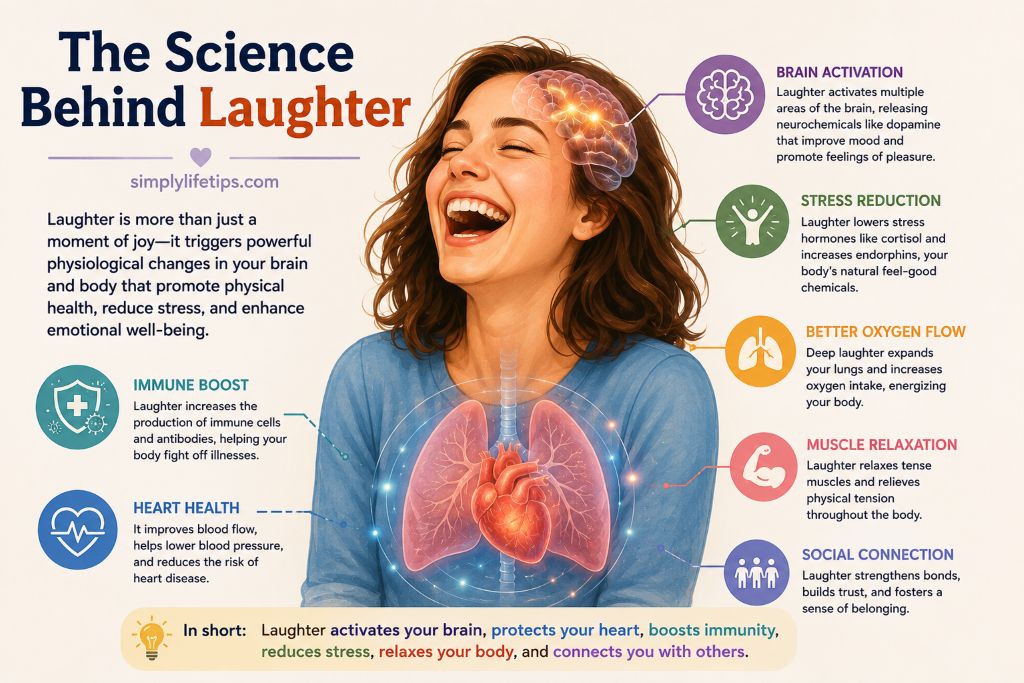
Laughter feels effortless, but it is actually one of the most complex behaviors the human body performs. A single laugh activates numerous areas of the brain while coordinating the muscles of the face, chest, abdomen, and respiratory system. Within seconds, your body experiences a cascade of positive biological changes that explain why laughter has earned its reputation as a natural wellness booster.
When something makes you laugh, your brain first processes the information in regions responsible for language, memory, emotion, and decision-making. Once the brain recognizes humor, it sends signals that trigger laughter through coordinated muscle movements and breathing patterns.
At the same time, your brain begins releasing several important neurotransmitters.
Endorphins: Your Body’s Natural Pain Relievers
One of the most significant benefits of laughter is the release of endorphins. These natural chemicals help reduce discomfort, promote relaxation, and create feelings of pleasure and well-being.
Endorphins are often released during exercise, but laughter can produce similar effects. This explains why people frequently feel lighter, happier, and more relaxed after sharing a genuine laugh.
Dopamine: The Reward Chemical
Laughter also stimulates dopamine, a neurotransmitter involved in motivation, learning, and reward. Dopamine contributes to the enjoyable feeling that follows laughter and encourages the brain to repeat positive experiences.
Serotonin: Supporting Emotional Balance
Although many factors influence serotonin levels, positive social interactions—including shared laughter—can support emotional stability and improve overall mood.
Cortisol and Stress Hormones
Stress causes the body to produce cortisol and adrenaline. While these hormones are essential during emergencies, chronically elevated levels can negatively affect sleep, immunity, digestion, and cardiovascular health.
One reason laughter is so valuable is that it helps reduce the body’s stress response, allowing both the mind and muscles to relax.
Improved Oxygen Intake
A hearty laugh increases breathing depth, allowing more oxygen to enter the lungs. This improved oxygen supply benefits the brain and muscles while creating an energizing effect.
Muscle Relaxation
During laughter, dozens of muscles throughout the face, shoulders, chest, and abdomen contract and then relax. Many people notice a pleasant sense of physical relaxation after prolonged laughter because muscle tension decreases naturally.
Cardiovascular Benefits
Laughter temporarily increases heart rate and blood circulation, similar to mild aerobic exercise. Afterward, blood vessels relax, which may support healthy circulation and contribute to cardiovascular wellness.
Immune System Support
Research suggests positive emotions and reduced stress may help the immune system function more effectively. While laughter is not a treatment for illness, maintaining a positive emotional state may support overall immune health.
Why the Science Matters?
Understanding what happens inside the body helps explain why the benefits of laughter are so wide-ranging. A simple laugh influences brain chemistry, hormone levels, breathing, circulation, muscle tension, and emotional well-being simultaneously.
Mental Health Benefits of Laughter

Mental health is just as important as physical health, yet it is often overlooked in our busy lives. Daily pressures from work, family responsibilities, financial concerns, and constant digital distractions can leave us feeling overwhelmed. While laughter cannot eliminate life’s challenges, it can significantly improve how we respond to them.
One of the greatest benefits of laughter is its ability to support emotional well-being. Scientific studies have shown that laughter influences brain chemistry, reduces stress, improves mood, and helps people develop greater emotional resilience. These positive effects make laughter a valuable part of a healthy lifestyle and an effective complement to other stress-management techniques.
1. Reduces Stress Naturally
Stress is the body’s natural response to demanding situations. Short-term stress can help you stay alert, but long-term stress can negatively affect both your physical and mental health.
One of the most well-known benefits of laughter is its ability to interrupt the body’s stress response. As explained in the previous section, laughter lowers stress hormones such as cortisol and adrenaline while encouraging muscle relaxation.
After a genuine laugh, many people notice that they feel calmer, lighter, and more optimistic. Problems may not disappear, but they often seem more manageable because laughter changes your emotional perspective.
Simple activities that encourage laughter include:
- Watching a favorite comedy
- Spending time with humorous friends
- Playing with children
- Sharing funny memories
- Reading humorous books
These enjoyable moments provide the mind with a healthy break from ongoing worries.
2. Improves Mood
Have you ever noticed how difficult it is to stay upset after laughing wholeheartedly?
Laughter stimulates the release of feel-good brain chemicals, helping create positive emotions that can last beyond the laughing itself. Even a few minutes of genuine laughter can brighten your outlook and make difficult situations feel less overwhelming.
People who regularly include humor in their lives often report:
- Greater happiness
- More optimism
- Better emotional balance
- Increased motivation
- Higher life satisfaction
While laughter isn’t a cure for sadness, it can become an important habit that supports emotional wellness over time.
3. Helps Build Emotional Resilience
Life is filled with disappointments, unexpected setbacks, and stressful situations. Emotional resilience is the ability to recover from these challenges without becoming overwhelmed.
Laughter encourages flexible thinking. Instead of focusing only on problems, it helps the brain recognize that difficult situations often have multiple perspectives.
People who maintain a healthy sense of humor frequently find it easier to:
- Adapt to change
- Recover after setbacks
- Handle criticism constructively
- Solve problems creatively
- Maintain hope during difficult times
This doesn’t mean ignoring problems. Instead, laughter helps create enough emotional distance to think more clearly and respond more effectively.
4. Supports Anxiety Management
Occasional anxiety is a normal part of life. However, persistent anxiety can affect sleep, concentration, relationships, and overall well-being.
Although laughter is not a treatment for anxiety disorders, it can temporarily reduce feelings of tension and promote relaxation.
Laughing may help by:
- Relaxing tight muscles
- Slowing stress responses
- Encouraging deeper breathing
- Shifting attention away from anxious thoughts
- Creating positive social interactions
For people receiving professional care for anxiety, laughter can serve as a helpful complementary wellness practice alongside recommended treatments.
5. May Help People Living with Depression
Depression is a serious medical condition that requires professional evaluation and treatment. Laughter should never be viewed as a replacement for therapy, medication, or other evidence-based care.
However, enjoyable social experiences—including shared laughter—may help improve daily quality of life by:
- Encouraging social interaction
- Reducing feelings of isolation
- Creating positive experiences
- Supporting emotional connection
- Providing temporary relief from persistent negative thoughts
Healthcare providers sometimes incorporate humor-based activities into wellness programs because positive emotions can support overall recovery when used alongside appropriate treatment.
6. Encourages Positive Thinking
One of the lesser-known benefits of laughter is that it can shift your focus from problems toward possibilities.
When people laugh together, they often become:
- More hopeful
- More creative
- Better at finding solutions
- More willing to cooperate
- More open to new ideas
This positive mindset doesn’t ignore challenges—it simply helps prevent negative thinking from dominating every situation.
7. Improves Social Confidence
Many people feel nervous when meeting new people or speaking in groups.
Appropriate humor can make conversations feel more relaxed and enjoyable. Shared laughter helps break the ice, making social interactions feel more comfortable.
People who laugh with others often experience:
- Stronger friendships
- Better communication
- Increased confidence
- Reduced social tension
- Greater trust
Because laughter is contagious, even a simple smile or lighthearted comment can create a welcoming atmosphere.
8. Helps Prevent Emotional Burnout
Modern lifestyles often involve long working hours, constant notifications, and increasing responsibilities. Without opportunities to relax, emotional exhaustion can gradually develop.
Regular moments of laughter provide a healthy mental reset by:
- Interrupting negative thought patterns
- Reducing emotional fatigue
- Improving energy levels
- Increasing motivation
- Supporting work-life balance
Even a few minutes of laughter during a busy day can help you return to tasks with renewed focus and a more positive attitude.
Small Daily Habits That Encourage More Laughter
You don’t have to wait for something hilarious to happen. You can intentionally create more opportunities to laugh by:
- Watching a short comedy video during a break
- Spending time with cheerful people
- Playing games with family or friends
- Following humorous but positive content creators
- Reading funny books or comics
- Keeping a collection of favorite jokes or amusing memories
- Learning to laugh at harmless mistakes instead of becoming frustrated
Over time, these small habits can make laughter a natural part of your daily routine.
Laughter Is Good for Your Mind
The benefits of laughter extend far beyond making us smile. Laughter helps reduce stress, improves mood, strengthens emotional resilience, encourages social connection, and supports overall mental well-being. While it isn’t a cure for mental health conditions, it is a simple, accessible habit that can complement a healthy lifestyle and help people navigate life’s challenges with greater optimism.
Physical Health Benefits of Laughter
Laughter is often associated with happiness and emotional well-being, but its effects extend far beyond improving your mood. Every genuine laugh triggers a series of positive physiological responses that benefit multiple systems throughout the body. From supporting heart health to relaxing muscles, the benefits of laughter demonstrate how closely the mind and body work together.
While laughter should never replace healthy eating, regular exercise, adequate sleep, or medical treatment, it is a valuable addition to a healthy lifestyle. Even a few minutes of laughter each day can contribute to better physical well-being over time.
1. Supports Heart Health
Your heart responds positively when you laugh. During laughter, your heart rate temporarily increases, causing blood to circulate more efficiently throughout the body. Once the laughter subsides, your heart rate gradually returns to normal, leaving many people feeling relaxed and refreshed.
Researchers suggest that regular laughter may support cardiovascular health by encouraging blood vessels to relax and improving blood flow. Good circulation helps deliver oxygen and nutrients to tissues while reducing unnecessary strain on the heart.
Although laughter alone cannot prevent heart disease, combining it with a healthy lifestyle may contribute to long-term cardiovascular wellness.
Healthy habits that work well alongside laughter include:
- Regular physical activity
- Eating a balanced diet
- Managing stress
- Getting enough sleep
- Avoiding tobacco products
- Maintaining a healthy weight
2. Improves Blood Circulation
Healthy circulation is essential for every organ in the body. Blood carries oxygen, nutrients, hormones, and immune cells where they are needed most.
One of the lesser-known benefits of laughter is its ability to encourage healthy blood flow. As blood vessels relax after laughter, circulation improves, allowing oxygen-rich blood to move more efficiently throughout the body.
Good circulation supports:
- Brain function
- Heart health
- Muscle performance
- Healthy skin
- Faster recovery after physical activity
When combined with regular exercise, laughter can become another simple way to support overall circulatory health.
3. Boosts the Immune System
The immune system protects the body against bacteria, viruses, and other harmful microorganisms. While many factors influence immune health, emotional well-being also plays an important role.
Chronic stress may weaken immune function over time. Because laughter helps reduce stress, researchers believe it may indirectly support a healthier immune response.
Some studies suggest that positive emotions associated with laughter may influence certain immune cells and antibodies, although more research is needed to understand the full relationship.
The best approach is to think of laughter as one piece of a healthy lifestyle that also includes:
- Nutritious food
- Regular exercise
- Good sleep
- Stress management
- Vaccinations and preventive healthcare
4. Relieves Muscle Tension
Have you ever noticed how relaxed you feel after laughing continuously for several minutes?
During laughter, muscles throughout the face, shoulders, chest, abdomen, and diaphragm contract rhythmically. Afterward, these muscles naturally relax, reducing physical tension.
This relaxation can be especially helpful after:
- Long workdays
- Intense concentration
- Emotional stress
- Extended computer use
Many people describe feeling physically lighter after sharing a genuine laugh with friends or family.
5. Acts as a Natural Pain Reliever
Another important benefit of laughter is its ability to increase pain tolerance.
As discussed in the science section, laughter stimulates the release of endorphins—natural chemicals that help reduce the perception of pain while promoting feelings of comfort and well-being.
For this reason, hospitals, rehabilitation centers, and support groups sometimes incorporate humor-based activities into patient care to improve comfort and emotional well-being.
However, laughter should always be viewed as a complementary wellness strategy rather than a replacement for professional medical treatment or prescribed pain management.
6. Encourages Deeper Breathing
A hearty laugh naturally changes your breathing pattern.
During laughter, you inhale more deeply and exhale more forcefully than during normal breathing. This process allows fresh oxygen to enter the lungs while helping remove carbon dioxide more efficiently.
Improved oxygen intake benefits:
- Brain function
- Muscle performance
- Energy levels
- Mental alertness
The deep breathing associated with laughter is one reason many people feel refreshed afterward.
7. Helps You Relax
Modern lifestyles often keep the body in a constant state of alertness. Work deadlines, family responsibilities, and digital distractions make it difficult to fully relax.
Laughter acts as a natural reset.
After laughing, many people experience:
- Slower breathing
- Reduced muscle tension
- A calmer mind
- Improved emotional balance
These relaxation effects may last well beyond the laughter itself, helping people cope more effectively with daily challenges.
8. May Improve Sleep Quality
Quality sleep is essential for physical recovery, emotional health, and cognitive performance.
People who regularly laugh and maintain positive social interactions often report feeling more relaxed before bedtime. Reduced stress levels may make it easier to fall asleep and experience more restful sleep.
Although laughter alone cannot treat sleep disorders, incorporating enjoyable activities into your evening routine may contribute to better sleep hygiene.
Simple bedtime habits include:
- Watching a lighthearted comedy
- Reading humorous books
- Spending enjoyable time with loved ones
- Avoiding stressful conversations before bed
9. Increases Energy Levels
Stress and emotional exhaustion can leave you feeling physically drained.
Laughter provides a temporary energy boost by improving oxygen intake, increasing circulation, and creating positive emotional experiences.
Many people notice they feel:
- More alert
- More motivated
- Less mentally fatigued
- Ready to return to work with renewed focus
This explains why workplaces that encourage healthy humor often report improved employee morale and productivity.
10. Supports Healthy Aging
Maintaining physical and emotional health becomes increasingly important with age.
Laughter helps older adults remain socially connected while encouraging movement, conversation, and positive emotional experiences.
Regular laughter may support healthy aging by encouraging:
- Better emotional well-being
- Stronger social relationships
- Reduced feelings of loneliness
- Continued mental engagement
- Greater enjoyment of daily life
Community programs, senior centers, and laughter groups often include humor-based activities because they promote both physical activity and social interaction.
Laughter Is Good for the Whole Body
The benefits of laughter reach nearly every system in the body. From supporting heart health and circulation to relaxing muscles, encouraging deeper breathing, increasing pain tolerance, and promoting better sleep, laughter is a simple yet powerful habit that contributes to overall physical wellness.
Although laughter should never replace medical care or healthy lifestyle choices, it complements them remarkably well. Making time to laugh each day is one of the easiest—and most enjoyable—ways to support your long-term health.
Laughter Strengthens Relationships and Social Connections
Laughter is more than a personal expression of happiness—it is one of the most powerful ways people connect. Think about some of your happiest memories, and you’ll likely remember laughing with family, friends, classmates, or colleagues. Shared laughter creates positive experiences that strengthen relationships and make social interactions more enjoyable.
One of the most valuable benefits of laughter is its ability to build trust, improve communication, and foster a sense of belonging. It acts as a universal language that brings people together regardless of age, culture, or background.
1. Strengthens Family Bonds
Families who laugh together often develop stronger emotional connections. Whether it’s sharing funny stories at dinner, playing games, or watching a comedy movie, laughter creates joyful memories that family members cherish for years.
Regular laughter within families can:
- Improve communication
- Reduce household tension
- Encourage open conversations
- Strengthen emotional security
- Create lasting positive memories
Children especially benefit from growing up in an environment where laughter and play are part of everyday life.
2. Builds Stronger Friendships
Friendships thrive on shared experiences, and laughter is one of the easiest ways to create those moments. Friends who laugh together often feel more comfortable expressing themselves and supporting one another during difficult times.
Shared laughter helps friends:
- Feel closer to each other
- Build mutual trust
- Resolve misunderstandings more easily
- Create unforgettable memories
- Enjoy spending time together
Even after years apart, people often reconnect by remembering humorous experiences they shared.
3. Improves Romantic Relationships
Healthy relationships involve much more than love—they require communication, trust, patience, and emotional support.
Couples who laugh together often report greater relationship satisfaction because humor helps them navigate everyday challenges without allowing small disagreements to become major conflicts.
Appropriate humor can help couples:
- Reduce tension during disagreements
- Improve communication
- Increase emotional intimacy
- Strengthen friendship within the relationship
- Create enjoyable shared experiences
However, humor should always be respectful. Sarcasm, ridicule, or jokes that embarrass a partner can damage trust rather than strengthen it.
4. Makes Communication Easier
Laughter naturally creates a relaxed atmosphere where people feel more comfortable talking openly.
Whether you’re meeting someone for the first time or working with a long-time colleague, a shared laugh can:
- Break the ice
- Reduce awkwardness
- Encourage conversation
- Increase confidence
- Make interactions feel more natural
Because laughter signals friendliness and openness, it often helps conversations flow more smoothly.
5. Creates Trust
Trust develops through positive experiences, and laughter contributes to many of them.
When people laugh together, they often feel:
- Safer
- More accepted
- Less judged
- More connected
- More willing to cooperate
This is one reason team-building activities frequently include games and lighthearted exercises that encourage laughter and collaboration.
6. Reduces Conflict
Disagreements are a normal part of life. Families, friends, and coworkers will occasionally have different opinions.
Gentle humor—used at the right time—can reduce emotional tension and help people approach disagreements with a calmer mindset.
It’s important to remember that laughter should never dismiss someone’s genuine feelings. Instead, it should create enough emotional space for respectful discussion.
Avoid humor that:
- Mocks others
- Belittles opinions
- Revives painful memories
- Creates embarrassment
- Increases conflict
Kind humor brings people together; hurtful humor drives them apart.
7. Encourages Teamwork in the Workplace
A positive work environment isn’t built solely on productivity—it also depends on healthy relationships among employees.
Workplaces that encourage appropriate humor often experience:
- Better teamwork
- Improved communication
- Higher morale
- Increased creativity
- Reduced workplace stress
Sharing a laugh during breaks or celebrating team successes helps employees feel more connected and motivated.
Professionalism should always come first, but a workplace that welcomes respectful humor is often a happier and more productive one.
8. Reduces Feelings of Loneliness
Loneliness can affect people of all ages, even those surrounded by others.
Laughter creates opportunities for meaningful interaction and reminds people that they are part of a supportive community.
Joining social groups, volunteering, participating in community events, or simply spending more time with loved ones can naturally increase opportunities to laugh together.
These shared moments often improve emotional well-being while reducing feelings of isolation.
9. Brings Communities Together
Festivals, family gatherings, celebrations, sporting events, and cultural traditions often include laughter as an important part of the experience.
Humor helps communities:
- Build friendships
- Strengthen cooperation
- Celebrate achievements
- Support one another during difficult times
- Create a sense of belonging
Because laughter is understood across cultures, it serves as a powerful reminder of our shared humanity.
10. Make Time to Laugh Together
While it’s easy to become busy with work and daily responsibilities, making time to laugh with others is an investment in your relationships.
Simple ways to encourage shared laughter include:
- Playing board games with family
- Watching comedy movies together
- Sharing funny stories during meals
- Spending time with children
- Celebrating special occasions
- Trying new activities with friends
- Keeping conversations light and positive
These moments may seem small, but they often become the memories people treasure most.
Laughter Connects People
The benefits of laughter extend beyond individual health—they strengthen families, deepen friendships, improve romantic relationships, encourage teamwork, and bring communities closer together. Every shared laugh creates an opportunity to build trust, improve communication, and develop stronger emotional connections.
Laughter Yoga Improves Your Health

At first glance, the idea of laughing without a joke or humorous situation may seem unusual. However, Laughter Yoga is based on the principle that the body often responds positively to intentional laughter in much the same way it responds to spontaneous laughter. This unique wellness practice combines voluntary laughter with deep breathing exercises, gentle movement, and playful activities to promote physical, mental, and emotional well-being.
Developed in India in 1995 by Dr. Madan Kataria, Laughter Yoga has grown into a global movement practiced in schools, workplaces, hospitals, senior centers, and community groups. Millions of people around the world participate in laughter clubs, demonstrating that you don’t need a comedy show to enjoy the benefits of laughter.
What Is Laughter Yoga?
Laughter Yoga is a group exercise program that encourages participants to laugh intentionally while combining simple breathing techniques borrowed from traditional yoga. Sessions usually begin with warm-up exercises, rhythmic clapping, and deep breathing before progressing to playful laughter exercises. Eye contact and childlike playfulness often turn voluntary laughter into genuine laughter as the session continues.
Unlike traditional yoga, Laughter Yoga does not require difficult poses or physical flexibility. People of various ages and fitness levels can participate, making it an accessible wellness activity for many individuals.
How Does Laughter Yoga Work?
Laughter Yoga is based on an interesting observation: the body often cannot distinguish between genuine laughter and intentional laughter when both are performed with enthusiasm. As laughter continues, breathing becomes deeper, muscles become more active, and positive changes occur throughout the body.
Participants typically experience:
- Increased oxygen intake
- Reduced muscle tension
- Improved relaxation
- Positive social interaction
- A more cheerful mood
Many people find that what begins as intentional laughter soon becomes natural because laughter is highly contagious within a group.
Benefits of Laughter Yoga

Helps Reduce Stress
One of the main reasons people join laughter clubs is to manage everyday stress. Laughing, moving, and breathing deeply together create a relaxing experience that helps participants feel calmer and more refreshed after each session.
Improves Mood
Laughter Yoga encourages positive emotions through both physical activity and social interaction. Participants often leave sessions feeling happier, more optimistic, and mentally refreshed.
Encourages Deep Breathing
The breathing exercises used in Laughter Yoga increase oxygen flow throughout the body. Better oxygen intake supports brain function, improves alertness, and promotes relaxation.
Supports Social Connection
Laughter is naturally contagious. Practicing it in groups helps people feel connected, reduces feelings of loneliness, and encourages meaningful social interaction.
Promotes Regular Laughter
Many adults go through entire days without laughing. Laughter Yoga provides a structured opportunity to laugh regularly, helping people make laughter a healthy daily habit.
Can You Practice Laughter Yoga at Home?
Yes. Although group sessions often feel more enjoyable because laughter spreads easily among participants, you can also practice simple laughter exercises at home.
You might try:
- Smiling while taking several deep breaths
- Laughing intentionally for one or two minutes
- Watching a favorite comedy afterward
- Practicing in front of a mirror
- Inviting family members to join
Many people discover that intentional laughter gradually becomes genuine, creating an enjoyable and relaxing experience.
Is Laughter Yoga Safe?
For most healthy adults, Laughter Yoga is considered a low-impact activity. However, people recovering from recent surgery, those with certain heart conditions, severe respiratory illnesses, uncontrolled high blood pressure, hernias, or pregnancy-related complications should consult a healthcare professional before participating in vigorous laughter exercises.
As with any wellness activity, comfort and safety should always come first. Participants should stop if they experience pain, dizziness, or unusual discomfort.
Laughter Yoga Is a Complement, Not a Cure
Although research suggests that Laughter Yoga may improve mood, reduce stress, and encourage social interaction, it should not be viewed as a replacement for medical treatment or mental health care. Instead, it works best as part of a balanced lifestyle that includes regular exercise, healthy eating, adequate sleep, and appropriate medical care when needed.
For people looking for a simple and enjoyable way to experience the benefits of laughter more consistently, Laughter Yoga offers an accessible option that requires no special equipment or athletic ability. Whether practiced alone or with a group, it reminds us that sometimes the simple act of laughing can be an important step toward a healthier, happier life.
How to Add More Laughter to Your Daily Life?
You don’t have to wait for something hilarious to happen before you laugh. Like any healthy habit, laughter can become a natural part of your daily routine. Small changes in your mindset, environment, and daily activities can create more opportunities to laugh and enjoy its many benefits.
The goal isn’t to force yourself to laugh all the time but to make room for more joy, humor, and positive interactions. Even a few minutes of genuine laughter each day can help reduce stress, improve your mood, and strengthen your relationships.
Spend Time with Positive People
Laughter is contagious. Spending time with cheerful, optimistic people naturally increases your chances of laughing. Friends, family members, and coworkers with a good sense of humor often help create a relaxed and enjoyable atmosphere.
Choose to nurture relationships with people who encourage positivity, kindness, and healthy humor rather than constant negativity or criticism.
Watch or Listen to Comedy
One of the easiest ways to laugh more is to enjoy content that makes you smile. Comedy movies, television shows, stand-up performances, humorous podcasts, and funny books can provide a welcome break from daily stress.
Instead of endlessly scrolling through social media, consider spending a few minutes watching something that genuinely lifts your mood.
Learn to Laugh at Yourself
Everyone makes mistakes. Instead of becoming frustrated by every small error, try viewing harmless situations with a sense of humor.
Laughing at yourself doesn’t mean ignoring serious problems or accepting poor behavior. It simply means recognizing that perfection isn’t possible and that many everyday mistakes become funny stories over time.
People who can laugh at themselves often appear more confident, approachable, and emotionally resilient.
Play More Often
Children laugh far more frequently than adults because they naturally make time for play. As responsibilities increase, many adults forget how enjoyable playful activities can be.
Simple activities such as playing board games, outdoor sports, card games, or spending time with pets can create moments of spontaneous laughter.
Play encourages creativity, reduces stress, and strengthens relationships while making everyday life more enjoyable.
Spend Time with Children
Children find joy in simple experiences and often laugh without hesitation. Playing games, reading funny stories, building with blocks, or simply talking with children can remind adults how easy it is to find happiness in everyday moments.
Their curiosity, imagination, and enthusiasm often encourage adults to become more relaxed and playful.
Share Funny Memories
Think about the moments that made you laugh the hardest. Sharing those stories with family and friends often brings the laughter back while strengthening your relationships.
Family gatherings, reunions, and celebrations become even more meaningful when people remember funny experiences together.
Create a Humor Collection
Keep a collection of things that make you smile.
You might save:
- Funny photos
- Humorous videos
- Favorite jokes
- Inspiring cartoons
- Memorable family stories
- Lighthearted quotes
Whenever you’re feeling stressed, revisiting this collection can provide a quick emotional boost.
Smile More Often
Although smiling and laughing are different, they are closely connected. A genuine smile makes you appear more approachable and encourages positive interactions with others.
Many conversations begin with a smile and naturally develop into laughter.
Even smiling at yourself in the mirror each morning can help start the day with a more positive mindset.
Practice Gratitude
People who regularly notice the good things in life often experience more positive emotions, including laughter.
Keeping a gratitude journal or simply reflecting on a few good moments each day helps shift your attention away from constant worries and toward the positive experiences that make life meaningful.
Gratitude and laughter often reinforce one another, creating a healthier emotional outlook.
Limit Negativity
Constant exposure to stressful news, online arguments, or negative conversations can affect your emotional well-being.
While it’s important to stay informed, balancing serious information with enjoyable activities helps maintain emotional balance.
Set aside time each day for hobbies, humor, meaningful conversations, or activities that genuinely make you happy.
Join a Laughter Group or Class
If you find it difficult to laugh on your own, consider joining a laughter club or a Laughter Yoga session in your community.
These groups provide a welcoming environment where participants laugh together, practice breathing exercises, and enjoy social interaction. Many people who attend regularly report feeling happier, less stressed, and more connected to others.
Make Laughter a Daily Habit
Like regular exercise or healthy eating, laughter becomes more beneficial when practiced consistently.
Simple daily habits include:
- Watching a short comedy clip
- Sharing a joke with a friend
- Playing with your children or pets
- Reading humorous books
- Spending time with positive people
- Looking for humor in everyday situations
- Smiling more often throughout the day
These small actions may seem insignificant, but over time they can have a meaningful impact on your physical and emotional well-being.
The benefits of laughter don’t come only from extraordinary moments. They are found in everyday conversations, shared smiles, playful activities, and joyful experiences with the people around you. By making laughter a regular part of your life, you can improve your health, strengthen your relationships, and approach life’s challenges with greater optimism and resilience.

How to Make Others Laugh and Spread Happiness
One of the most rewarding benefits of laughter is that it is contagious. When you laugh, the people around you are more likely to smile and laugh as well. By bringing laughter into someone else’s day, you not only brighten their mood but also strengthen your relationship and create positive memories together.
Making others laugh doesn’t require being a professional comedian. Small acts of kindness, warmth, and lighthearted humor are often enough to create genuine moments of happiness. The goal isn’t to tell perfect jokes but to help people feel comfortable, relaxed, and appreciated.
Smile First
A genuine smile is often the beginning of laughter. Smiling makes you appear approachable, friendly, and welcoming. It encourages positive interactions and helps create an atmosphere where laughter can happen naturally.
Whether you’re greeting a neighbor, meeting a coworker, or spending time with family, a sincere smile can set a positive tone for the conversation.
Share Funny Stories
Everyone has amusing experiences from everyday life. Sharing funny travel mishaps, childhood memories, or harmless mistakes can make conversations more enjoyable and relatable.
People often connect more deeply through authentic stories than through rehearsed jokes because they feel genuine and personal.
Laugh at Yourself
Being able to laugh at your own minor mistakes shows confidence and humility. It helps others feel more comfortable around you and reminds everyone that no one is perfect.
For example, if you accidentally mispronounce a word or spill your coffee, responding with a smile instead of frustration can ease tension and encourage others to relax.
The key is to laugh at harmless situations without putting yourself down or diminishing your self-worth.
Spend Time with Children
Children have a remarkable ability to find joy in simple things. Playing games, telling stories, making funny faces, or joining their imaginative play often leads to spontaneous laughter.
Their natural enthusiasm reminds adults not to take every moment too seriously.
Enjoy Fun Activities Together
Shared experiences often create the biggest laughs.
Activities that naturally encourage laughter include:
- Playing board games
- Watching comedy movies
- Singing karaoke
- Playing outdoor games
- Solving fun challenges
- Celebrating special occasions
- Trying something new together
These activities strengthen relationships while creating memories that people remember long after the laughter ends.
Use Kind and Respectful Humor
Not all humor has a positive effect.
Healthy humor should make everyone feel included rather than embarrassed. Avoid jokes that rely on insults, stereotypes, personal criticism, or sensitive topics that may hurt someone’s feelings.
Instead, focus on humor that is:
- Friendly
- Inclusive
- Encouraging
- Respectful
- Appropriate for the situation
Kind humor builds trust, while hurtful humor can damage relationships.
Listen and Be Present
Many funny moments happen naturally during conversations. By listening carefully and paying attention to others, you’re more likely to notice humorous situations and respond with genuine laughter.
Putting away distractions such as mobile phones during conversations allows you to fully enjoy the moment and connect more meaningfully with the people around you.
Celebrate Everyday Moments
Life doesn’t have to be extraordinary to be enjoyable. Laughing together while cooking dinner, playing with pets, gardening, or sharing family stories often creates some of the happiest memories.
Finding humor in everyday situations helps people appreciate life’s simple pleasures and reduces the tendency to focus only on stress and responsibilities.
Spread Positivity
People are naturally drawn to those who make them feel good. Offering compliments, expressing gratitude, celebrating small achievements, and maintaining an optimistic attitude can create an environment where laughter develops naturally.
Positivity doesn’t mean pretending that problems don’t exist. Instead, it means choosing to bring hope and encouragement into your interactions with others.
Know When Humor Isn’t Appropriate
Although laughter has many benefits, there are times when people need empathy more than humor. During periods of grief, serious illness, or emotional distress, listening with compassion is often more valuable than trying to make someone laugh.
Being sensitive to another person’s feelings shows emotional intelligence and helps build stronger, more trusting relationships.
Share the Gift of Laughter
One of the greatest benefits of laughter is that it multiplies when shared. Every smile you inspire, every funny story you tell, and every joyful moment you create has the potential to brighten someone else’s day. In return, you’ll often experience the same positive emotions yourself.
You don’t need exceptional wit or a talent for comedy to make a difference. A warm smile, a lighthearted conversation, and a genuine sense of kindness are often enough to spread happiness. By making laughter a regular part of your interactions, you can strengthen relationships, improve emotional well-being, and help create a more positive and supportive world for everyone around you.
Conclusion
Laughter is much more than a reaction to something funny—it’s a natural tool that supports your physical, mental, and social well-being. From reducing stress and improving mood to strengthening relationships and promoting heart health, the benefits of laughter extend to nearly every aspect of life. What may seem like a simple moment of joy actually triggers a series of positive changes throughout the body, helping you feel healthier, calmer, and more connected to others.
Scientific research continues to demonstrate that laughter influences brain chemistry, encourages relaxation, improves circulation, supports the immune system, and helps people cope with everyday challenges. While it is not a cure for disease or a replacement for professional medical treatment, laughter complements a healthy lifestyle by enhancing emotional resilience and improving overall quality of life.
Perhaps one of the greatest strengths of laughter is its simplicity. It doesn’t require expensive equipment, special training, or a significant time commitment. A conversation with a friend, a funny movie, a playful moment with your children, or even sharing a humorous story can bring genuine laughter into your day. These small moments may seem insignificant, but when practiced regularly, they contribute to lasting improvements in well-being.
Laughter also reminds us not to become overwhelmed by life’s pressures. Challenges and responsibilities are unavoidable, but maintaining a healthy sense of humor helps us face them with greater optimism and resilience. People who laugh together often communicate better, build stronger relationships, and create happier memories that last a lifetime.
The good news is that laughter is available to everyone. Regardless of your age or background, you can choose to make more room for humor, joy, and positive experiences in your daily routine. Watching a comedy, spending time with loved ones, playing with children or pets, joining a laughter group, or simply smiling more often are easy ways to experience the many benefits of laughter.
As the famous saying goes, “Laughter is the best medicine.” While it may not replace medical care, it certainly plays an important role in supporting a healthier, happier, and more balanced life.
Make laughter a daily habit—not because life is always perfect, but because a positive attitude can help you navigate life’s imperfections with greater strength and hope. Every genuine laugh is an investment in your health, your happiness, and your relationships.
So the next time you have an opportunity to laugh, don’t hold back. Share the moment, spread the joy, and enjoy the countless benefits of laughter that come from one of humanity’s most natural and powerful gifts.
Frequently Asked Questions (FAQs)
1. What are the benefits of laughter?
The benefits of laughter include reducing stress, improving mood, supporting heart health, boosting the immune system, relaxing muscles, increasing pain tolerance, strengthening relationships, encouraging better sleep, and improving overall emotional well-being. Regular laughter also helps people cope with life’s challenges more effectively.
2. Is laughter really good for your health?
Yes. Research shows that laughter produces positive effects on both the mind and body. It promotes relaxation, supports healthy circulation, encourages deep breathing, and helps reduce stress. While laughter is not a substitute for medical treatment, it is an excellent addition to a healthy lifestyle.
3. Can laughter reduce stress?
Absolutely. One of the most recognized benefits of laughter is its ability to lower stress levels. Laughing helps calm the body’s stress response, relaxes muscles, and shifts your attention away from worries, leaving you feeling more refreshed and optimistic.
4. Does laughter improve mental health?
Laughter can support mental well-being by improving mood, reducing feelings of tension, strengthening emotional resilience, and encouraging positive social interaction. Although it cannot treat mental health conditions on its own, it can complement professional care and healthy lifestyle habits.
5. Can laughter boost the immune system?
Some research suggests that positive emotions and reduced stress may support healthy immune function. While laughter should not be viewed as a treatment for illness, regular laughter may contribute to overall wellness when combined with nutritious eating, regular exercise, adequate sleep, and preventive healthcare.
References:
- Mayo Clinic. Stress relief from laughter? It’s no joke.
- Harvard Health Publishing – The Health Benefits of Laughter.
- Cleveland Clinic – Health benefits of laughter.
- World Health Organization (WHO) – Mental Health.
- American Psychological Association (APA) – Stress and resilience resources.
- Berk LS, Tan SA, Fry WF, et al. – Research on laughter and stress hormones.

Mathukutty P V is a Blogger, YouTuber, and Content Writer and the founder of Simply Life Tips. After taking voluntary retirement in 2017, he embraced a free lifestyle focused on learning, personal growth, and sharing practical wisdom to help others live with more purpose and positivity.