Silence kills relationships is a powerful truth many couples realize only when it’s too late. Silence is not always peaceful; sometimes it is the loudest sign that something is broken. When communication stops, emotional connection begins to fade, misunderstandings grow, and distance slowly replaces intimacy.
In many relationships, silence doesn’t appear suddenly. It starts with small moments—unspoken feelings, avoided conversations, and suppressed emotions. Over time, these silent gaps become emotional walls that separate two people who once felt deeply connected.
Power communication in relationships is key to building trust and emotional connection.
Why Silence Kills Relationships?
Silence is rarely empty. It often carries unspoken emotions, such as hurt, anger, disappointment, or fear. When someone chooses silence, they may be protecting themselves or avoiding conflict, but the result is emotional disconnection.
For example, a husband who feels unappreciated may stop expressing his feelings. A wife who feels unheard may withdraw emotionally. Instead of addressing the issue, both partners remain silent, creating a cycle of distance that becomes harder to break.
Things That Destroy Relationships | Hidden Mistakes That Ruin Love
How Silence Kills Relationships?
Emotional connection thrives on communication. Without it, relationships begin to weaken. Silence creates confusion because partners start guessing each other’s thoughts instead of understanding them.
Power Struggle in Relationships | How to Restore Emotional Connection
Imagine coming home after a stressful day, and your partner barely speaks. Over time, this lack of interaction makes you feel alone, even when you are together. This is how silence quietly replaces warmth with cold distance.
The Role of Ego and Fear in Silence
Many couples remain silent because of ego and fear. Ego says, “Why should I speak first?” while fear whispers, “What if I’m misunderstood or rejected?”
This internal battle prevents honest conversations. Instead of resolving issues, partners build emotional barriers. The longer the silence continues, the harder it becomes to break it, as both sides wait for the other to take the first step.
This article explains how ego destroys family bonds and offers simple, actionable tips to manage it.
Signs Silence Is Damaging Your Relationship
Silence becomes dangerous when it turns into a repeated pattern rather than an occasional pause. What starts as a temporary gap in communication slowly evolves into emotional distance, making partners feel disconnected even when they are physically together. Over time, this silence stops being peaceful and begins to create confusion, loneliness, and misunderstanding within the relationship.
Reduced Meaningful Conversations
One of the earliest signs is when conversations lose depth and meaning. Instead of sharing thoughts, feelings, or experiences, discussions become limited to basic daily routines like food, work, or schedules. While these conversations keep the relationship functional, they fail to nurture emotional bonding. For example, a couple may talk about what to cook or what bills to pay, but never discuss how they feel about each other or their life together. This shift gradually weakens the emotional connection.
Emotional Withdrawal
Silence often leads to emotional withdrawal, where one or both partners stop sharing their inner world. They may avoid expressing feelings, opinions, or concerns because they feel unheard or misunderstood. Over time, this creates a sense of isolation within the relationship. For instance, a partner who once shared everything may now choose to keep things to themselves, not because they don’t care, but because they no longer feel safe or valued while expressing it.
Lack of Eye Contact and Warmth
Non-verbal communication plays a crucial role in relationships. When silence takes over, even simple gestures like eye contact, smiles, or affectionate looks begin to disappear. This lack of warmth creates an emotional coldness that is often more damaging than words. For example, sitting together without acknowledging each other or avoiding eye contact during conversations indicates a deeper emotional disconnect.
Avoidance of Meaningful Topics
Another strong indicator is the avoidance of important or sensitive topics. Couples may deliberately steer away from discussions about feelings, plans, or unresolved issues to prevent conflict. While this may seem like a way to maintain peace, it actually allows problems to grow silently. For instance, instead of discussing a misunderstanding, partners may ignore it completely, leading to unresolved tension that builds over time.
Living Like Roommates Instead of Partners
As silence deepens, the relationship can begin to feel more like a shared living arrangement than a partnership. Both individuals continue their routines, but without emotional involvement. They may coexist peacefully, but the sense of intimacy, excitement, and emotional connection fades away. This is often the stage where couples realize something is missing but struggle to identify or address it.
Feeling Alone Even When Together
Perhaps the most painful sign is feeling emotionally alone despite being physically together. When communication breaks down, partners no longer feel understood or supported. For example, sitting next to your partner yet feeling like you have no one to talk to is a clear indication that silence has taken a toll on the relationship.
When these signs appear consistently, it indicates that the relationship is shifting from connection to mere coexistence. Recognizing these patterns early is crucial because once silence becomes comfortable, rebuilding communication requires conscious effort and willingness from both partners.
Silence Feels Safe, but Silence Kills Relationships
Silence often feels like the easiest and safest choice in a relationship because it helps avoid uncomfortable conversations, arguments, and emotional exposure. In the moment, choosing not to speak can give a sense of control and temporary peace. It creates an illusion that the problem is not serious or can be ignored. However, this sense of safety is deceptive because silence does not eliminate issues—it only hides them beneath the surface.
The Illusion of Peace
Silence can feel calm because there is no visible conflict. There are no raised voices, no disagreements, and no emotional tension on the surface. For many couples, this quietness is mistaken for harmony.
For example, instead of discussing a misunderstanding, partners may choose to stay quiet to “keep the peace.” While this avoids immediate discomfort, it does not resolve the underlying issue. The relationship may appear stable externally, but internally, unresolved emotions continue to build.
Avoidance Instead of Resolution
Choosing silence is often a form of emotional avoidance. Rather than facing difficult conversations, partners delay them indefinitely. This avoidance prevents clarity and understanding, which are essential for a healthy relationship.
For instance, if one partner feels hurt but never expresses it, the other partner remains unaware of the problem. As a result, the same behavior may continue, deepening the hurt and widening the emotional gap between them.
Accumulation of Unspoken Emotions
When feelings are not expressed, they do not disappear—they accumulate. Over time, these unspoken emotions turn into resentment, frustration, and emotional fatigue.
A small issue that could have been resolved through a simple conversation can grow into a major emotional burden. For example, repeated silence about feeling unappreciated can eventually lead to anger or complete emotional withdrawal.
Emotional Distance and Disconnection
Silence gradually creates emotional distance. Emotional distance in marriage often arises despite having everything materially. Without communication, partners stop sharing their thoughts, experiences, and feelings. This lack of sharing weakens intimacy and makes the relationship feel distant.
Even when partners spend time together, the absence of meaningful interaction makes the connection feel empty. What once felt like companionship slowly turns into emotional isolation.
When Small Issues Become Big Problems
One of the most harmful effects of silence is how it transforms small issues into major conflicts. Problems that could have been resolved quickly become complicated because they remain unaddressed for too long.
For example, a minor misunderstanding ignored today can resurface later as a bigger argument, carrying accumulated frustration from the past. This escalation often surprises couples, but it is simply the result of prolonged silence.
Emotional Exhaustion Over Time
Constantly suppressing thoughts and feelings is emotionally draining. Silence requires effort—holding back words, controlling emotions, and avoiding conversations. Over time, this leads to emotional exhaustion, where one or both partners feel mentally and emotionally tired.
This exhaustion can reduce patience, increase irritability, and further damage the relationship, creating a cycle where silence leads to more problems, and those problems lead to even more silence.
In reality, silence is not a solution—it is a delay that increases the cost of unresolved issues. While it may feel safe in the short term, its long-term impact can quietly weaken the foundation of any relationship.
The Psychological Impact of Silence
Silence affects mental and emotional well-being. It can make a person feel ignored, rejected, or unimportant. These feelings slowly reduce self-esteem and create insecurity within the relationship.
For example, when one partner repeatedly experiences silence, they may begin to believe they are not valued. This emotional neglect can be more painful than open conflict because it lacks clarity and closure.
How to Break the Silence in a Relationship?
Breaking the silence in a relationship requires intentional effort, emotional awareness, and consistent action. Silence does not disappear on its own; it must be actively replaced with communication. The first and most important step is recognizing that silence is not harmless—it is slowly damaging the connection. Once both partners acknowledge this, real change can begin.
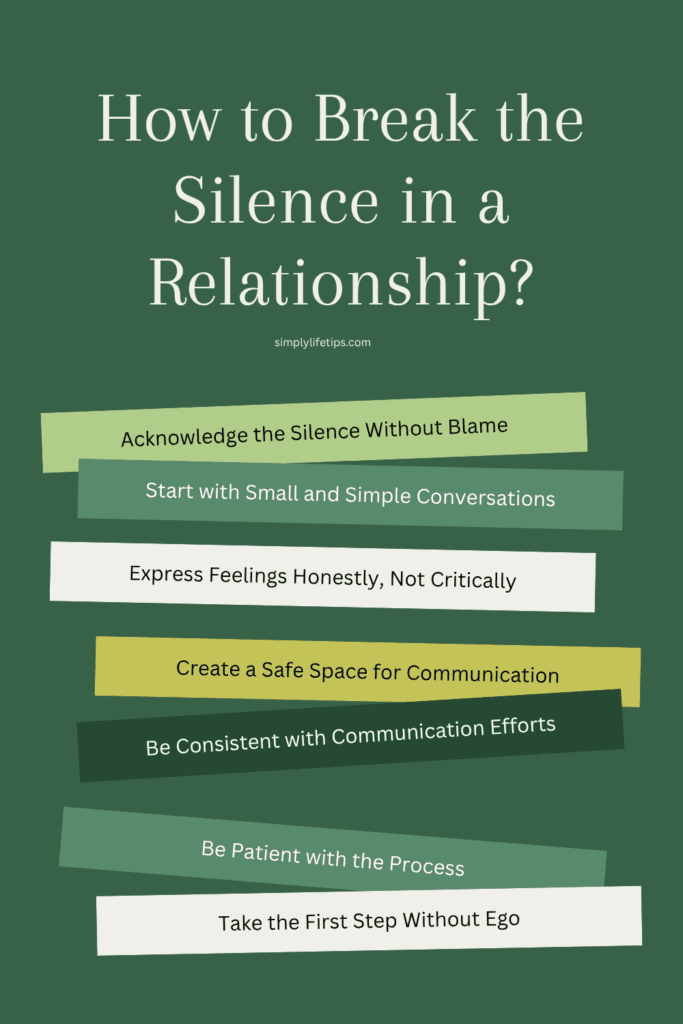
Acknowledge the Silence Without Blame
The process starts with awareness. Instead of pointing fingers, it is important to calmly recognize that communication has reduced. Blaming statements often make the other person defensive, which can deepen silence.
For example, saying “We don’t talk like we used to, and I miss that connection” creates openness, whereas accusations create resistance. This approach shifts the focus from conflict to connection.
Start with Small and Simple Conversations
Breaking the silence does not require intense discussions immediately. It is more effective to begin with small, manageable conversations that feel natural and comfortable.
Simple expressions like “How was your day?” or “I was thinking about something today” can reopen communication. Gradually, these small interactions rebuild familiarity and emotional comfort between partners.
Express Feelings Honestly, Not Critically
One of the biggest mistakes couples make is expressing emotions through criticism instead of honesty. Using “I feel” statements helps communicate emotions without sounding accusatory.
For instance, saying “I feel distant from you lately” is more constructive than saying “You never talk to me anymore.” The first invites understanding, while the second triggers defensiveness.
Create a Safe Space for Communication
For silence to break, both partners must feel emotionally safe. This means listening without interrupting, judging, or dismissing the other person’s feelings.
When one partner feels heard and respected, they are more likely to open up. Over time, this safe environment encourages deeper and more meaningful conversations.
Be Consistent with Communication Efforts
Consistency is what transforms small efforts into lasting change. A single conversation will not fix long-term silence, but regular communication can gradually rebuild connection.
For example, setting aside even 10–15 minutes daily to talk without distractions can make a significant difference. These consistent moments strengthen emotional bonding and rebuild trust.
Be Patient with the Process
Breaking the silence is not immediate. If silence has existed for a long time, it may take time for both partners to feel comfortable communicating again.
Patience is essential. Instead of expecting instant change, focus on steady progress. Even small improvements in communication are signs that the relationship is moving in the right direction.
Take the First Step Without Ego
Often, silence continues because both partners wait for the other to initiate conversation. Letting go of ego and taking the first step can break this cycle.
Starting a conversation does not mean accepting blame—it means valuing the relationship more than pride. This simple shift can create a powerful impact on rebuilding connection.
Breaking silence is ultimately about choosing connection over comfort. While silence may feel easier in the moment, communication is what sustains a healthy and meaningful relationship over time.
Simple Habits to Rebuild Communication
Healthy communication can be rebuilt through small but meaningful habits. Setting aside time to talk, actively listening without interrupting, and showing empathy can transform a relationship.
For instance, spending 10 minutes daily discussing feelings instead of just routines can significantly improve emotional bonding. These small efforts create a safe space where both partners feel heard and valued.
The Power of Vulnerability in Relationships
Vulnerability is the opposite of silence. It allows partners to express their true feelings without fear. When one person opens up, it encourages the other to do the same.
Sharing fears, insecurities, and emotions strengthens trust and deepens intimacy. It turns silence into understanding and distance into connection.
When Silence Becomes a Warning Sign?
Not all silence is harmful, but prolonged emotional silence is a serious warning sign. It may indicate deeper issues such as unresolved conflicts, emotional burnout, or loss of interest.
Recognizing this early can prevent long-term damage. Addressing silence at the right time can save a relationship before it reaches a breaking point.
How Couples Can Stay Emotionally Connected?
Strong relationships are not maintained by chance but through consistent effort, emotional awareness, and intentional communication. Emotional connection is what keeps a relationship alive, even during stressful or busy phases of life. When couples actively nurture this connection, they prevent silence from turning into distance and disconnection.
Prioritize Daily Emotional Communication
Regular communication is the foundation of emotional connection. It is not just about talking, but about sharing thoughts, feelings, and experiences. Couples who make time for even small daily conversations create a sense of closeness and understanding.
For example, asking “How are you really feeling today?” instead of just discussing routines can open deeper emotional conversations. These moments, though simple, strengthen the bond over time.
Practice Active Listening
Communication is not complete without listening. Active listening means giving full attention, understanding without interrupting, and responding with empathy.
When one partner feels truly heard, it builds trust and emotional safety. For instance, maintaining eye contact, acknowledging feelings, and responding thoughtfully can make the other person feel valued and respected.
10 Powerful Phrases To Practice Active Listening Every Day
Show Consistent Emotional Support
Emotional connection grows when partners feel supported during both good and difficult times. Small gestures like encouragement, appreciation, or simply being present can make a significant difference.
For example, standing by your partner during stressful situations or celebrating their achievements together reinforces the feeling of being emotionally connected.
Spend Quality Time Together
Spending time together without distractions helps strengthen emotional intimacy. It is not about the amount of time, but the quality of interaction during that time.
Simple activities like having meals together, going for a walk, or sharing a meaningful conversation can rebuild connection and reduce emotional distance.
Express Appreciation and Affection
Gratitude and affection keep relationships warm and positive. Regularly expressing appreciation for small things prevents feelings of neglect or taken-for-granted attitudes.
For instance, saying “I appreciate what you did today” or showing affection through kind words and gestures helps maintain emotional closeness.
Be Open and Vulnerable
Emotional connection deepens when partners are willing to be open and vulnerable. Sharing fears, insecurities, and genuine feelings builds trust and strengthens intimacy.
When one partner expresses vulnerability, it creates a safe space for the other to do the same, replacing silence with meaningful connection.
Stay Connected Even During Busy Times
Life can get busy, but emotional connection should not be neglected. Couples who make an effort to stay connected despite their schedules maintain stronger relationships.
For example, a quick message, a short call, or a few minutes of conversation can prevent emotional distance from developing. These small efforts show that the relationship remains a priority.
Resolve Conflicts Through Communication
Disagreements are natural, but how couples handle them determines the strength of their connection. Addressing issues openly and respectfully prevents unresolved problems from turning into silence.
Instead of avoiding conflict, discussing it calmly helps maintain understanding and prevents emotional buildup.
When couples consistently practice these habits, they create a relationship built on trust, understanding, and emotional closeness. This not only strengthens their bond but also ensures that silence never replaces communication.
External References
- American Psychological Association Research highlights how communication breakdown and emotional withdrawal negatively impact relationship satisfaction and mental well-being.
- Gottman Institute Studies show that lack of communication and emotional disengagement are key predictors of relationship failure and long-term dissatisfaction.
FAQs – Silence Kills Relationships
What does silence mean in a relationship?
Silence often reflects unspoken emotions like hurt, anger, or fear. It usually indicates a lack of communication rather than peace.
Is silence always bad in relationships?
No, short periods of silence can be normal. However, prolonged emotional silence can damage connection and trust.
How can I talk to a silent partner?
Start gently without blame. Express your feelings honestly and create a safe space for open conversation.
Can silence cause a breakup?
Yes, continuous silence can lead to emotional disconnection, which may eventually result in separation.
How do couples rebuild communication after silence?
By starting small, being consistent, listening actively, and showing empathy towards each other’s feelings.
Conclusion
Silence may seem harmless, but it has the power to quietly destroy even the strongest relationships. Communication is the lifeline of emotional connection, and without it, love slowly fades into the distance.
Breaking the silence requires courage, honesty, and effort, but it can rebuild trust and bring back closeness. The sooner couples address silence, the better their chances of preserving a healthy and meaningful relationship.
Are you choosing silence in your relationship, or are you ready to start the conversation that could save it?
If this resonated with you, share it with someone who needs it.
PVM

Mathukutty P V is a Blogger, YouTuber, and Content Writer and the founder of Simply Life Tips. After taking voluntary retirement in 2017, he embraced a free lifestyle focused on learning, personal growth, and sharing practical wisdom to help others live with more purpose and positivity.