Duty towards neighbour is more than simply being friendly to the people who live nearby. It means treating our neighbours with kindness, respect, understanding, and consideration while being ready to offer help when they genuinely need it.
In our busy modern lives, we may communicate with people across the world while knowing very little about those who live next door. Yet neighbours are often the people who notice when something is wrong and can offer immediate support during an emergency, illness, or difficult time.
A good relationship with our neighbours can make our surroundings safer, more peaceful, and more welcoming. Simple actions such as greeting others, respecting their privacy, keeping noise under control, offering help, and avoiding unnecessary judgment can strengthen the whole community.
So, what is our duty towards our neighbour, and how can we practise it in everyday life? Let us explore some simple ways to become better neighbours and understand the importance of living together with kindness and mutual respect.

What Is Your Duty Towards Neighbour?
Your duty towards neighbour begins with a simple principle: live in a way that does not cause unnecessary harm to the people around you. This includes avoiding behaviour that can hurt others physically, verbally, emotionally, or socially.
Being a good neighbour also means treating people with fairness, honesty, kindness, and respect. We may not always agree with our neighbours, but differences in opinions, lifestyles, or circumstances should not become reasons for hostility or disrespect.
The Bible expresses this principle clearly in Mark 12:31: “Love your neighbour as yourself.” Whether viewed as a religious teaching or a practical principle for community life, the message is simple: treat others with the same care, dignity, and consideration that you would want for yourself.
Our duty towards neighbour is therefore not limited to helping someone during an emergency. It also includes everyday choices—speaking respectfully, respecting privacy, avoiding unnecessary disturbances, offering help when appropriate, and showing compassion when someone is going through a difficult time.
When neighbours practise these simple responsibilities, individual homes can become part of a safer, kinder, and more supportive community.
6 Ways to Fulfil Your Duty Towards Neighbour
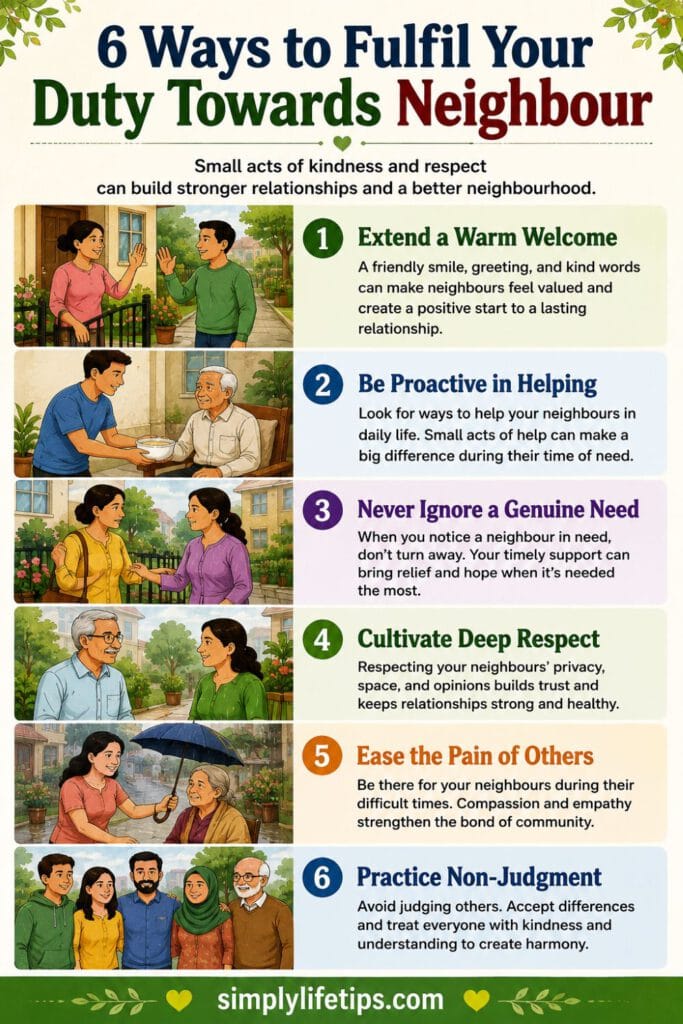
Extend a Warm Welcome
A warm welcome is one of the simplest ways to build a good relationship with a neighbour. A friendly smile, greeting, or kind word can make people feel comfortable and respected.
When a new family moves into the neighbourhood, take the opportunity to welcome them. You might introduce yourself, share useful information about nearby shops or services, or simply let them know that they can ask for help if they need it.
Even with neighbours you have known for years, small gestures of friendliness still matter. Greeting them when you meet, asking how they are doing, or welcoming them home after a trip can strengthen trust and goodwill.
You do not need to become close friends with every neighbour. A respectful and welcoming attitude is enough to create a more pleasant atmosphere for everyone.
2. Be Proactive in Helping
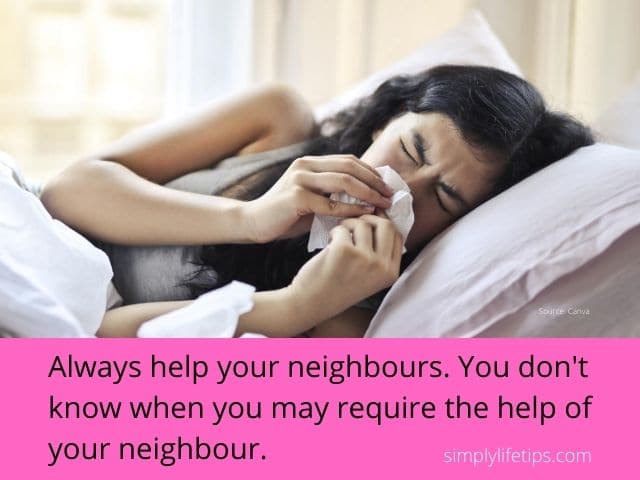
Helping a neighbour is a meaningful expression of kindness and shared humanity. You do not need to perform a grand act; small gestures of help can make a significant difference.
During an emergency, be ready to offer support and reassurance. If a neighbour is sick or elderly, you might help with groceries, medicines, or other necessary errands.
You can also help a new neighbour become familiar with the area, offer practical guidance, or assist with a small task when needed.
Sometimes, simply asking, “Can I help you?” can make someone feel supported and cared for.
Helping others not only supports people in need but can also bring greater meaning and positivity into our own lives.
3. Never Ignore a Need
It can be tempting to mind your own business when a neighbour is facing a difficulty. However, offering help at the right moment can make a meaningful difference.
Pay attention when someone may need support. You might check on a neighbour who lives alone, offer assistance during an illness, or lend a helping hand when someone is going through a difficult situation.
Kindness does not always require a major effort. A simple visit, phone call, helping hand, or word of encouragement can ease someone’s burden and remind them that they are not alone.
Understanding the importance of helping others can encourage us to respond with kindness when a neighbour needs support.
4. Cultivate Deep Respect
Respect is the foundation of a peaceful and safe neighbourhood. Treat your neighbours with dignity, even when their opinions, habits, or lifestyles are different from yours.
Respect also means valuing their privacy and being mindful of your own behaviour. Avoid unnecessary interference in their personal matters, gossip, or actions that may make them uncomfortable.
Be especially considerate about noise. Elderly people and those who are unwell may need rest, while children may need a quiet environment to study. Keeping noise under control is a simple way to show consideration for the needs of others.
Speaking respectfully is an important part of maintaining healthy relationships, and learning how to speak well can help us communicate more effectively with our neighbours.
5. Ease the Pain of Others
Pain is not always visible. A neighbour may be going through financial hardship, grief, illness, loneliness, or emotional distress.
A kind word, a listening ear, or a simple offer of help can provide comfort during a difficult time. If a neighbour experiences a loss, visiting them, offering practical support, or simply being present can remind them that they are not alone.
Showing compassion does not mean solving every problem. Sometimes, genuine concern and a willingness to stand by someone are all that a person needs.
6. Practice Non-Judgment

Avoid judging your neighbours based on their appearance, clothing, lifestyle, financial situation, or personal choices. People have different circumstances, priorities, and ways of living.
Never mock the way a neighbour speaks, dresses, or lives. What may seem unusual to you may be completely normal or meaningful to someone else.
Instead of making assumptions, practise understanding and respect. A non-judgmental attitude helps create a neighbourhood where people feel accepted, valued, and comfortable being themselves.
Never Judge A Person Without Knowing The Truth
Respect Your Neighbour’s Privacy and Boundaries
Being a good neighbour also means understanding personal boundaries. Friendly relationships are valuable, but everyone deserves privacy and the freedom to live without unnecessary interference.
Avoid asking intrusive questions about a neighbour’s personal, financial, or family matters. Do not spread gossip or discuss someone’s private life with others.
Respect their property and personal space as well. Do not enter their home or property without permission, and avoid creating situations that may make them uncomfortable.
Helping a neighbour is important, but good neighbourly behaviour also means knowing when to give someone space. Respect, kindness, and consideration can help maintain a healthy relationship between neighbours.
Why Is a Good Neighbourhood Important?
A good neighbourhood can make everyday life safer, more peaceful, and more enjoyable. The people who live around us can influence our sense of security, belonging, and well-being.
Safety and Security
Neighbours who know and care about one another can look out for unusual activity and respond more quickly during emergencies. They may notice when something is wrong, check on an elderly neighbour, or offer immediate assistance when someone needs help.
Sense of Belonging
Simple interactions such as greeting a neighbour, having a short conversation, or sharing a friendly smile can create a sense of connection. Feeling that we are part of a caring community can reduce loneliness and make our surroundings feel more welcoming.
Mutual Support
Life can bring unexpected challenges such as illness, old age, emergencies, or personal difficulties. A supportive neighbourhood makes it easier for people to receive practical help, encouragement, and companionship when they need it.
Positive Values for Children
Children learn by observing the behaviour of adults around them. When they see neighbours helping, respecting, and cooperating, they learn important values such as kindness, empathy, responsibility, and social awareness.
Mental and Emotional Well-Being
Living in a peaceful and cooperative neighbourhood can reduce everyday stress and create a more positive environment. Knowing that people nearby are friendly and willing to help can provide comfort and a stronger sense of security.
| Benefit | How It Helps |
|---|---|
| Safety & Security | Neighbours who know and care about one another can notice unusual activity and offer help during emergencies. |
| Sense of Belonging | Friendly greetings and everyday conversations can reduce loneliness and help people feel connected to their community. |
| Mutual Support | Neighbours can provide practical help and emotional support during illness, old age, emergencies, or difficult times. |
| Child Development | Children learn empathy, kindness, cooperation, and social responsibility by observing adults helping and respecting one another. |
| Mental Well-Being | A peaceful and supportive neighbourhood can reduce feelings of isolation and create a more positive daily environment. |
A Deeper Look at the Benefits of a Good Neighbourhood
The importance of fulfilling our duty towards our neighbour becomes clearer when we consider the practical benefits of a healthy and supportive community.
Safety and Security
A good neighbourhood can provide an additional layer of safety. When neighbours know and care about one another, they are more likely to notice unusual activity or potential hazards.
For example, a neighbour may keep an eye on a home while the family is away or offer assistance when someone faces an emergency. Such cooperation can make the neighbourhood safer for everyone.
Sense of Belonging
Our neighbourhood is an important part of our daily social environment. A friendly greeting, a short conversation, or a simple act of kindness can help people feel valued and connected.
This sense of belonging can be especially meaningful for people who live alone or have limited social contact.
Mutual Support
Life can be unpredictable. Neighbours can provide valuable support during illness, old age, emergencies, or personal difficulties.
Support may include helping with errands, sharing useful information, lending a hand with practical tasks, or simply offering encouragement when someone is having a difficult time.
Positive Values for Children
Children learn many social behaviours by watching the adults around them. When they see neighbours helping, respecting, and cooperating, they learn the importance of empathy, kindness, responsibility, and community spirit.
A positive neighbourhood can therefore contribute to the development of considerate and socially responsible children.
Mental and Emotional Well-Being
A peaceful and supportive neighbourhood can contribute to a person’s sense of comfort and security. Friendly interactions and meaningful connections can reduce feelings of isolation and help create a more positive daily environment.
When people know that caring neighbours are nearby, they may feel less alone when facing life’s difficulties.
Conclusion
Being a good neighbour does not require extraordinary actions. Simple acts of kindness, respect, consideration, and support can make a meaningful difference in the lives of the people around us.
Good neighbours are often the first people who can offer help during an emergency, illness, or difficult time. Building a healthy relationship with neighbours through genuine concern, mutual respect, and thoughtful actions creates a stronger sense of community.
Some neighbours may be too shy or proud to ask for help. Being attentive to their needs and offering support with sensitivity is an important part of our duty towards our neighbours.
When we choose kindness over indifference and understanding over judgment, we help create a neighbourhood where people feel safe, respected, and cared for.
What is one simple thing you can do today to become a better neighbour?

Mathukutty P V is a Blogger, YouTuber, and Content Writer and the founder of Simply Life Tips. After taking voluntary retirement in 2017, he embraced a free lifestyle focused on learning, personal growth, and sharing practical wisdom to help others live with more purpose and positivity.