
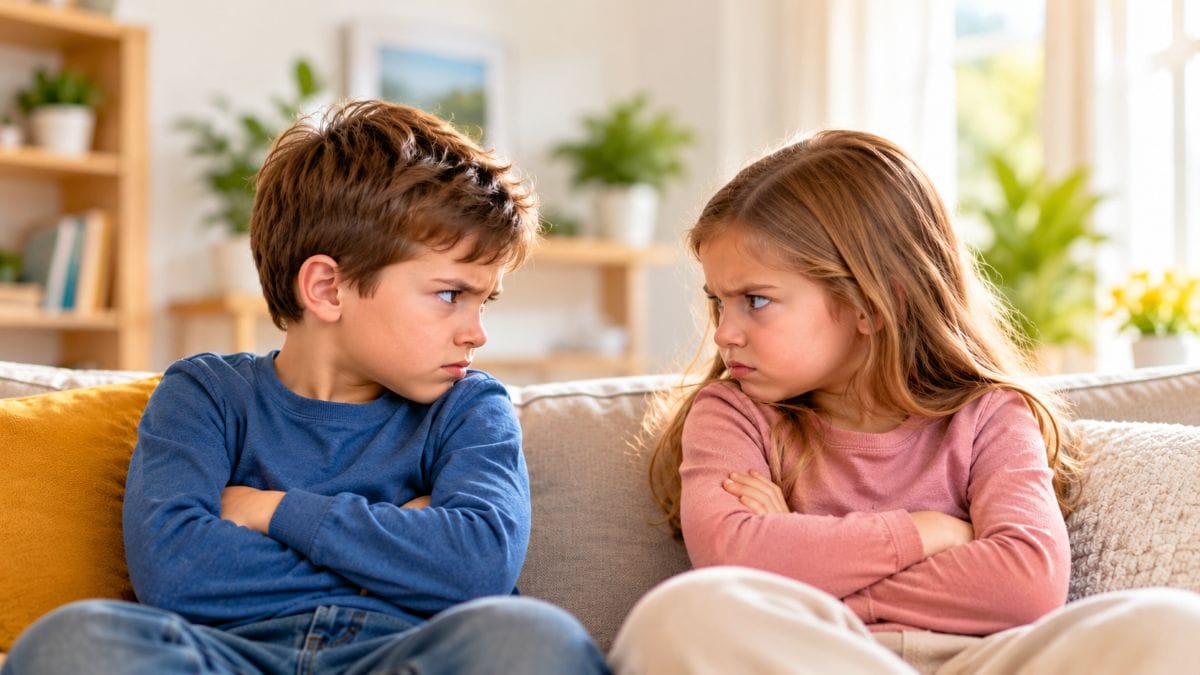
Sibling rivalry is common in families with more than one child. Brothers and sisters may argue over toys, attention, personal space, privileges, or simply because they have different personalities. Occasional disagreements are normal, but constant conflict can make family life stressful for everyone.
Understanding why sibling rivalry happens can help parents respond more effectively. The goal is not to eliminate every argument. Instead, parents can teach children how to communicate, manage strong emotions, respect boundaries, solve disagreements, and develop a healthier relationship with one another.
What Is Sibling Rivalry?
Sibling rivalry refers to competition, jealousy, disagreement, or conflict between brothers and sisters. It can involve arguments, teasing, competing for parental attention, complaints about fairness, or disagreements over possessions and privileges.
Sibling rivalry can begin when a new child joins the family and may continue as children move through different stages of development. Younger children may struggle with sharing, school-age children may become concerned about fairness, and teenagers may seek greater independence and privacy.
Some rivalry is a normal part of growing up. Children are still learning emotional regulation, communication, compromise, and problem-solving. However, persistent aggression, bullying, humiliation, or behaviour that makes a child feel unsafe should not simply be dismissed as ordinary sibling rivalry.
Why Does Sibling Rivalry Happen?
There is rarely one reason for sibling rivalry. Children’s ages, personalities, needs, family circumstances, and perceptions of fairness can all influence how they relate to one another.
Competition for Parental Attention
Children naturally want to feel loved, valued, and noticed by their parents. When one child receives more attention because of age, schoolwork, illness, activities, or other circumstances, another child may feel overlooked.
This does not necessarily mean parents are showing favoritism. Sometimes one child genuinely needs more help at a particular stage of life. However, children may not always understand why their sibling is receiving additional attention.
Parents can reassure each child that love is not something they have to compete for. Spending individual time with each child can also help them feel secure and valued.
Differences in Age and Development
Children at different ages have different needs and expectations. A toddler may struggle with sharing, while a school-age child may be particularly concerned about fairness. A teenager may want greater independence and privacy.
These differences can create conflict between siblings. What seems reasonable to a parent may feel unfair to a child.
Fairness does not always mean treating every child identically. It means recognizing what each child needs while maintaining reasonable and consistent family boundaries.
Differences in Personality
Siblings may have very different temperaments. One child may be quiet and patient while another is energetic and outspoken. One may enjoy spending time alone while another constantly seeks companionship.
These differences can lead to misunderstandings and irritation. Parents can help by teaching children that different personalities are normal and that differences do not justify disrespect.
Comparing Siblings
Comparison can make sibling rivalry worse.
Statements such as “Why can’t you be more like your brother?” or “Your sister always does better” can make children feel that they are competing for parental approval.
Instead of ranking children, parents can recognize individual strengths and encourage each child to improve according to their own abilities.
Competition Over Possessions and Privileges
Many sibling arguments begin with ordinary things: a toy, television programme, computer, seat in the car, or turn at an activity.
These disagreements may seem small, but repeated arguments over the same issues can create resentment. Clear rules about sharing, turns, personal belongings, and privileges can prevent many unnecessary conflicts.
Is Sibling Rivalry Normal?
Some sibling rivalry is normal. Children are still learning how to manage frustration, communicate their needs, negotiate, compromise, and understand another person’s point of view.
A disagreement between siblings does not automatically mean there is a serious problem. When handled appropriately, everyday disagreements can give children opportunities to practise communication and problem-solving.
However, the intensity and effect of the conflict matter. Frequent fighting that becomes aggressive, frightening, humiliating, or emotionally damaging requires greater attention.
Parents should look beyond how often siblings argue and consider whether the children feel safe, respected, and able to recover after disagreements.
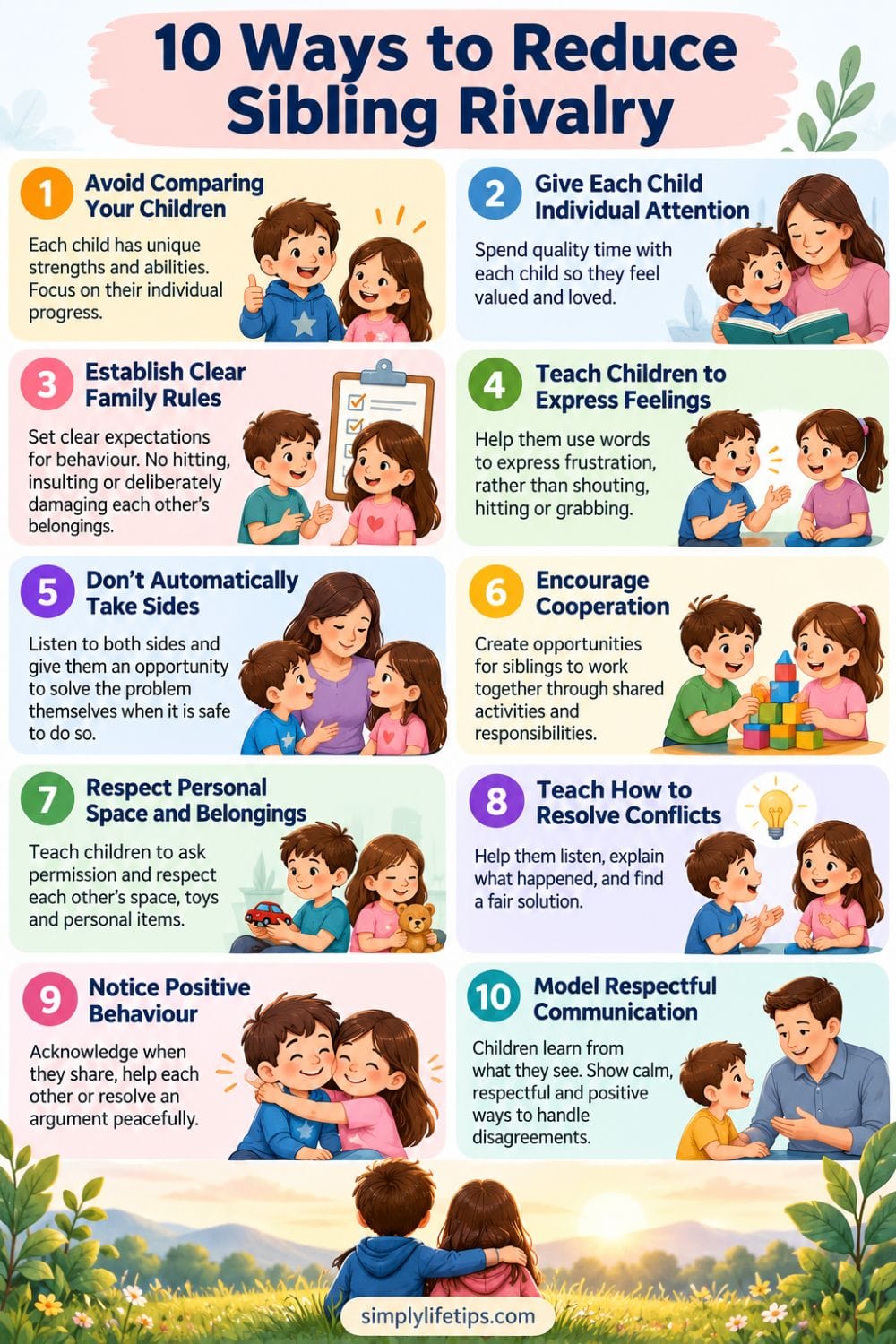
10 Ways to Reduce Sibling Rivalry
Parents cannot prevent every disagreement between siblings. However, they can create an environment that encourages cooperation rather than constant competition.
1. Avoid Comparing Your Children
One of the most effective ways to reduce sibling rivalry is to stop comparing children.
Every child has different abilities, interests, personality traits, and developmental needs. Instead of telling one child that another is smarter, better behaved, or more successful, focus on each child’s individual progress.
For example, rather than saying, “Your brother always finishes his homework on time,” a parent could say, “Let’s find a routine that helps you finish your homework before dinner.”
This encourages improvement without turning siblings into competitors.
2. Give Each Child Individual Attention
Children may compete for attention when they feel that another sibling is receiving more of it.
Individual attention does not have to involve expensive outings or elaborate activities. Reading together, taking a short walk, helping with a household task, or simply talking for a few minutes can help a child feel valued.
The important thing is not the amount of money spent or the complexity of the activity. It is the message that each child matters.
3. Establish Clear Family Rules
Children need to know what behaviour is acceptable during disagreements.
Family rules might include no hitting, kicking, threatening, insulting, name-calling, or deliberately damaging another person’s belongings.
Rules should be applied consistently. Children should understand that being angry is acceptable, but hurting another person is not.
Clear expectations can make it easier for children to understand boundaries before an argument becomes serious.
4. Teach Children to Express Feelings With Words
Children sometimes fight because they do not yet know how to communicate frustration effectively.
Parents can teach children to say, “I was using that,” “I feel upset,” “Please give me some space,” or “Can I have a turn when you finish?” instead of grabbing, shouting, or hitting.
Teaching children appropriate language does not eliminate disagreements. It gives them healthier ways to handle those disagreements.
It can also help children develop the communication skills needed for a healthy sibling relationship.
Teaching children appropriate language does not eliminate disagreements. It gives them healthier ways to handle those disagreements and can help them develop a healthy sibling relationship based on communication, respect, and understanding.
5. Don’t Automatically Take Sides
When siblings fight, parents may immediately want to decide who is right and who is wrong.
Sometimes intervention is necessary, especially when there is a risk of physical harm. But minor disagreements can sometimes be opportunities for children to practise solving problems themselves.
Parents can ask questions such as, “What happened?” “What do you both want?” and “How can you solve this?”
The objective is not always to identify a winner. It is to help children learn how to resolve disagreements.
6. Encourage Cooperation
Children who are constantly placed in competition may begin to see their siblings as opponents.
Parents can create opportunities for siblings to work together. They might clean up a room, prepare something simple, complete a family project, play a cooperative game, or help with a shared responsibility.
Shared experiences can gradually change the way children see one another. Instead of always asking, “Who is better?” they can learn to think, “What can we accomplish together?”
These experiences can also strengthen the sibling bond and create positive memories that balance everyday disagreements.
Shared experiences can gradually change the way children see one another. Instead of always asking, “Who is better?” they can learn to think, “What can we accomplish together?” These experiences can strengthen the sibling bond and create positive memories that balance everyday disagreements.
7. Respect Personal Space and Belongings
As children grow, personal space becomes increasingly important.
Siblings should learn to ask permission before using another person’s belongings. Older children may also need privacy for homework, hobbies, friendships, or simply quiet time.
Respecting boundaries can prevent many arguments before they begin.
Parents can establish practical rules about bedrooms, toys, electronic devices, clothing, and other possessions so that children know what they can share and what belongs to an individual child.
8. Teach Children How to Resolve Conflicts
Children need opportunities to practise conflict resolution.
Parents can encourage siblings to listen to each other, explain what happened without insults, identify the actual problem, and work toward a reasonable solution.
For example, if two children want to use the same device, they might agree on a schedule rather than continuing to argue.
Conflict resolution is not about making one child win and another lose. It is about helping children understand that disagreements can be handled without damaging their relationship.
9. Notice Positive Behaviour
Parents often notice children most when they are fighting because conflict demands immediate attention.
Positive behaviour deserves attention too.
When siblings share, cooperate, help one another, or resolve an argument peacefully, acknowledge it. A simple comment such as “I noticed how you helped your sister” can reinforce the behaviour parents want to see again.
Children need to know that cooperation receives attention too—not just conflict.
10. Model Respectful Communication
Children learn a great deal by watching adults.
If parents regularly shout, insult, interrupt, or use sarcasm during disagreements, children may copy those behaviours. If parents demonstrate calm communication, listening, patience, and respectful disagreement, children have a healthier example to follow.
Parents do not have to handle every disagreement perfectly. What matters is showing children that anger does not have to become cruelty and that disagreements can be repaired.
Build a Stronger Sibling Relationship
Reducing sibling rivalry is only part of the goal. Parents can also actively encourage positive relationships between their children.
Children need opportunities to experience their siblings as companions rather than competitors. Shared activities, family traditions, celebrations, cooperative games, and simple everyday moments can help create positive memories.
A strong sibling relationship does not mean siblings will never argue. Healthy relationships can include disagreements. What matters is whether children learn to repair those disagreements and continue treating one another with respect.
Parents can encourage this by giving children opportunities to help each other, celebrate each other’s achievements, and spend enjoyable time together without turning every activity into a competition.
What Parents Should Avoid
Parents should avoid turning sibling relationships into a competition for approval.
Constantly asking who finished first, who performed better, who is more responsible, or who is the “good” child can create resentment.
It is also important to remember that equal treatment does not always mean identical treatment. One child may need more help with schoolwork, another may need additional emotional support, and an older child may have different responsibilities from a younger one.
Parents can explain these differences when appropriate and reassure children that different needs do not mean different levels of love.
Parents should also avoid forcing children to spend every moment together. Sometimes siblings simply need time apart. Individual hobbies, friendships, personal space, and separate activities can give children a chance to recharge.
When Sibling Rivalry Becomes a Serious Concern
Some sibling conflict is normal, but persistent hostility should not be ignored.
Parents should pay particular attention when conflict involves repeated physical aggression, threats, deliberate humiliation, serious bullying, destruction of property, or behaviour that causes a child to feel frightened or unsafe.
Harvard Health notes that sibling rivalry is common, but excessive squabbling and competition can become harmful. It recommends avoiding comparisons, recognizing each child’s strengths, giving children individual attention, establishing family rules for respectful behaviour, and seeking professional help when rivalry becomes a significant problem.
If sibling conflict is seriously affecting family life or a child’s wellbeing, parents can discuss the situation with a pediatrician, child psychologist, counsellor, or another qualified professional.
Seeking help is not a sign of failure. Sometimes an outside perspective can help a family understand the source of the conflict and develop healthier patterns.
Harvard Health notes that sibling rivalry is common, but excessive squabbling and competition can become harmful. It recommends avoiding comparisons, recognizing each child’s strengths, giving children individual attention, and establishing family rules for respectful behaviour. Read the Harvard Health guidance on sibling rivalry.
Sibling Rivalry and Sibling Hostility
Occasional arguments are different from persistent hostility.
Sibling rivalry may involve competition and disagreements that come and go. Hostility involves a more persistent pattern of anger, resentment, rejection, or deliberately hurtful behaviour.
If conflict between siblings is becoming increasingly hostile, parents should look beyond the individual arguments and consider what may be driving the pattern.
Understanding the difference can help parents decide whether ordinary guidance is enough or whether the family needs additional support.
Help Children See Each Other as Allies
Parents cannot make siblings like each other every day. Children will have different personalities, interests, and opinions.
The goal is to help them understand that disagreement does not have to destroy a relationship.
When children learn to communicate honestly, respect personal boundaries, compromise, apologize when necessary, and appreciate one another’s strengths, they develop skills that can benefit many relationships throughout life.
A family environment that combines clear boundaries with warmth and individual attention gives children a better foundation for developing those skills.
Conclusion
Sibling rivalry is a normal part of many families, but constant conflict does not have to become the family’s permanent pattern.
Children may compete for attention, argue over possessions, struggle with differences in personality, or feel that another sibling receives preferential treatment. With patient guidance, parents can help children learn healthier ways to handle these situations.
Avoiding comparisons, giving each child individual attention, establishing clear boundaries, encouraging cooperation, respecting personal space, and teaching conflict-resolution skills can gradually reduce unnecessary tension.
The goal is not to eliminate every argument. It is to help children understand that disagreements can be handled respectfully and that having a brother or sister does not mean having a lifelong competitor.
With the right guidance, today’s rivals can gradually become tomorrow’s trusted companions.
Frequently Asked Questions
What is sibling rivalry?
Sibling rivalry is competition, jealousy, disagreement, or conflict between brothers and sisters. It may involve competition for parental attention, arguments over possessions, teasing, disagreements about fairness, or differences in interests and personalities.
Why does sibling rivalry happen?
Sibling rivalry can happen because children compete for parental attention, have different personalities and developmental needs, feel compared with one another, or disagree over possessions and privileges. Changes in family circumstances can also contribute.
How can parents reduce sibling rivalry?
Parents can reduce sibling rivalry by avoiding comparisons, giving each child individual attention, establishing clear family rules, teaching children to express their feelings, encouraging cooperation, and helping them learn how to resolve disagreements.
How should parents handle siblings fighting?
Parents should first consider whether anyone is in danger. Minor disagreements can sometimes be handled by giving children an opportunity to solve the problem themselves. When intervention is necessary, parents can remain calm, separate children if needed, and help them work toward a solution rather than simply deciding who is to blame.
When should parents seek help for sibling rivalry?
Parents should consider professional guidance when sibling conflict becomes severe, persistent, physically aggressive, frightening, or emotionally damaging. A qualified professional can help determine whether additional support is needed.
References
- Harvard Health Publishing. Sibling rivalry is normal — but is it helpful or harmful? Updated April 15, 2026. Harvard Health reference
- Nemours KidsHealth. Sibling Rivalry. KidsHealth reference

Mathukutty P V is a Blogger, YouTuber, and Content Writer and the founder of Simply Life Tips. After taking voluntary retirement in 2017, he embraced a free lifestyle focused on learning, personal growth, and sharing practical wisdom to help others live with more purpose and positivity.



