
Professional English sentences can transform the way you communicate at work. Whether you’re writing emails, attending meetings, speaking on calls, or chatting with colleagues, the right words help you sound confident, respectful, and competent. You don’t need complicated vocabulary to impress others. Instead, using clear, polite, and professional English sentences creates a positive impression and improves workplace communication.
In this guide, you’ll learn 10 professional English sentences that native speakers regularly use in offices around the world. Each sentence comes with its meaning, examples, and practical tips so you can start using them immediately.
Learn the 10 most common English mistakes and the right way to use them with practical examples.
Importance of Professional English Sentences
Professional communication isn’t about sounding formal all the time. It’s about communicating clearly while showing respect and confidence.
Using professional English helps you:
- Build credibility at work
- Communicate ideas clearly
- Show confidence during meetings
- Improve email etiquette
- Create stronger professional relationships
- Leave a positive impression on clients and colleagues
Let’s explore these useful expressions.
Quick Reference: 10 Professional English Sentences
Want a simple way to remember these workplace expressions? Save the infographic below for quick reference. It summarizes all 10 professional English sentences in an easy-to-read format, making it perfect for students, professionals, job seekers, and anyone looking to improve their business English. Pin it to Pinterest, bookmark this page, or share it with colleagues so you can revisit these useful phrases whenever you need them.
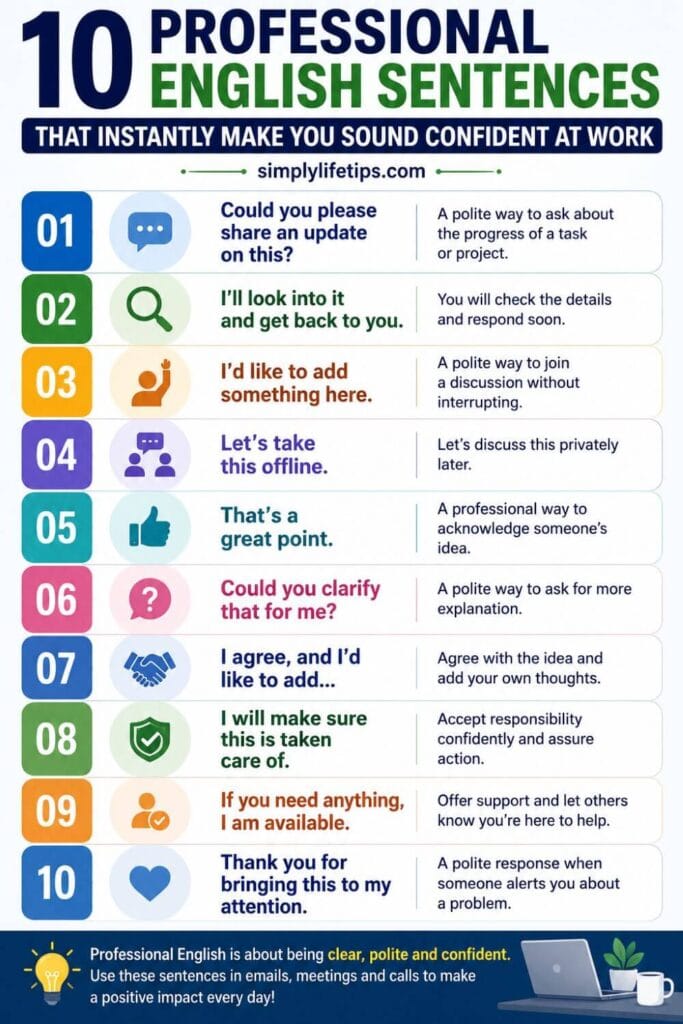
Put These Professional English Sentences into Practice
Learning these professional English sentences is only the beginning. The real improvement comes from using them consistently in your emails, meetings, presentations, phone calls, and everyday workplace conversations. Start by practicing two or three expressions each day until they become natural. Over time, these simple yet powerful phrases will help you communicate more confidently, build stronger professional relationships, and leave a positive impression wherever you work.
1. Could You Please Share an Update on This?
Meaning: A polite way to ask about the progress of a task or project.
Instead of asking:
“What happened?”
say:
“Could you please share an update on this?”
This sounds respectful while encouraging the other person to provide information.
Example
Manager:
“Could you please share an update on the client presentation?”
Employee:
“I’ve completed the draft and will send it for review this afternoon.”
Why does it sound professional?
The sentence avoids sounding demanding while still requesting the information you need.
2. I’ll Look Into It and Get Back to You
Meaning: You’re acknowledging the question and promising to investigate before responding.
This is especially useful when you don’t know the answer immediately.
Example
Client:
“Why hasn’t my order arrived?”
You:
“I’ll look into it and get back to you shortly.”
Why does it work?
Rather than guessing or giving incorrect information, you demonstrate responsibility and reliability.
3. I’d Like to Add Something Here
Meaning: A polite way to join a discussion or contribute an idea.
This expression is ideal during meetings because it allows you to participate without interrupting others.
Example
“I’d like to add something here. I believe we should also consider customer feedback before making the final decision.”
Why does it sound better?
Instead of abruptly speaking over someone, you introduce your thoughts respectfully, making collaboration smoother.
4. Let’s Take This Offline
Meaning: Continue discussing the topic privately after the meeting.
Despite the wording, it doesn’t necessarily mean without the internet. It simply means discussing it later with only the relevant people.
Example
“That’s an important point. Let’s take this offline so we can give it the attention it deserves.”
When to Use It?
This phrase is especially helpful when:
- The meeting is running out of time.
- The discussion affects only a few participants.
- The conversation has gone off-topic.
- Sensitive information needs a private discussion.
It keeps meetings productive while ensuring important issues are still addressed.
5. That’s a Great Point
Meaning: A professional way to acknowledge someone else’s idea before responding.
Recognizing another person’s contribution creates a collaborative atmosphere and shows that you value their opinion. Even if you later offer a different perspective, starting with appreciation helps keep the discussion positive.
Example
Colleague:
“We should collect customer feedback before launching the new feature.”
You:
“That’s a great point. Customer feedback will help us identify any issues before the release.”
Why does it sound professional?
People appreciate being heard. Acknowledging ideas before sharing your own builds trust, encourages teamwork, and makes conversations more productive.
6. Could You Clarify That for Me?
Meaning: A polite way to ask someone to explain something in more detail.
Instead of saying:
“I don’t get it.”
use:
“Could you clarify that for me?”
This sounds respectful and demonstrates your willingness to understand correctly.
Example
“Could you clarify that for me? I want to make sure I understand the project requirements correctly.”
When to Use It?
This sentence is useful when:
- Instructions are unclear.
- A client explains something complicated.
- You’re discussing technical information.
- You need additional details before making a decision.
Why does it work?
Seeking clarification helps prevent misunderstandings and shows that you care about accuracy.
7. I Agree, and I’d Like to Add…
Meaning: Agree with someone’s idea while introducing your own viewpoint.
This expression keeps discussions collaborative instead of competitive.
Example
“I agree, and I’d like to add that we should also include a customer satisfaction survey after the project is completed.”
Why do professionals use it?
Instead of simply agreeing or disagreeing, this sentence helps move the conversation forward by building on existing ideas.
It demonstrates:
- Active listening
- Respect for colleagues
- Critical thinking
- Team collaboration
8. I Will Make Sure This Is Taken Care Of
Meaning: A confident way to accept responsibility.
Rather than saying:
“I’ll try.”
say:
“I will make sure this is taken care of.”
Example
“Thank you for informing me about the issue. I will make sure this is taken care of by the end of the day.”
Why does it sound better?
This phrase reassures clients, managers, and colleagues that you’re committed to resolving the issue. It reflects accountability and professionalism.
9. If You Need Anything, I Am Available
Meaning: A polite way to offer help and support.
Offering assistance strengthens workplace relationships and shows that you’re approachable.
Example
“If you need anything, I am available. Please don’t hesitate to reach out.”
Best Situations to Use It
- Ending an email
- Supporting a teammate
- Speaking with clients
- Finishing a meeting
- Welcoming a new employee
Why does it leave a Positive Impression?
Simple offers of assistance help build stronger professional relationships and encourage open communication.
10. Thank You for Bringing This to My Attention
Meaning: A professional response when someone reports a problem or concern.
Instead of reacting defensively, you acknowledge the information politely.
Example
Client:
“There appears to be an error in the report.”
You:
“Thank you for bringing this to my attention. I’ll review it immediately and provide an update.”
Why does it work?
This sentence:
- Shows appreciation
- Reduces tension
- Demonstrates professionalism
- Builds confidence in your ability to solve problems
Whether the issue comes from a customer, colleague, or manager, this response helps maintain positive communication.
Tips to Use Professional English Sentences Naturally
Learning these professional English sentences is only the first step. To make them part of your everyday communication, practice using them whenever the opportunity arises.
Here are a few simple ways to build the habit:
Use Them in Emails
Replace casual phrases with professional alternatives.
Instead of:
- “What’s happening?”
Write:
- “Could you please share an update on this?”
Instead of:
- “I’ll check.”
Write:
- “I’ll look into it and get back to you.”
These small improvements make your emails sound polished and respectful.
Practice During Meetings
Meetings are an excellent place to use these expressions.
For example:
- “I’d like to add something here.”
- “That’s a great point.”
- “Let’s take this offline.”
These phrases help you participate confidently while maintaining professional etiquette.
Use Them on Phone or Video Calls
Professional communication isn’t limited to emails.
During calls, try saying:
- “Could you clarify that for me?”
- “Thank you for bringing this to my attention.”
- “I will make sure this is taken care of.”
They help conversations remain calm, productive, and solution-focused.
Practice Every Day
Choose two or three expressions each week and intentionally use them in real conversations. Over time, they’ll become natural parts of your vocabulary.
Consistency matters more than memorizing dozens of phrases at once.
Common Mistakes to Avoid
Even with professional English, a few habits can reduce the impact of your communication.
Using Very Casual Language
Avoid expressions like:
- “No problem.”
- “Whatever.”
- “I don’t know.”
Instead, choose responses that sound thoughtful and courteous.
Interrupting Others
Rather than jumping into the conversation, say:
“I’d like to add something here.”
This simple phrase shows respect and keeps discussions collaborative.
Being Too Direct
Professional English often softens requests without making them weak.
Compare these examples:
❌ Send me the report.
✅ Could you please send me the report?
The second version is polite while remaining clear.
Making Promises You Can’t Keep
Avoid saying:
“I’ll have it done in an hour.”
Unless you’re certain.
Instead, say:
“I’ll look into it and get back to you.”
This gives you time to gather accurate information and builds credibility.
Conclusion
Using professional English sentences doesn’t require an advanced vocabulary or complicated grammar. The most effective workplace communication is clear, respectful, and confident.
By adding these 10 expressions to your daily conversations, you’ll sound more polished in emails, meetings, presentations, phone calls, and client interactions. Small improvements in the way you communicate can strengthen professional relationships, build trust, and even create new career opportunities.
Start by choosing two or three of these sentences and use them consistently this week. Before long, they’ll become a natural part of your professional communication style.
You can improve your English vocabulary words to replace “very” without memorizing hundreds of difficult words.
Frequently Asked Questions
What are professional English sentences?
Professional English sentences are polite, clear, and confident expressions commonly used in workplaces, business meetings, emails, and professional conversations.
How can I improve my professional English?
Practice speaking daily, read professional emails, watch business presentations, and regularly use workplace phrases in real conversations.
Are these expressions suitable for job interviews?
Yes. Many of these sentences demonstrate confidence, professionalism, and strong communication skills during interviews.
Can beginners use these professional English sentences?
Absolutely. These expressions use simple vocabulary and are easy for English learners at any level to understand and apply.
Which professional English sentence is the most useful?
“I’ll look into it and get back to you” is one of the most valuable because it shows responsibility, professionalism, and a commitment to providing accurate information.
External Resources

Mathukutty P V is a Blogger, YouTuber, and Content Writer and the founder of Simply Life Tips. After taking voluntary retirement in 2017, he embraced a free lifestyle focused on learning, personal growth, and sharing practical wisdom to help others live with more purpose and positivity.