
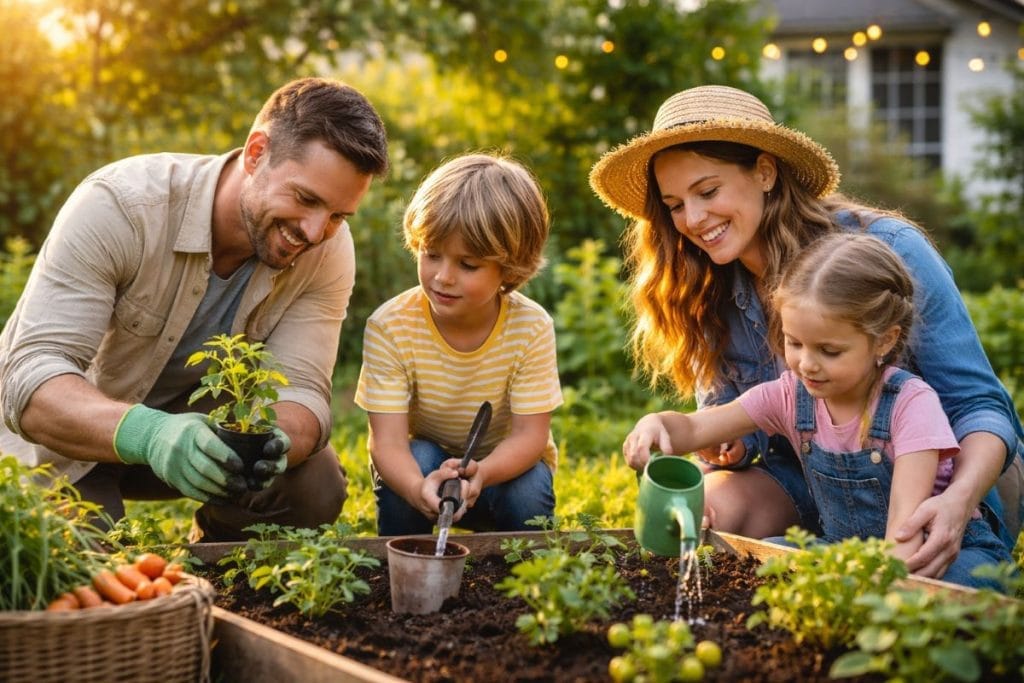
Parental role modelling becomes unavoidable the moment we have children, because raising a child often forces us to reflect on our own childhood, the mistakes our parents made, and the promises we silently make to ourselves to do better, yet when parenting becomes emotionally intense, exhausting, and overwhelming, we may find ourselves repeating the very behaviours we once vowed to avoid. Many parents begin their journey with clear intentions such as staying calm, avoiding yelling, speaking with kindness, and parenting mindfully, but real life has a way of exposing unresolved patterns, emotional triggers, and deeply ingrained habits. This blog explores parental role modelling in depth, not from a place of perfection, but from the reality that growth is ongoing, mistakes are inevitable, and what truly shapes a child is not flawlessness but the daily effort to grow, repair, and move forward again and again.
What Is Parental Role Modelling?
Parental role modelling refers to the way children learn values, emotional responses, communication styles, coping mechanisms, and relationship patterns by observing their parents’ everyday behaviour. Long before children understand explanations or rules, they absorb tone, body language, reactions, and emotional expressions. Children learn how to handle frustration by watching how parents react under stress. They learn how to treat others by observing how parents speak to family members, strangers, and even themselves. For example, when a parent handles disappointment calmly, the child learns resilience without being taught a single lesson.
A practical tip is to remember that role modelling is happening constantly, even during ordinary moments like morning routines, mealtimes, or disagreements, making consistency far more important than occasional parenting efforts.
Why Parental Role Modelling Is So Important?
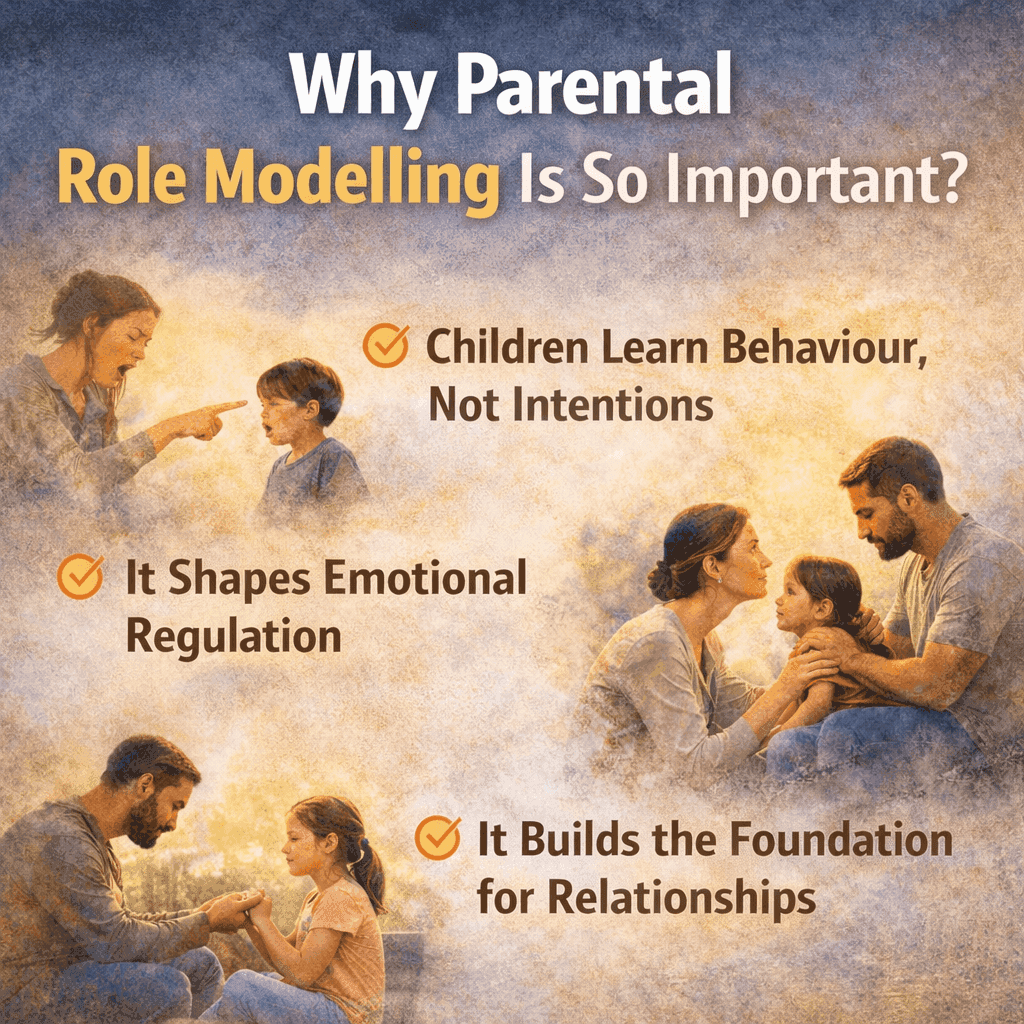
Children Learn Behaviour, Not Intentions
Parental role modelling matters because children do not learn from parental intentions; they learn from lived experiences. A parent may genuinely intend to be patient and gentle, but when stress takes over, the behaviour that emerges becomes the lesson the child absorbs. For instance, a parent who frequently reacts with frustration during difficult moments teaches emotional reactivity, even if calmness is often discussed. A helpful tip is to focus less on judging yourself for slipping and more on what happens after the slip, because repair and accountability become powerful lessons in themselves.
It Shapes Emotional Regulation
Children are not born knowing how to regulate emotions; they borrow that ability from their caregivers. Through parental role modelling, children learn whether emotions are safe to express or something to suppress or fear. A parent who names feelings calmly and stays emotionally present teaches children that emotions can be managed rather than avoided. For example, saying “I feel overwhelmed right now, so I need a moment” models self-awareness and regulation. A useful tip is to narrate emotional regulation out loud so children can connect behaviour with emotional understanding.
It Builds the Foundation for Relationships
Parental role modelling strongly influences how children will approach relationships throughout life. Children learn what love looks like, how conflict is handled, and whether connection feels safe by watching parental interactions. If disagreements are resolved respectfully, children learn that conflict does not threaten connection. A practical tip is to allow children to witness respectful repair after disagreements, as this builds trust and emotional security.
The Importance of Self-Awareness in Parental Role Modelling
Self-awareness is a cornerstone of effective parental role modelling. Many automatic parenting reactions come from unresolved childhood experiences rather than conscious choice. For example, a parent who was criticised harshly as a child may become overly controlling or reactive without realising why. Becoming aware of emotional triggers allows parents to pause and choose responses more intentionally. A helpful tip is to notice patterns rather than isolated incidents, as patterns reveal where growth is most needed.
Why Repeating Old Patterns Does Not Mean Failure
Repeating behaviours from our own upbringing can feel deeply upsetting, especially when we are aware of them and hope to avoid them. However, repeating patterns does not mean failure; it means those patterns were deeply ingrained. Parental role modelling improves not through self-punishment but through repeated conscious effort. For instance, recognising that you reacted out of habit and choosing to respond differently next time is growth in action. A practical tip is to treat each difficult moment as information rather than a verdict on your parenting.
Benefits of Parental Role Modelling for Children

Creates Emotional Safety
One of the greatest benefits of parental role modelling is emotional safety. Children feel secure when parents are predictable, emotionally responsive, and willing to repair after mistakes. For example, a parent who acknowledges a mistake and reconnects emotionally shows the child that relationships are safe even when things go wrong. A helpful tip is to prioritise reconnection after conflict, as emotional safety strengthens attachment.
Develops Healthy Coping Skills
Children learn coping strategies by watching how parents manage stress, frustration, and disappointment. When parents model pausing, breathing, or seeking support instead of exploding or withdrawing, children learn constructive ways to handle emotions. A practical tip is to verbalise coping strategies during stressful moments so children can consciously learn them.
Builds Strong Self-Worth
Parental role modelling shapes how children view themselves. When children are treated with respect, empathy, and unconditional regard, they internalise a sense of worth. For example, correcting behaviour without shaming reinforces that love is not dependent on perfection. A useful tip is to separate the child from the behaviour in language, reinforcing love while guiding behaviour.
Encourages Accountability and Growth
Children learn how to handle mistakes by observing how parents respond to their own. When parents take responsibility without defensiveness, children learn accountability without fear. For instance, apologising sincerely after losing patience models humility and growth. A practical tip is to view apologies not as weakness but as teaching moments that strengthen trust.
Strengthens Long-Term Emotional Resilience
The long-term benefit of parental role modelling is emotional resilience. Children raised in environments where effort, reflection, and repair are normalised grow into adults who can navigate challenges with self-awareness and compassion. A helpful tip is to emphasise progress over outcomes, as resilience grows through persistence rather than perfection.
How Parental Role Modelling Influences a Child’s Future Parenting?
Many adults only begin to understand their childhood once they become parents themselves. The behaviours they observed growing up resurface naturally, both the harmful and the helpful ones. Parental role modelling today becomes the reference point your child will carry into adulthood. For example, a child who observes effort and growth will be more likely to question harmful patterns rather than repeat them blindly. A practical tip is to model curiosity and reflection, as these qualities empower future change.
Becoming the Person You Want Your Child to Know
Every day is an opportunity to reflect on how you want your child to remember you, not as a perfect parent, but as a growing human being. Writing down the qualities you hope your child associates with you, such as patience, kindness, honesty, or resilience, creates clarity and intention. Small daily actions aligned with those values matter more than grand gestures. A helpful tip is to measure success by effort rather than consistency, because children notice striving even when outcomes vary.
Conclusion
Parental role modelling is not about achieving transformation in a single day, week, or year, but about choosing growth repeatedly, forgiving yourself often, and continuing forward even when you must begin again. When children witness parents reflecting, repairing, and striving to do better, they learn one of the most valuable lessons of all: that being human includes growth, effort, and change. Over time, the qualities you practice will not only reshape you but will be mirrored back to you through your child’s empathy, emotional strength, and ability to grow beyond what they inherited.
FAQs – Parental role modelling
What is parental role modelling in simple terms?
Parental role modelling means children learn how to behave, feel, and relate to others by watching their parents. It is less about what parents say and more about what they consistently do. Everyday actions become powerful lessons.
Can parental role modelling still change if I’ve made many mistakes?
Yes, parental role modelling can change at any stage because children learn from ongoing experiences, not past moments alone. Repair, reflection, and effort are powerful teachers. Growth over time matters more than early missteps.
Does parental role modelling matter more than discipline?
Parental role modelling often has a deeper impact than discipline because children internalise behaviour they observe regularly. Discipline sets boundaries, but modelling teaches how to live within those boundaries. Both matter, but modelling shapes identity.
How can I improve parental role modelling when I feel overwhelmed?
Improvement begins with awareness and self-compassion. Focus on one small behaviour at a time, such as pausing before reacting or repairing after conflict. Consistency in small changes builds lasting impact.
Will my child really notice my efforts to change?
Yes, children are highly sensitive to effort and emotional tone. Even when changes feel invisible, children absorb consistency, repair, and emotional presence. Over time, they often mirror those qualities naturally.
Thank you for taking the time to explore this post. I sincerely hope you found the insights valuable and actionable. If this content resonated with you, please consider sharing it. Your support enables me to share knowledge and inspiration with others in our community.
PVM

Mathukutty P V is a Blogger, YouTuber, and Content Writer and the founder of Simply Life Tips. After taking voluntary retirement in 2017, he embraced a free lifestyle focused on learning, personal growth, and sharing practical wisdom to help others live with more purpose and positivity.



