Do you know that misconceptions about happiness often cause people to chase the wrong goals, compare themselves to others, and feel disappointed even when life seems to be going well? Many people believe happiness is something that appears after achieving success, earning more money, finding the perfect relationship, or avoiding all problems. However, research and real-life experiences consistently show that happiness is far more complex and meaningful than these popular beliefs.
10 Misconceptions About Happiness
Many people spend years chasing happiness in money, success, possessions, and perfect circumstances, only to discover that true happiness remains out of reach. The reality is that happiness is not a destination or a reward for achievement—it is built through gratitude, meaningful relationships, personal growth, resilience, and purpose. Understanding these common misconceptions about happiness can help you stop pursuing myths and start creating a more fulfilling and joyful life every day.
The truth is that happiness is not a destination but a way of experiencing life. It grows through gratitude, healthy relationships, personal growth, purpose, and resilience. Understanding the misconceptions about happiness can help you stop chasing illusions and start building genuine fulfillment.
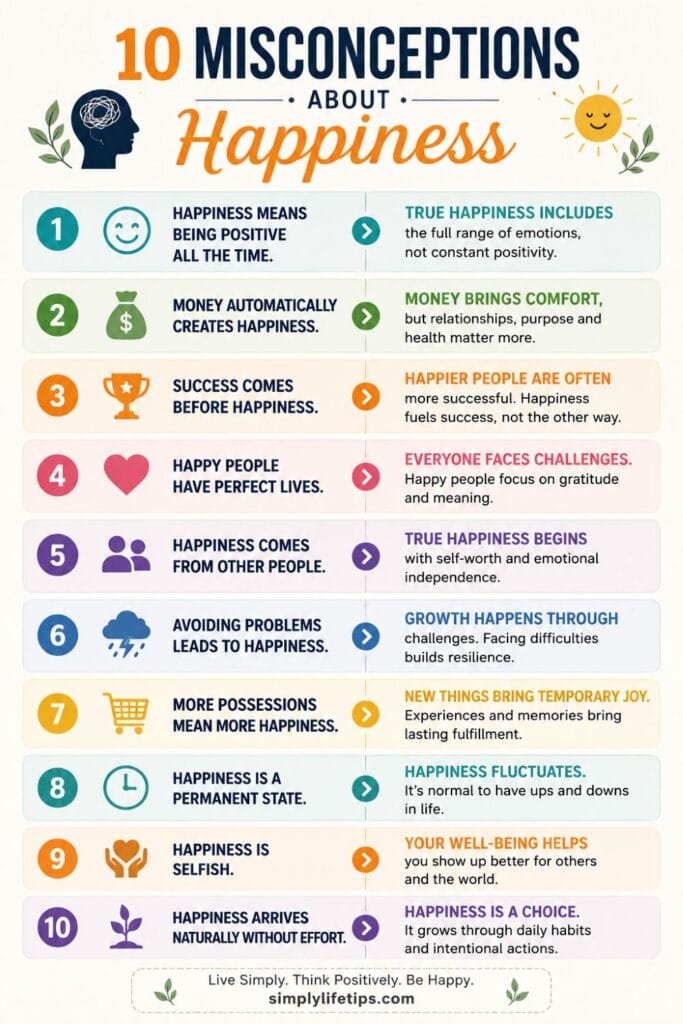
Happiness Means Being Positive All the Time
One of the biggest misconceptions about happiness is the belief that happy people are always cheerful and optimistic.
In reality, emotionally healthy people experience the full range of human emotions. They feel sadness, frustration, disappointment, grief, and anxiety just like everyone else. The difference is that they acknowledge these emotions instead of suppressing them.
For example, a happy person who loses a loved one will still grieve deeply. Their happiness does not eliminate pain; it helps them navigate it more effectively.
True happiness includes emotional balance, not constant positivity.
Misconceptions About Mental Strength | 10 Myths That Hold People Back
Money Automatically Creates Happiness
Many people believe that earning more money will solve all their problems and make them happy forever.
While financial stability can reduce stress and improve quality of life, happiness does not increase endlessly with income. Once basic needs and reasonable comforts are met, factors such as relationships, health, purpose, and personal satisfaction become far more important.
Consider two individuals. One earns a moderate income but enjoys strong family relationships and meaningful work. Another earns significantly more but constantly experiences stress, loneliness, and dissatisfaction. The first person may feel much happier despite having less wealth.
Money is a tool, not the ultimate source of happiness.
Success Comes Before Happiness
Many people postpone happiness until they achieve a major goal.
They tell themselves:
- “I’ll be happy when I get promoted.”
- “I’ll be happy when I buy a house.”
- “I’ll be happy when I retire.”
The problem is that every achievement is often followed by another goal. Happiness remains permanently postponed.
Research suggests that happier people are often more productive, creative, and successful because their positive mindset helps them perform better.
Rather than waiting for success to create happiness, cultivate happiness while pursuing success.
Happy People Have Perfect Lives
Social media has reinforced the misconception that happiness belongs only to people with ideal lives.
The truth is that every person faces challenges, disappointments, failures, and uncertainties.
The smiling family photo online may hide financial struggles. The successful entrepreneur may battle stress and self-doubt. The seemingly perfect couple may have relationship difficulties.
Happiness is not the absence of problems. It is the ability to find meaning, gratitude, and hope despite life’s imperfections.
Misconceptions About Self-Love | 10 Common Myths That Hold People Back
Happiness Comes From Other People
Many individuals believe another person is responsible for their happiness.
They expect a spouse, friend, family member, or partner to provide constant emotional fulfillment.
Healthy relationships certainly contribute to happiness, but depending entirely on others for emotional well-being creates disappointment and unhealthy expectations.
For example, someone who cannot enjoy time alone may struggle even in a loving relationship because they rely excessively on external validation.
True happiness begins with developing self-worth and emotional independence.
Avoiding Problems Leads to Happiness
Some people assume happiness means living without stress, conflict, or difficulties.
In reality, growth often comes through challenges.
People who try to avoid every uncomfortable situation frequently miss opportunities for learning, resilience, and personal development.
For instance, starting a business, changing careers, or pursuing a dream often involves uncertainty and setbacks. Yet overcoming these obstacles can create deeper satisfaction than a life focused solely on comfort.
Happiness grows when we face challenges with courage rather than avoiding them.
More Possessions Mean More Happiness
Modern culture often encourages people to believe happiness can be purchased.
A new phone, a luxury car, designer clothing, or a bigger house may provide temporary excitement. However, this feeling often fades quickly.
Psychologists call this phenomenon “hedonic adaptation.” People become accustomed to new possessions and soon seek something else to maintain the same level of excitement.
Experiences often create more lasting happiness than material purchases. Travel, meaningful conversations, learning new skills, and helping others tend to leave deeper emotional memories.
Possessions can enhance life, but they rarely provide lasting fulfillment.
Happiness Is a Permanent State
Many people expect happiness to be constant.
When they experience sadness or disappointment, they assume something is wrong with them.
The reality is that happiness naturally fluctuates. Human emotions are designed to change depending on circumstances and experiences.
Even the most fulfilled individuals have difficult days, stressful weeks, and challenging periods.
Instead of seeking permanent happiness, focus on building emotional resilience and overall life satisfaction.
A meaningful life is often more realistic and sustainable than a perfectly happy one.
Happiness Is Selfish
Some people believe focusing on personal happiness is selfish or irresponsible.
However, genuine happiness often improves relationships and communities.
People who maintain emotional well-being tend to be more patient, generous, supportive, and compassionate. They are often better equipped to help others because they are not constantly overwhelmed by their own emotional struggles.
Think of happiness as a resource that allows you to contribute more positively to the lives of those around you.
Taking care of your well-being is not selfish; it is responsible.
Happiness Arrives Naturally Without Effort
Another common misconception about happiness is that it simply happens.
In reality, happiness often requires intentional habits and choices.
People who report higher levels of happiness frequently practice behaviors such as:
- Expressing gratitude
- Maintaining healthy relationships
- Exercising regularly
- Pursuing meaningful goals
- Helping others
- Managing stress effectively
- Developing positive habits
Just as physical fitness requires consistent effort, emotional well-being often requires ongoing attention and practice.
How to Build Genuine Happiness?
Instead of chasing myths, focus on habits that support lasting fulfillment:
- Practice gratitude daily.
- Invest in meaningful relationships.
- Prioritize physical and mental health.
- Accept all emotions rather than suppressing them.
- Focus on personal growth.
- Spend more on experiences than possessions.
- Develop a sense of purpose.
- Help others whenever possible.
- Limit unhealthy comparisons.
- Appreciate progress rather than perfection.
These habits create a stronger foundation for happiness than any external achievement alone.
Why Understanding Happiness Matters?
Believing the wrong ideas about happiness can lead people to spend years chasing goals that never provide lasting satisfaction.
When you understand what happiness truly is, you stop waiting for perfect circumstances and begin appreciating the value already present in your life.
Happiness is not about having everything. It is about recognizing meaning, connection, gratitude, growth, and purpose in the journey itself.
FAQs – Misconceptions About Happiness
What are the biggest misconceptions about happiness?
Some of the biggest misconceptions include believing that money, success, possessions, or perfect circumstances automatically create lasting happiness.
Can a person be happy and still feel sad?
Yes. Happiness does not mean the absence of negative emotions. Emotionally healthy people experience sadness, frustration, and grief while still maintaining overall life satisfaction.
Does money contribute to happiness?
Money can improve happiness by meeting basic needs and reducing financial stress, but beyond a certain point, relationships and purpose become more important.
Why do successful people sometimes feel unhappy?
Success alone does not guarantee fulfillment. Without meaningful relationships, purpose, and emotional well-being, achievement may not lead to lasting happiness.
How can I become genuinely happier?
Focus on gratitude, strong relationships, personal growth, health, meaningful goals, and helping others rather than relying solely on external achievements.
Conclusion
Understanding the misconceptions about happiness can transform the way you approach life. Happiness is not hidden behind wealth, success, perfection, or constant positivity. It is built through meaningful relationships, gratitude, purpose, resilience, and personal growth. When you stop chasing myths and start focusing on what truly matters, happiness becomes less of a destination and more of a daily practice that enriches every aspect of life.
Which of these misconceptions about happiness have you believed at some point in your life?
If this resonated with you, share it with someone who needs it.
PVM

Mathukutty P V is a Blogger, YouTuber, and Content Writer and the founder of Simply Life Tips. After taking voluntary retirement in 2017, he embraced a free lifestyle focused on learning, personal growth, and sharing practical wisdom to help others live with more purpose and positivity.