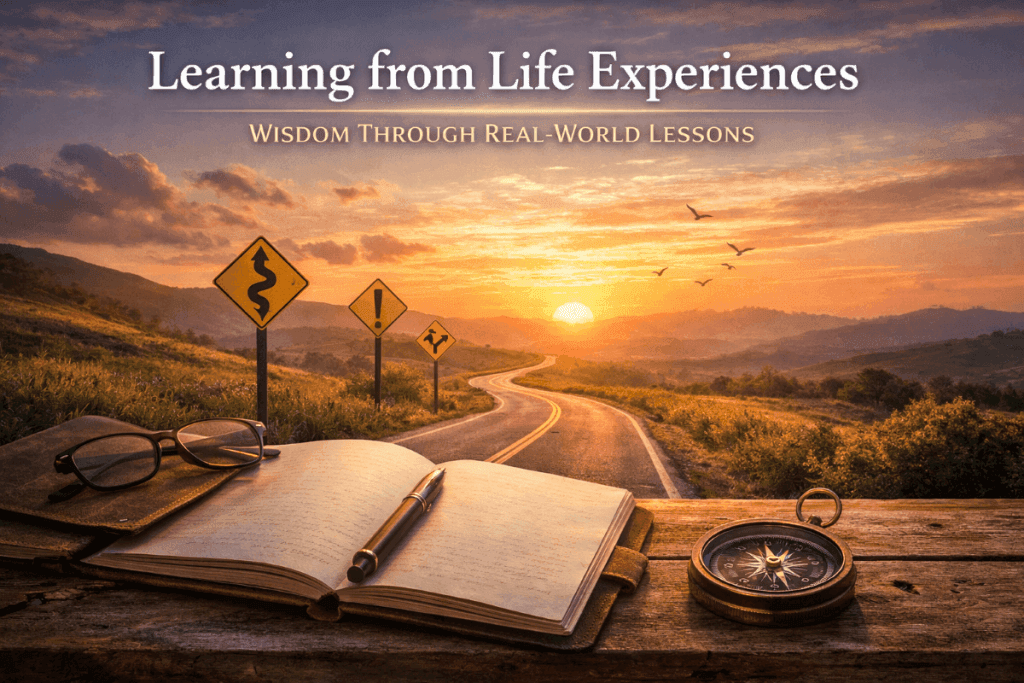
Learning from life experiences is the most authentic form of education, as it teaches lessons that no textbook or classroom can fully replicate. From the very first day of life, every success, failure, joy, and disappointment quietly shapes our mindset, values, and decisions. Academic knowledge provides structure and theory, but real-life experiences add context, emotion, and real consequences. These experiences make learning deeply personal and long-lasting. Many people later realise that their strongest skills, emotional maturity, and practical wisdom came from challenges, relationships, mistakes, and self-reflection. This blog explains how learning from life experiences shapes personal growth and self-awareness. It highlights the impact of experiences on professional development and emotional intelligence. It also shares practical ways to extract wisdom from everyday life.
Understanding Learning from Life Experiences
Learning from life experiences is the process of gaining knowledge, insight, and wisdom through real-world situations rather than structured instruction. This type of learning is often unplanned, emotional, and deeply transformative.
Example: Repeated job rejections can build resilience, adaptability, and communication skills more effectively than studying interview techniques alone. Managing family responsibilities similarly teaches patience, empathy, and prioritisation beyond what self-help books can offer. Unlike formal education, experiential learning emphasises real-time decision-making, personal accountability, and understanding context rather than simply identifying right or wrong answers.
Why Life Experiences Are Powerful Teachers?
Life experiences carry emotional weight, making the lessons learned from them both memorable and impactful. Experiences of failure, loss, or disappointment often trigger deep reflection and self-assessment, strengthening long-term learning.
Example: An entrepreneur facing financial loss learns risk management and decision-making more effectively because the consequences are real and personal. Positive experiences, such as achieving long-term goals, reinforce discipline, consistency, and self-belief. This blend of emotion, accountability, and reflection leads to lasting behavioural change rather than short-lived motivation.
Powerful Life Lessons for Long-Term Success, Balance, and Fulfilment

Life Experiences and Personal Growth
Personal growth is closely tied to learning from life experiences because growth often begins where comfort ends. Challenging situations such as relationship conflicts, career setbacks, or health issues compel individuals to reassess priorities, habits, and beliefs.
Example: Someone who goes through a difficult relationship may develop stronger boundaries, emotional awareness, and communication skills in future interactions. These lessons, though painful at the time, become foundations for healthier decisions later. Life experiences also encourage self-discovery, helping individuals understand their strengths, weaknesses, values, and triggers. Over time, this self-awareness fosters confidence, maturity, and inner stability, which are essential components of long-term personal development.
Learning from Failure and Mistakes
Failure is one of the most significant sources of experiential learning, yet it is often misunderstood or feared. Learning from life experiences means reframing failure as feedback rather than defeat.
Example: A student who performs poorly in an exam learns the importance of preparation, time management, and strategy, lessons that apply far beyond academics. In professional life, a failed project can highlight gaps in planning, teamwork, or leadership, providing insights that lead to future success. The key lies in reflection, where individuals analyse what went wrong, what could be done differently, and what skills need improvement. Those who consistently learn from their mistakes tend to develop resilience and adaptability, qualities that are critical in an unpredictable world.
At the end of the day, when it comes time to make that decision, as president, all you have to guide you are your values, and your vision, and the life experiences that make you who you are.
Michelle Obama’s Success Story And Success Rules
Life Experiences in Professional Development
In the workplace, learning from life experiences plays a vital role in shaping competence and leadership. Real-world challenges, such as handling difficult colleagues, managing deadlines, or navigating organisational change, teach problem-solving and emotional intelligence more effectively than theoretical models.
Example: A manager who learns to handle team conflicts through experience gains empathy, negotiation skills, and situational awareness that cannot be fully taught in training sessions. Career growth often accelerates when professionals consciously reflect on their experiences, identify patterns, and apply lessons strategically. Over time, this experiential learning builds practical wisdom, enabling individuals to make balanced decisions under pressure and lead with confidence.
8 Life Lessons No One Tells You (And What to Do About It)
Emotional Intelligence Through Life Experiences
Emotional intelligence develops primarily through learning from life experiences, particularly those involving relationships and interpersonal challenges. Experiences such as misunderstandings, disagreements, or emotional loss teach empathy, self-regulation, and perspective-taking.
Example: Caring for a sick family member often deepens compassion, patience, and emotional strength, qualities that influence all areas of life. These experiences help individuals recognise their emotional responses, manage stress, and communicate more effectively. Unlike technical skills, emotional intelligence grows gradually through lived experiences, reflection, and conscious effort to respond thoughtfully rather than react impulsively.
Learning from Success and Positive Experiences
While challenges offer powerful lessons, positive life experiences also contribute significantly to learning and growth. Achievements reinforce effective habits, decision-making, and perseverance.
Example: Completing a long-term project successfully highlights the importance of planning, consistency, and teamwork. Celebrating successes mindfully helps individuals identify what strategies worked and how to replicate them in future endeavours. Learning from life experiences includes acknowledging progress, building self-belief, and cultivating gratitude, which together enhance motivation and emotional well-being. Positive experiences also remind individuals of their capabilities, encouraging them to pursue larger goals with confidence.
The Role of Reflection in Experiential Learning
Reflection is the bridge between experience and wisdom, transforming events into meaningful lessons. Without reflection, experiences may pass without contributing to growth. Learning from life experiences requires intentional thinking about what happened, why it happened, and how it can inform future actions. Practices such as journaling, meditation, or thoughtful conversations help individuals process emotions and extract insights.
Example: Reflecting on a stressful situation at work may reveal communication gaps or unrealistic expectations, guiding better approaches next time. Regular reflection strengthens self-awareness and ensures that experiences contribute to continuous improvement rather than repeated mistakes.
Applying Life Lessons to Daily Decision-Making
One of the most practical benefits of learning from life experiences is improved decision-making. Experiences provide reference points that guide choices, helping individuals anticipate outcomes and assess risks realistically.
Example: Someone who has experienced burnout may prioritise work-life balance and set healthier boundaries in future roles. Similarly, financial mistakes often teach budgeting, saving, and long-term planning more effectively than theoretical advice. By consciously applying lessons learned, individuals make more informed, balanced, and values-driven decisions that align with their long-term goals.
12 Life Lessons for Kids That Are the Greatest Inheritance You Can Give
Cultivating a Growth Mindset Through Experiences
A growth mindset thrives on learning from life experiences, viewing challenges as opportunities rather than obstacles. Individuals with this mindset believe that abilities can be developed through effort, learning, and persistence. When faced with setbacks, they focus on improvement instead of self-criticism.
Example: A person who struggles with public speaking may use each speaking opportunity as practice, gradually building confidence and skill. Life experiences reinforce this mindset by demonstrating that progress often comes through persistence and adaptation rather than immediate success. Over time, this approach fosters resilience and a proactive attitude toward personal and professional development.
Teaching the Next Generation Through Experiences
Learning from life experiences also plays a crucial role in mentoring and parenting, where shared experiences become valuable teaching tools. Stories of challenges, mistakes, and lessons learned provide practical guidance and emotional connection.
Example: Sharing a personal experience of career uncertainty can help younger individuals navigate similar situations with confidence and realism. Experiential teaching emphasises authenticity and relatability, making lessons more impactful than abstract advice. By modelling reflective learning, adults encourage younger generations to view experiences as opportunities for growth rather than sources of fear.
Life experiences can, at times, be quite humbling, but you learn from them. But I like the changes in my life and what kind of person they’ve made me into. I’m very open, not as judgmental as I was in my twenties, and a lot more compassionate.
Life Lessons From The Elderly: Wisdom To Embrace At Any Age
Conclusion
Learning from life experiences is a lifelong process that shapes character, wisdom, and resilience in ways no formal education alone can achieve. Each experience, whether joyful or challenging, carries lessons that contribute to personal growth, emotional intelligence, and professional success when approached with reflection and openness. By consciously extracting insights from everyday events, individuals transform ordinary moments into powerful tools for self-development. In a rapidly changing world, the ability to learn from life experiences ensures adaptability, clarity, and inner strength, enabling individuals to navigate uncertainty with confidence and purpose.
How intentionally are you learning from your own life experiences today?
- Most Important Life Lessons You Must Always Remember
- 7 Powerful Life Lessons From The Eagle Wisdom
- Timeless Lessons from Albert Einstein: 9 Insights for a Fulfilling Life
FAQs about Learning from Life Experiences
What does learning from life experiences mean?
Learning from life experiences means acquiring knowledge, wisdom, and understanding through real-life situations rather than structured academic instruction. It involves observing outcomes, reflecting on actions, and internalising lessons that arise from both success and failure. These experiences often carry emotional depth, which makes the learning more impactful and memorable. Over time, such learning shapes values, attitudes, and decision-making abilities. It is a continuous process that evolves as individuals encounter new stages and challenges in life.
Why is learning from life experiences important?
Learning from life experiences is important because it builds practical wisdom that cannot be gained from theory alone. It helps individuals develop resilience, adaptability, and emotional intelligence needed to handle real-world challenges. Life experiences teach accountability, as people directly face the consequences of their choices. This form of learning also enhances self-awareness and empathy toward others. Ultimately, it prepares individuals to make balanced and thoughtful decisions in both personal and professional life.
How can I improve my ability to learn from experiences?
You can improve your ability to learn from experiences by consciously reflecting on events and your responses to them. Practices such as journaling, self-questioning, and mindful thinking help convert experiences into clear lessons. Seeking feedback from trusted people also provides new perspectives on the same experience. Applying learned lessons to future situations reinforces growth and prevents repeated mistakes. Consistency in reflection gradually turns everyday events into meaningful learning opportunities.
Can life experiences replace formal education?
Life experiences cannot fully replace formal education, but they strongly complement it. Formal education provides foundational knowledge, frameworks, and technical skills required for many professions. Life experiences add practical understanding, emotional maturity, and real-world application to that knowledge. Together, they create a well-rounded individual capable of both critical thinking and effective action. The most successful individuals often integrate academic learning with experiential insights.
How do failures contribute to learning from life experiences?
Failures contribute to learning from life experiences by revealing gaps in skills, judgment, or preparation. They encourage individuals to analyse what went wrong and identify areas for improvement. Failure also builds resilience by teaching how to recover, adapt, and move forward despite setbacks. The emotional impact of failure often strengthens the lesson learned. When approached with reflection, failures become powerful stepping stones toward long-term success.
Thank you for taking the time to explore this post. I sincerely hope you found the insights valuable and actionable. If this content resonated with you, please consider sharing it. Your support enables me to share knowledge and inspiration with others in our community.
PVM

Mathukutty P V is a Blogger, YouTuber, and Content Writer and the founder of Simply Life Tips. After taking voluntary retirement in 2017, he embraced a free lifestyle focused on learning, personal growth, and sharing practical wisdom to help others live with more purpose and positivity.