

Childhood emotional neglect is one of the most overlooked childhood experiences, yet it can have a profound impact on emotional health, self-esteem, relationships, and overall well-being. Unlike physical abuse or verbal mistreatment, emotional neglect is often invisible because it involves the absence of emotional support rather than harmful actions. Many adults who experienced emotional neglect during childhood may not even realize it affected them until they begin noticing recurring patterns such as difficulty expressing emotions, chronic self-doubt, fear of vulnerability, or feelings of emptiness. Fortunately, healing childhood emotional neglect is possible. With awareness, self-compassion, and intentional healing practices, individuals can learn to reconnect with their emotions, build healthier relationships, and develop a stronger sense of self-worth.
What Is Childhood Emotional Neglect?
Childhood emotional neglect occurs when a child’s emotional needs are consistently ignored, dismissed, minimized, or unmet by caregivers. Emotional needs include feeling understood, accepted, comforted, encouraged, and emotionally supported.
Unlike abuse, which involves harmful actions, emotional neglect often stems from what did not happen. A parent may provide food, clothing, education, and physical safety while failing to offer emotional guidance and validation. Because the child’s basic physical needs are met, emotional neglect frequently goes unnoticed.
For example, imagine a child returning home upset after being excluded by friends at school. Instead of listening and offering comfort, the parent responds with statements like “Don’t be so sensitive” or “You’ll get over it.” While these responses may not seem harmful, repeated experiences like this teach the child that emotions are unimportant or burdensome.
Over time, children learn to suppress their feelings, disconnect from their emotional experiences, and rely solely on themselves for emotional support.
To learn more about the concept, read this detailed guide on Understanding Childhood Emotional Neglect.
Importance of Healing Childhood Emotional Neglect
Healing childhood emotional neglect is important because emotional wounds do not automatically disappear with age. Many people carry the effects into adulthood without realizing the connection to their childhood experiences.
When emotional needs remain unmet during childhood, individuals often develop coping mechanisms designed to protect them from emotional pain. These strategies may have been useful in childhood, but can create challenges later in life.
For example:
- Avoiding emotional conversations to prevent discomfort.
- Seeking constant validation from others.
- Struggling to identify personal needs.
- Feeling disconnected from emotions.
- Becoming overly independent.
- Experiencing persistent feelings of loneliness.
Healing allows individuals to break these patterns and create healthier emotional habits. It also provides an opportunity to develop the emotional skills that may have been missing during childhood.
Signs of the Effects of Childhood Emotional Neglect
Many adults discover emotional neglect only after recognizing specific patterns in their lives.
Difficulty Understanding Your Emotions
People who experienced emotional neglect often find it difficult to identify exactly what they are feeling.
For example, instead of recognizing sadness, frustration, disappointment, or anxiety, they may simply describe themselves as feeling “bad” or “off.”
This emotional confusion occurs because they were never taught how to recognize and process emotions effectively.
Feeling Empty Despite Success
Some individuals achieve academic, professional, or financial success but still experience a persistent sense of emptiness.
For example, a person may receive a promotion, buy a home, or achieve a long-term goal yet feel strangely unfulfilled afterward.
This can occur because emotional needs remain unmet despite external achievements.
Excessive Self-Reliance
Being independent is valuable, but emotional neglect can lead to extreme self-reliance.
For example, someone may refuse help during a crisis because they learned early in life that emotional support was unavailable.
As a result, they may carry overwhelming burdens alone.
Difficulty Asking for Help
Many adults affected by emotional neglect feel uncomfortable depending on others.
Even when support is available, they may hesitate to seek assistance because they fear rejection, disappointment, or appearing weak.
Strong Inner Critic
Individuals who lack emotional validation often become highly self-critical.
For example, after making a minor mistake at work, they may spend hours replaying the event and criticizing themselves harshly.
Challenges in Relationships
Emotional neglect can make vulnerability feel risky.
As a result, some people struggle to trust others, express affection, communicate openly, or form deep emotional connections.
Common Causes of Childhood Emotional Neglect
Understanding the causes can help individuals replace self-blame with compassion and understanding.
Emotionally Unavailable Parents
Some parents struggle to connect emotionally due to their own upbringing, personality traits, or life challenges.
For example, a parent who never learned emotional expression may find it difficult to provide emotional support to their children.
Mental Health Difficulties
Conditions such as depression, anxiety, addiction, or unresolved trauma may reduce a caregiver’s ability to respond to a child’s emotional needs consistently.
High Levels of Family Stress
Financial hardship, marital conflict, illness, or demanding work schedules can shift attention away from emotional nurturing.
Although parents may care deeply for their children, chronic stress can affect emotional availability.
Generational Emotional Neglect
Emotional neglect often passes from one generation to the next.
Parents who were emotionally neglected may unintentionally repeat similar patterns because they never learned healthier emotional skills.
Cultural and Social Influences
Certain cultures emphasize emotional restraint and discourage open discussion of feelings.
Children raised in such environments may learn that emotional expression is inappropriate or unnecessary.
The Long-Term Effects of Childhood Emotional Neglect
The impact of emotional neglect often extends beyond childhood.
Effects on Self-Esteem
Children develop self-worth partly through emotional validation.
When emotional experiences are repeatedly ignored, they may conclude that their feelings—and therefore they themselves—are unimportant.
This belief can persist into adulthood and affect confidence.
Effects on Mental Health
Unresolved emotional neglect can contribute to:
- Anxiety disorders
- Depression
- Chronic stress
- Emotional numbness
- Feelings of loneliness
For example, someone may experience ongoing anxiety without understanding that suppressed emotions contribute to their distress.
Effects on Relationships
People who experienced emotional neglect may struggle with emotional intimacy.
Some avoid closeness altogether, while others become overly dependent on partners for validation.
Effects on Career and Achievement
Many emotionally neglected individuals become high achievers.
While achievement itself is positive, it can sometimes become a way to earn approval and compensate for feelings of inadequacy.
This may contribute to perfectionism and burnout.
How to Heal Childhood Emotional Neglect?
Healing is not about blaming parents or dwelling on the past. Instead, it involves understanding experiences, developing emotional skills, and creating healthier patterns.
1. Learn to Identify Emotions
The first step is reconnecting with emotions.
Several times each day, ask:
- What am I feeling?
- What caused this feeling?
- What does this emotion need?
Using an emotion wheel or an emotional vocabulary list can be helpful.
For example, instead of saying “I feel bad,” identify whether you feel disappointed, frustrated, overwhelmed, lonely, or anxious.
2. Practice Emotional Validation
Validation means acknowledging emotions without judgment.
Instead of saying:
“I shouldn’t feel upset.”
Try saying:
“It makes sense that I feel upset given what happened.”
This simple practice teaches your brain that emotions are acceptable and worthy of attention.
3. Develop Self-Compassion
Many people who experienced emotional neglect speak to themselves harshly.
Self-compassion involves treating yourself with understanding rather than criticism.
For example, if you make a mistake, replace self-judgment with:
“Everyone makes mistakes. I can learn from this experience.”
Research consistently shows that self-compassion improves emotional resilience and mental well-being.
4. Reconnect With Personal Needs
Emotionally neglected children often learn to ignore their own needs.
Start asking yourself:
- What do I need right now?
- What would help me feel supported?
- What boundaries would improve my well-being?
Learning to honor personal needs is a major part of recovery.
5. Build Healthy Relationships
Supportive relationships can help repair emotional wounds.
Look for people who:
- Listen without judgment.
- Respect your emotions.
- Encourage open communication.
- Provide emotional support.
Healthy relationships offer opportunities to experience the validation that may have been missing during childhood.
6. Establish Healthy Boundaries
Boundaries protect emotional health.
For example:
- Limiting contact with toxic individuals.
- Saying no when necessary.
- Protecting personal time and energy.
Strong boundaries reinforce self-respect and emotional safety.
7. Consider Professional Therapy
Therapy can provide valuable support during the healing process.
A therapist can help:
- Identify emotional neglect patterns.
- Process unresolved emotions.
- Develop healthier coping strategies.
- Improve emotional awareness.
Many people find therapy to be one of the most effective tools for long-term healing.
12 Powerful Healing Steps to Heal Childhood Emotional Neglect
Healing childhood emotional neglect is a journey of reconnecting with your emotions, understanding your unmet childhood needs, and learning healthier ways to care for yourself. Many adults carry invisible emotional wounds without realizing how much they influence relationships, confidence, decision-making, and overall well-being. This infographic outlines 12 practical and effective strategies that can help you develop emotional awareness, strengthen self-worth, establish healthy boundaries, and move toward lasting emotional healing.
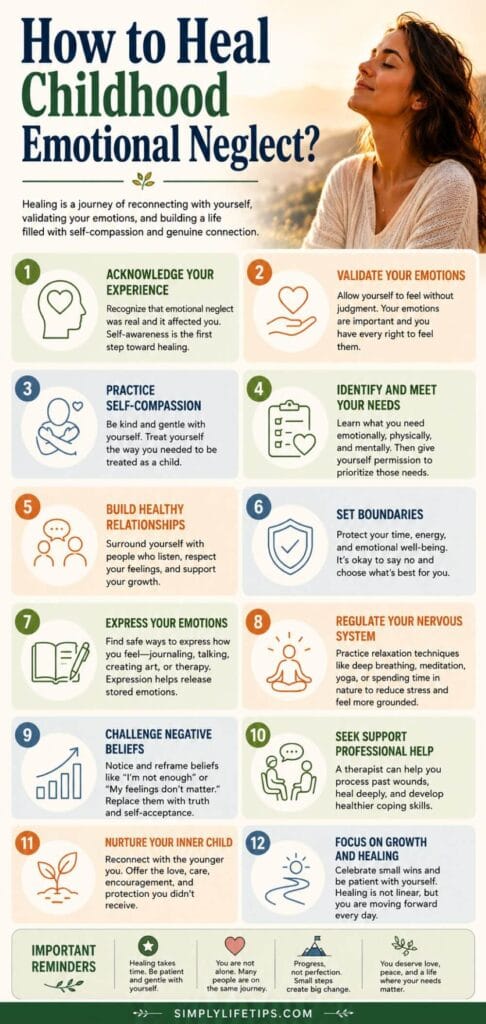
Healing does not happen overnight, but every small step matters. By acknowledging your experiences, practicing self-compassion, expressing emotions in healthy ways, and seeking support when needed, you can gradually overcome the effects of childhood emotional neglect. Use these strategies consistently and remember that emotional healing is a process of growth, self-discovery, and learning to give yourself the care and validation that may have been missing during childhood.
Benefits of Healing Childhood Emotional Neglect
Healing childhood emotional neglect does far more than reduce emotional pain. It creates positive changes in nearly every area of life, including mental health, relationships, self-confidence, career growth, and overall happiness. As individuals learn to recognize and meet their emotional needs, they often discover a deeper sense of peace, connection, and purpose. The following benefits highlight why healing childhood emotional neglect is one of the most valuable investments a person can make in their emotional well-being.
1. Improved Emotional Awareness
One of the most significant benefits of healing childhood emotional neglect is developing a stronger understanding of emotions. Many emotionally neglected individuals grow up disconnected from their feelings because they were never taught how to identify or process them.
As healing progresses, people become better at recognizing emotions such as sadness, anger, disappointment, joy, fear, and excitement. Instead of feeling confused or emotionally numb, they gain clarity about their internal experiences.
For example, rather than feeling generally stressed, a person may recognize that they are actually feeling anxious about an upcoming presentation or disappointed by a recent interaction. This awareness makes emotional management much easier.
2. Increased Self-Esteem and Self-Worth
Emotional neglect often leaves people feeling unimportant, invisible, or unworthy of attention. These beliefs can silently influence decisions, relationships, and personal goals throughout adulthood.
Healing helps individuals challenge these negative beliefs and develop a healthier self-image. They begin to understand that their value does not depend on achievements, appearance, or approval from others.
For example, someone who previously sought constant validation from coworkers or friends may gradually develop confidence in their own abilities and judgments without needing external reassurance.
3. Healthier and More Fulfilling Relationships
People who experienced emotional neglect frequently struggle with emotional intimacy, trust, or communication. Healing allows them to become more comfortable expressing feelings and connecting with others.
As emotional awareness improves, relationships often become stronger and more authentic. Individuals learn how to communicate their needs, establish boundaries, and respond to others with greater empathy.
For example, instead of withdrawing during conflicts, they may learn to discuss concerns openly and work toward solutions together. This leads to deeper emotional connections and healthier partnerships.
4. Better Emotional Regulation
Unprocessed emotions can feel overwhelming or difficult to manage. Some people may suppress emotions entirely, while others may experience emotional outbursts because they never learned effective coping strategies.
Healing teaches healthier ways to process emotions. Individuals become better equipped to handle stress, disappointment, frustration, and other difficult feelings without becoming overwhelmed.
For example, after receiving criticism at work, a person may be able to reflect calmly, learn from the feedback, and move forward rather than spiraling into self-doubt or emotional distress.
5. Reduced Anxiety and Chronic Stress
Many adults who experienced emotional neglect live in a constant state of emotional tension without understanding why. Suppressed feelings often contribute to anxiety, stress, and mental exhaustion.
Healing allows individuals to acknowledge emotions rather than carry them internally. This reduces emotional pressure and creates a greater sense of calm.
For example, someone who habitually ignores their feelings may discover that simply acknowledging sadness or frustration significantly reduces emotional stress and improves overall mental health.
6. Greater Confidence in Decision-Making
People affected by emotional neglect often struggle with self-trust. Because their feelings were frequently dismissed during childhood, they may doubt their instincts and seek excessive reassurance from others.
Healing strengthens confidence in personal judgment. Individuals learn to trust their emotions, values, and preferences when making decisions.
For example, instead of asking multiple people for approval before making a career choice, they become more comfortable evaluating options and making decisions independently.
7. Stronger Personal Boundaries
Many emotionally neglected individuals have difficulty setting boundaries because they learned to prioritize other people’s needs over their own.
Healing helps people recognize that their needs and limits are important. They become more comfortable saying no, protecting their energy, and avoiding unhealthy situations.
For example, someone who previously agreed to every request out of guilt may learn to decline commitments that negatively affect their well-being.
Healthy boundaries contribute to greater self-respect and emotional balance.
8. Improved Mental Health
Healing childhood emotional neglect can significantly improve overall mental health. While emotional neglect alone does not cause every mental health condition, it can contribute to anxiety, depression, loneliness, and emotional distress.
As individuals develop emotional awareness and healthier coping mechanisms, many experience improvements in mood, resilience, and emotional stability.
For example, understanding the root causes of emotional struggles often reduces feelings of confusion and hopelessness.
9. Enhanced Emotional Resilience
Life inevitably includes challenges, setbacks, and disappointments. Emotional resilience refers to the ability to recover from these difficulties and continue moving forward.
Healing strengthens resilience by teaching individuals how to process emotions constructively rather than avoiding them.
For example, after experiencing a professional setback, a resilient person acknowledges disappointment, learns from the experience, and remains focused on future opportunities rather than becoming stuck in self-criticism.
10. Reduced Need for External Validation
People who grew up without emotional validation often seek approval from others to feel worthy or accepted.
Healing helps individuals develop internal validation. They learn to recognize their own achievements, strengths, and values without constantly depending on praise from others.
For example, rather than feeling devastated by criticism, they can evaluate feedback objectively while maintaining a healthy sense of self-worth.
11. Greater Authenticity
Emotional neglect sometimes encourages people to hide their true thoughts, feelings, and preferences to gain acceptance or avoid rejection.
As healing progresses, individuals become more comfortable being themselves. They learn that authenticity fosters healthier relationships and greater personal satisfaction.
For example, they may feel more confident expressing opinions, pursuing personal interests, or setting goals that align with their values rather than trying to please everyone around them.
12. Improved Physical Well-Being
Emotional health and physical health are closely connected. Chronic emotional stress can contribute to sleep problems, fatigue, headaches, muscle tension, and other physical symptoms.
Healing often leads to healthier stress management and improved self-care habits, which can positively affect physical well-being.
For example, individuals who become more aware of their emotional needs may prioritize rest, exercise, healthy nutrition, and relaxation practices.
13. Increased Capacity for Joy and Happiness
When emotions are suppressed, positive emotions may also become muted. Many emotionally neglected individuals struggle to fully experience joy, excitement, or contentment.
Healing allows people to reconnect with the full range of human emotions. As emotional barriers decrease, they often experience greater enjoyment in relationships, hobbies, achievements, and everyday experiences.
For example, simple activities such as spending time with loved ones, enjoying nature, or celebrating accomplishments may feel more meaningful and fulfilling.
14. Better Parenting Skills
For parents, healing childhood emotional neglect can help prevent unhealthy patterns from being passed to the next generation.
Individuals who understand their own emotional experiences are often better equipped to recognize and respond to their children’s emotional needs.
For example, rather than dismissing a child’s sadness with “You’ll be fine,” they may offer empathy, support, and guidance.
This creates a more emotionally healthy family environment.
15. A Stronger Sense of Identity
Many emotionally neglected individuals struggle to understand who they are because they spent years ignoring their own feelings and needs.
Healing encourages self-discovery. People gain a clearer understanding of their values, goals, interests, strengths, and personal desires.
For example, they may discover career aspirations, hobbies, or life priorities that genuinely reflect who they are rather than what others expect of them.
16. Greater Overall Life Satisfaction
Ultimately, healing childhood emotional neglect improves overall quality of life. Emotional awareness, self-acceptance, healthy relationships, resilience, and self-confidence work together to create a deeper sense of fulfillment.
Rather than merely surviving, individuals can thrive emotionally, socially, and personally. They become better equipped to pursue meaningful goals, enjoy relationships, navigate challenges, and experience life with greater confidence and emotional freedom.
The benefits of healing childhood emotional neglect extend far beyond emotional recovery. They influence how individuals think, feel, connect with others, handle challenges, and experience life itself. Every step toward healing helps replace emotional disconnection with self-understanding, self-worth, resilience, and authentic connection. Although the journey requires patience and commitment, the long-term rewards can be truly life-changing.
16 Benefits of Healing Childhood Emotional Neglect Infographic
The benefits of healing childhood emotional neglect extend far beyond emotional recovery. When people begin addressing unmet emotional needs from childhood, they often experience significant improvements in self-esteem, emotional awareness, relationships, resilience, and overall life satisfaction. Healing allows individuals to reconnect with themselves, break unhealthy patterns, and develop healthier ways of thinking, feeling, and relating to others. This infographic highlights some of the most powerful benefits that can emerge from the healing process.
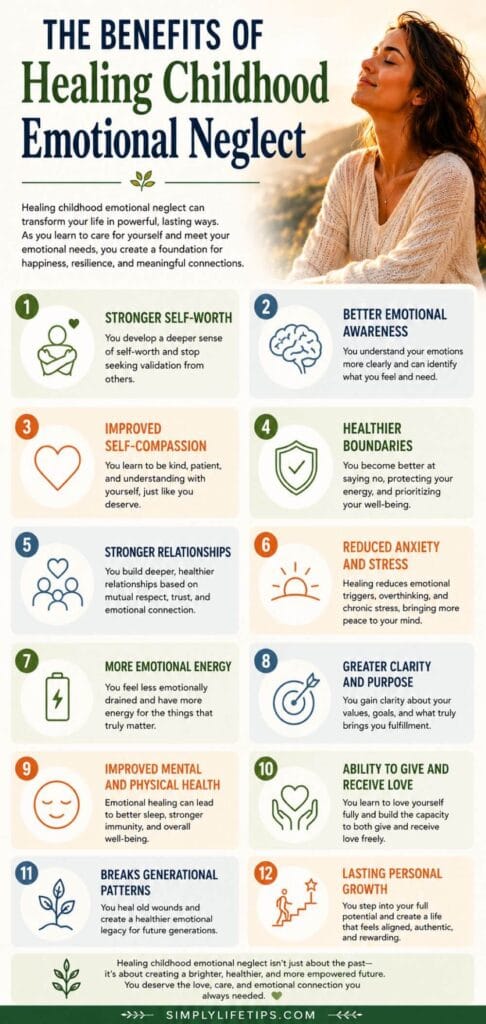
Healing childhood emotional neglect is not about changing the past; it is about creating a healthier future. As emotional wounds begin to heal, individuals often experience greater confidence, stronger relationships, improved mental well-being, and a deeper sense of purpose. Every step toward emotional healing helps build a life rooted in self-worth, emotional balance, and authentic connection. The journey may take time, but the long-term rewards can positively impact every area of life.
Conclusion
Healing childhood emotional neglect is a journey of rediscovering emotions, rebuilding self-worth, and creating healthier relationships with yourself and others. Although emotional neglect may leave lasting effects, it does not define your future. By developing emotional awareness, practicing self-compassion, honoring personal needs, building supportive relationships, and seeking professional help when necessary, you can heal old wounds and create a more emotionally fulfilling life. Every step toward healing strengthens your ability to experience connection, confidence, resilience, and genuine well-being.
Frequently Asked Questions
What is childhood emotional neglect?
Childhood emotional neglect occurs when a child’s emotional needs are consistently overlooked, ignored, or unmet by caregivers.
How do I know if I experienced emotional neglect?
Common signs include difficulty identifying emotions, excessive self-reliance, low self-esteem, emotional numbness, and relationship challenges.
Can childhood emotional neglect affect adult relationships?
Yes. It can influence trust, communication, vulnerability, emotional intimacy, and attachment patterns.
Is childhood emotional neglect a form of trauma?
Many mental health professionals consider chronic emotional neglect a potentially traumatic experience because of its long-term emotional impact.
Can emotional neglect be healed later in life?
Yes. Through self-awareness, emotional skill-building, healthy relationships, therapy, and consistent self-care, many people achieve significant healing and emotional growth.
Related Articles
- Healing Childhood Emotional Trauma: Strategies and Benefits
- Understanding Childhood Depression: Signs, Causes, Support
- The Impact Of Childhood Experiences On The Future
If you are unsure whether emotional neglect affected you, try this Childhood Emotional Neglect Questionnaire for additional insight.

Mathukutty P V is a Blogger, YouTuber, and Content Writer and the founder of Simply Life Tips. After taking voluntary retirement in 2017, he embraced a free lifestyle focused on learning, personal growth, and sharing practical wisdom to help others live with more purpose and positivity.



