
Do you know how to handle criticism like a great leader? Handling criticism is an essential skill in today’s professional world, especially as leadership brings visibility and constant feedback. Some feedback is constructive, some is uncomfortable, and some directly challenges your confidence, ego, or authority. What separates great leaders from average ones is not how often they are criticised, but how calmly and wisely they respond when criticism tests them. This blog post explains how to handle criticism like a great leader and turn feedback into growth instead of frustration.
Handling Criticism Like a Great Leader
Handling criticism is inevitable in leadership because every decision a leader makes affects people, outcomes, and direction, and where there is impact, opinions will follow. Leaders operate in visible roles, and visibility naturally invites evaluation, disagreement, and feedback. As responsibility increases, so does scrutiny, making criticism a constant companion rather than an occasional challenge. Great leaders accept this reality early, understanding that avoiding criticism is impossible, but that responding to it with maturity and clarity sustains trust, authority, and long-term effectiveness.
Why Criticism Feels So Personal?
Criticism feels personal because it often touches a leader’s sense of identity, competence, and self-worth. Many leaders subconsciously equate performance with value, so feedback can feel like a judgment of who they are rather than what they did. This triggers an emotional threat response, making the mind defensive and reactive. Recognising this pattern helps leaders separate emotion from information and respond with clarity instead of self-protection.
The Cost of Poorly Handling Criticism
Poorly handling criticism carries a high leadership cost because defensive or dismissive reactions quickly erode trust and credibility. Team members stop sharing honest feedback, communication weakens, and small issues remain hidden until they grow into serious problems. Over time, fear replaces openness, relationships suffer, and leadership effectiveness declines, not because of the criticism itself, but because of how it was handled.
How Great Leaders Handle Criticism?
Great leaders handle criticism with composure, curiosity, and confidence rather than defensiveness. They listen fully before responding, separate their ego from the feedback, and focus on what can be learned instead of who is right. By acknowledging input, asking thoughtful questions, and choosing deliberate action, they turn criticism into a tool for growth and demonstrate emotional maturity that earns long-term trust and respect.
How to Handle Criticism Using The RAIN Framework?
The RAIN framework offers a simple structure to process criticism calmly and effectively. It supports emotional intelligence and self-regulation. Leaders can apply it in meetings, reviews, and difficult conversations.
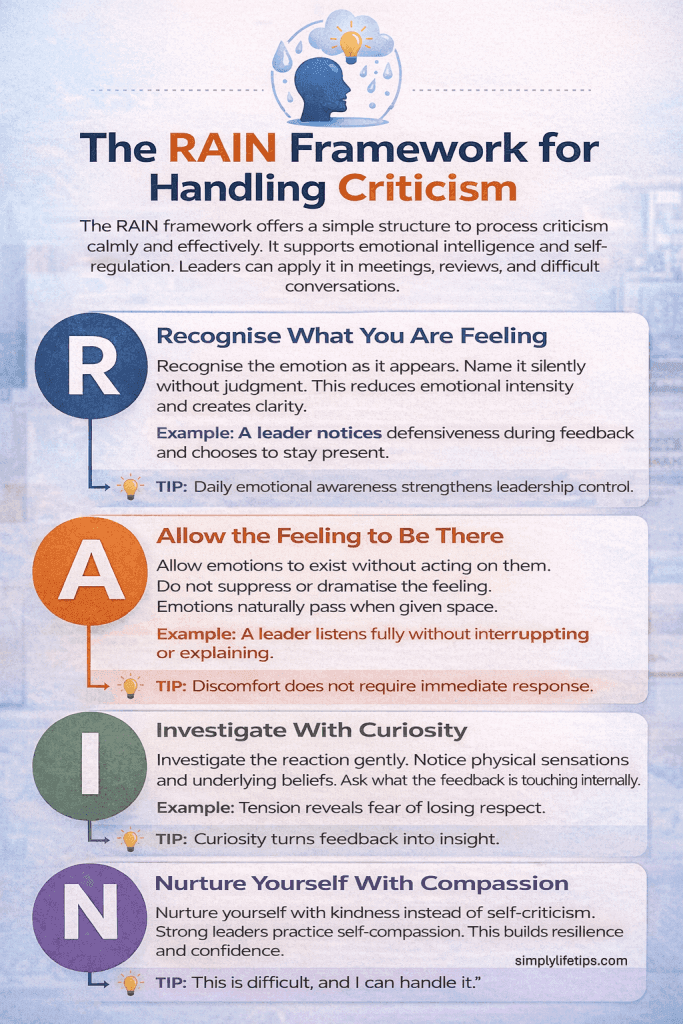
R – Recognise What You Are Feeling
Recognise the emotion as it appears. Name it silently without judgment. This reduces emotional intensity and creates clarity.
Example: A leader notices defensiveness during feedback and chooses to stay present.
Tip: Daily emotional awareness strengthens leadership control.
A – Allow the Feeling to Be There
Allow emotions to exist without acting on them. Do not suppress or dramatise the feeling. Emotions naturally pass when given space.
Example: A leader listens fully without interrupting or explaining.
Tip: Discomfort does not require immediate response.
I – Investigate With Curiosity
Investigate the reaction gently. Notice physical sensations and underlying beliefs. Ask what the feedback is touching internally.
Example: Tension reveals fear of losing respect.
Tip: Curiosity turns feedback into insight.
N – Nurture Yourself With Compassion
Nurture yourself with kindness instead of self-criticism. Strong leaders practice self-compassion. This builds resilience and confidence.
Example: “This is difficult, and I can handle it.”
Tip: Speak to yourself like a trusted mentor.
Learn how maintaining inner peace can help you handle conflict, criticism, and rejection without losing your calm.
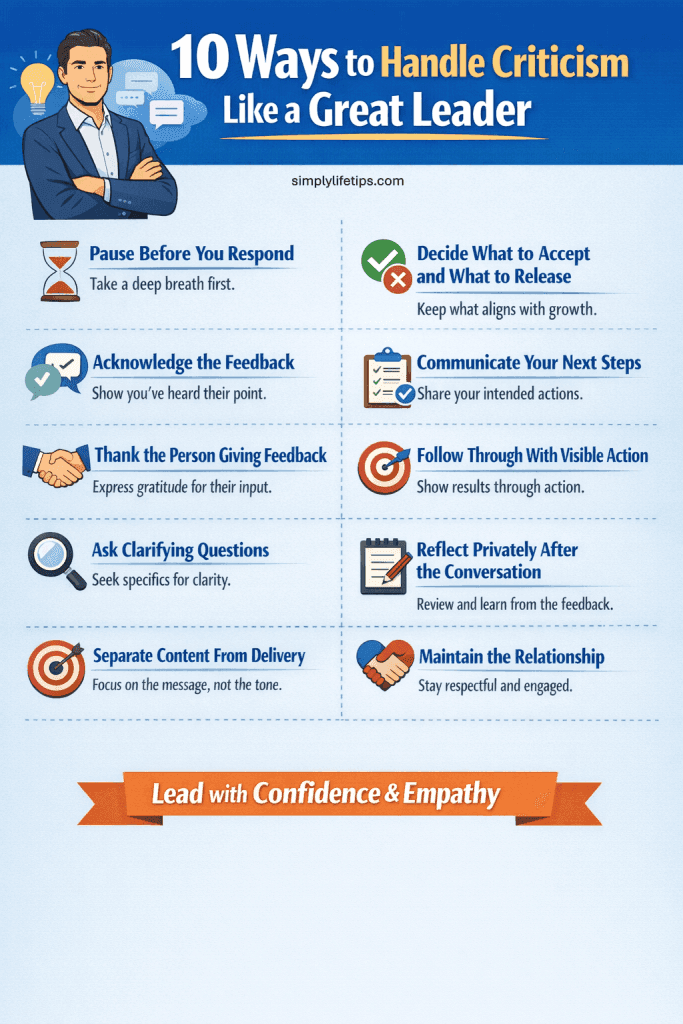
10 Ways to Handle Criticism Like a Great Leader
Responding after receiving criticism is where leadership maturity becomes visible. The inner work done through the RAIN framework prepares leaders to act with clarity instead of emotion. A strong response protects relationships, builds trust, and turns feedback into progress.
1. Pause Before You Respond
When you handle criticism like a great leader, your first response should never be rushed. Criticism can trigger emotions quickly, especially when it feels unfair or unexpected. Taking a brief pause allows emotions to settle and prevents regretful words that can damage trust or credibility. This pause gives you time to think clearly instead of reacting from ego or defensiveness. Silence in this moment does not signal weakness or lack of confidence. It signals self-control, maturity, and leadership presence.
Example: When a leader receives critical feedback during a meeting, they pause, take a breath, and listen carefully instead of reacting instantly. This calm approach keeps the conversation professional and prevents unnecessary conflict.
Tip: If you need more time, say, “Let me reflect on this and get back to you.” This response shows that you take feedback seriously while maintaining control over your emotions.
2. Acknowledge the Feedback
When you handle criticism like a great leader, acknowledgement comes before agreement. Acknowledging feedback shows respect, even when you do not fully agree with the point being made. It tells the other person that they have been heard and taken seriously. This simple act alone can reduce tension and lower defensiveness in difficult conversations. People feel calmer when they know their perspective matters. Respect creates space for a more productive discussion.
Example: A leader responds to criticism by saying, “I understand what you’re pointing out.” This response keeps the conversation open without immediately accepting or rejecting the feedback.
Tip: Avoid dismissive phrases like “That’s not true” or “You misunderstood.” These responses shut down dialogue and escalate conflict instead of resolving it.
3. Thank the Person Giving Feedback
When you handle criticism like a great leader, thanking the person does not mean you agree with everything they said. It shows openness, confidence, and emotional strength. Leaders who express gratitude for feedback make it easier for others to speak honestly in the future. This creates a culture where issues are shared early instead of hidden until they become problems. Gratitude reduces fear and encourages trust.
Example: A leader responds by saying, “Thank you for sharing this with me.” This simple sentence shows respect and keeps communication healthy.
Tip: Gratitude builds psychological safety within teams and signals that honest feedback is welcome.
4. Ask Clarifying Questions
Vague criticism creates confusion, but clarification creates progress. When you handle criticism like a great leader, you focus on turning unclear feedback into actionable insight. Asking for clarification helps separate emotion from facts and prevents misunderstandings. Great leaders seek specifics, not assumptions, because clear information leads to better decisions. This approach keeps conversations grounded and productive.
Example: A leader asks, “Can you share an example of when this happened?” This question invites clarity without sounding confrontational.
Tip: Ask questions calmly and with genuine curiosity, not defensiveness.
5. Separate Content From Delivery
Not all feedback is delivered kindly, but that does not make it useless. When you handle criticism like a great leader, you focus on the message rather than the tone. This mindset prevents ego-driven reactions and keeps your attention on improvement instead of offence. Separating delivery from meaning allows growth even in uncomfortable situations. Leaders who do this stay calm and objective.
Example: A leader ignores the harsh wording of a comment and focuses on extracting the core issue being raised. This helps address the real problem without escalating emotions.
Tip: Ask yourself, “Is there something here I can learn?”
6. Decide What to Accept and What to Release
Not all criticism deserves action, and great leaders understand this. When you handle criticism like a great leader, you evaluate feedback objectively instead of reacting emotionally. You keep what aligns with growth, values, and goals, and discard what is personal, biased, or unhelpful. This balanced approach protects confidence while still allowing improvement.
Example: A leader accepts feedback about improving communication style but ignores personal attacks that add no value. This keeps the focus on growth rather than self-doubt.
Tip: Growth requires discernment, not blind acceptance.
Learn how to embrace feedback, separate fact from emotion, and use criticism for growth and success.
7. Communicate Your Next Steps
Strong leaders close the loop by clearly sharing their intended actions. When you handle criticism like a great leader, you show accountability by communicating what you plan to change or improve. This builds trust and reassures others that their feedback was taken seriously. Even small, consistent actions demonstrate commitment to growth.
Example: A leader says, “I’ll work on setting clearer expectations in meetings.” This response shows responsibility without overpromising.
Tip: Be realistic with commitments and avoid promising changes you cannot sustain over time.
8. Follow Through With Visible Action
Words matter, but actions speak louder. When you handle criticism like a great leader, your response is measured by what you do after the conversation ends. Teams closely observe follow-through, not promises. Consistent action strengthens credibility and reinforces trust over time.
Example: After receiving feedback, a leader demonstrates improved communication in future updates and meetings. This visible change confirms that the feedback led to action.
Tip: Small, consistent changes create a lasting and meaningful impact.
9. Reflect Privately After the Conversation
Reflection turns feedback into lasting learning. When you handle criticism like a great leader, you take time to review not only what was said, but also how you responded. This self-review strengthens emotional intelligence and improves future reactions. Leaders who reflect grow faster because they learn from every interaction.
Example: A leader journals insights after feedback sessions to understand triggers, emotions, and lessons. This practice builds self-awareness over time.
Tip: Look for patterns across feedback, not isolated comments.
10. Maintain the Relationship
Healthy leadership protects relationships even during difficult moments. When you handle criticism like a great leader, you ensure that feedback does not damage the connection. Continuing to engage normally and respectfully signals emotional stability and maturity. It shows that disagreement does not threaten your confidence or authority.
Example: After receiving criticism, a leader continues to treat the feedback-giver with the same respect and professionalism as before. This reinforces trust and psychological safety.
Tip: Strong leaders do not hold grudges.
Responding well to criticism is not about perfection. It is about presence, clarity, and integrity. When leaders master this step, feedback becomes a tool for influence, trust, and long-term growth.
When Criticism Is Unfair or Poorly Delivered
Not all criticism is constructive, and great leaders know how to stay grounded even when feedback is unfair, emotional, or poorly expressed. The key is to regulate emotions first, then evaluate the content calmly without reacting to tone or personal attacks. Leaders acknowledge the concern, ask for clarity if needed, and choose whether any part of the feedback is useful, while confidently discarding what is unhelpful. By responding with composure and respect, leaders protect their credibility, maintain relationships, and demonstrate emotional maturity even in challenging situations.
How to Handle Criticism With Trust?
How a leader handles criticism directly influences the level of trust within a team. When leaders listen calmly, acknowledge feedback, and respond without defensiveness, team members feel safe to speak honestly. This openness encourages transparency, reduces fear, and strengthens relationships over time. Consistent, respectful responses to criticism show reliability and integrity, which are the foundation of lasting trust.
Using Criticism for Continuous Growth
Criticism becomes a powerful tool for continuous growth when leaders treat it as ongoing feedback rather than a one-time event. By tracking recurring comments, reflecting on patterns, and adjusting behaviour gradually, leaders turn insight into improvement. This disciplined approach transforms criticism into a learning system that strengthens skills, sharpens self-awareness, and supports long-term leadership effectiveness.
To deepen your leadership growth, explore these related guides:
Conclusion
How to handle criticism like a great leader is not about being emotionally unaffected or always agreeing with feedback. It is about responding with awareness, balance, and integrity, even when the message is uncomfortable or imperfect. When leaders use criticism as information rather than a personal attack, they grow stronger, build trust, and model emotional intelligence for their teams. Over time, criticism shifts from something to fear into a tool for clarity, learning, and lasting leadership impact.
Are you using criticism as a threat to your confidence, or as a pathway to becoming a better leader?
How To Use Criticism For Personal Growth
FAQs – Handle Criticism Like a Great Leader
What is the best way for leaders to handle criticism?
Leaders should pause, regulate emotions, and listen fully before responding. This approach prevents defensiveness and encourages learning. Thoughtful responses build trust and credibility.
Why does criticism trigger defensiveness in leaders?
Criticism often challenges identity and competence. The brain interprets it as a threat, activating emotional reactions. Awareness helps leaders separate emotion from information.
Can criticism improve leadership performance?
Yes, criticism highlights blind spots and growth areas. When processed calmly, it provides valuable insight. Consistent reflection leads to better leadership decisions.
How does emotional intelligence help with criticism?
Emotional intelligence improves self-awareness and self-regulation. It allows leaders to manage reactions effectively. This results in clearer communication and stronger relationships.
How often should leaders reflect on feedback?
Leaders should review feedback regularly, ideally monthly. Reflection helps identify patterns and progress. Continuous review supports long-term growth.
References: Amy Gibson Linkedin

Mathukutty P V is a Blogger, YouTuber, and Content Writer and the founder of Simply Life Tips. After taking voluntary retirement in 2017, he embraced a free lifestyle focused on learning, personal growth, and sharing practical wisdom to help others live with more purpose and positivity.