Fear of commitment in relationships is not just a hesitation toward marriage or long-term bonding—it is a deeply psychological response shaped by past experiences, emotional conditioning, and internal belief systems. Many individuals genuinely desire love and stability, yet when relationships begin to deepen, an internal resistance emerges.
This fear often operates subconsciously. A person may not even realize why they feel anxious, doubtful, or emotionally distant. Instead, they may assume something is wrong with the relationship when in reality, the root cause lies within unresolved emotional patterns.
Understanding this fear in depth is essential because it not only affects romantic relationships but also impacts self-worth, decision-making, and long-term happiness.
Fear of Commitment in Relationships | Inspiring Story
Meera (name changed) was preparing for her arranged marriage. What should have been a joyful phase slowly turned into emotional turmoil. As the wedding date approached, she became increasingly anxious.
She constantly questioned: “Will my partner truly stay?” and “What if I get hurt again?”
Seeking clarity, she went for counseling. Initially, her concerns appeared normal, but as she explored her past, deeper emotional wounds surfaced.
Years ago, she had been in love with someone who left her when the topic of marriage came up. He openly admitted he could not commit for life. This rejection deeply affected her.
Even more significant was her childhood experience. When she was very young, her father abandoned her family. That early trauma silently shaped her emotional framework.
Over time, she developed a core belief: “Commitment is temporary. People eventually leave.”
This belief became the foundation of her fear of commitment in relationships.
What Is Fear of Commitment in Relationships?
Fear of commitment in relationships is a psychological defense mechanism. It is the mind’s way of protecting itself from potential emotional pain.
When someone has experienced abandonment, betrayal, or instability, their brain associates commitment with risk. Instead of seeing love as security, they see it as vulnerability.
For a deeper psychological explanation, you can explore The Power of Commitment
This fear can manifest in subtle ways:
- Delaying decisions
- Overanalyzing partners
- Avoiding emotional intimacy
It is not about unwillingness to love—it is about fear of losing that love.
Deep Psychological Causes of Fear of Commitment in Relationships
1. Childhood Emotional Trauma and Attachment Styles
Childhood experiences form the blueprint of adult relationships. When a child grows up in an unstable environment—such as experiencing abandonment, neglect, or inconsistent affection—they often develop insecure attachment styles. Childhood Emotional Trauma is the psychological and emotional distress resulting from distressing events or ongoing adverse experiences during one’s formative years.
For example, a child who sees a parent leave may internalize the idea that relationships are unreliable. As adults, they may:
- Fear abandonment
- Avoid emotional closeness
- Struggle with trust
In Meera’s case, her father’s departure created a lasting emotional imprint that influenced her adult relationships.
2. Past Relationship Trauma and Emotional Conditioning
Romantic relationships play a powerful role in shaping beliefs. When someone experiences heartbreak—especially rejection tied to commitment—it reinforces existing fears.
For instance, if a partner leaves specifically because they cannot commit, the mind connects commitment with rejection. This creates a loop:
- Fear → Avoidance → Temporary relief → Reinforced fear
This pattern makes future commitment feel risky.
3. Fear of Losing Identity and Freedom
Some individuals associate commitment with losing control over their lives. They fear:
- Losing personal independence
- Sacrificing career ambitions
- Being emotionally dependent
This fear is especially common among individuals who value autonomy or have seen controlling relationships.
However, healthy commitment does not restrict—it provides stability while allowing personal growth.
4. Low Self-Worth and Internal Beliefs
Internal narratives significantly influence behavior. Thoughts like:
- “I am not lovable.”
- “I cannot maintain a relationship.”
create emotional barriers.
These beliefs often develop from past criticism, rejection, or neglect. When someone doubts their worth, they may avoid commitment to prevent future disappointment.
Signs of Fear of Commitment in Relationships
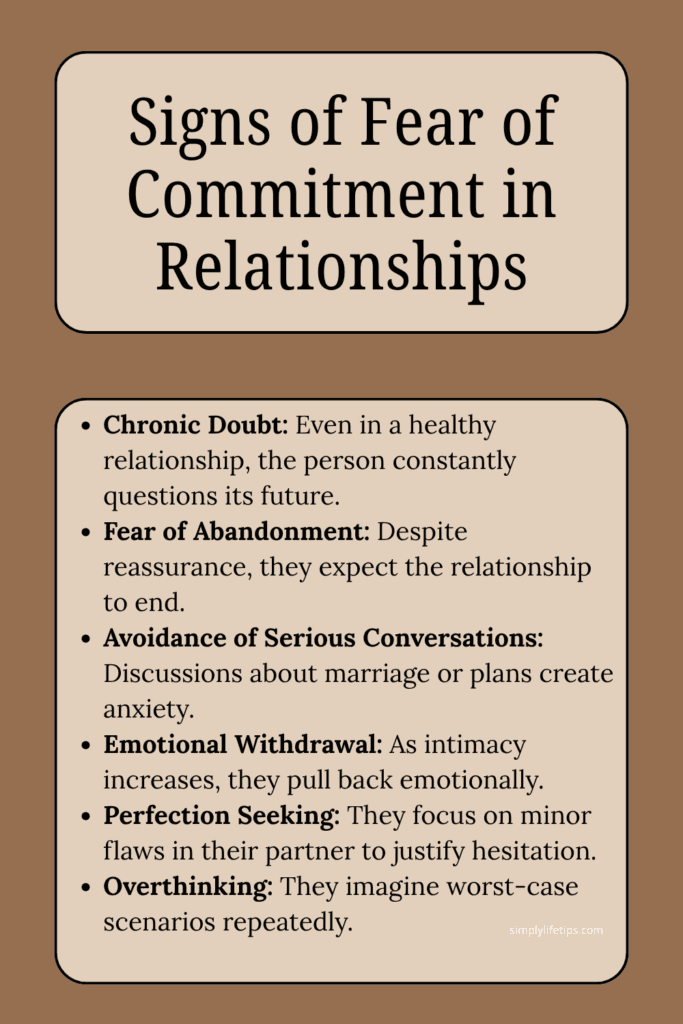
- Chronic Doubt: Even in a healthy relationship, the person constantly questions its future.
- Fear of Abandonment: Despite reassurance, they expect the relationship to end.
- Avoidance of Serious Conversations: Discussions about marriage or plans create anxiety.
- Emotional Withdrawal: As intimacy increases, they pull back emotionally.
- Perfection Seeking: They focus on minor flaws in their partner to justify hesitation.
- Overthinking: They imagine worst-case scenarios repeatedly.
These signs often appear gradually, making them difficult to identify initially.
Open Communication: A Transformational Tool
Communication is not just about talking—it is about emotional transparency.
When individuals express their fears openly, it reduces internal pressure. For example:
- Instead of suppressing fear, saying “I feel anxious about long-term commitment” invites understanding.
- Instead of withdrawing, sharing concerns builds connection.
When communication is honest, it transforms relationships into safe emotional spaces.
Taking Small Steps
Fear often arises when decisions feel overwhelming. Breaking commitment into smaller steps makes it manageable.
Phase 1: Emotional Comfort
- Spend quality time together
- Share personal experiences
- Build emotional intimacy
Why Sleeping Close Together Boosts Emotional Intimacy in Marriage?
Phase 2: Practical Alignment
- Discuss goals and values
- Plan short-term activities
- Understand each other’s expectations
Phase 3: Long-Term Planning
- Talk about marriage
- Discuss finances and responsibilities
- Build a shared vision
This gradual approach reduces anxiety and builds confidence.
Developing Self-Awareness
Self-awareness is the process of identifying your emotional patterns.
Ask yourself:
- What triggers my fear?
- Am I reacting to my partner or my past?
- What beliefs do I hold about relationships?
For example, if you believe “relationships always fail,” your behavior will reflect that belief.
Awareness allows you to challenge and change these patterns.
Seeking Professional Help
When fear becomes overwhelming, therapy provides structured support.
Therapy benefits include:
- Identifying root causes
- Reprocessing past trauma
- Building emotional resilience
Couples therapy adds:
- Better communication
- Conflict resolution
- Mutual understanding
Seeking help is a strategic decision, not a weakness.
Fear of Marriage | Causes, Signs, and Solutions
Building Trust
Trust is built through consistent behavior over time.
Key elements include:
- Reliability: Doing what you say
- Honesty: Being transparent
- Respect: Honoring boundaries
- Presence: Being emotionally available
For example, small actions like keeping promises or showing up during difficult times strengthen trust significantly.
As trust increases, fear naturally decreases.
Reframing Beliefs
Beliefs shape emotional responses. Changing them is essential.
Negative Belief → Positive Reframe
- “People always leave.” → “Some relationships are stable and lasting.”
- “Commitment is risky.” → “Commitment creates security.”
- “I will get hurt.” → “I can handle challenges.”
This cognitive shift reduces anxiety and builds confidence.
Emotional Resilience
No relationship guarantees permanence. Accepting uncertainty is part of emotional maturity.
Resilience helps you:
- Handle fear without avoidance
- Stay present in relationships
- Respond calmly to challenges
Practices include:
- Mindfulness
- Journaling
- Emotional regulation techniques
Accepting Imperfection
Perfection is an illusion in relationships. Expecting flawless partners or guaranteed outcomes creates pressure.
Healthy relationships involve:
- Mistakes
- Learning
- Growth
Accepting imperfection allows relationships to evolve naturally.
FAQs
What is fear of commitment in relationships?
It is the emotional resistance to long-term bonding due to fear of vulnerability, often rooted in past experiences.
Can commitment fear be completely overcome?
Yes, with self-awareness, therapy, and supportive relationships, individuals can develop healthy commitment patterns.
What are the main signs of commitment issues?
Avoiding serious conversations, emotional withdrawal, overthinking, and fear of abandonment are common signs.
Does communication help reduce commitment fear?
Yes, open communication creates trust and emotional safety, reducing anxiety.
How long does it take to overcome commitment fear?
It varies depending on individual experiences, but consistent effort and support can lead to significant improvement over time.
Conclusion
Fear of commitment in relationships is deeply rooted but entirely manageable. It is shaped by past experiences, emotional patterns, and internal beliefs—but it does not define your future.
Meera’s journey shows that with awareness, communication, and effort, fear can transform into confidence.
Commitment is not about losing freedom—it is about building a stable foundation for love, growth, and emotional security.
If this resonated with you, share it with someone who needs it.
PVM

Mathukutty P V is a Blogger, YouTuber, and Content Writer and the founder of Simply Life Tips. After taking voluntary retirement in 2017, he embraced a free lifestyle focused on learning, personal growth, and sharing practical wisdom to help others live with more purpose and positivity.