Fear of marriage is becoming a serious emotional concern among many young people today. Unlike earlier generations, individuals now think deeply before committing, which increases both awareness and anxiety. Marriage is no longer seen as a simple life step—it is viewed as a lifelong emotional, financial, and psychological responsibility. This shift in perspective has made people more cautious, sometimes even fearful, about entering marriage.
The fear is not always about rejecting marriage itself, but about the uncertainties that come with it. Questions about compatibility, long-term happiness, and personal growth create hesitation. Many individuals want to be sure they are making the right decision because the consequences feel permanent. Understanding these fears in depth helps in addressing them effectively.
What Is the Fear of Marriage Called?
The fear of marriage is known as Gamophobia, a psychological condition related to fear of commitment or long-term relationships.
Meaning and cause of Gamophobia
Gamophobia goes beyond simple hesitation and reflects a deeper emotional resistance toward commitment. Individuals experiencing this fear often feel overwhelmed at the thought of being tied to one person for life. It can trigger anxiety, avoidance behavior, and even emotional withdrawal when discussions about marriage arise. This fear is often rooted in past experiences, personal beliefs, or a lack of clarity about relationships.
Example of Gamophobia
A person may be in a stable and loving relationship but suddenly feel uncomfortable when marriage is discussed seriously. They may delay decisions, avoid conversations, or create distance to escape the pressure. Even though they care about their partner, the idea of long-term commitment creates stress. This behavior often confuses partners but is actually a sign of internal fear rather than lack of love.
Why Do People Fear Marriage Today?
The fear of marriage has increased due to modern lifestyle changes, awareness, and personal expectations.
Fear of Choosing the Wrong Partner
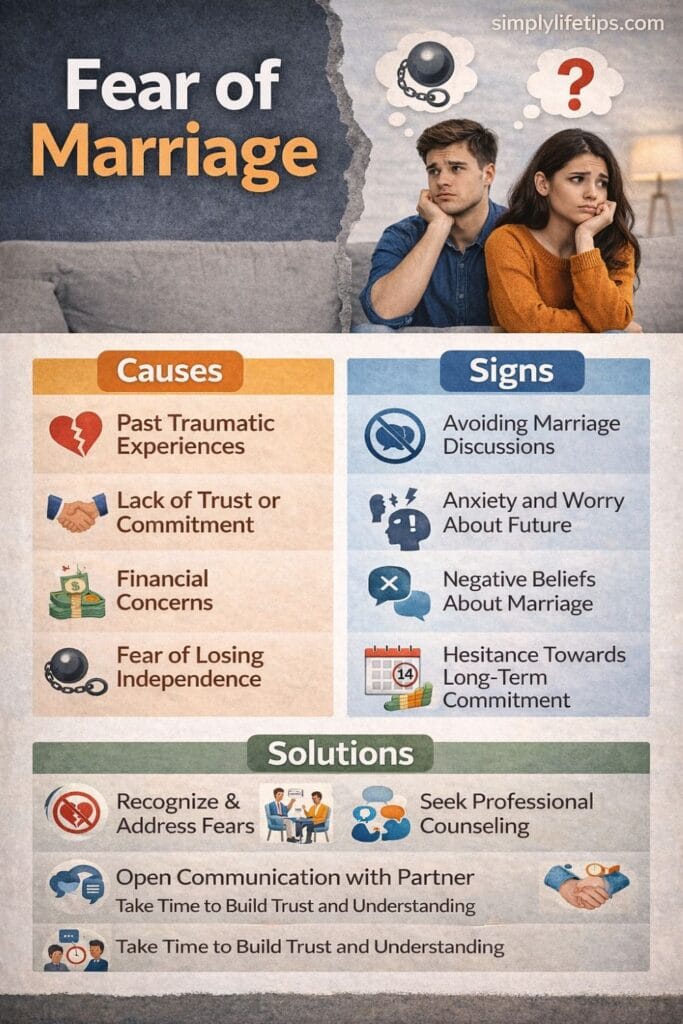
Choosing a life partner is one of the biggest decisions in life, and the fear of making the wrong choice can be overwhelming. People worry about long-term compatibility, emotional connection, and whether their partner will grow in the same direction. The idea that one wrong decision can affect an entire life creates hesitation. This fear often leads individuals to overthink even small issues in a relationship.
Exposure to Failed Marriages
Many individuals have witnessed unhappy marriages, conflicts, or divorces either in their families or social circles. These experiences shape negative perceptions about marriage and create subconscious fear. Instead of seeing marriage as a source of support, they begin to associate it with stress and disappointment. This exposure makes people more cautious and sometimes overly defensive in relationships.
Loss of Independence
Modern individuals highly value personal freedom, independence, and self-identity. The idea of sharing life with someone and making compromises can feel restrictive. People fear losing control over their time, decisions, and personal space. This concern is especially strong among those who have built an independent lifestyle and are not ready to adjust it.
Financial Pressure
Marriage brings financial responsibilities such as managing household expenses, planning for the future, and sometimes supporting a family. This creates pressure, especially for individuals who are still stabilizing their careers. The fear of not being financially prepared leads to hesitation in committing. Financial insecurity can make marriage feel like a burden rather than a partnership.
Fear of Emotional Vulnerability
Marriage requires emotional openness and deep connection, which can be difficult for individuals who have experienced heartbreak or betrayal. The fear of being hurt again leads to emotional walls and avoidance. People may struggle to trust fully, even in healthy relationships. This fear of vulnerability often prevents them from moving forward.
Signs of Fear of Marriage
Recognizing these signs can help identify whether someone is dealing with fear of commitment.
Fear of commitment is a recognized psychological pattern (source: Psychology Today).
Avoiding Marriage Conversations
Individuals may feel uncomfortable when topics related to marriage come up and often try to change the subject. They may give vague answers or delay discussions to avoid facing the reality of commitment. This avoidance is not always intentional but driven by internal anxiety. Over time, it can create confusion in relationships.
Healthy marriages are built on communication and trust, as relationship experts at the Gottman Institute suggest.
Anxiety About Commitment
The thought of long-term commitment can trigger stress, overthinking, or even fear. People may imagine worst-case scenarios instead of focusing on the present relationship. This anxiety can make decision-making difficult and emotionally exhausting. It often leads to hesitation even when the relationship is healthy.
Overanalyzing Relationships
Every small issue is examined in detail, leading to unnecessary doubts about compatibility. Individuals may constantly question whether their partner is “the right one.” This habit creates instability and prevents emotional security. Overanalysis often becomes a way to avoid making a final decision.
Creating Emotional Distance
When relationships become serious, some individuals begin to withdraw emotionally. They may reduce communication, avoid closeness, or create unnecessary conflicts. This behavior acts as a defense mechanism to protect themselves from commitment. It can confuse partners and create misunderstandings.
Comparing with Others
Seeing friends or peers getting married can create pressure and self-doubt. Individuals may question their own readiness and feel left behind. This comparison increases anxiety and sometimes leads to rushed decisions. It shifts focus away from personal readiness to societal expectations.
How to Overcome Fear of Marriage?
Overcoming fear requires conscious effort, self-awareness, and emotional growth.
Identify the Root Cause
Understanding the exact reason behind the fear is the first step toward overcoming it. It could be past trauma, fear of failure, or uncertainty about expectations. Identifying the cause helps in addressing the issue logically rather than emotionally. Once the root is clear, the fear becomes easier to manage.
Redefine Marriage
Marriage should be viewed as a partnership rather than a restriction. Modern relationships are based on mutual respect, equality, and shared goals. Changing this perspective reduces fear and creates a positive outlook. When marriage is seen as supportive rather than limiting, it becomes less intimidating.
Take Your Own Time
There is no fixed timeline for marriage, and rushing into it can lead to regret. Taking time allows individuals to understand themselves and their partners better. It also helps in building emotional readiness and confidence. Patience leads to stronger and more stable decisions.
Improve Communication
Open discussions about expectations, goals, and fears create clarity in relationships. Communication helps in resolving doubts and building trust. It also allows partners to understand each other’s perspectives better. Clear communication reduces uncertainty and emotional tension.
Build Self-Confidence
Fear often arises from self-doubt and lack of confidence. Believing in one’s ability to handle challenges reduces anxiety. Self-confidence helps individuals make decisions based on clarity rather than fear. It also strengthens emotional stability in relationships.
Seek Professional Help
In cases where fear is deeply rooted, professional guidance can be helpful. Therapy provides a safe space to explore emotions and past experiences. It helps in identifying patterns and developing healthier perspectives. Seeking help is a sign of strength, not weakness.
Overcoming Fear of Intimacy in Marriage
Fear of marriage is often closely linked to fear of intimacy, which involves emotional closeness and vulnerability.
Understanding Emotional Intimacy
Intimacy is about sharing thoughts, feelings, and experiences openly with a partner. It requires trust, honesty, and emotional safety. Many people fear intimacy because it exposes their vulnerabilities. Understanding its importance helps in building stronger relationships.
This A-Z guide offers tips on how to cultivate a deeper, more meaningful and emotional intimacy with your partner.
Start with Small Steps
Opening up does not have to happen all at once. Sharing small thoughts and feelings gradually builds comfort and trust. This approach makes emotional connection feel safe rather than overwhelming. Small steps lead to deeper bonds over time.
Build Trust Over Time
Trust develops through consistent actions, honesty, and reliability. It cannot be forced or rushed. When partners feel secure, fear naturally decreases. Trust creates a strong foundation for emotional connection.
Accept Imperfection
No relationship is perfect, and expecting perfection creates unnecessary pressure. Accepting flaws and differences helps in building realistic expectations. It also reduces fear of failure and disappointment. Imperfection makes relationships more genuine and human.
Practice Vulnerability
Being emotionally open requires courage but strengthens relationships. Vulnerability allows partners to understand each other deeply. It builds connection and trust over time. When practiced gradually, it reduces fear and increases emotional security.
How Women Can Deal with Fear of Marriage?
Women often face unique challenges and expectations related to marriage.
Balancing Career and Marriage
Many women fear losing their identity or career growth after marriage. This concern is valid in environments where support is lacking. Choosing a partner who respects and supports professional goals is essential. A balanced approach helps in maintaining both career and personal life.
Protecting Independence
Independence is an important aspect of self-growth and confidence. Women may fear losing control over their decisions and lifestyle after marriage. Setting clear boundaries and expectations early can help maintain individuality. A healthy marriage should support independence, not restrict it.
Handling Social Pressure
Society often imposes expectations regarding the right age or time for marriage. This pressure can create anxiety and confusion. Ignoring external opinions and focusing on personal readiness leads to better decisions. Confidence in one’s choices reduces stress.
Ensuring Emotional Security
Emotional safety is a key factor in decision-making for many women. Trust, respect, and understanding are essential in a relationship. Taking time to observe a partner’s behavior and values helps in building confidence. Emotional security reduces fear significantly.
Learning to Say No
Not every relationship is suitable for marriage, and recognizing this is important. Saying no to the wrong person prevents long-term regret. Confidence in making such decisions reduces anxiety. It empowers women to choose what is right for them.
Practical Tips to Handle Pressure from Friends Getting Married
Focus on Your Own Timeline
Everyone’s life journey is different, and comparing timelines creates unnecessary stress. Marriage is a personal decision that should be based on readiness, not competition. Focusing on individual growth and goals helps in maintaining clarity. This mindset reduces anxiety and builds confidence.
Limit Social Media Comparison
Social media often highlights only the positive side of relationships. Constant exposure can create unrealistic expectations and pressure. Reducing comparison helps in maintaining emotional balance. It allows individuals to focus on reality rather than perception.
Set Boundaries in Conversations
Friends and relatives may ask questions out of curiosity, but it can feel intrusive. Politely setting boundaries helps protect mental peace. Clear communication ensures that personal decisions are respected. This reduces unnecessary stress.
Making a life decision like marriage requires self-respect and clarity—this is explained well in this article: Behaviours That Earn Respect
Invest in Personal Growth
Focusing on career, health, and emotional well-being creates a strong foundation for the future. Personal growth builds confidence and clarity. It also helps individuals feel more prepared for long-term commitments. Growth reduces fear naturally.
Celebrate Others Without Pressure
Being happy for others does not mean comparing lives. Celebrating friends’ milestones with a positive mindset reduces emotional burden. It helps in maintaining healthy relationships and self-confidence. This approach creates emotional balance.
FAQs
What is the fear of marriage called?
The fear of marriage is called Gamophobia, which is the fear of commitment or long-term relationships.
Is fear of marriage normal?
Yes, it is completely normal, especially in today’s world where people are more aware and cautious about relationships.
How to overcome fear of marriage?
Understanding the root cause, improving communication, building confidence, and taking time are effective ways to overcome it.
What causes fear of intimacy in marriage?
It is usually caused by past emotional wounds, trust issues, or fear of vulnerability.
How can women deal with fear of marriage?
By focusing on independence, choosing supportive partners, setting boundaries, and ignoring social pressure.
Conclusion
Fear of marriage is not something to be ashamed of—it is a sign of awareness and the desire to make the right decision. In a world where relationships are complex, taking time to understand oneself and one’s partner is essential. Fear becomes manageable when approached with clarity, patience, and emotional growth.
Marriage should never be a result of pressure or comparison. It should be a decision made with confidence, readiness, and mutual understanding. When individuals focus on personal development and genuine connection, the fear gradually transforms into trust.
So, should marriage be decided based on others’ timelines, or should it be chosen when it truly feels right?
If this resonated with you, share it with someone who needs it.
PVM

Mathukutty P V is a Blogger, YouTuber, and Content Writer and the founder of Simply Life Tips. After taking voluntary retirement in 2017, he embraced a free lifestyle focused on learning, personal growth, and sharing practical wisdom to help others live with more purpose and positivity.