
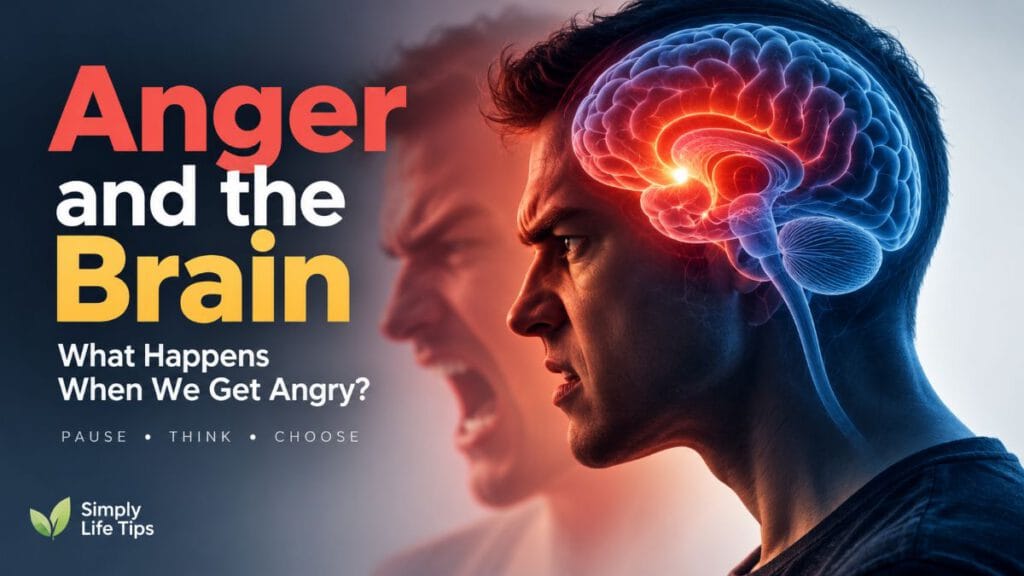
Anger and the brain are closely connected, and a moment of intense anger can make us say or do things we would never choose when we are calm. One harsh word, an impulsive message, or a decision made in frustration can sometimes leave consequences long after the anger has disappeared. But what actually happens inside the brain when anger takes over?
In a recent Facebook post, neurosurgeon Dr. Arun Oommen explains the connection between anger, the brain, and our reactions. His message is not that anger is always bad. Instead, it is about understanding what happens during intense anger and learning to create a pause before we respond.
Anger and the Brain: What Happens During Anger?
Anger involves several interacting brain areas and systems, not a single “anger centre.”
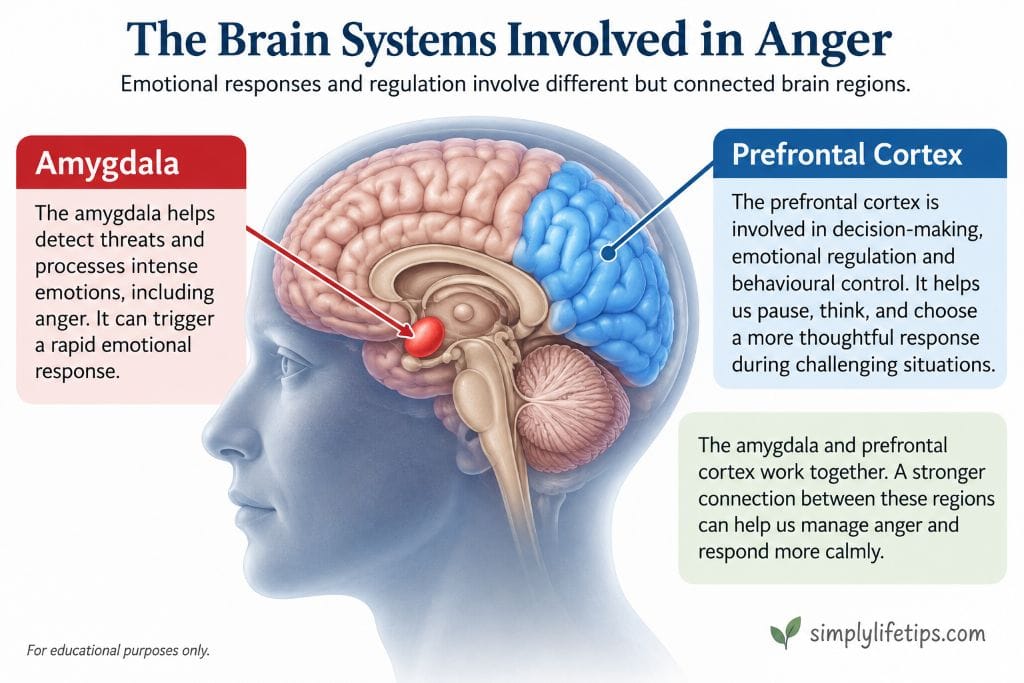
Several brain areas are involved in anger-related processes, including the amygdala and frontal cortical areas. Research reviewed by Richard and colleagues found that the amygdala is involved in anger processing, while the ventromedial prefrontal cortex plays an important role in controlling and reducing anger.
When we perceive a situation as threatening, unfair, humiliating, or deeply frustrating, the brain can respond quickly. The body’s autonomic nervous system may also become activated.
You may notice:
- A faster heartbeat
- Faster breathing
- Muscle tension
- Increased alertness
- A strong urge to respond immediately
This is one reason anger can feel physical as well as emotional.
Why Do We React Before We Think?
Understanding anger and the brain also helps explain why we sometimes react before we have time to think about the consequences.
The prefrontal cortex helps us evaluate situations, consider consequences, plan, and regulate behaviour.
During intense emotional arousal, however, thoughtful decision-making can become more difficult. The emotional response may feel urgent, while the possible consequences of our actions seem less important in that moment.
This can create a familiar pattern:
Emotion → reaction → consequences
instead of:
Emotion → pause → reflection → response
That may help explain why someone can later say, “I didn’t mean to say that.”
It does not mean that the thinking part of the brain simply switches off. Rather, intense emotional arousal can make deliberate control more difficult precisely when we need it most.
Why Do Angry Words Cause So Much Damage?
A moment of anger can change the way we communicate.
We may raise our voice, choose words because we know they will hurt, send an angry message, or make a decision without thinking about what happens next.
The anger may last for minutes.
The consequences may last much longer.
A message can be deleted from a phone, but not necessarily from someone’s memory. A relationship can survive disagreements, but repeated impulsive reactions can gradually damage trust.
This is why learning to think before you speak can be particularly important when emotions are running high.
How Can You Pause Before Reacting?
One of the most practical ideas in Dr. Oommen’s message is to create a small gap between anger and action.
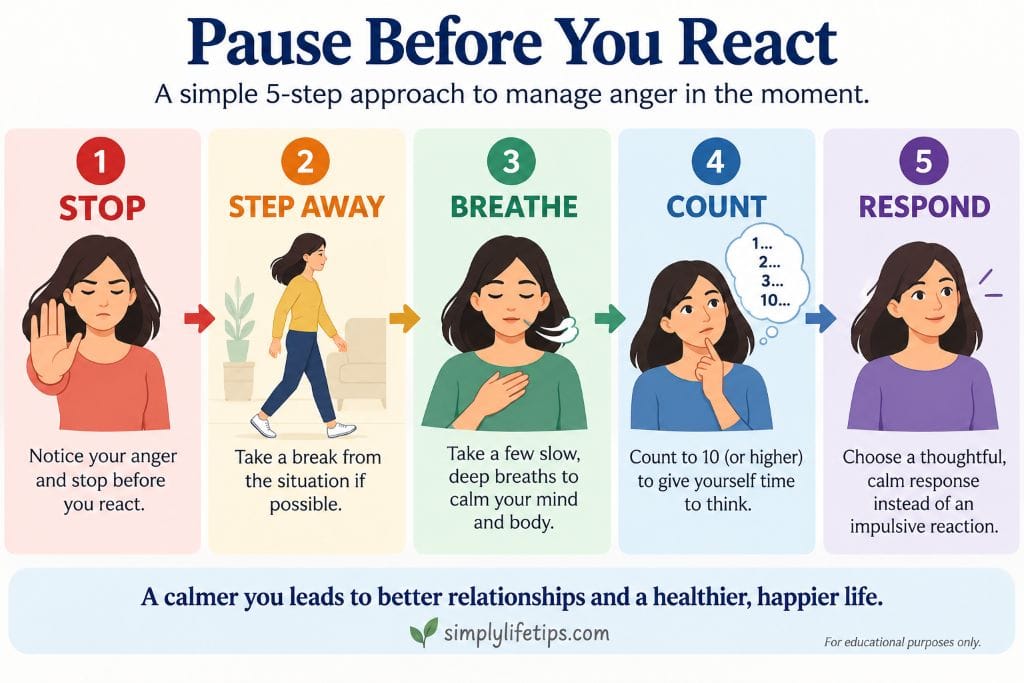
When anger rises, try a simple brain break:
Stop. Don’t immediately respond.
Step away. If possible, create some distance from the argument.
Breathe. Take several slow, deliberate breaths.
Count. Give yourself a few seconds before speaking, calling, or sending a message.
Respond. Return to the situation when you can think more clearly.
Counting to 10 will not solve every disagreement. The purpose is simply to interrupt an automatic reaction and give yourself time to choose what to do next.
Learning to recognise your triggers and developing healthier ways to manage anger can also help. If anger is becoming difficult to control, professional support may be useful. The American Psychological Association also recommends strategies such as recognising triggers, changing unhelpful thought patterns, and learning constructive ways to manage anger.
Is Anger Always Bad?
No.
Anger is a normal human emotion. It can arise when we feel hurt, threatened, disrespected, frustrated, or when someone crosses an important boundary.
Anger can sometimes tell us that something needs attention.
The important question is not simply:
“Am I angry?”
It is:
“What am I going to do with this anger?”
Expressing anger calmly can help us communicate boundaries and address problems. The difficulty begins when anger becomes excessive, frequent, aggressive, or difficult to control.
How Does Anger Affect the Body?
Strong emotional reactions affect the body as well as the brain.
The connection between anger and the brain does not stop with our thoughts and emotions; strong emotional reactions can affect the body as well.
Research has increasingly examined the relationship between anger and cardiovascular health. An NIH-supported study found that experimentally induced anger temporarily impaired blood-vessel dilation in healthy adults, with the effect lasting up to about 40 minutes. The researchers noted that further research is needed to understand the long-term implications.
This does not mean that every episode of anger causes a heart attack or stroke.
Rather, the research suggests that repeated or intense emotional stress deserves attention as part of overall health.
When Does Anger Become a Problem?
Occasional anger is part of normal life.
But if you are angry much of the time, regularly lose control, become aggressive, or find that anger is damaging your relationships, work, or daily life, it may be worth seeking professional help.
A mental health professional can help identify anger triggers, examine the thoughts that occur before an angry reaction, and develop healthier ways of responding.
If anger is occurring alongside prolonged stress or mental fatigue, you may also find our article on mental exhaustion useful.
The Goal Is Not to Eliminate Anger
We cannot—and do not need to—eliminate every angry feeling.
The goal is to recognise anger before it controls our behaviour.
Notice the physical signs.
Recognise the trigger.
Pause before speaking.
Give yourself time to think.
Then choose your response.
As Dr. Arun Oommen’s message suggests, control does not mean never showing anger. It means being able to choose how you express it when anger appears.
A moment of anger should not have to destroy a relationship that took years to build.
When we understand the brain, perhaps we can understand ourselves a little better too.
Learning about anger and the brain can help us recognise what is happening before an emotional reaction turns into an impulsive action.
Conclusion
Understanding anger and the brain helps explain why intense emotions can sometimes lead to impulsive words and actions. The brain’s emotional and regulatory systems work together during anger, while strong emotional arousal can make thoughtful responses more difficult.
Anger itself is not the enemy. What matters is what we do when it appears.
Sometimes the most important thing we can do is pause.
One breath.
One moment.
One choice.
That small gap between feeling and reacting may be enough to prevent a temporary emotion from creating a lasting consequence.
Read Dr. Arun Oommen’s original Facebook post: Dr. Arun Oommen’s original Facebook post
This article is based on ideas shared by Dr. Arun Oommen in his recent Facebook post and expanded with additional scientific references. It is for general information and is not a substitute for professional medical advice.
Frequently Asked Questions
What happens to the brain when we get angry?
Anger involves several brain regions and networks. The amygdala plays an important role in processing emotionally significant information, while frontal brain regions including the prefrontal cortex contribute to emotional regulation and decision-making.
Why do we say things when angry that we later regret?
Strong emotional arousal can make immediate reactions feel more urgent and make careful consideration of consequences more difficult. Pausing before responding can create space for more deliberate decision-making.
Can taking a break help control anger?
A short pause can interrupt an impulsive reaction. Stepping away, breathing slowly, and delaying a message or difficult conversation can give you time to respond more deliberately.
Is anger a normal emotion?
Yes. Anger is a normal human emotion. It can signal that something feels unfair, threatening, hurtful, or unacceptable. The important issue is how frequently and intensely it occurs and how it is expressed.
Can frequent anger affect heart health?
Research suggests that intense anger can temporarily affect blood-vessel function, while other evidence has linked repeated anger with cardiovascular risk. However, this does not mean that every episode of anger directly causes heart disease.

Mathukutty P V is a Blogger, YouTuber, and Content Writer and the founder of Simply Life Tips. After taking voluntary retirement in 2017, he embraced a free lifestyle focused on learning, personal growth, and sharing practical wisdom to help others live with more purpose and positivity.



