Affirmations for health and wellness can help you develop a more positive mindset while supporting healthy habits, self-care, and emotional well-being. In today’s fast-paced world, stress, busy schedules, and daily distractions can make it difficult to give your mind and body the attention they deserve.
While nutritious food, regular physical activity, quality sleep, and proper healthcare remain essential for overall health, positive self-talk can be a useful addition to your wellness routine. Simple statements such as “I care for my body with kindness” or “I choose habits that support my well-being” can encourage greater awareness of your daily choices.
In this guide, you’ll discover how affirmations for health and wellness work, their potential benefits, practical ways to use them, and 15 positive affirmations you can incorporate into your everyday routine.
What Are Affirmations For Health And Wellness?
Affirmations for health and wellness are positive, intentional statements that encourage a supportive mindset toward your physical, mental, and emotional well-being. They can help you focus on healthy choices, self-care, resilience, and the habits you want to develop.
For example, instead of focusing on negative thoughts such as “I never take care of myself,” you can use a more constructive statement such as, “I make choices that support my health and well-being.”
When practised consistently, affirmations can serve as reminders of your goals and encourage more positive self-talk. They do not replace nutritious food, exercise, adequate sleep, professional medical care, or other essential aspects of a healthy lifestyle. Instead, they can complement these habits by helping you maintain a more supportive and mindful approach to your overall wellness.
Affirmations for health and wellness can therefore be used as simple reminders to support healthier thinking, self-care, and positive daily choices.
What Are Affirmations?
Affirmations are positive statements that you intentionally repeat to encourage more constructive thoughts and attitudes. They can be used to challenge negative self-talk, reinforce personal goals, and remind you of the values and behaviours you want to develop.
For example, if you often think, “I don’t have enough energy to exercise,” you could replace that thought with a more supportive statement such as, “I take small steps to keep my body active and strong.”
Affirmations work best when they are realistic, meaningful, and connected to actions. Repeating a positive statement while also practising healthy habits can help create a consistent reminder of the choices you want to make.
For health and wellness, affirmations can focus on areas such as self-care, healthy habits, stress management, physical activity, emotional balance, and developing a positive relationship with your body.
Why Do Affirmations Work?
Affirmations work by encouraging more supportive patterns of thinking and helping you focus on your goals instead of negative self-talk. The brain can adapt and form new neural connections over time, a process known as neuroplasticity. While affirmations alone do not change your life or cure health conditions, practising them consistently can reinforce positive attitudes and healthier behaviours.
When combined with actions such as exercising regularly, eating nutritious foods, getting enough sleep, and managing stress, affirmations can become a powerful reminder of the habits you want to maintain.
When practised consistently, affirmations for health and wellness can help keep your personal wellness goals visible and encourage you to connect positive intentions with practical actions.
How affirmations can support your wellness journey
- Encourage positive self-talk: Replace self-criticism with more compassionate and encouraging thoughts.
- Strengthen motivation: Keep your attention on long-term health and wellness goals.
- Reduce the impact of negative thinking: Help shift your focus from limiting beliefs to constructive actions.
- Support healthy habits: Reinforce daily choices that contribute to physical and mental well-being.
- Build resilience: Encourage a calm and confident mindset during challenges or stressful situations.
Example
If your goal is to exercise consistently, repeating “I enjoy taking care of my body through movement” can help reinforce your commitment to staying active, especially when paired with a regular fitness routine.
Benefits Of Affirmations For Health And Wellness
Affirmations for health and wellness can support a positive mindset and encourage healthier patterns of thinking and behaviour. Their benefits can be especially useful when they are combined with practical habits such as regular exercise, balanced nutrition, sufficient sleep, relaxation, and appropriate healthcare.
The benefits of affirmations for health and wellness are most meaningful when positive self-talk is combined with realistic lifestyle changes and consistent self-care.
1. Helps Manage Stress
Positive statements can encourage you to pause and redirect your attention when stressful thoughts become overwhelming. For example, repeating “I am calm, present, and capable of handling today’s challenges” can serve as a reminder to slow down and respond thoughtfully.
Affirmations are not a treatment for anxiety or other mental health conditions, but they can be included as one part of a broader stress-management routine.
If you are looking for more ways to use positive self-talk when dealing with everyday pressure, explore our guide to affirmations for stress reduction for practical ideas you can add to your routine.
2. Encourages Healthy Habits
Affirmations can keep your health goals visible and encourage you to follow through with positive actions. Saying “I nourish my body with foods that support my well-being” can remind you to make more mindful food choices.
The affirmation itself is not what creates the habit. Consistent action is essential.
3. Builds Self-Confidence
A healthy relationship with yourself is an important part of overall wellness. Affirmations such as “I am capable of making choices that support my well-being” can encourage self-confidence and reduce harsh self-criticism.
Over time, pairing positive self-talk with achievable goals can help you recognise your progress.
4. Supports a Positive Recovery Mindset
During periods of illness, injury, or recovery, positive statements may help encourage patience, hope, and self-compassion. For example, “I am patient with my body as it recovers” can provide a supportive reminder during a challenging period.
Affirmations should complement—not replace—medical advice, prescribed treatment, or professional healthcare.
5. Encourages Better Sleep Habits
A calming affirmation before bedtime can help create a relaxing transition from daytime activities to sleep. Try “I release today’s tension and give myself permission to rest.”
For better results, combine affirmations with healthy sleep habits such as maintaining a consistent bedtime, reducing screen exposure before sleep, and creating a comfortable sleeping environment.
How To Use Affirmations Effectively
Using affirmations for health and wellness consistently can make them a meaningful part of your daily self-care routine. The goal is not simply to repeat words but to connect positive statements with realistic goals and healthy actions.
The most effective way to use affirmations for health and wellness is to choose statements that reflect your current goals and pair them with specific actions.
1. Choose Relevant Affirmations
Select affirmations that relate to your current health and wellness goals. If you want to become more active, choose statements about movement and motivation. If stress is your main concern, focus on calmness, relaxation, and emotional balance.
For example: “I make time each day to care for my mind and body.”
2. Practise Consistently
Repetition can help keep your intentions and goals at the forefront of your mind. Choose a convenient time, such as after waking up, during meditation, or before bedtime, and make affirmations part of your routine.
Even spending a few minutes each day can create a consistent mindfulness practice.
3. Use Realistic Statements
Your affirmations should feel believable and supportive. If a statement feels completely unrealistic, it may be difficult to connect with it.
Instead of saying “I will never feel stressed again,” try “I am learning healthy ways to manage stress.”
This approach makes the affirmation more practical and achievable.
4. Speak With Intention
Say your affirmations slowly and pay attention to their meaning. You can repeat them silently, speak them aloud, or listen to a recorded version.
Rather than rushing through several statements, focus on one or two that are particularly meaningful to you.
5. Connect Affirmations With Action
Affirmations become more useful when they are paired with practical behaviour.
For example:
Affirmation: “I take care of my body every day.”
Action: Take a 20-minute walk, drink enough water, prepare a nutritious meal, or go to bed at a reasonable time.
The combination of positive self-talk and consistent action makes your wellness routine more meaningful.
6. Write Them Down
Writing affirmations in a journal can help you reflect on your thoughts, goals, and progress. You can also place short affirmations somewhere you regularly see them, such as beside your desk, on a mirror, or near your bedside.
Quick Tip
Start with one to three affirmations rather than trying to remember many at once. Choose statements that match your current goals and gradually change them as your needs and priorities evolve.
If you want to extend your affirmation practice beyond health and wellness, these affirmations for personal growth can help you focus on confidence, resilience, and personal development.
15 Affirmations For Health And Wellness
The right affirmations can serve as daily reminders to care for your mind, body, and emotional well-being. Choose the statements that feel meaningful to you and repeat them regularly as you take practical steps toward your health goals.
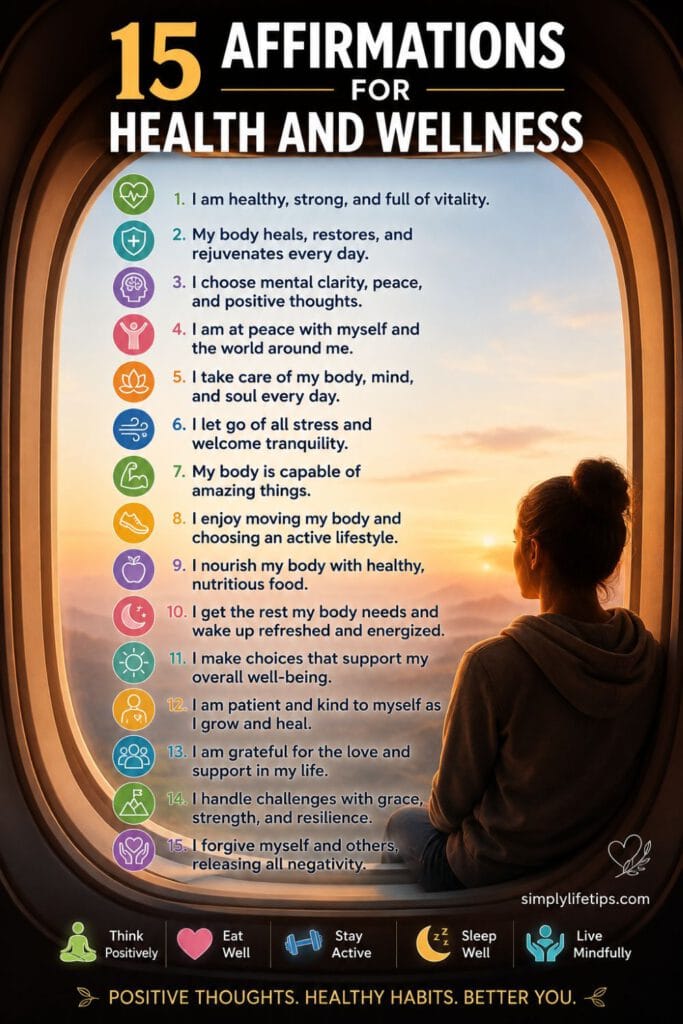
These affirmations for health and wellness cover several areas, including physical health, mental wellness, fitness, healthy eating, and emotional balance.
General Health
- “I make choices that support my health and well-being.”
- “I listen to my body and give it the care it needs.”
- “I am grateful for my body and treat it with kindness.”
These affirmations encourage a healthy and respectful relationship with your body without creating unrealistic expectations about health.
Practising gratitude can also encourage a more positive outlook, and these affirmations for gratitude offer additional ideas for bringing thankfulness into your daily routine.
Mental Wellness
- “I give myself permission to slow down and recharge.”
- “I can focus on what I can control today.”
- “I choose thoughts that are supportive, realistic, and kind.”
Use these statements when you need a reminder to practise self-compassion and manage everyday mental pressure.
Fitness and Physical Activity
- “I enjoy moving my body in ways that feel good to me.”
- “I am becoming stronger through consistent movement.”
- “I take small, positive steps toward my fitness goals.”
These affirmations work particularly well when paired with achievable physical activities such as walking, stretching, yoga, cycling, or strength training.
Healthy Eating and Weight Management
- “I nourish my body with foods that support my well-being.”
- “I listen to my body’s hunger and fullness signals.”
- “I treat myself with patience and kindness throughout my health journey.”
These statements focus on mindful and sustainable choices rather than unrealistic weight-loss promises.
Emotional Balance
- “I allow myself to feel my emotions without judging myself.”
- “I handle challenges one step at a time.”
- “I am worthy of care, compassion, and emotional well-being.”
Emotional wellness is an important part of overall health. These affirmations can encourage self-compassion and resilience during difficult moments.
Making affirmations part of your everyday routine can help you stay focused on your health and wellness goals. You don’t need a long or complicated practice. A few minutes at a consistent time can be enough to create a meaningful habit.
Healthy relationships can also contribute to emotional well-being, so you may find these affirmations for healthy relationships helpful for developing a more positive approach to your relationships.
How to Make These Affirmations More Effective
Don’t feel that you need to repeat all 15 every day. Choose two or three affirmations that match your current needs.
For example:
- Morning: “I make choices that support my health and well-being.”
- Before exercise: “I take small, positive steps toward my fitness goals.”
- Before bed: “I give myself permission to slow down and recharge.”
Wellness Goals
The important thing is to connect the words with realistic actions that support your wellness goals.
Important: These affirmations are intended as supportive self-care practices. They should not replace professional medical advice, diagnosis, treatment, or prescribed medication.
Incorporating Affirmations Into Your Routine
Making affirmations part of your everyday routine can help you stay focused on your health and wellness goals. You don’t need a long or complicated practice. A few minutes at a consistent time can be enough to create a meaningful habit.
1. Create a Morning Ritual
Start your day by repeating one or two affirmations aloud. You can say them while looking in the mirror, getting ready, or enjoying your morning tea or coffee.
For example:
“Today, I will make choices that support my health and well-being.”
This can help you begin the day with a clear and positive intention.
2. Include Affirmations in Meditation
If you already practise meditation, add an affirmation to your routine. Take a few slow breaths, repeat your chosen statement, and focus on its meaning.
For example:
“I am calm, present, and kind to myself.”
3. Use Daily Reminders
Write your favourite affirmations on sticky notes or save them as reminders on your phone. Place them somewhere you naturally look during the day, such as your desk, mirror, or refrigerator.
Seeing the same positive message regularly can remind you of the healthy behaviour you want to practise.
4. Add Affirmations to Your Exercise Routine
Affirmations can be used before or during physical activity to reinforce motivation and consistency.
Try:
“I enjoy moving my body and becoming stronger.”
Remember that the affirmation should support your exercise routine rather than replace proper training, rest, or recovery.
5. Practise Before Bed
A calming affirmation can become part of your evening wind-down routine. Choose a statement that encourages relaxation and self-compassion.
For example:
“I let go of today’s worries and give myself time to rest.”
Combine it with healthy sleep habits for a more consistent bedtime routine.
6. Keep a Wellness Journal
Write down an affirmation along with one healthy action you took that day. This can help you connect your thoughts with your behaviour and recognise your progress.
For example:
Affirmation: “I care for my body every day.”
Action: “I took a 30-minute walk today.”
Make It Simple and Sustainable
The best affirmation routine is one you can maintain. Start with one or two meaningful statements, practise them consistently, and adjust them as your goals change.
Making affirmations for health and wellness part of an established routine can make it easier to practise them consistently.
The Science Behind Affirmations
Research on self-affirmation suggests that reflecting on personally important values can influence how people respond to stressful situations and information. Some studies have found that self-affirmation may activate brain regions involved in self-related processing and reward.
One study published in Social Cognitive and Affective Neuroscience found that self-affirmation was associated with increased activity in brain regions involved in self-processing and valuation. Other research suggests that self-affirmation may help people become more receptive to health-related messages and encourage healthier intentions.
However, the scientific evidence does not mean that repeating affirmations can cure illness, directly heal the body, or replace professional healthcare. Affirmations are better understood as a complementary self-care practice that may support motivation, self-reflection, stress management, and positive behaviour.
This is why affirmations for health and wellness are best viewed as a complementary practice that supports positive intentions rather than a standalone health treatment.
What This Means for Your Wellness Routine
You can think of affirmations as a mental reminder rather than a medical treatment.
For example:
Affirmation: “I make time to care for my health.”
Action: Schedule a walk, prepare a nutritious meal, practise relaxation, or make time for adequate sleep.
This combination of positive intention and practical action is a more realistic way to use affirmations for health and wellness.
Overcoming Resistance To Affirmations
If affirmations feel awkward, unrealistic, or ineffective when you first try them, that is completely normal. Not everyone immediately connects with positive statements, especially when they conflict with deeply established negative thoughts or self-doubt.
The key is to choose affirmations that feel realistic and give yourself time to develop the practice.
Start With Small Statements
You don’t need to begin with dramatic statements such as “I am completely healthy and never experience stress.”
Instead, choose something more believable:
“I am taking small steps to improve my well-being.”
A realistic statement is often easier to accept and repeat consistently.
Give Yourself Time
Affirmations are not an instant solution. Their potential value comes from consistent practice combined with meaningful actions.
Give yourself time to develop a routine rather than expecting immediate changes in your thoughts or behaviour.
Adapt Your Affirmations
Your needs can change over time, so your affirmations can change too. If a statement no longer feels relevant, replace it with one that better reflects your current goals.
For example, you might begin with:
“I am learning to manage stress in healthier ways.”
Later, you could use:
“I handle stressful situations with greater calm and confidence.”
Focus on Progress, Not Perfection
You don’t have to repeat affirmations perfectly every day. Missing a day doesn’t mean you’ve failed. Simply return to your routine when you can.
When setbacks make it difficult to stay positive, these affirmations for overcoming challenges can provide additional encouragement for developing resilience and maintaining a constructive mindset.
Remember that affirmations are one small tool within a broader approach to health and wellness. Healthy nutrition, physical activity, adequate sleep, meaningful relationships, stress management, and appropriate professional care remain important parts of overall well-being.
Conclusion
Affirmations for health and wellness can be a simple way to encourage positive self-talk, mindfulness, self-compassion, and healthier intentions. When used consistently alongside practical habits, they can become a useful part of your daily wellness routine.
You don’t need to repeat dozens of statements or make unrealistic promises to yourself. Start with one or two affirmations that feel meaningful and connect them with actions that support your physical, mental, and emotional well-being.
Remember that affirmations are a complementary self-care practice, not a replacement for medical advice, treatment, healthy nutrition, physical activity, quality sleep, or professional support when needed.
Choose an affirmation that resonates with you today, repeat it with intention, and take one small action that supports your well-being. Small, consistent steps can help you build a healthier and more mindful daily routine.
Which affirmation will you choose to begin your health and wellness journey today?
FAQs About Affirmations for Health and Wellness
What are affirmations for health and wellness?
Affirmations for health and wellness are positive statements that encourage supportive thoughts about your physical, mental, and emotional well-being. They can help reinforce healthy intentions, self-care, and positive self-talk when practised consistently alongside healthy lifestyle habits.
Do affirmations really work for health and wellness?
Affirmations may help support motivation, self-reflection, positive self-talk, and healthier intentions. Their effects vary from person to person, and they work best when combined with practical actions such as regular physical activity, nutritious eating, adequate sleep, and stress management.
How often should I repeat health and wellness affirmations?
There is no fixed number of times you need to repeat an affirmation. Start with one or two meaningful statements and practise them consistently, such as in the morning, during meditation, or before bedtime. Choose a routine that is realistic enough to maintain.
Can affirmations help reduce stress?
Affirmations may help you redirect negative self-talk and create a calmer, more supportive mindset. For example, saying “I can handle today’s challenges one step at a time” can serve as a reminder to pause and respond to stressful situations more thoughtfully. Affirmations should complement, not replace, appropriate support for ongoing or severe stress.
Can affirmations replace medical treatment?
No. Affirmations should not replace professional medical advice, diagnosis, treatment, or prescribed medication. They can be used as a complementary self-care practice alongside appropriate healthcare and healthy lifestyle habits.

Mathukutty P V is a Blogger, YouTuber, and Content Writer and the founder of Simply Life Tips. After taking voluntary retirement in 2017, he embraced a free lifestyle focused on learning, personal growth, and sharing practical wisdom to help others live with more purpose and positivity.