
Child discipline plays an essential role in helping children develop responsibility, self-control, respect, and good behaviour. But how should parents respond when children disobey? The answer is not harsh punishment, fear, or humiliation. Effective discipline teaches children to understand their actions, respect boundaries, and make better choices.
As children grow, their ability to understand rules and consequences changes. A strategy that works for a toddler may not be suitable for a preteen. Therefore, parents need age-appropriate child discipline methods that match their children’s developmental stages and individual needs.
The goal is to make consequences fair, meaningful, and consistent. Through positive discipline, parents can teach valuable life lessons while maintaining a loving and supportive relationship with their children.
What Is Child Discipline?
Child discipline refers to the guidance, boundaries, and teaching strategies parents use to help children understand acceptable behaviour and develop self-control.
Good discipline does not mean forcing children to obey every instruction without question. It means helping them understand why certain behaviours are appropriate and why others are not.
For example, if a child throws toys deliberately, a parent can temporarily remove the toy and explain why throwing is unsafe. If an older child refuses to complete homework, the parent can establish a rule that homework must be finished before recreational activities.
Both situations teach children that their choices have consequences.
Why Is Positive Child Discipline Important?
Children are still learning how to manage emotions, follow instructions, and interact with others. They need patient guidance to develop these skills.
Positive child discipline helps children:
- Develop responsibility: Children learn to take ownership of their actions instead of blaming others.
- Understand boundaries: Consistent rules help them recognise acceptable and unacceptable behaviour.
- Improve self-control: They gradually learn to manage frustration, anger, and disappointment.
- Develop problem-solving skills: Discussing mistakes helps children identify better ways to handle situations.
- Build respect for others: Children learn to consider other people’s feelings and needs.
- Become independent: As they grow, they learn to make responsible decisions without constant supervision.
For example, a child who learns to put away toys after playing gradually develops responsibility for personal belongings and shared spaces.
Parents can learn more about setting boundaries with empathy and guiding children without harsh punishment in our guide to discipline with gentle parenting.
Age-Appropriate Child Discipline Methods and Consequences
Children need different types of guidance at different ages. Parents should consider their child’s developmental stage when deciding how to respond to disobedience.
Here are practical child discipline methods for four age groups.
1. Ages 1–3: Redirection and Immediate Consequences
Focus: Redirection and immediate, simple consequences
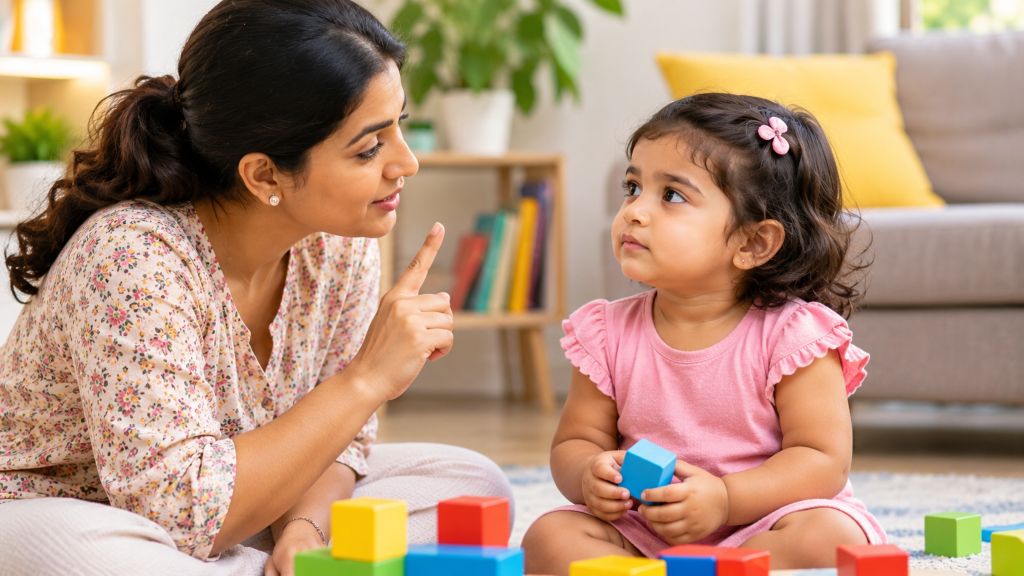
Toddlers are still developing language, emotional regulation, and an understanding of rules. They may not fully understand why certain behaviours are unacceptable.
At this age, discipline should be gentle, immediate, and easy to understand.
Appropriate consequences include:
- Stop the activity briefly: If a toddler throws toys or behaves unsafely during play, pause the activity.
- Remove unsafe objects: Take away an item that the child is using dangerously.
- Help clean up messes: Encourage the child to help tidy up toys or simple messes with parental assistance.
- Redirect their attention: Offer an acceptable alternative instead of repeatedly saying no.
- Use simple instructions: Explain expectations using short, consistent sentences.
Example: If a toddler hits another child, gently stop the behaviour and say, “We don’t hit. Hands are gentle.” Show the child how to touch gently instead.
At this age, avoid lengthy explanations, threats, and harsh punishments. Toddlers learn through repetition, modelling, and immediate guidance.
2. Ages 4–6: Simple Consequences and Routine
Focus: Simple consequences and routine
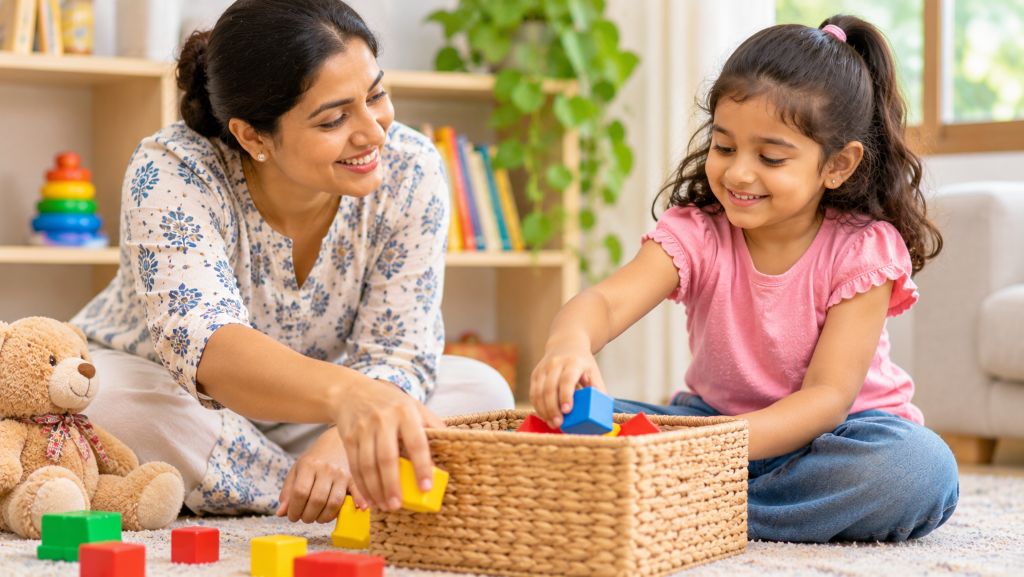
Children between four and six begin to understand rules, routines, and the relationship between their actions and consequences. They can also participate more actively in solving everyday problems.
Appropriate consequences include:
- Temporary loss of a privilege: Pause a particular activity briefly if the child misuses it.
- Clean up their mess: Ask them to put away toys or clean up an area they have deliberately messed up.
- Pause play: Temporarily stop play until the child follows a reasonable instruction.
- Practise the correct behaviour: Demonstrate what they should do instead of repeating the unwanted behaviour.
- Repair harm: Encourage an apology, comforting someone they hurt, or another meaningful way to make things right.
Example: If a child refuses to put away toys after playing, explain that the toys need to be put away before starting another activity.
Parents should remain calm and consistent. The child should understand that consequences are connected to behaviour, not expressions of parental anger.
3. Ages 7–9: Responsibility and Accountability
Focus: Responsibility and accountability

Children aged seven to nine can better understand rules, fairness, responsibility, and the impact of their actions on others.
Parents can gradually introduce consequences that encourage independent decision-making.
Appropriate consequences include:
- Temporary loss of a relevant privilege: Restrict a privilege briefly when it is directly connected to the behaviour.
- Complete an avoided responsibility: Ask the child to finish an age-appropriate task they deliberately neglected.
- Repair damaged items: If a child damages something intentionally, involve them in an age-appropriate repair or replacement process. For example, they can help fix a damaged toy, clean up the mess, or contribute in a small, practical way to making things right. Avoid imposing financial responsibility they are not mature enough to manage.
- Adjust the evening routine: If disruptive behaviour interferes with bedtime preparations, prioritise the routine and reduce optional activities.
- Discuss what happened: Help the child understand their mistake and identify better choices for the future.
Example: If a child refuses to complete homework because they want to play video games, explain that homework must be completed before gaming time.
At this age, encourage children to think about their decisions rather than simply obeying instructions out of fear.
4. Ages 10–12: Choices and Consequences
Focus: Choices and consequences

Preteens are developing greater independence and beginning to understand more complex social and emotional situations. They can participate in discussions about rules, expectations, and the consequences of their choices.
Appropriate consequences include:
- Temporary restriction of entertainment: Limit gaming, social media, or other entertainment when misuse of those privileges is involved.
- Complete missed responsibilities: Require unfinished household duties or school responsibilities to be completed before leisure activities.
- Make amends: Encourage the child to take meaningful steps to repair harm caused to another person.
- Additional related responsibility: Ask them to take an appropriate corrective action connected to their behaviour.
- Create a prevention plan: Discuss what triggered the behaviour and agree on practical steps to prevent it from happening again.
Example: If a preteen repeatedly ignores agreed screen-time limits, temporarily reduce recreational screen access and work together to establish a realistic screen-time agreement.
The goal is to help preteens understand that greater independence comes with greater responsibility.
Understanding child discipline becomes easier when parents consider their children’s developmental stages. The appropriate consequences for toddlers may differ significantly from those suitable for older children. The following infographic summarises age-appropriate consequences and effective positive discipline strategies for children aged 1–12.
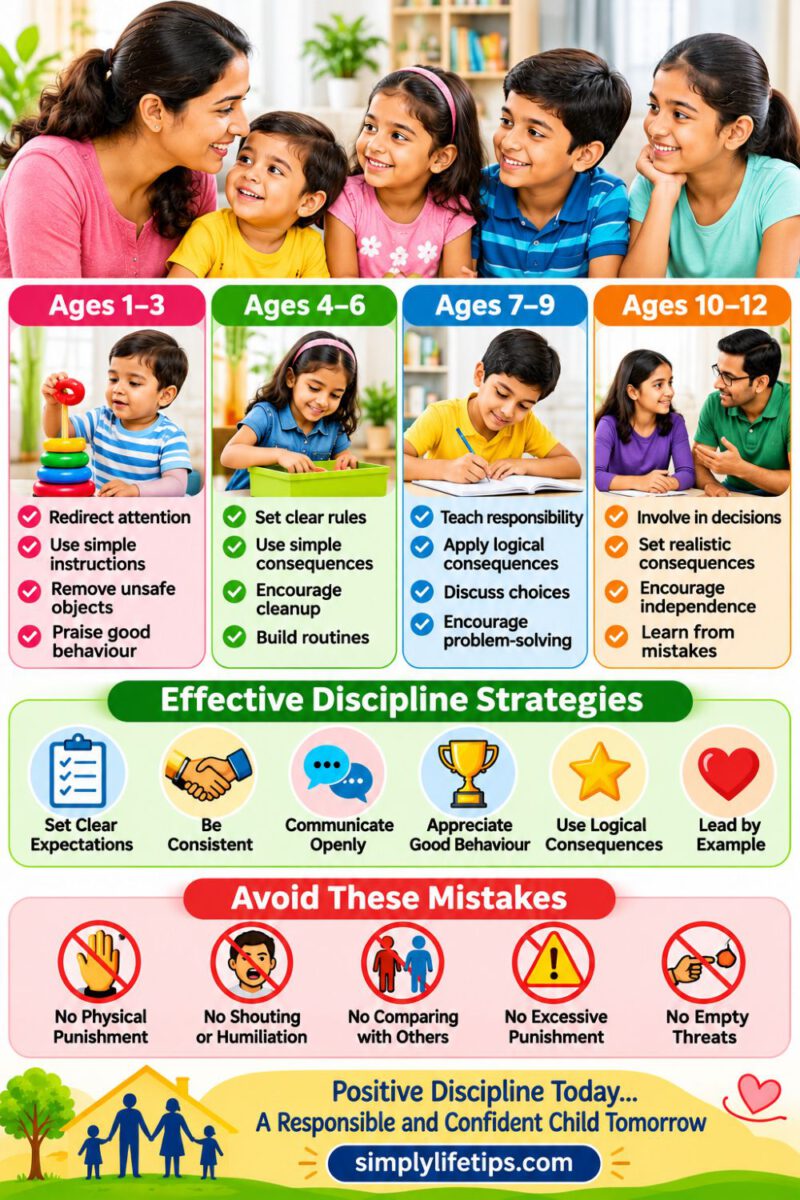
As the infographic illustrates, effective child discipline changes as children grow. Younger children need simple instructions and immediate guidance, while older children benefit from opportunities to make decisions and accept responsibility.
Regardless of age, parents should maintain clear boundaries, apply fair consequences, encourage open communication, and appreciate positive behaviour. The ultimate goal is to teach children responsibility and self-control without using fear, shame, or physical punishment.
Let’s look at some practical discipline strategies that parents can use in everyday situations.
Effective Child Discipline Strategies Every Parent Should Know
Age-appropriate consequences are only one part of effective parenting. The way parents communicate and respond to children’s behaviour also matters.
For more practical advice on building self-control, responsibility, and good habits, read our guide on teaching children discipline.
Here are seven useful positive discipline strategies.
1. Set Clear Rules and Expectations
Children need to understand what their parents expect from them. Establish a few simple family rules and explain them clearly.
For example:
- Speak respectfully to family members.
- Put toys and belongings away after use.
- Complete homework before recreational screen time.
- Do not hit, push, or hurt others.
Avoid creating too many rules. Focus on important expectations that children can understand and follow.
2. Be Consistent With Consequences
Consistency helps children understand that family rules are important.
If parents sometimes ignore a behaviour and sometimes react harshly to the same behaviour, children may become confused.
For example, if the family rule is that toys must be put away after play, apply that expectation consistently.
3. Use Logical Consequences
Logical consequences are directly connected to a child’s behaviour.
For example:
- If a child throws a toy, temporarily remove that toy.
- If a child makes a mess, help them clean it up.
- If a child misuses a privilege, temporarily restrict that privilege.
These consequences help children understand the relationship between their actions and the outcomes.
4. Encourage Communication
Instead of immediately scolding a child, ask what happened and listen to their explanation.
A child who refuses to follow instructions may be frustrated, tired, confused, or struggling with something they cannot express clearly.
Listening does not mean accepting inappropriate behaviour. It means understanding the reason behind it so parents can respond effectively.
5. Appreciate Good Behaviour
Discipline should not focus only on correcting mistakes. Parents should also recognise positive behaviour.
For example, when a child shares toys, completes homework independently, or helps with household responsibilities, acknowledge the effort.
Specific appreciation such as “You remembered to put your books away without being reminded” helps reinforce responsible behaviour.
6. Teach Children to Correct Their Mistakes
Children should learn that making mistakes is part of growing up. What matters is recognising mistakes and taking steps to correct them.
If a child hurts someone’s feelings, encourage them to apologise and make things right. If they damage something, help them understand how to repair or replace it appropriately.
This approach teaches accountability rather than shame.
7. Lead by Example
Children learn a great deal by observing their parents.
If parents expect children to speak respectfully, they should also communicate respectfully. If parents want children to control their anger, they should demonstrate healthy ways of managing frustration.
Good parenting involves modelling the behaviour we want children to develop.
Child Discipline Mistakes Parents Should Avoid
Even well-intentioned parents sometimes use discipline methods that can negatively affect their children’s emotional development.
Here are some common mistakes to avoid.
1. Using Physical Punishment
Hitting, slapping, or spanking should not be used as disciplinary methods. Physical punishment can cause harm and does not teach children healthy ways to manage behaviour.
2. Shouting and Humiliating Children
Insulting children, calling them names, or embarrassing them in front of others can damage their confidence and trust.
Correct the behaviour without attacking the child’s character.
3. Giving Unrelated or Excessive Punishments
Consequences should be reasonable and connected to the behaviour. Taking away every privilege for a minor mistake does not necessarily teach responsibility.
4. Comparing Children With Others
Statements such as “Why can’t you behave like your brother?” can create resentment and discourage children.
Focus on the child’s behaviour and individual progress instead.
5. Expecting Perfect Behaviour
Children are still learning. They will sometimes make mistakes, forget instructions, and struggle to control their emotions.
Parents should maintain boundaries while allowing opportunities to learn and improve.
6. Making Threats Without Following Through
Repeated threats that are never enforced make family rules less meaningful.
Set realistic expectations and follow through calmly and consistently.
How to Discipline a Child Without Hitting or Yelling
Parents do not need physical punishment or shouting to teach children appropriate behaviour. A calm and structured approach can be more constructive.
Consider these practical steps:
- Stay calm: Take a moment to manage your own emotions before responding.
- Identify the behaviour: Explain exactly what the child did wrong.
- State the expectation: Tell the child what behaviour you expect instead.
- Choose an appropriate consequence: Make sure it is fair, immediate when possible, and related to the behaviour.
- Allow the child to make things right: Encourage them to correct mistakes and repair harm.
- Reconnect afterwards: Remind the child that they are loved even when their behaviour needs correction.
For example, instead of shouting at a child for throwing food, calmly explain that food should stay on the plate. Ask the child to help clean up and demonstrate the appropriate behaviour.
The objective is to correct the behaviour while maintaining a loving parent-child relationship.
Conclusion
Child discipline is an essential part of raising responsible, respectful, and emotionally healthy children. However, effective discipline should focus on teaching rather than punishment.
As children grow, their understanding of rules and responsibilities changes. Toddlers need simple redirection, preschoolers benefit from consistent routines, school-age children can learn accountability, and preteens can gradually take responsibility for their choices.
Parents should combine clear boundaries with patience, consistency, communication, and encouragement. Most importantly, children should understand that mistakes are opportunities to learn and improve.
Remember: The goal of child discipline is not to make children afraid of disobeying but to help them understand why making responsible choices matters.
Frequently Asked Questions (FAQs)
1. What are the best child discipline methods?
Effective child discipline methods include setting clear rules, using logical consequences, redirecting inappropriate behaviour, encouraging communication, recognising positive behaviour, and teaching children to correct their mistakes.
2. How do you discipline a child without hitting?
Stay calm, explain why the behaviour is unacceptable, establish clear boundaries, and use reasonable consequences related to the behaviour. Encourage the child to make better choices rather than using physical punishment.
3. What are age-appropriate consequences for children?
Toddlers benefit from redirection and immediate guidance. Preschoolers can learn through simple routines and cleanup responsibilities. School-age children can practise accountability, while preteens can learn through reasonable privilege restrictions and problem-solving.
4. How do you discipline a child who does not listen?
First, make sure the child understands the instruction. Give clear and simple directions, establish reasonable expectations, and follow through consistently. Also consider whether tiredness, frustration, or other difficulties are affecting their behaviour.
5. Why is positive discipline important?
Positive discipline helps children develop self-control, responsibility, emotional regulation, respect, and problem-solving skills. It strengthens the parent-child relationship while teaching children to make better decisions.
References
- UNICEF – How to discipline your child in a smart and healthy way.
- WHO – Corporal punishment and health.
- American Academy of Pediatrics – Disciplining Your Child.
- Raising Children Network – Positive discipline.

Mathukutty P. V. is the founder of Simply Life Tips. He shares practical advice and useful insights on personal growth, health, well-being, technology, and everyday living. His goal is to help readers build positive habits and make informed decisions. He believes in continuous learning and sharing knowledge to help people live healthier, happier, and more meaningful lives.
Discover more from Simply Life Tips
Subscribe to get the latest posts sent to your email.