
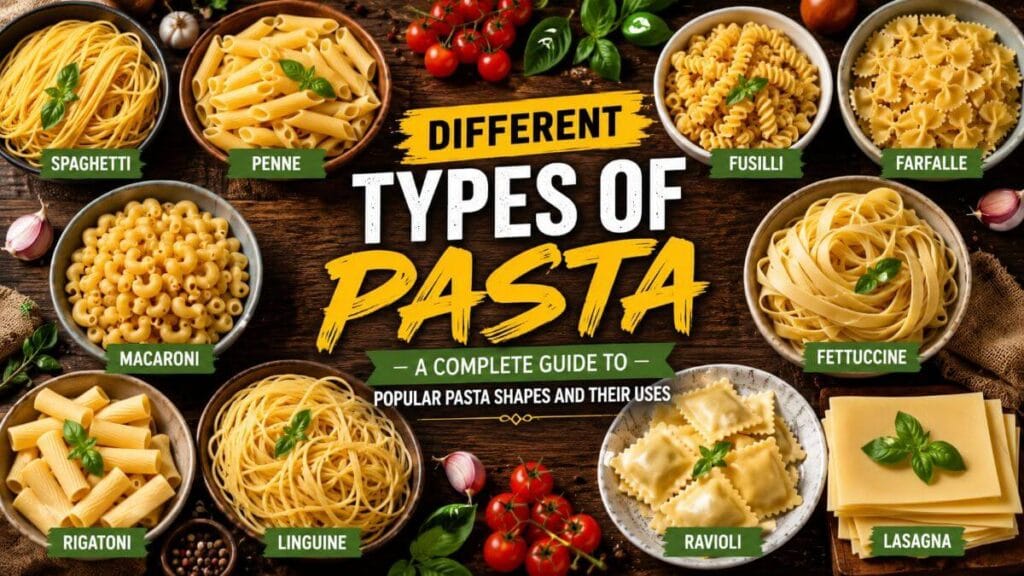
Different types of pasta have been a cornerstone of Italian cuisine for centuries, offering incredible variety in shape, texture, and flavor. From long strands of spaghetti to stuffed ravioli and layered lasagna sheets, each pasta type is designed to complement specific sauces and cooking styles. While many people think pasta is simply pasta, the shape you choose can significantly affect how a dish tastes and feels.
Understanding the different types of pasta can help you create more flavorful meals and choose the perfect pasta for every recipe. Some shapes are ideal for light olive oil sauces, while others are specially designed to hold rich, creamy, or chunky meat sauces. Whether you’re preparing a quick family dinner, a comforting baked casserole, or an authentic Italian feast, knowing the purpose of each pasta shape can elevate your cooking experience.
In this guide, we’ll explore different types of pasta, including spaghetti, penne, fusilli, farfalle, macaroni, fettuccine, rigatoni, linguine, ravioli, and lasagna. You’ll learn what makes each type unique, the best dishes to prepare with them, and how to choose the right pasta for your favorite recipes.
Different Types of Pasta at a Glance
Before exploring each pasta variety in detail, take a look at this quick visual guide showing different types of pasta. Understanding the different types of pasta can help you choose the perfect shape for every recipe, whether you’re making creamy Alfredo, hearty meat sauces, refreshing pasta salads, or baked casseroles.
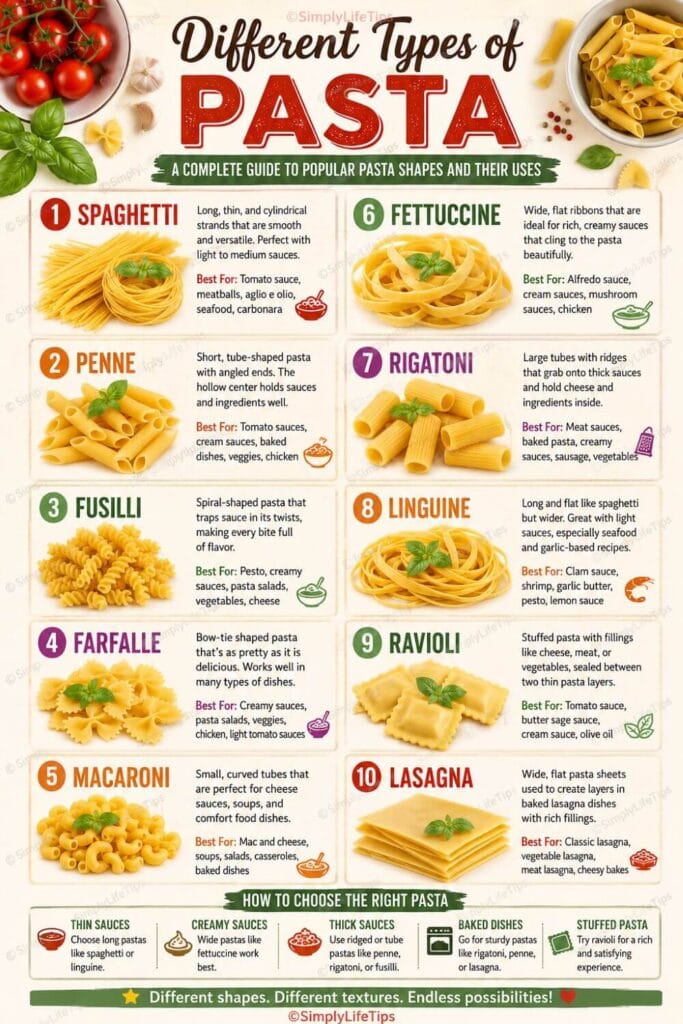
Save This Pasta Guide for Later
Not sure which pasta shape to use for your next meal? Save this infographic to Pinterest and use it as a quick reference whenever you’re cooking Italian dishes.
What Are the Different Types of Pasta?
Different types of pasta are among the most loved foods worldwide, offering endless possibilities for delicious meals. From long strands of spaghetti to stuffed ravioli and layered lasagna sheets, each pasta shape is designed to complement specific sauces, ingredients, and cooking methods. Understanding the different types of pasta can help home cooks choose the right pasta for every recipe and create more authentic Italian-inspired dishes.
Pasta has been a staple food for centuries and continues to evolve with modern cooking trends. While many people think all pasta tastes the same, its shape significantly affects texture, sauce absorption, and the overall dining experience. Whether you’re preparing a quick weeknight dinner or an elaborate family feast, knowing which pasta to use can make a remarkable difference.
10 Different Types of Pasta
Spaghetti
What Is Spaghetti?
Spaghetti is one of the most famous pasta varieties in the world. It consists of long, thin, cylindrical strands traditionally made from durum wheat semolina and water. Originating in Italy, spaghetti has become a global favorite because of its simplicity and versatility.
The name “spaghetti” comes from the Italian word meaning “little strings.” Its smooth texture and lengthy shape make it suitable for numerous recipes, ranging from classic Italian dishes to modern fusion cuisine.
Best Uses for Spaghetti
Spaghetti pairs exceptionally well with light and medium-thickness sauces. Tomato-based sauces, olive oil preparations, and seafood dishes are particularly popular choices. The pasta’s smooth surface allows sauces to coat each strand evenly without becoming overly heavy.
Popular dishes include Spaghetti Bolognese, Spaghetti Carbonara, Spaghetti Aglio e Olio, and Spaghetti with Meatballs. Seafood lovers often enjoy spaghetti combined with shrimp, clams, mussels, or salmon.
Why Spaghetti Remains Popular?
Spaghetti’s versatility, affordability, and ease of preparation make it a staple in kitchens around the world. It works equally well for simple home-cooked meals and sophisticated restaurant dishes, making it one of the most widely consumed pasta types globally.
Penne
What Is Penne?
Penne is a tube-shaped pasta characterized by its diagonally cut ends, which resemble the tip of a fountain pen. The word “penne” is derived from the Italian word for “quills” or “pens.”
Its hollow center and sturdy structure make it one of the most versatile pasta shapes available. Penne comes in both smooth and ridged varieties, with ridged versions offering better sauce retention.
Best Uses for Penne
Penne works particularly well with chunky sauces because ingredients can become trapped inside the tubes. This allows every bite to deliver a balanced combination of pasta and sauce.
Common recipes include Penne Arrabbiata, Penne Alfredo, Penne Primavera, and baked pasta casseroles loaded with cheese and vegetables.
Why Is Penne Ideal for Baked Dishes?
Penne maintains its shape during baking, making it perfect for casseroles and oven-baked pasta dishes. The hollow center captures melted cheese and sauce, creating rich and satisfying meals.
Fusilli
What Is Fusilli?
Fusilli is a spiral-shaped pasta recognized by its corkscrew appearance. The twisted design is not only visually appealing but also highly functional.
Originally developed to maximize sauce retention, fusilli remains a favorite among chefs and home cooks alike.
Best Uses for Fusilli
The spiral grooves effectively trap sauces, herbs, and small ingredients. This makes fusilli an excellent choice for creamy sauces, pesto, and pasta salads.
Popular recipes include Fusilli Alfredo, Pesto Fusilli, Vegetable Fusilli, and cold pasta salads served during summer gatherings.
Why does Fusilli hold sauce so well?
The twists create multiple surfaces that capture ingredients. Whether paired with thick meat sauces or creamy cheese-based mixtures, fusilli ensures flavorful bites from start to finish.
Farfalle
What Is Farfalle?
Farfalle is commonly known as bow-tie pasta because of its distinctive butterfly-like shape. It is created by pinching the center of a rectangular pasta piece.
This elegant shape makes farfalle both attractive and versatile for various recipes.
Best Uses for Farfalle
Farfalle pairs beautifully with creamy sauces, vegetable dishes, and pasta salads. Its unique design provides a pleasant texture and attractive presentation.
Many cooks use farfalle in chicken pasta dishes, pesto recipes, and light cream sauces.
Unique Characteristics of Farfalle
The center section is thicker than the edges, creating a delightful contrast in texture. This combination enhances the overall eating experience and makes farfalle a favorite in both casual and formal meals.
Macaroni
What Is Macaroni?
Macaroni is a small, curved, tube-shaped pasta that has become synonymous with comfort food. Although simple in appearance, it is one of the most versatile pasta varieties available.
Its compact size makes it suitable for a wide range of dishes.
Best Uses for Macaroni
Macaroni is most commonly associated with macaroni and cheese, but it also works well in soups, casseroles, and cold pasta salads.
The hollow tubes easily absorb sauces, ensuring flavorful and satisfying meals.
Why Is Macaroni a Comfort Food Favorite?
Its soft texture and ability to pair with rich cheese sauces have made macaroni a beloved ingredient in family recipes for generations.
Fettuccine
What Is Fettuccine?
Fettuccine is a flat, ribbon-like pasta wider than spaghetti. Its broad surface area makes it particularly effective at carrying rich sauces.
This pasta originated in central Italy and remains a staple of traditional Italian cuisine.
Best Uses for Fettuccine
Fettuccine is best known for Fettuccine Alfredo, a creamy dish featuring butter, cheese, and pasta. It also pairs well with mushroom sauces, chicken dishes, and seafood recipes.
The wide ribbons provide excellent sauce coverage, creating a rich and indulgent meal.
Why does fettuccine pair well with Creamy Sauces?
The broad shape offers plenty of surface area for thick sauces to cling to, ensuring every bite is packed with flavor.
Rigatoni
What Is Rigatoni?
Rigatoni is a large tube-shaped pasta featuring ridges along its outer surface. These ridges help capture sauce and seasonings.
Its robust design makes it suitable for hearty recipes.
Best Uses for Rigatoni
Rigatoni is commonly used in baked pasta dishes, meat sauces, and creamy casseroles. The large tubes can hold substantial amounts of sauce and cheese.
Popular dishes include Rigatoni Bolognese and baked rigatoni with mozzarella.
Advantages of Rigatoni’s Ridged Surface
The ridges increase sauce retention while the hollow center traps ingredients, creating exceptionally flavorful meals.
Linguine
What Is Linguine?
Linguine resembles spaghetti but features a flatter profile. The name translates to “little tongues” in Italian.
Its shape makes it an excellent middle ground between spaghetti and fettuccine.
Best Uses for Linguine
Linguine is traditionally paired with seafood dishes and lighter sauces. Garlic, olive oil, lemon, and herbs are common companions.
Popular recipes include Linguine with Clam Sauce and Garlic Butter Linguine.
Why is Linguine Popular for Seafood?
Its slightly flattened shape provides enough surface area for delicate seafood sauces while maintaining a light and elegant texture.
Ravioli
What Is Ravioli?
Ravioli is a stuffed pasta consisting of filling enclosed between two layers of dough. It is one of the most versatile and creative pasta types.
The fillings vary widely depending on regional traditions and personal preferences.
Common Ravioli Fillings
Popular fillings include ricotta cheese, spinach, mushrooms, beef, chicken, seafood, and various vegetable combinations.
Each filling creates a unique flavor profile that transforms the dish.
Best Ways to Serve Ravioli
Ravioli is often paired with simple sauces that complement rather than overpower the filling. Butter and sage sauce, tomato sauce, and light cream sauces are common choices.
Lasagna
What Is Lasagna?
Lasagna consists of large, flat pasta sheets used to create layered baked dishes. It is one of Italy’s most famous comfort foods.
The sheets serve as the structural foundation for multiple layers of fillings and sauces.
How is Lasagna Made?
Traditional lasagna alternates layers of pasta, meat sauce, béchamel or cheese, and vegetables. The dish is then baked until golden and bubbly.
The result is a rich, hearty meal that is perfect for family gatherings and special occasions.
Popular Lasagna Variations
Modern lasagna recipes include beef lasagna, chicken lasagna, vegetarian lasagna, spinach lasagna, and seafood lasagna. Each variation offers a unique twist on the classic dish.
How to Choose the Right Pasta Shape?
Match Pasta with Sauce Thickness
Thin pasta varieties such as spaghetti and linguine work best with lighter sauces. Thicker or ridged pasta shapes like penne, fusilli, and rigatoni perform better with chunky or creamy sauces.
Consider the Cooking Method
For baked dishes, choose sturdy pasta such as penne, rigatoni, or lasagna sheets. For quick stovetop meals, spaghetti, linguine, and fettuccine are excellent options.
Think About Texture
Different pasta shapes create different eating experiences. Experimenting with various shapes can help you discover new favorite recipes and flavor combinations.
FAQs about Different Types of Pasta
What are the most common types of pasta?
The most common types of pasta include spaghetti, penne, fusilli, farfalle, macaroni, fettuccine, rigatoni, linguine, ravioli, and lasagna.
Which pasta is best for creamy sauces?
Fettuccine is considered one of the best pasta types for creamy sauces because its wide ribbons hold thick sauces effectively.
What are the most common types of pasta?
The most common types of pasta include spaghetti, penne, fusilli, farfalle, macaroni, fettuccine, rigatoni, linguine, ravioli, and lasagna.
Which pasta is best for creamy sauces?
Fettuccine is considered one of the best pasta types for creamy sauces because its wide ribbons hold thick sauces effectively.
What pasta works best for pasta salads?
Fusilli and farfalle are excellent choices for pasta salads because their shapes trap dressings and ingredients well.
Conclusion
The different types of pasta offer far more than visual variety. Each shape is carefully designed to interact with sauces, ingredients, and cooking techniques in unique ways. Whether you prefer spaghetti, penne, fusilli, farfalle, macaroni, fettuccine, rigatoni, linguine, ravioli, or lasagna, understanding their strengths can elevate your cooking and help you create restaurant-quality meals at home.
Related Posts
- Best Foods For Diabetes Control And Lower Blood Sugar
- Indian Summer Food And Drink: Beat The Heat For Good Health
- Indian Summer Food And Drink: Beat The Heat For Good Health
- What Are The Best Foods For Sound Sleep Through The Night
- Weight Gain Baby Foods (Homemade) For 6 To 24-month Babies

Mathukutty P V is a Blogger, YouTuber, and Content Writer and the founder of Simply Life Tips. After taking voluntary retirement in 2017, he embraced a free lifestyle focused on learning, personal growth, and sharing practical wisdom to help others live with more purpose and positivity.



