Handle blame without damaging relationships by focusing on understanding, accountability, and solutions rather than defensiveness. Whether the blame comes from a spouse, parent, friend, colleague, or manager, your response can either deepen conflict or strengthen the relationship.
Most people instinctively defend themselves when accused of making a mistake. While this reaction is natural, it often escalates tension and makes resolution more difficult. The good news is that there are better ways to respond.
The following strategies will help you maintain respect, preserve trust, and address problems effectively when blame enters the conversation.
11 Smart Ways to Handle Blame Without Damaging Relationships
Being blamed can be frustrating, especially when emotions are running high. However, the way you respond often determines whether a conflict escalates or leads to understanding. Learning to handle blame without damaging relationships is an important communication skill that can strengthen trust, improve problem-solving, and protect valuable personal and professional connections.
The infographic below highlights 11 practical strategies that can help you respond calmly, communicate effectively, and focus on solutions instead of arguments.
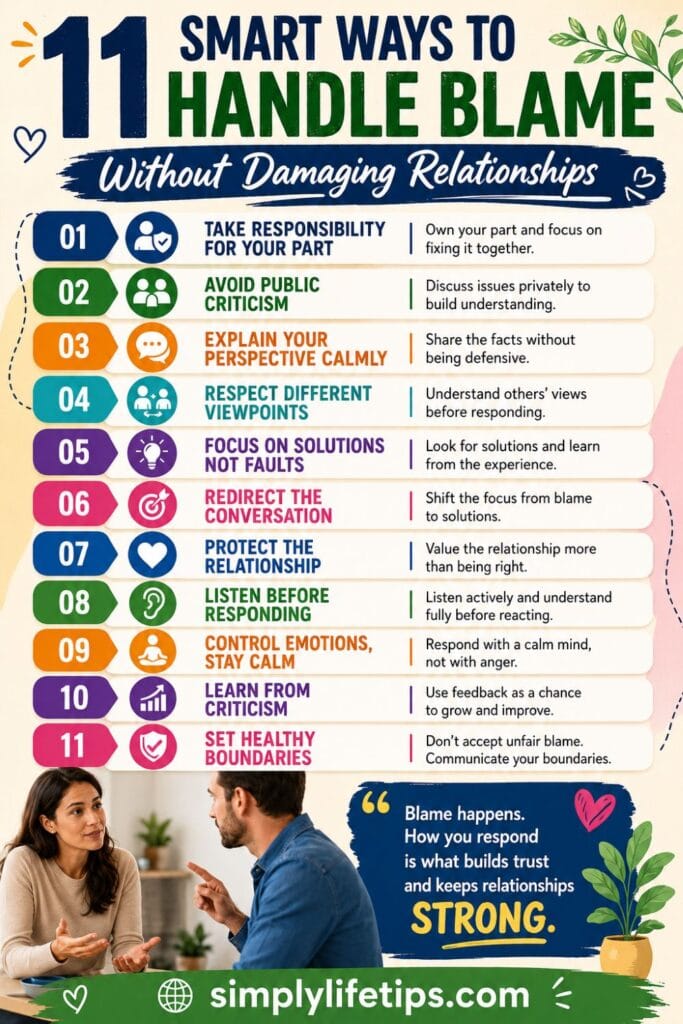
The key takeaway from these strategies is simple: blame does not have to destroy relationships. By listening carefully, taking responsibility for your part, respecting different perspectives, and focusing on solutions, you can turn difficult conversations into opportunities for growth and understanding.
Whether you’re dealing with workplace conflicts, family disagreements, or relationship challenges, these techniques can help you handle blame without damaging relationships while building greater trust, respect, and emotional intelligence over time.
Why Blame Often Damages Relationships?
Blame can quickly create emotional distance between people. When someone feels attacked, they may become defensive, angry, or withdrawn.
Common reasons that blame-harming relationships include:
- Poor communication
- Lack of empathy
- Public criticism
- Refusal to accept responsibility
- Focusing on the fault instead of the solutions
For example, a husband blaming his wife for a financial mistake or a manager blaming an employee in front of colleagues can create resentment that lasts far beyond the original issue.
Emotional distance between parent and child happens slowly through lack of presence, communication gaps, and digital distractions.
Learning to handle blame constructively helps prevent these negative outcomes.
11 Ways to Handle Blame Without Damaging Relationships
1. Take Responsibility for Your Part
One of the most effective ways to handle blame without damaging relationships is to acknowledge any role you may have played.
Instead of saying:
“It’s not my fault.”
Try:
“I take responsibility for my part. Let’s focus on fixing it.”
This response demonstrates maturity and shifts the conversation toward problem-solving.
People are often more willing to cooperate when they see accountability rather than resistance.
2. Avoid Public Arguments
Being blamed in front of others can feel humiliating, but responding publicly often makes matters worse.
Instead of reacting emotionally, say:
“Let’s discuss this privately so we can understand each other better.”
Private discussions create a safer environment for honest communication and reduce the pressure to defend oneself in front of an audience.
3. Explain Your Perspective Calmly
Sometimes blame results from misunderstandings or circumstances beyond your control.
Instead of saying:
“I can’t do anything about that.”
Try:
“I understand your concern. Here’s what happened from my perspective.”
A calm explanation allows facts to emerge without escalating emotions.
People are more likely to listen when they feel respected rather than challenged.
4. Respect Different Viewpoints
Two people can experience the same event differently.
Rather than saying:
“That’s not true.”
Consider:
“I see the situation differently. Let me explain my perspective.”
This response validates the other person’s feelings while allowing you to share your side.
Respectful disagreement often preserves relationships better than trying to prove someone wrong.
5. Focus on Solutions Instead of Fault
One of the best ways to handle blame without damaging relationships is to redirect the conversation toward solutions.
Instead of saying:
“I told you this wouldn’t work.”
Say:
“The result wasn’t what we expected. Let’s see how we can improve it next time.”
This approach encourages cooperation and learning rather than criticism and defensiveness.
6. Redirect the Conversation Productively
When blame dominates the discussion, progress often stops.
Instead of responding with:
“Stop blaming me!”
Try:
“Can we focus on solving the problem together?”
This simple shift can transform a conflict into a collaborative effort.
People generally appreciate conversations that move toward resolution rather than accusation.
7. Protect the Relationship
In many situations, preserving the relationship matters more than winning the argument.
Instead of saying:
“You’re always blaming me.”
Try:
“I value our relationship and want us to work through this together.”
This response reminds both parties that they are on the same side.
Strong relationships thrive when people prioritize connection over being right.
8. Listen Before Responding
Many conflicts escalate because people react before fully understanding the issue.
- Allowing the other person to finish speaking
- Asking clarifying questions
- Avoiding interruptions
- Paying attention to emotions as well as facts
Often, people simply want their concerns acknowledged before discussing solutions.
9. Control Emotional Reactions
Anger and frustration can make blame situations worse.
When emotions rise:
- Pause before responding
- Take a deep breath
- Speak slowly
- Focus on facts
- Avoid personal attacks
A calm response demonstrates emotional intelligence and helps de-escalate tension.
10. Learn from Constructive Criticism
Not every accusation is unfair. Sometimes criticism reveals growth opportunities.
Ask yourself:
- Is there some truth in this feedback?
- What lesson can I learn?
- How can I improve moving forward?
People who embrace constructive feedback often experience stronger personal and professional development.
How to Handle Criticism Like a Great Leader Using the RAIN Framework
11. Set Healthy Boundaries
Repeated unfair blame can become emotionally exhausting.
If someone constantly blames you:
- Communicate respectfully
- Clarify misunderstandings
- Present facts when necessary
- Establish clear boundaries
- Seek support if needed
Healthy relationships require mutual respect and accountability.
Benefits of Handling Blame Constructively
When you learn to handle blame without damaging relationships, you can experience:
- Better communication
- Stronger trust
- Reduced conflict
- Improved emotional intelligence
- Healthier family relationships
- Greater workplace respect
- More effective leadership
These benefits extend far beyond individual disagreements and contribute to long-term relationship success.
A Real-Life Example
Imagine a team misses an important project deadline.
A defensive response might be:
“It’s not my fault. Everyone else caused the delay.”
A constructive response would be:
“I could have communicated earlier about the challenges. Let’s review what happened and improve our process.”
The second response encourages teamwork, accountability, and future success.
FAQs – Handle Blame Without Damaging Relationships
Why is it important to handle blame without damaging relationships?
Because relationships are often more valuable than winning an argument. Constructive responses help preserve trust and mutual respect.
How do I stay calm when someone blames me unfairly?
Pause before responding, focus on facts, and remind yourself that reacting emotionally usually worsens the situation.
Should I apologize if I am only partly responsible?
Yes. Acknowledging your role demonstrates maturity without accepting responsibility for factors beyond your control.
What if someone constantly blames me for everything?
Set respectful boundaries, communicate clearly, and address patterns of unfair blame directly.
Can handling blame well improve workplace relationships?
Absolutely. Employees and leaders who focus on solutions rather than fault often build stronger professional relationships and greater trust.
Conclusion
Learning how to handle blame without damaging relationships is a valuable communication skill that can improve every area of life. Whether at home, at work, or among friends, responding with accountability, empathy, and a solution-focused mindset helps transform conflict into understanding. The next time blame enters a conversation, will you choose a defensive reaction or a response that strengthens the relationship?

Mathukutty P V is a Blogger, YouTuber, and Content Writer and the founder of Simply Life Tips. After taking voluntary retirement in 2017, he embraced a free lifestyle focused on learning, personal growth, and sharing practical wisdom to help others live with more purpose and positivity.