
Things You Should Never Say to Your Father may seem like a simple topic, but the words we choose can have a profound impact on one of the most important relationships in our lives. Fathers often spend years working, sacrificing, and carrying responsibilities without expecting recognition. While they may tolerate hardship, financial pressure, and personal struggles, certain words from their children can hurt them more deeply than any external challenge.
Many fathers are not expressive about their emotions. They may not openly talk about their sacrifices or ask for appreciation. Yet behind their strength lies a heart that values love, respect, and connection with their children. Understanding the phrases that can damage this bond can help us build stronger and healthier relationships with our fathers.
Things You Should Never Say to Your Father
Many people do not realize that a father’s deepest pain rarely comes from financial struggles, long working hours, or personal sacrifices. Most fathers willingly endure those challenges because they love their children. However, certain words spoken by their own children can leave emotional wounds that last for years. The following infographic highlights five phrases that can deeply hurt a father and explains why respect and gratitude are essential in every father-child relationship.
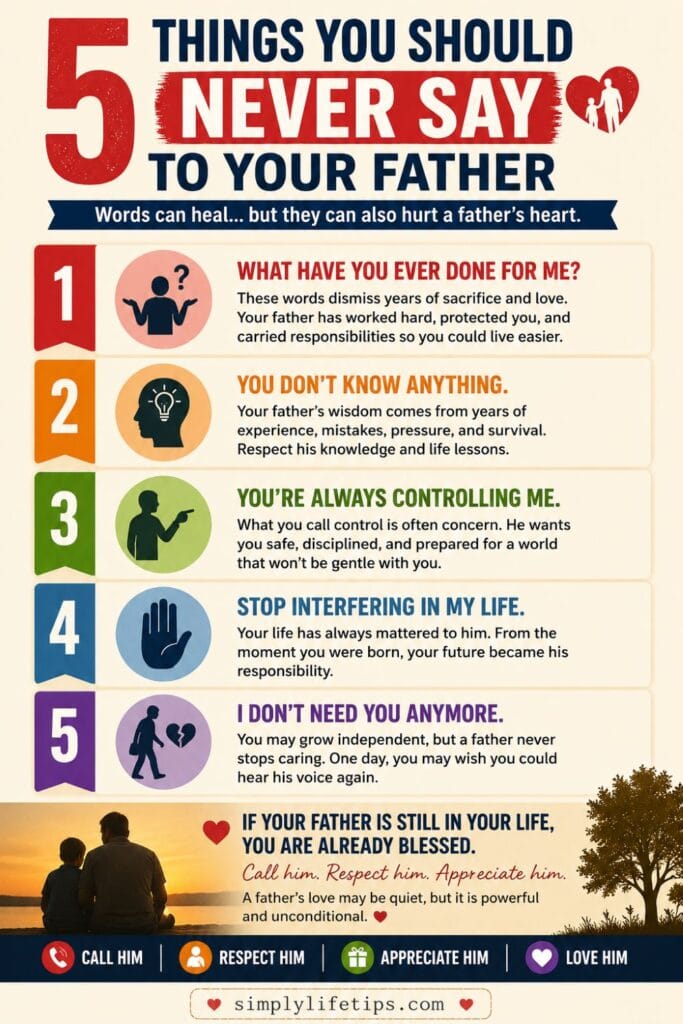
The words we speak have the power to strengthen relationships or damage them. While no family is perfect, choosing respect over frustration can make a significant difference in how fathers feel valued and appreciated. A father may not always express his emotions openly, but he remembers both the words that encourage him and the words that hurt him. Take a moment today to thank your father, listen to his advice, and remind him that his sacrifices have not gone unnoticed. Small acts of appreciation can create lasting memories and strengthen one of the most important relationships in your life.
Why Fathers Deserve Respect?
A father’s role extends far beyond providing financial support. He often becomes a protector, guide, teacher, and source of encouragement throughout a child’s life.
Many fathers wake up early, work long hours, and make countless sacrifices to ensure their families have opportunities they may never have had themselves. These efforts often go unnoticed because they become part of everyday life.
For example, a father may delay his personal dreams to fund his child’s education. He may work extra shifts to provide a comfortable home or silently carry stress so his family can feel secure.
Respecting a father does not mean agreeing with every decision he makes. It means recognizing the effort, responsibility, and love behind his actions.
5 Things You Should Never Say to Your Father
A father plays a vital role in a child’s development. Through guidance, encouragement, shared experiences, and unwavering support, fathers help shape their children’s academic achievement, social skills, emotional well-being, and overall success throughout life. Read Fathers’ Impact on Child Development
1. “What Have You Ever Done for Me?”
This is one of the most painful things a child can say to a father.
These words dismiss years of sacrifice, responsibility, and care. Even fathers who were not perfect likely invested significant time, energy, and resources into raising their children.
Imagine a father who spent decades working hard to provide food, education, healthcare, and security. Hearing this question can make him feel as though none of those efforts mattered.
Instead of focusing solely on what was lacking, try acknowledging what was provided. Gratitude strengthens relationships and helps create mutual understanding.
2. “You Don’t Know Anything.”
Generational differences can sometimes make children believe their fathers are outdated or uninformed.
While your father may not understand every modern trend, social media platform, or technological advancement, he possesses something invaluable: experience.
His knowledge comes from years of solving problems, facing failures, managing responsibilities, and navigating life’s challenges.
For instance, a father who has handled financial difficulties, career setbacks, and family responsibilities often has wisdom that cannot be learned from a quick internet search.
Respecting his experience does not mean you must follow every piece of advice. It simply means valuing the lessons life has taught him.
How a Strong Father Leads with Love, Patience, and Understanding
3. “You’re Always Controlling Me.”
Many children, especially teenagers and young adults, view parental guidance as control.
However, what feels like control is often a concern.
A father worries because he understands risks that his child may not yet recognize. He wants to protect his children from mistakes that could have long-term consequences.
For example, when a father asks questions about friends, career choices, or safety, he is usually acting out of care rather than a desire to dominate.
Open communication is a better solution than accusations. Discuss your need for independence while respecting his intentions.
4. “Stop Interfering in My Life.”
To many fathers, involvement in their children’s lives is an expression of love and responsibility.
From the day a child is born, a father begins thinking about their future, safety, and success. That concern rarely disappears, even when children become adults.
When a child says, “Stop interfering in my life,” a father may feel rejected and unappreciated.
Of course, adults need personal space and independence. However, there are respectful ways to establish boundaries without hurting someone who genuinely cares about your well-being.
A calm conversation is often far more effective than harsh words.
Lessons from Fathers: Smallest Habits Prepared for the Biggest Opportunity
5. “I Don’t Need You Anymore.”
This statement can be devastating for a father.
Every parent hopes their child will become independent and capable. Yet independence should never be confused with emotional separation.
A father may no longer need to make decisions for you, but his support, guidance, and presence remain meaningful.
Many people only realize how valuable a father’s advice was after they no longer have the opportunity to hear it.
One day, you may wish you could ask him one more question, seek his guidance, or simply thank him for everything he did.
Never let independence become an excuse to forget the people who helped you become who you are.
The Emotional Impact of Disrespect
Fathers are often expected to be strong and resilient. Society frequently encourages men to hide their emotions and remain composed regardless of circumstances.
Because of this, many fathers do not openly express how deeply disrespectful words hurt them.
However, emotional wounds can last for years.
A father’s greatest hope is often to see his children happy, successful, and respectful. When that respect disappears, it can make him question whether his sacrifices were appreciated.
Choosing kindness and respect can prevent unnecessary pain and strengthen family relationships.
Ways to Show Appreciation to Your Father
Showing appreciation does not require expensive gifts or grand gestures.
Simple actions can mean a great deal:
- Call him regularly.
- Ask for his advice.
- Spend quality time together.
- Thank him for the specific sacrifices he made.
- Listen when he shares his experiences.
- Celebrate important milestones with him.
- Express your love openly.
Even a simple “Thank you, Dad” can have a lasting impact.
The Value of a Father’s Love
A father’s love is often quiet but powerful.
He may not always express his feelings through words, but his actions frequently reveal his devotion. Whether through long hours at work, guidance during difficult times, or constant concern for his family’s future, fathers demonstrate love in countless ways.
Recognizing that love, while he is still present, is one of the greatest gifts a child can give.
FAQs – Things You Should Never Say to Your Father
Why are words important in a father-child relationship?
Words have the power to strengthen or damage relationships. Respectful communication helps build trust, while hurtful comments can create emotional distance.
Do fathers get hurt by disrespectful comments?
Yes. Although many fathers do not openly show their emotions, disrespectful words from their children can deeply affect them.
How can I improve my relationship with my father?
Spend time together, communicate openly, show appreciation, and make an effort to understand his perspective.
What if I have already said hurtful things to my father?
A sincere apology and consistent efforts to improve the relationship can help heal emotional wounds.
How can children show gratitude to their fathers?
Simple actions such as saying thank you, listening, spending time together, and acknowledging sacrifices can make a significant difference.
Conclusion
The things you should never say to your father are not just phrases; they are words that can leave lasting emotional scars. A father can endure stress, exhaustion, financial pressure, and personal sacrifice, but disrespect from his own child often hurts the most. By choosing gratitude, understanding, and respect, we can honor the love and sacrifices that fathers make every day. While no relationship is perfect, treating our fathers with kindness can create memories and connections that last a lifetime.
Have you thanked your father recently for the sacrifices he made to help shape your life?

Mathukutty P V is a Blogger, YouTuber, and Content Writer and the founder of Simply Life Tips. After taking voluntary retirement in 2017, he embraced a free lifestyle focused on learning, personal growth, and sharing practical wisdom to help others live with more purpose and positivity.