
Patience strengthens relationships by creating the emotional space needed for understanding, trust, and long-term connection. In a fast-moving world, where people expect immediate responses and quick outcomes, patience becomes a rare but essential quality. It allows individuals to slow down, think clearly, and respond with intention instead of reacting impulsively. Relationships thrive not on perfection but on the ability to handle imperfections calmly and respectfully. When patience strengthens relationships, it transforms everyday interactions into opportunities for deeper connection.
In today’s fast-moving world, obsessed with instant gratification, the true power of patience is often overlooked.
How Patience Strengthens Relationships?
Patience in relationships is the ability to remain emotionally steady, even when situations become difficult or frustrating. It involves controlling immediate reactions and choosing thoughtful responses that support the relationship rather than harm it. Being patient does not mean ignoring problems; it means addressing them with clarity and calmness. It also includes accepting that people grow and change at different speeds. This understanding helps reduce unnecessary pressure and promotes harmony.
Infographic – How Patience Strengthens Relationships?
Patience strengthens relationships by shaping how we respond, communicate, and connect with the people who matter most. In every relationship—whether it’s marriage, friendship, or family—there are moments of misunderstanding, delay, and emotional tension. What determines the strength of that relationship is not the absence of these challenges, but how we handle them. Patience allows us to pause, understand, and respond with clarity instead of reacting impulsively.
This infographic breaks down the core ways patience builds stronger emotional bonds, improves communication, and creates long-term stability. It also highlights simple, practical actions you can apply daily to become more patient and emotionally aware.
Take a moment to explore these insights and reflect on how patience can transform your relationships from fragile to deeply connected.
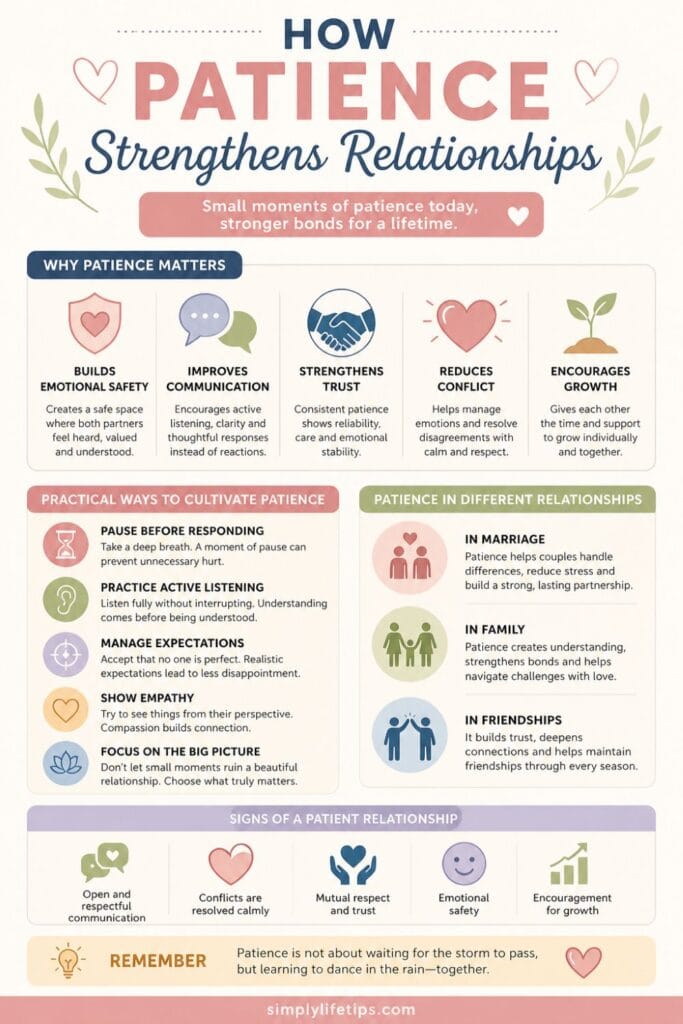
Patience is not just a virtue—it is a relationship skill that determines long-term success and emotional depth. When practiced consistently, it reduces unnecessary conflicts, builds trust, and creates a safe environment where love can grow naturally. Small acts of patience, repeated daily, lead to stronger bonds and meaningful connections over time.
The key is not perfection but progress. Every moment you choose patience over reaction, you strengthen your relationship and create a healthier emotional space for both yourself and others.
Start with small changes, stay consistent, and remember—strong relationships are not built in moments of ease, but in moments where patience leads the way.
Why Patience Strengthens Relationships?
Patience acts as a stabilizing force that keeps relationships grounded during challenging moments. It allows individuals to process emotions before responding, leading to healthier communication and fewer misunderstandings. When patience is present, both partners feel respected and valued, which strengthens emotional bonds. It also helps in resolving conflicts more effectively by focusing on solutions rather than blame. Over time, patience builds a relationship that is resilient and deeply connected.
Builds Emotional Safety
Emotional safety is created when individuals feel secure enough to express their true thoughts and feelings without fear of criticism. Patience plays a key role in building this environment by encouraging calm and non-judgmental responses. When someone knows they will be heard without interruption or anger, they become more open and honest. This openness strengthens trust and deepens emotional intimacy. Over time, emotional safety becomes the foundation of a strong and lasting relationship.
Improves Communication
Patience enhances communication by allowing both individuals to fully express themselves without being rushed or interrupted. It encourages active listening, where the focus is on understanding rather than reacting. This leads to more meaningful conversations and reduces the chances of misunderstandings. When patience is practiced, even difficult discussions can be handled with clarity and respect. As a result, communication becomes more effective and supportive.
Reduces Conflict
Many conflicts arise not from the issue itself but from how people react to it. Patience introduces a pause that prevents impulsive reactions and allows for thoughtful responses. This pause helps in understanding the situation more clearly before responding. As a result, small misunderstandings do not escalate into major arguments. Over time, patience reduces the frequency and intensity of conflicts, creating a more peaceful relationship.
Strengthens Trust
Trust develops when individuals consistently respond with calmness and understanding. Patience shows emotional reliability, which makes others feel secure in the relationship. When mistakes are handled without harsh reactions, it encourages honesty and openness. This consistency builds confidence in each other’s intentions and actions. As trust grows, the relationship becomes stronger and more stable.
Encourages Personal Growth
Patience allows individuals the time and space needed to grow and improve. It removes the pressure of immediate change and supports gradual development. When people feel supported rather than judged, they are more likely to work on themselves. This creates a positive environment where both partners can evolve together. Over time, this mutual growth strengthens the relationship significantly.
The Hidden Damage of Impatience
Impatience can quietly weaken relationships by creating tension and misunderstanding. It often leads to quick reactions that escalate situations unnecessarily. Over time, repeated impatience can cause emotional distance and reduce connection. It also increases stress, making interactions feel exhausting rather than enjoyable. Recognizing these effects is the first step toward building more patience.
Frequent Arguments
Impatience often results in reacting without thinking, which turns minor issues into repeated arguments. When people respond quickly with frustration, it creates a cycle of conflict. These frequent arguments can slowly damage the relationship’s stability. Over time, even small disagreements can feel overwhelming. Practicing patience helps break this cycle and promotes calmer interactions.
Miscommunication
When patience is lacking, individuals tend to listen only partially and react prematurely. This leads to misunderstandings and incorrect assumptions about intentions. Miscommunication can create unnecessary tension and confusion. Over time, it weakens trust and clarity in the relationship. Patience ensures that communication is complete and accurate.
Emotional Distance
Repeated impatience can make individuals feel unimportant or unheard. This emotional disconnect grows gradually and can become difficult to repair. When people feel misunderstood, they may withdraw from the relationship. This creates a gap that reduces intimacy and connection. Patience helps maintain emotional closeness by fostering understanding.
Increased Stress
A relationship filled with impatience often feels tense and exhausting. Constant conflicts and misunderstandings increase emotional stress. Instead of being a source of comfort, the relationship becomes draining. This stress can affect overall well-being and happiness. Practicing patience creates a more relaxed and supportive environment.
Practical Ways to Patience Strengthens Relationships
Developing patience requires conscious effort and consistent practice. It involves changing habits and adopting a more thoughtful approach to interactions. Over time, these small changes can lead to significant improvements in relationships. Patience can be strengthened through simple daily practices. The key is to remain consistent and mindful.
Developing patience is closely linked to emotional regulation and self-control, which are key to healthy relationships—learn more from the American Psychological Association.
Pause Before Responding
Taking a moment before responding allows you to process your emotions and think clearly. This pause prevents impulsive reactions that can harm the relationship. Even a few seconds can make a big difference in how you respond. It helps you choose words carefully and avoid unnecessary conflict. Over time, this habit becomes natural and improves communication.
Practice Active Listening
Active listening involves giving full attention to the speaker without interrupting. It shows respect and helps in understanding the complete message. This reduces misunderstandings and builds trust. When people feel heard, they are more likely to communicate openly. Patience plays a key role in developing this skill.
Adjust Expectations
Unrealistic expectations often lead to frustration and disappointment. Accepting that people are imperfect helps reduce unnecessary pressure. This creates a more balanced and understanding relationship. When expectations are realistic, it becomes easier to stay patient. Over time, this leads to greater satisfaction and harmony.
Develop Empathy
Empathy allows you to see situations from the other person’s perspective. It helps in understanding their emotions and reactions. This reduces judgment and increases compassion. When empathy is present, patience naturally follows. It strengthens the emotional connection between individuals.
Focus on What Matters
Focusing on long-term goals helps prioritize the relationship over temporary emotions. It encourages thoughtful responses instead of impulsive reactions. This perspective helps avoid unnecessary conflicts. Over time, it strengthens the relationship’s foundation. Patience becomes easier when the bigger picture is clear.
Stay Present
Being present helps you stay aware of your thoughts and emotions. It reduces distractions and improves emotional control. This awareness allows for more thoughtful responses. Practicing mindfulness supports patience in daily interactions. It leads to more meaningful and calm communication.
Communicate with Respect
Respectful communication is essential for maintaining a healthy relationship. Using calm and positive language prevents misunderstandings. It ensures that conversations remain constructive and supportive. Patience helps maintain this respectful tone, even during disagreements. Over time, it strengthens mutual respect.
Patience Strengthens Relationships in Marriage
Marriage requires continuous effort and understanding. Patience helps couples navigate differences and challenges effectively. It allows partners to support each other during difficult times. This creates a stable and lasting bond. Over time, patience becomes the foundation of a strong marriage. Patience in marriage isn’t about avoiding conflict—it’s about choosing understanding over reaction. Why Patience in Marriage Is the Secret to a Stronger Relationship?
Managing Differences
Every couple has differences in opinions and habits. Patience allows these differences to exist without causing conflict. It encourages acceptance and understanding. This reduces unnecessary arguments and promotes harmony. Over time, differences become manageable rather than problematic.
Handling Stress
Life challenges can create stress in relationships. Patience helps partners support each other instead of adding pressure. It encourages calm and thoughtful responses during difficult times. This strengthens the bond between partners. Over time, it builds resilience in the relationship.
Building Stability
Consistency in patience creates long-term stability in marriage. It helps in maintaining balance and understanding. This stability strengthens trust and emotional connection. Over time, it creates a secure and lasting relationship. Patience becomes a key factor in marital success.
Patience in Family and Parenting
Patience plays a vital role in maintaining healthy family relationships. It helps in managing conflicts and guiding behavior effectively. In parenting, patience is essential for teaching and nurturing children. It creates a supportive and loving environment. Over time, it strengthens family bonds.
Teaching Emotional Control
Children learn emotional behavior by observing adults. Patient responses teach them how to manage their emotions effectively. This helps in developing emotional intelligence. Over time, children become more balanced and self-aware. Patience plays a key role in this learning process.
Strengthening Bonds
Patience creates a sense of security and trust within the family. It encourages open communication and understanding. This strengthens emotional connections between family members. Over time, it builds a supportive and loving environment. Strong bonds lead to healthier relationships.
Navigating Challenges
Families face various challenges, from daily conflicts to major life changes. Patience helps in handling these situations calmly and effectively. It encourages problem-solving rather than reacting emotionally. Over time, it strengthens resilience and unity. This makes the family more adaptable and connected.
Emotional Intelligence and Patience
Patience is closely linked to emotional intelligence, which involves understanding and managing emotions effectively. It helps individuals recognize their triggers and control their reactions. This leads to more thoughtful and balanced responses. Emotional intelligence enhances communication and empathy. Over time, it strengthens relationships significantly.
The Value of Patience: Moral Story Of The Peach Tree
Common Myths About Patience
Several misconceptions about patience can lead to a misunderstanding of its true value. Some people believe patience means tolerating everything, while others see it as weakness. In reality, patience is about responding wisely and maintaining boundaries. It requires strength and self-control. Understanding these myths helps in practicing patience correctly.
Signs of a Patient Relationship
A patient relationship is characterized by calm communication, mutual respect, and emotional safety. Partners listen to each other and resolve conflicts without aggression. There is a strong sense of trust and understanding. Growth is encouraged without pressure or judgment. These signs indicate a healthy and balanced relationship.
Patience Strengthens Relationships – Daily Habits to Practice
Practicing patience daily helps in developing it as a natural habit. Small actions can lead to significant improvements over time. Consistency is key to building patience. These habits support emotional control and better communication. Over time, they strengthen relationships.
Start with Small Situations
Practicing patience in everyday situations helps build the habit gradually. Simple actions like waiting calmly can improve emotional control. These small efforts make a big difference over time. They prepare you for handling bigger challenges. Consistency is important for long-term results.
Reflect on Your Behavior
Reflecting on your actions helps identify areas for improvement. It encourages self-awareness and growth. This helps in understanding triggers and reactions. Over time, it leads to better emotional control. Reflection supports continuous improvement.
Use Positive Thinking
Positive thinking helps in maintaining a calm and balanced mindset. It reduces stress and improves emotional control. This makes it easier to practice patience. Over time, it creates a more positive outlook. This supports healthier relationships.
Maintain Well-Being
Good physical and mental health improves emotional stability. Regular exercise, proper sleep, and relaxation help in managing stress. This supports patience in daily interactions. Over time, it enhances overall well-being. A healthy mind supports better relationships.
Long-Term Benefits of Patience in Relationships
Patience creates lasting benefits that strengthen relationships over time. It improves emotional connection, stability, and happiness. It also supports personal growth and self-awareness. These benefits make relationships more fulfilling. Over time, patience becomes a key factor in long-term success.
FAQs about Patience Strengthens Relationships
What does it mean that patience strengthens relationships?
It means patience helps build trust, improve communication, and reduce conflicts, leading to stronger emotional connections.
How can I become more patient in my relationship?
By practicing active listening, managing expectations, pausing before reacting, and improving emotional awareness.
Is patience important in marriage?
Yes, patience is essential for handling differences, resolving conflicts, and building long-term stability.
Can too much patience be harmful?
Yes, if it leads to tolerating unhealthy behavior without setting boundaries.
Why do people struggle with patience in relationships?
Due to stress, unrealistic expectations, and a lack of emotional awareness.
Conclusion
Patience strengthens relationships by creating a strong emotional foundation built on trust, understanding, and respect. It transforms communication, reduces conflict, and supports long-term growth. While impatience leads to tension and disconnection, patience fosters harmony and stability. Developing patience requires consistent effort, but the results are deeply rewarding. Stronger bonds, deeper connections, and lasting happiness all come from choosing patience every day—so how will you start practicing patience in your relationships today?
If this resonated with you, share it with someone who needs it.
PVM

Mathukutty P V is a Blogger, YouTuber, and Content Writer and the founder of Simply Life Tips. After taking voluntary retirement in 2017, he embraced a free lifestyle focused on learning, personal growth, and sharing practical wisdom to help others live with more purpose and positivity.