Setting healthy boundaries in relationships is essential for building respect, emotional safety, and long-term happiness. Many people mistake love for constant sacrifice, believing that saying yes all the time will strengthen the bond. However, this often leads to emotional exhaustion and silent frustration. True connection grows when both partners feel respected and understood.
Healthy boundaries in relationships are clear limits that protect your emotional, mental, and physical well-being. They define how you want to be treated and what behavior you accept or reject. Setting boundaries in relationships reduces conflict, builds trust, and creates mutual respect. They are essential for maintaining a balanced and lasting relationship.
To build a strong foundation, it’s important to clearly understand how boundaries work in relationships.
Setting Healthy Boundaries in Relationships
Understanding the Concept of Boundaries
Healthy boundaries are personal limits that help you maintain emotional balance and self-respect in a relationship. They guide how you interact with your partner and how you respond to different situations. Without these limits, relationships can become confusing and emotionally draining. Clear boundaries create stability and strengthen connections.
Boundaries Are Not Restrictions
Many people think boundaries create distance, but they actually build clarity and trust. They are not about controlling your partner but about expressing your needs honestly. When both partners understand each other’s limits, conflicts naturally reduce. Boundaries make relationships more stable, not weaker.
According to the American Psychological Association, healthy relationships are built on respect, communication, and clearly defined personal boundaries.
Importance of Setting Healthy Boundaries in Relationships
Prevents Emotional Burnout
When boundaries are missing, one person often gives more than they receive. Over time, this creates emotional exhaustion and hidden resentment. Constantly ignoring your own needs can damage your mental well-being. Healthy limits ensure that your energy is protected and balanced. Learn things that silently destroy relationships and how to fix them before it’s too late.
Builds Mutual Respect
Boundaries communicate self-respect, which encourages others to respect you as well. When you clearly express your limits, your partner understands how to treat you. This reduces misunderstandings and strengthens emotional trust. Respect becomes a natural part of the relationship.
Improves Communication
Boundaries encourage open and honest conversations between partners. Instead of suppressing feelings, you express them clearly and calmly. This reduces emotional tension and confusion. As a result, communication becomes healthier and more effective.
Signs You Need Better Boundaries
Constant People-Pleasing
If you always prioritize your partner’s needs over your own, it is a warning sign. You may feel responsible for keeping the relationship happy at all times. This behavior often leads to emotional exhaustion over time. Healthy relationships require balance, not constant sacrifice.
Feeling Guilty for Saying No
You may feel uncomfortable or anxious when trying to say no. This guilt often comes from fear of rejection or conflict. However, always saying yes can harm your well-being. Learning to say no is essential for maintaining self-respect.
Fear of Commitment in Relationships | Proven Ways to Overcome It
Emotional Exhaustion
Feeling drained after interactions is a strong indicator of weak boundaries. You may feel overwhelmed by your partner’s needs or emotions. This can lead to frustration and burnout. Boundaries help protect your emotional energy.
Lack of Personal Time
If you have no time for yourself, your independence starts to fade. Your life may revolve entirely around your partner. This can lead to loss of identity and personal growth. Healthy relationships allow space for individuality.
Types of Boundaries in Relationships
Emotional Boundaries
Emotional boundaries protect your feelings and mental health. They help you avoid taking responsibility for your partner’s emotions. This allows you to support them without losing yourself. It creates emotional balance in the relationship.
Physical Boundaries
Physical boundaries define your comfort with touch and personal space. Everyone has different preferences that should be respected. Ignoring these can lead to discomfort or tension. Respecting them builds trust and safety.
Respect is more important than love in any relationship because it forms the foundation of trust, understanding, and long-term stability.
Time Boundaries
Time boundaries ensure you have space for personal growth and rest. They help you balance your relationship with other responsibilities. Without them, life can feel overwhelming. Managing time wisely strengthens both individuals and the relationship.
Communication Boundaries
Communication boundaries define how partners speak to each other. Respectful language prevents emotional harm and misunderstandings. They help manage conflicts healthily. This creates a more peaceful connection.
Digital Boundaries
Digital boundaries protect privacy in the modern world. They include phone usage, social media behavior, and online interactions. Respecting these boundaries builds trust. It prevents unnecessary conflicts and insecurity.
How to Set Healthy Boundaries Without Guilt?
Using polite phrases for setting boundaries helps you communicate your needs respectfully while maintaining healthy relationships.
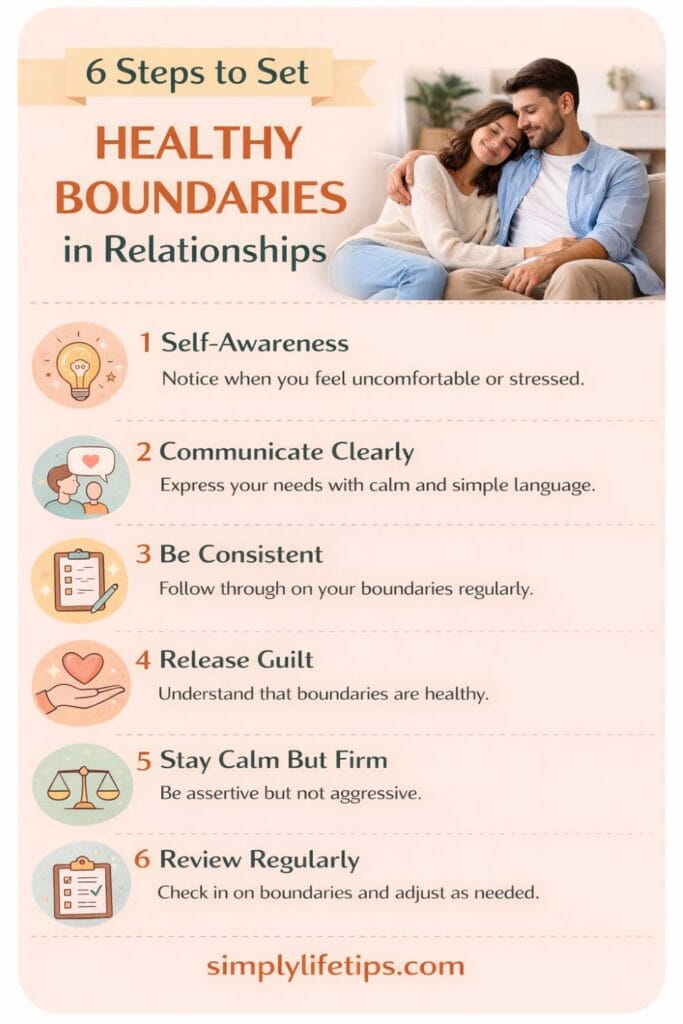
Save this guide on Pinterest for quick reference.
Start With Self-Awareness
Understanding your feelings is the first step in setting boundaries. Notice situations where you feel uncomfortable or stressed. These emotions signal where limits are needed. Self-awareness helps you take control of your needs.
Communicate Clearly and Calmly
Express your needs using simple and respectful language. Avoid blaming or criticizing your partner. Clear communication reduces defensiveness and confusion. It helps your partner understand your perspective.
Be Consistent
Consistency makes your boundaries effective and meaningful. If you ignore them, others may not take them seriously. Repeating your limits calmly builds clarity over time. This strengthens respect in the relationship.
Let Go of Guilt
Feeling guilty is normal when you start setting boundaries. However, it does not mean you are doing something wrong. Boundaries protect your well-being and improve your relationship. Over time, confidence replaces guilt.
Examples of Healthy Boundaries in Daily Life
Taking Personal Time
Spending time alone helps you recharge emotionally. It allows you to reflect and relax without pressure. This improves your mood and energy. A balanced individual contributes to a healthier relationship.
Saying No When Needed
Saying no protects your time and energy. It prevents you from feeling overwhelmed or used. It also shows self-respect and confidence. Healthy partners understand and respect this.
Respecting Privacy
Privacy builds trust between partners. Avoiding unnecessary checking of phones or messages shows respect. It creates a sense of security in the relationship. Trust grows stronger over time.
Managing Conflict Calmly
Choosing calm discussions over emotional reactions improves communication. It prevents small issues from becoming bigger problems. Respectful conversations lead to better understanding. This strengthens emotional connection.
Powerful Affirmations For Healthy Boundaries: Empower Your Life And Relationships
10 Healthy Boundaries Every Relationship Needs
Use this simple checklist to build healthy boundaries in relationships that protect your emotional well-being and strengthen your connection. These boundaries help create respect, reduce conflict, and bring balance into your relationship.
1. Personal Time Boundary
You allow yourself time alone to recharge without feeling guilty. This helps you maintain emotional balance and prevents burnout. A healthy relationship supports individuality, not constant availability.
2. Communication Boundary
You expect respectful and calm communication, even during disagreements. Hurtful language, shouting, or silence as punishment is not acceptable. This boundary protects emotional safety.
3. Emotional Responsibility Boundary
You do not take responsibility for your partner’s emotions. You can support them, but their feelings are not your burden to carry. This prevents emotional exhaustion.
4. Saying No Boundary
You feel comfortable saying no without fear or guilt. You understand that saying no does not mean rejection. It shows self-respect and clarity.
5. Privacy Boundary
You respect each other’s personal space, including phones, messages, and private thoughts. Trust replaces control in a healthy relationship. This builds long-term security.
6. Time and Energy Boundary
You protect your time and energy from being overused. You balance your relationship with work, family, and personal growth. This keeps life stable and fulfilling.
7. Conflict Boundary
You choose to handle disagreements calmly rather than react emotionally. You avoid arguments during anger and revisit them with a clear mind. This improves understanding.
8. Social Boundary
You maintain friendships and social connections outside your relationship. A healthy partner supports your social life. This prevents emotional dependency.
9. Digital Boundary
You set limits on phone usage, social media, and online interactions. You avoid behaviors that create insecurity or mistrust. This keeps the relationship transparent and respectful.
10. Self-Respect Boundary
You do not tolerate repeated disrespect, manipulation, or emotional harm. You value yourself enough to walk away from unhealthy patterns. This is the foundation of all boundaries.
Quick Self-Check
Ask yourself:
- Do I feel respected in my relationship?
- Can I express my needs without fear?
- Do I have time and space for myself?
If the answer is no, it’s time to strengthen your boundaries.
Common Mistakes When Setting Boundaries
Being Too Aggressive
Boundaries should be firm but not harsh. Aggressive communication can create fear or distance. It may damage trust rather than build it. Respectful tone is key. You should never underestimate the power of an apology because it can transform relationships.
Being Inconsistent
Changing your limits frequently creates confusion. Your partner may not understand what to expect. Consistency helps establish clarity and respect. It makes boundaries more effective.
Expecting Immediate Change
Adjusting to boundaries takes time for both partners. Immediate results are not always realistic. Patience is important in this process. Growth happens gradually.
Not Explaining Your Needs
Lack of explanation can lead to misunderstanding. Your partner may feel confused or hurt. Clear communication helps avoid this. It ensures both partners stay aligned.
How Boundaries Strengthen Relationships?
Creates Emotional Safety
Boundaries make relationships feel secure and predictable. Both partners know what to expect from each other. This reduces anxiety and stress. Emotional safety allows love to grow.
Builds Trust
Trust develops when boundaries are respected consistently. It shows reliability and understanding. Over time, this strengthens the connection. Trust is the foundation of lasting relationships.
Encourages Individual Growth
Boundaries allow both partners to grow independently. Personal growth enhances the relationship overall. It prevents dependency and imbalance. Strong individuals build stronger relationships.
How to Handle Resistance When Setting Boundaries?
Stay Calm and Firm
Remain confident and avoid emotional reactions. Calm communication helps your partner understand better. Firmness shows that your needs are important. This builds respect over time.
Reassure Your Partner
Explain that boundaries are meant to improve the relationship. Reassurance reduces fear and misunderstanding. It shows that you still value the connection. This strengthens emotional trust.
Give Time for Adjustment
Change does not happen instantly. Your partner may need time to adapt. Consistency helps them understand your limits. Patience makes the process smoother.
Building Long-Term Boundary Habits
Regular Self-Check
Reflect on whether your needs are being met. This helps you adjust boundaries when needed. Self-awareness keeps the relationship balanced. It ensures long-term emotional health.
Open Communication
Keep discussing needs as the relationship evolves. Situations and priorities change over time. Open communication prevents misunderstandings. It keeps the relationship strong. Power communication in relationships is the key to building trust and emotional connection.
Practice Self-Respect
How you treat yourself influences how others treat you. Self-respect sets the standard in relationships. It builds confidence and clarity. Strong self-respect leads to healthier connections.
FAQs
What are healthy boundaries in a relationship?
Healthy boundaries are limits that protect your emotional, mental, and physical well-being while maintaining respect and connection.
How do I set boundaries without hurting my partner?
Communicate clearly and calmly, focus on your needs, and avoid blaming language. Respectful communication reduces conflict.
Is it selfish to set boundaries in a relationship?
No, boundaries are a sign of self-respect and emotional maturity. They help maintain balance in the relationship.
Why do I feel guilty when setting boundaries?
Guilt often comes from conditioning or fear of rejection, but setting boundaries is necessary for long-term relationship health.
Can boundaries improve a relationship?
Yes, boundaries create clarity, trust, and emotional safety, which strengthen the relationship over time.
Conclusion
Setting healthy boundaries in relationships is one of the most powerful steps you can take to build a strong, respectful, and emotionally balanced connection.
It allows you to protect your well-being while staying deeply connected to your partner. It replaces confusion with clarity and exhaustion with peace.
Healthy love is not about constant sacrifice—it is about mutual respect, honest communication, and balanced effort.
When you learn to set and respect boundaries, you don’t lose love—you create a version of it that is stronger, healthier, and built to last.
Because the best relationships are not the ones where people give endlessly, but the ones where both individuals feel valued, respected, and free to be themselves.
If this resonated with you, share it with someone who needs it.
PVM

Mathukutty P V is a Blogger, YouTuber, and Content Writer and the founder of Simply Life Tips. After taking voluntary retirement in 2017, he embraced a free lifestyle focused on learning, personal growth, and sharing practical wisdom to help others live with more purpose and positivity.