

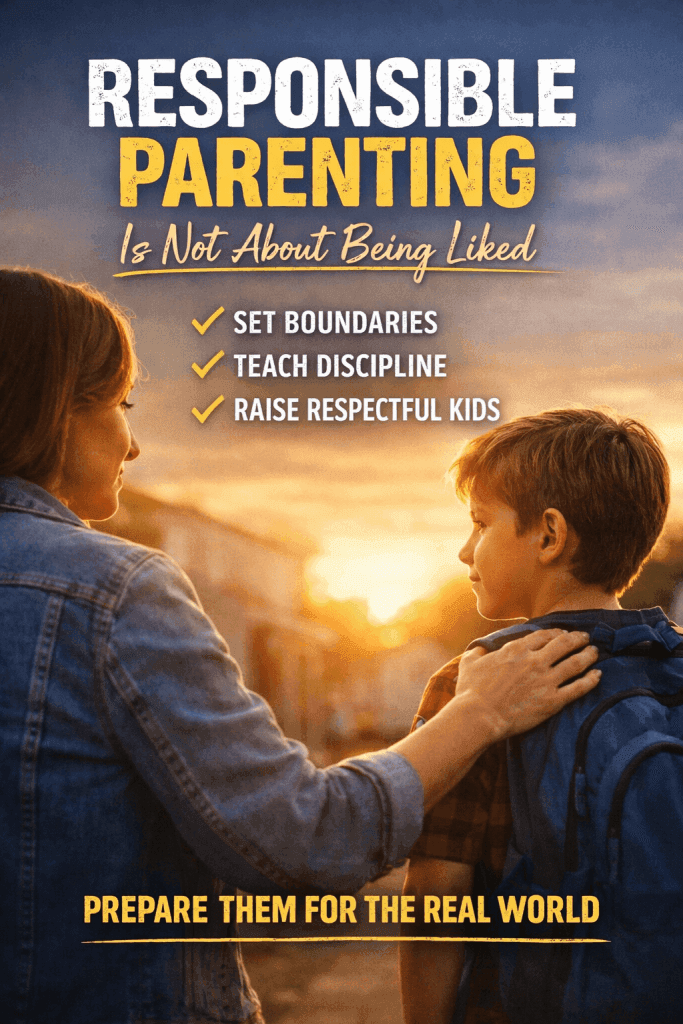
Responsible parenting is often misunderstood in today’s people-pleasing culture, where many parents worry more about being liked by their children than preparing them for the real world they will eventually face. Children are not growing up in a world without limits, rules, or consequences. They are entering a reality shaped by expectations, deadlines, responsibilities, and accountability. Responsible parenting accepts this truth early and provides children with guidance, structure, and discipline so they are not shocked by life later. Parenting is not about avoiding discomfort. It is about building strength, resilience, and respect through consistent leadership and clear boundaries.
Responsible Parenting Is Not About Being Liked
Responsible parenting requires parents to think beyond the present moment. Being liked feels good, but it is temporary. Preparation lasts a lifetime. Children often resist rules because rules challenge comfort. However, discomfort is not harmful when it leads to growth. A parent who enforces routines, responsibilities, and limits may face complaints, but those same rules teach discipline and self-control.
Example: A child who must complete homework before play learns priorities early, which supports academic success later. Responsible parenting chooses long-term growth over short-term approval.
Discipline Is Guidance, Not Cruelty
Discipline is one of the most misunderstood aspects of responsible parenting. Discipline does not mean harsh punishment. It means teaching children how actions lead to outcomes. When discipline is calm, consistent, and fair, children learn accountability without fear.
Example: Losing screen time after ignoring agreed-upon rules teaches cause and effect. This lesson is essential because real life operates on consequences. Responsible parenting uses discipline to prepare children for responsibility, not to control them through fear.
Parenting in the Digital Age | Practical Screen Time Guidelines for Pre-Teens
Rules Are Necessary, Not Oppressive
Rules are a form of clarity. Children feel safer when expectations are clear and consistent. A lack of rules creates confusion and anxiety, not freedom. Responsible parenting establishes rules, so children know what behaviour is acceptable.
Example: Consistent bedtime rules support better sleep, focus, and emotional regulation. Rules help children understand boundaries, which builds trust between parent and child. Predictability gives children a sense of security that supports healthy development.
Why Saying No Is a Core Part of Responsible Parenting?
Saying no often triggers guilt in parents, but it is one of the most important tools in responsible parenting. Children do not need unlimited choices. Too many options overwhelm them and increase frustration. Guidance simplifies decisions and provides direction. Saying no to harmful habits such as excessive screen time, junk food, or unsafe behaviour protects children from choices they are not ready to manage. No is not rejection. It is leadership. It teaches children that limits exist for their benefit.
Children Need Guidance More Than Freedom
Freedom without guidance creates uncertainty. Children lack the experience to consistently make healthy decisions on their own. Responsible parenting fills that gap by offering direction and supervision. Guidance helps children learn judgment over time.
Example: Allowing age-appropriate independence within clear boundaries teaches responsibility without risk. Children who grow up with guidance develop confidence because they trust that adults are there to lead and support them.
Feelings Are Valid, but Behaviour Has Expectations
Responsible parenting acknowledges emotions without excusing poor behaviour. Children should be encouraged to express feelings, whether anger, sadness, or frustration. However, emotions do not justify disrespect or harmful actions. Teaching children to separate feelings from behaviour builds emotional intelligence.
Example: A child can feel angry but still speak respectfully. This balance prepares children to handle stress and conflict in healthy ways as adults.
The Real World Has Rules and Consequences
The world does not pause for emotions. It has deadlines, standards, and accountability. Children raised without boundaries often struggle when they encounter these realities. Responsible parenting reduces this shock by introducing structure early. Home becomes the training ground for life. Small responsibilities such as chores, routines, and follow-through teach children how to manage expectations. These lessons translate directly into school performance and workplace readiness.
Boundaries Teach Safety
Boundaries protect children physically and emotionally. They define what is safe and acceptable. Children naturally test limits to understand them. Consistent boundaries reassure children that adults are in control. When limits are enforced calmly and consistently, children feel secure rather than restricted. Responsible parenting uses boundaries to prevent harm and encourage responsible decision-making.
Structure Creates Security and Stability
Structure provides rhythm to a child’s day. Regular sleep schedules, meal times, and routines reduce stress and improve behaviour. Structure helps children predict what comes next, which supports emotional regulation. Responsible parenting uses structure to create stability, not rigidity. Within structure, children feel safe enough to explore, learn, and grow.
Correction Is an Act of Love
Correcting behaviour is part of teaching. Ignoring poor behaviour does not promote kindness. It promotes confusion. Responsible parenting addresses behaviour calmly and clearly. Correction shows involvement and care. It communicates that actions matter. Children who receive clear feedback learn respect for others and for themselves. This respect carries into friendships, classrooms, and future workplaces.
You Are Not Meant for Holding the Line
Holding boundaries is emotionally demanding. Children may react with anger or frustration. This response does not mean the boundary is wrong. Responsible parenting requires emotional strength and consistency. Love is not permissiveness. Love is preparation. Parents who hold the line teach resilience, patience, and responsibility. These lessons may not be appreciated immediately, but they are invaluable later.
Emotional Bonding With Children | How Love, Discipline, and Care Shape Their Future
Long-Term Results of Responsible Parenting
Responsible parenting shows its value over time. Children raised with boundaries adapt better to challenges. They accept feedback more easily. In classrooms, they follow rules and manage time effectively. In adulthood, they respect deadlines, authority, and relationships. They understand accountability and rarely confuse entitlement with self-expression. These outcomes are the result of consistent guidance early in life.
Conclusion
Responsible parenting is not about being liked. It is about preparing children for reality with love, structure, and accountability. Discipline is not cruelty. Rules are not oppression. Saying no is not failure. It is a responsibility. Parents who do the hard work now protect their children from harsher lessons later. This approach is not outdated. It is practical, effective, and deeply loving.
Are we ready to choose responsible parenting today, even when it feels hard?
FAQs – Responsible Parenting
Is responsible parenting too strict for modern children?
Responsible parenting is not about strictness. It is about balance and consistency. Children benefit from clear expectations. Modern life still requires accountability.
Can discipline harm a child’s confidence?
Healthy discipline builds confidence by teaching responsibility. It helps children understand limits. Confidence grows when children know what is expected.
How do boundaries support emotional development?
Boundaries create safety and predictability. Children feel secure within limits. This security supports emotional regulation.
Is it okay if my child dislikes my rules?
Yes, discomfort is part of learning. Children do not need to like every rule. They need guidance that supports growth.
How can parents stay consistent without guilt?
Guilt fades when results appear. Consistency leads to calmer behaviour and stronger responsibility. Responsible parenting builds confidence in both parent and child.
Thank you for taking the time to explore this post. I sincerely hope you found the insights valuable and actionable. If this content resonated with you, please consider sharing it. Your support enables me to share knowledge and inspiration with others in our community.
PVM

Mathukutty P V is a Blogger, YouTuber, and Content Writer and the founder of Simply Life Tips. After taking voluntary retirement in 2017, he embraced a free lifestyle focused on learning, personal growth, and sharing practical wisdom to help others live with more purpose and positivity.



