What is maturity? Maturity is not simply about growing older; it is about how we think, behave, and respond to the challenges and situations we encounter in life. It develops through self-awareness, responsibility, emotional control, thoughtful decision-making, and the willingness to learn from experience.
Maturity influences many areas of life, including personal relationships, education, career, and leadership. A mature person can remain calm under pressure, respect different opinions, accept mistakes, and make thoughtful decisions instead of reacting impulsively.
In this guide, you’ll discover what maturity means, explore the different types of maturity, learn the common signs of mature behaviour, and understand why maturity is important for personal growth, healthy relationships, and long-term success.
What is maturity?
Maturity is the ability to respond to situations with reason rather than simply reacting based on emotion. It involves knowing how to behave, speak, and interact appropriately according to the situation and the people involved.
A mature person understands when to speak, what to say, when to listen, and, importantly, when to remain silent. Maturity is reflected not only in what we do but also in how thoughtfully we respond to everyday situations.
Why Is Maturity Important?
Maturity is important because it helps us make better decisions, build healthier relationships, and respond wisely to life’s challenges. Instead of reacting emotionally, mature people think carefully before acting and accept responsibility for their choices. This improves communication, earns respect, and builds trust in both personal and professional life.
Whether you are a student, employee, parent, or leader, maturity helps you remain calm under pressure, solve problems effectively, and adapt to changing circumstances. It also encourages empathy, patience, and self-discipline, making it easier to work toward long-term goals while maintaining positive relationships with others.
Signs of Maturity
Maturity is reflected in everyday behaviour rather than simply in what a person says. Common signs include:
- Accepting responsibility for mistakes.
- Thinking before speaking or acting.
- Respecting different opinions.
- Managing emotions during difficult situations.
- Keeping promises and commitments.
- Learning from failures instead of blaming others.
- Making decisions based on long-term goals rather than temporary emotions.
Developing these habits can strengthen both personal and professional relationships.
Difference Between Age and Maturity
Growing older does not automatically make a person mature. Age measures the number of years a person has lived, while maturity reflects how they think, behave, make decisions, and respond to different situations.
Some young people can demonstrate remarkable maturity through responsibility, emotional balance, and a willingness to learn. At the same time, some adults may continue to behave impulsively or avoid responsibility despite their age.
Characteristics of a Mature and Immature Person
| Mature Person | Immature Person |
|---|---|
| Thinks before reacting | Reacts impulsively |
| Accepts responsibility | Blames others |
| Respects different opinions | Insists on being right |
| Controls emotions | Loses emotional control easily |
| Learns from mistakes | Repeats the same mistakes |
| Communicates respectfully | Uses hurtful or offensive language |
| Solves problems calmly | Creates unnecessary conflicts |
| Focuses on long-term goals | Seeks immediate gratification |
Age vs Maturity
| Age | Maturity |
|---|---|
| Increases naturally over time | Develops through experience and self-awareness |
| Cannot be controlled | Can be improved through learning and practice |
| Measures years lived | Reflects behaviour, judgement, and responsibility |
| Same for everyone born on a date | Different for every individual |
Physical Maturity
Physical maturity is often the most visible form of maturity. It refers to the development of the body and biological systems, but it also involves taking responsibility for your physical well-being.
Examples
- Maintaining good hygiene and grooming regularly.
- Eating balanced meals and exercising.
- Avoiding reckless physical behaviour, such as excessive drinking, dangerous stunts, or consistently getting inadequate sleep.
For instance, a 25-year-old who constantly eats junk food, skips sleep, and avoids exercise may not be demonstrating good physical responsibility. Meanwhile, a teenager who follows a disciplined routine and understands the consequences of neglecting physical health can show signs of physical maturity.
Mental Maturity: Clarity in Thinking
Mental maturity is the ability to think rationally, plan for the future, make informed decisions, and develop an independent perspective. It also involves practising critical thinking and handling opposing views with understanding and respect.
Examples
- Not reacting impulsively in stressful situations.
- Thinking before speaking.
- Engaging in respectful discussions without losing composure.
A mentally mature person does not argue simply to win. Instead, they seek clarity and consider different perspectives. For example, during a group discussion, a mature person listens to different viewpoints, accepts that people may disagree, and contributes thoughtfully rather than insisting, “I’m right.”
3. Emotional Maturity: Balancing the Heart
Emotional maturity means recognising, understanding, and managing your emotions while responding appropriately to other people. It helps you handle difficult situations without allowing temporary emotions to control your words or actions.
Key Traits
- The ability to forgive and let go.
- Not reacting emotionally to every situation.
- Taking responsibility for mistakes instead of blaming others.
For example, imagine two friends have a disagreement. One storms off, blocks the other on social media, and talks about them behind their back. The other reflects on what happened, reaches out calmly, and communicates their feelings clearly. The second response demonstrates greater emotional maturity.
Emotionally mature people can express anger without becoming abusive and show affection without using manipulation.
4. Spiritual Maturity: Finding Purpose and Meaning
Spiritual maturity is often overlooked, yet it can influence how a person understands life, relationships, and the wider world. It is not necessarily about religion; rather, it involves wisdom, acceptance, compassion, and a sense of connectedness.
Traits of Spiritually Mature Individuals
- Accepting life’s uncertainties.
- Showing compassion for others beyond self-interest.
- Understanding that material things are temporary.
For example, when someone loses a job, they may panic and feel hopeless. A spiritually mature person may view the situation as a temporary phase, an opportunity to grow, or a chance to explore a new path while remaining grounded and calm.
The four main types of maturity develop different aspects of our physical, mental, emotional, and spiritual well-being. Understanding each type can help us recognise areas where we are growing and where we can improve.
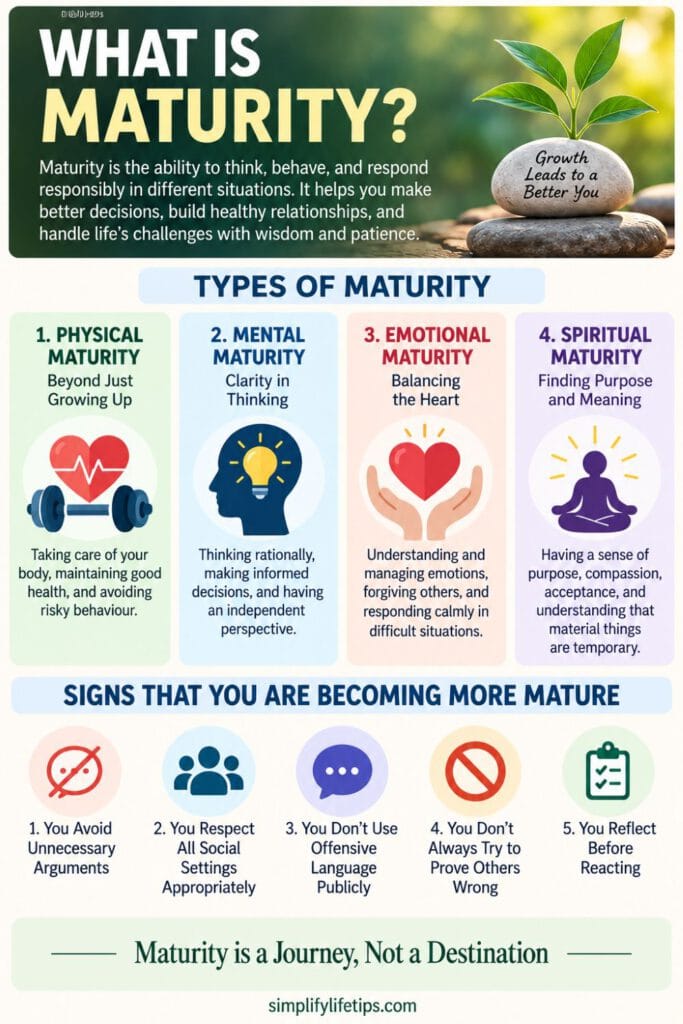
Signs That You Are Becoming More Mature
1. You Avoid Unnecessary Arguments
You choose peace over ego and know when to stop an argument, even when you believe you are right. You understand that winning an argument is not always worth damaging a relationship.
2. You Respect All Social Settings Appropriately
You understand that different situations require different behaviour. For example, you behave differently at a funeral than at a wedding and adjust your behaviour according to the environment and the people around you.
3. You Don’t Use Offensive Language Publicly
Mature individuals are conscious of how their words affect others. Using vulgar or offensive language loudly in public, especially around elders or children, can show a lack of awareness and consideration.
4. You Don’t Always Try to Prove Others Wrong
Instead of focusing on proving someone wrong, you look for ways to handle the situation constructively. Rather than saying, “See, I told you,” a mature response might be, “How can I help now?”
5. You Consider Before Reacting
Before responding to criticism or a difficult situation, take a moment to think. Pausing before reacting helps you respond thoughtfully instead of allowing temporary emotions to control your behaviour.
How to Develop Maturity?
Developing maturity is a lifelong process that requires self-awareness, patience, and consistent effort. Life experiences can contribute to personal growth, but we can also become more mature by practising positive habits every day.
Some practical ways to develop maturity include:
- Accept responsibility for your actions.
- Think before speaking or reacting.
- Learn from mistakes instead of blaming others.
- Listen carefully before forming opinions.
- Respect different viewpoints and cultures.
- Control your emotions during difficult situations.
- Keep your promises and commitments.
- Continue learning and improving throughout life.
By practising these habits consistently, you can gradually build stronger character, better judgement, and healthier relationships.
Workplace Maturity
Workplace maturity means remaining professional, reliable, and respectful in a work environment. Mature employees accept constructive feedback, communicate clearly, meet deadlines, and take responsibility for their actions instead of blaming others.
For example, when a project faces unexpected challenges, a mature employee stays calm, works with the team, and looks for practical solutions instead of complaining or making excuses. Workplace maturity strengthens teamwork, builds trust, and supports career growth.
If you’d like to improve your professional judgement, read our guide on Successful Decision Making in the Workplace.
Relationship Maturity
Relationship maturity is reflected in honesty, empathy, patience, and mutual respect. Mature individuals communicate openly, respect personal boundaries, and resolve disagreements through calm discussion rather than anger or manipulation.
Whether in friendships, marriage, or family relationships, maturity helps build trust and long-lasting connections.
Healthy relationships depend on thoughtful communication. Learn how thinking before you speak can strengthen trust, respect, and understanding.
Importance
In a world driven by instant gratification, social media reactions, and digital validation, maturity is increasingly valuable. Whether you are a student, parent, employee, or leader, maturity can:
- Improve relationships
- Support career growth
- Earn respect from peers and elders
- Help maintain peace of mind
A mature individual is trusted and admired—not because they are perfect, but because they are balanced, thoughtful, and kind.
One of the clearest signs of maturity is the willingness to keep learning. Explore why never stop learning after success is an important habit for lifelong personal growth.
Understanding what is maturity can help us recognise our strengths, improve our behaviour, and build healthier relationships.
Conclusion
Growing as a person is not determined by age but by the choices we make, the way we respond to challenges, and how we treat others. Self-awareness, emotional balance, critical thinking, and a sense of purpose help us navigate life’s opportunities and difficulties with greater wisdom and confidence.
Personal growth is a lifelong journey rather than a destination. Every experience, whether a success or a setback, offers an opportunity to learn, improve, and become a better version of ourselves. By practising patience, accepting responsibility, and making thoughtful decisions every day, we can build stronger character, healthier relationships, and a more meaningful life.
FAQs about What is maturity
What is maturity in simple words?
Maturity means understanding how to behave appropriately in different situations, thinking before acting, and managing your emotions wisely.
Does maturity depend on age?
No. Maturity does not depend entirely on age. Some young people can demonstrate remarkable maturity through life experiences, responsibility, and conscious learning.
What are the four types of maturity?
The four types are physical, mental, emotional, and spiritual maturity. Each focuses on a different aspect of personal development.
How can you develop maturity?
You can develop maturity by learning from mistakes, reflecting on your actions, listening to others, taking responsibility, and choosing thoughtful responses instead of impulsive reactions.
Why is maturity important in relationships?
Maturity helps people handle disagreements calmly, respect each other’s boundaries, communicate honestly, and build trust through considerate behaviour.
Related Articles
- Cultivate A Winning Attitude: The Key To A Successful Life
- 9 Habits of an Immature Wife That Damage Marriage
Reference
U.S. Department of Health and Human Services, Office of Population Affairs — Emotional Development

Mathukutty P V is a Blogger, YouTuber, and Content Writer and the founder of Simply Life Tips. After taking voluntary retirement in 2017, he embraced a free lifestyle focused on learning, personal growth, and sharing practical wisdom to help others live with more purpose and positivity.