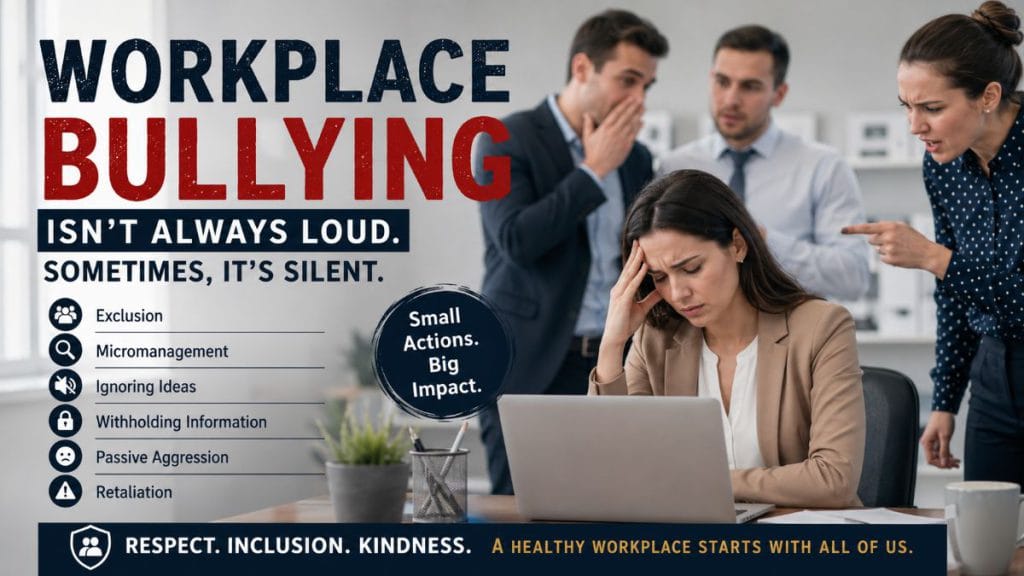
Workplace bullying is more common than many people realize, and it isn’t always loud or aggressive. While shouting, insults, and public humiliation are easy to recognize, some of the most damaging forms of bullying happen quietly through repeated exclusion, unfair treatment, manipulation, or intimidation. These subtle behaviors gradually erode an employee’s confidence, mental health, and job satisfaction.
Many victims don’t even realize they’re being bullied because the behavior often appears normal or is dismissed as “office politics” or “just the way the manager is.” Over time, however, these repeated actions create a toxic workplace where employees struggle to perform, feel isolated, and may eventually leave their jobs.
Understanding both obvious and hidden workplace bullying is the first step toward creating healthier, more respectful workplaces where everyone has the opportunity to succeed.
Did you know that 87% of workplace conflicts start with the wrong phrase?
What Is Workplace Bullying?
Workplace bullying is repeated, unreasonable behavior directed toward an employee or group of employees that creates a risk to their health, safety, dignity, or well-being.
Unlike occasional disagreements or constructive criticism, bullying involves a pattern of behavior intended to intimidate, control, isolate, or undermine another person.
Bullying can come from:
- Managers
- Supervisors
- Team leaders
- Co-workers
- Clients or customers
- Even subordinates (upward bullying)
The common factor is repetition. One isolated incident may be inappropriate, but ongoing behavior that creates psychological harm is workplace bullying.
Why Does Workplace Bullying Often Go Unnoticed?
Many organizations successfully identify obvious misconduct but overlook subtle bullying because it is harder to prove.
Reasons include:
It Happens Gradually
Bullying often begins with small actions.
For example:
- Being left out of one meeting.
- Being ignored once.
- Receiving excessive criticism.
As these incidents increase over weeks or months, employees begin questioning themselves instead of recognizing the pattern.
It Is Often Disguised as Management
Statements like these are common:
- “I’m just demanding excellence.”
- “I’m preparing you for success.”
- “I’m only being honest.”
Constructive feedback focuses on improving work. Bullying focuses on controlling the person.
Victims Fear Speaking Up
Employees may worry about:
- Losing promotions
- Being labeled difficult
- Retaliation
- Losing their jobs
- Being isolated further
This fear allows bullying to continue.
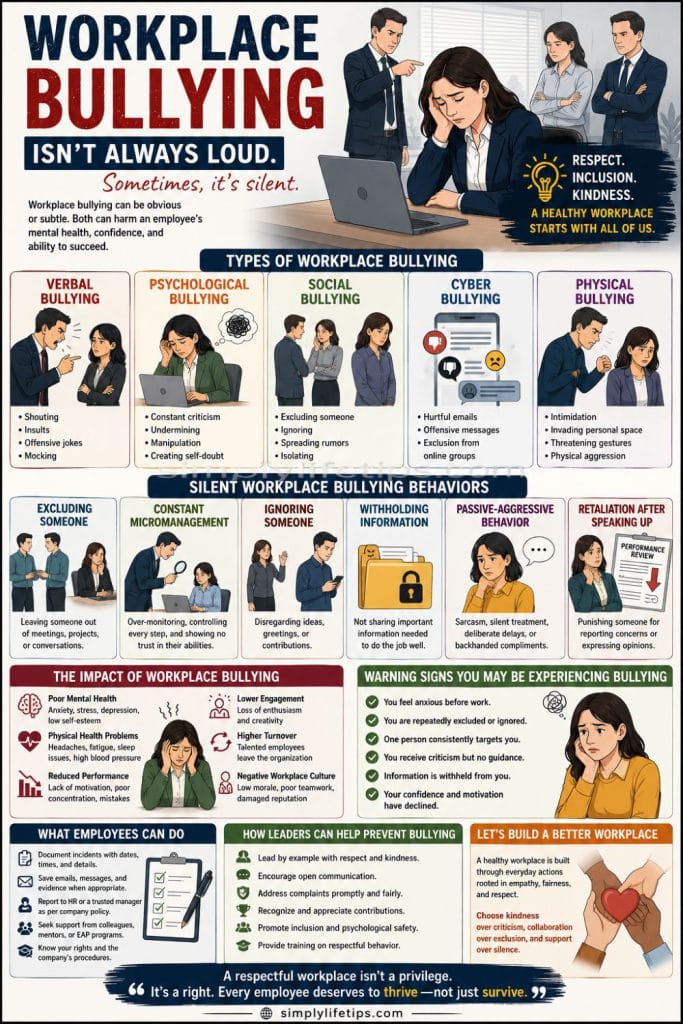
Types of Workplace Bullying
Verbal Bullying
Verbal bullying includes:
- Shouting
- Name-calling
- Mocking
- Insults
- Humiliating jokes
Example:
A supervisor repeatedly calls an employee “useless” during team meetings.
Psychological Bullying
Psychological bullying attacks confidence rather than using obvious insults.
Examples include:
- Constant criticism
- Manipulation
- Isolation
- Undermining achievements
- Creating self-doubt
Victims often lose confidence despite being highly capable professionals.
Social Bullying
This type damages workplace relationships.
Examples:
- Excluding someone from lunches
- Ignoring invitations
- Leaving people out of emails
- Encouraging coworkers to avoid someone
Humans naturally seek belonging. Social exclusion can be emotionally devastating.
Cyberbullying
Technology has created new opportunities for workplace bullying.
Examples include:
- Humiliating emails
- Offensive group chats
- Public criticism in workplace messaging apps
- Excluding employees from online meetings
Remote employees are particularly vulnerable.
Obvious Signs of Workplace Bullying
Shouting and Aggressive Communication
Raising one’s voice to intimidate employees is never effective leadership.
Healthy managers address problems respectfully.
Public Humiliation
Correcting employees publicly instead of privately damages morale.
Example:
A manager displays an employee’s mistakes during a meeting while mocking their competence.
Threats and Intimidation
Threatening job loss without a legitimate reason creates unnecessary fear.
Examples include:
- “You’ll regret this.”
- “You’re easily replaceable.”
Verbal Abuse
Repeated insults, offensive remarks, or sarcastic attacks are unacceptable.
Physical Intimidation
Physical aggression includes:
- Blocking someone’s path
- Invading personal space
- Slamming objects
- Threatening gestures
These behaviors should always be reported immediately.
Silent Workplace Bullying Behaviors
Excluding Someone
Isolation is one of the most common forms of workplace bullying.
Examples:
- Leaving employees out of meetings
- Ignoring social invitations
- Excluding them from projects
- Not involving them in decisions
Over time, exclusion affects career growth.
Constant Micromanagement
Managers should guide employees—not control every minute of their work.
Micromanagement becomes bullying when it:
- Removes autonomy
- Creates unnecessary pressure
- Demonstrates a lack of trust
- Focuses only on mistakes
Employees eventually stop taking initiative because every decision is questioned.
Ignoring Someone
Being consistently ignored sends a powerful message.
Examples:
- Not responding to emails
- Ignoring greetings
- Rejecting suggestions without discussion
- Speaking to everyone except one employee
This silent treatment often causes employees to feel invisible.
Withholding Information
Information is essential for success.
Examples include deliberately not sharing:
- Meeting times
- Deadlines
- Project updates
- Customer information
- Training opportunities
Employees then appear incompetent despite lacking necessary information.
Passive-Aggressive Behavior
Passive aggression includes indirect hostility rather than open confrontation.
Examples:
- Deliberately delaying responses
- Sarcastic compliments
- Silent treatment
- Rolling eyes
- Dismissing ideas with subtle remarks
These behaviors create confusion because they are difficult to confront directly.
Retaliation After Speaking Up
Employees should feel safe reporting concerns.
Retaliation might involve:
- Poor performance reviews
- Reduced responsibilities
- Fewer promotions
- Schedule changes
- Isolation
- Increased scrutiny
Retaliation discourages others from speaking up.
Effects of Workplace Bullying
Bullying affects far more than job performance.
Mental Health
Victims commonly experience:
- Anxiety
- Depression
- Panic attacks
- Burnout
- Low self-esteem
Many continue experiencing stress long after leaving the organization.
Physical Health
Chronic workplace stress can contribute to:
- Headaches
- Sleep problems
- Digestive issues
- High blood pressure
- Fatigue
Mental stress often produces physical symptoms.
Career Growth
Bullying may cause employees to:
- Avoid promotions
- Lose confidence
- Change careers
- Leave their profession entirely
Organizations lose valuable talent.
Organizational Costs
Companies also suffer through:
- Higher turnover
- Increased absenteeism
- Lower productivity
- Poor teamwork
- Reduced innovation
- Higher recruitment costs
- Damaged reputation
A toxic culture ultimately affects profitability.
Workplace Bullying vs. Constructive Feedback
Many employees struggle to distinguish bullying from normal management.
| Constructive Feedback | Workplace Bullying |
|---|---|
| Focuses on behavior | Attacks the person |
| Given respectfully | Delivered aggressively |
| Private discussion | Public embarrassment |
| Encourages improvement | Creates fear |
| Fair and consistent | Targets specific individuals |
| Includes solutions | Offers only criticism |
Healthy leaders correct mistakes while preserving dignity.
Warning Signs You May Be Experiencing Workplace Bullying
Ask yourself:
- Do I feel anxious before work every day?
- Am I repeatedly excluded?
- Is one person consistently targeting me?
- Do I receive criticism but no guidance?
- Am I denied information others receive?
- Have my confidence and motivation declined?
If several answers are yes, it may indicate workplace bullying.
How Employees Can Respond?
Document Everything
Keep records of:
- Dates
- Times
- Witnesses
- Emails
- Messages
- Meeting notes
Documentation helps establish patterns.
Stay Professional
Avoid emotional retaliation.
Remain calm and factual.
Seek Support
Speak with:
- HR
- A trusted manager
- Employee assistance programs
- Union representatives, where applicable
Support reduces isolation.
Understand Company Policies
Read your organization’s:
- Anti-bullying policy
- Code of conduct
- Complaint procedures
Knowing your rights improves confidence.
Discover practical strategies to deal with toxic people with confidence and protect your emotional well-being.
How Can Managers Prevent Workplace Bullying?
Leadership shapes workplace culture.
Effective managers:
- Model respectful behavior.
- Encourage open communication.
- Listen without judgment.
- Address complaints promptly.
- Reward collaboration.
- Resolve conflicts early.
- Hold everyone accountable equally.
Employees often imitate leadership behavior.
Building a Psychologically Safe Workplace
Psychological safety allows employees to:
- Ask questions.
- Admit mistakes.
- Share ideas.
- Report concerns.
- Disagree respectfully.
Innovation thrives where people feel safe rather than fearful.
Organizations with psychologically safe cultures typically experience:
- Better teamwork
- Greater creativity
- Higher engagement
- Lower turnover
- Improved customer service
Everyday Actions That Build Respect
Healthy workplaces are built through small daily actions.
Simple habits include:
- Greeting colleagues.
- Listening actively.
- Giving credit fairly.
- Including everyone in discussions.
- Offering constructive feedback privately.
- Respecting different opinions.
- Celebrating achievements.
These behaviors strengthen trust across teams.
Conclusion
Workplace bullying extends far beyond shouting or public humiliation. Silent behaviors such as exclusion, micromanagement, withholding information, passive aggression, retaliation, and persistent disrespect can be equally harmful. Recognizing these subtle patterns empowers employees, managers, and organizations to take meaningful action before lasting damage occurs.
Every employee deserves more than just a paycheck—they deserve respect, fairness, dignity, and psychological safety. By choosing empathy over intimidation and collaboration over exclusion, organizations create workplaces where people can thrive, contribute, and reach their full potential.
Frequently Asked Questions
What qualifies as workplace bullying?
Repeated unreasonable behavior that intimidates, humiliates, excludes, or undermines an employee and negatively affects their health or work.
Is micromanagement considered bullying?
Not always. It becomes bullying when it is excessive, targeted, persistent, and intended to undermine confidence or autonomy.
Can a coworker bully another coworker?
Yes. Workplace bullying can occur between colleagues, managers and employees, or even subordinates toward supervisors.
What is psychological safety?
Psychological safety is a workplace culture where employees feel comfortable speaking up, asking questions, sharing ideas, and reporting concerns without fear of punishment or humiliation.
How can organizations reduce workplace bullying?
By implementing clear policies, training leaders, encouraging open communication, investigating complaints fairly, and fostering a culture of respect and inclusion.
Related Articles
- Kindness in the Workplace | Importance and Benefits
- Workplace Loneliness | The Silent Struggle No One Talks About
- 7 Signs Of A Toxic Workplace And How To Identify Them
- Toxic Workplace Behaviours: Causes,

Mathukutty P V is a Blogger, YouTuber, and Content Writer and the founder of Simply Life Tips. After taking voluntary retirement in 2017, he embraced a free lifestyle focused on learning, personal growth, and sharing practical wisdom to help others live with more purpose and positivity.