
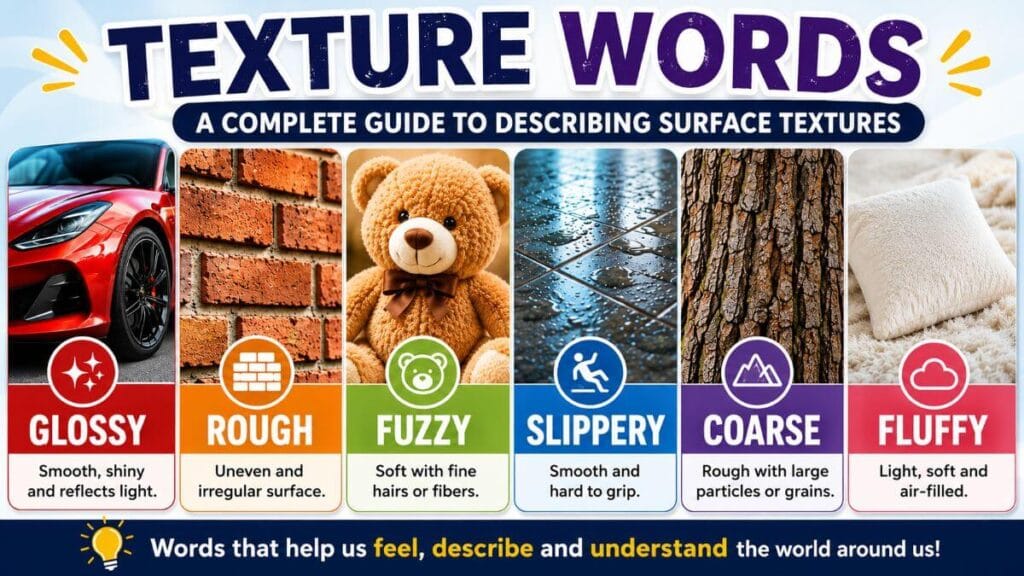
Texture words help us describe how objects feel when we touch them. Whether you are learning English, teaching children, improving vocabulary, or writing descriptive content, understanding texture words can make communication more vivid and accurate. Some of the most commonly used texture words are glossy, rough, fuzzy, slippery, coarse, and fluffy. Each word describes a unique tactile experience and helps us better understand the physical world around us.
What Are Texture Words?
Texture words are descriptive terms used to explain the surface quality of an object. They tell us whether something feels smooth, soft, hard, rough, shiny, or fuzzy. These words are commonly used in education, creative writing, product descriptions, and everyday conversations.
For example, when shopping for clothing, furniture, or home décor, texture plays an important role in decision-making. A fluffy blanket feels comfortable, while a glossy car finish looks attractive and polished.
10 Texture Words Infographic
Understanding texture words becomes much easier when you can see real-world examples. Save or share the infographic below for quick reference whenever you need to describe how a surface feels.
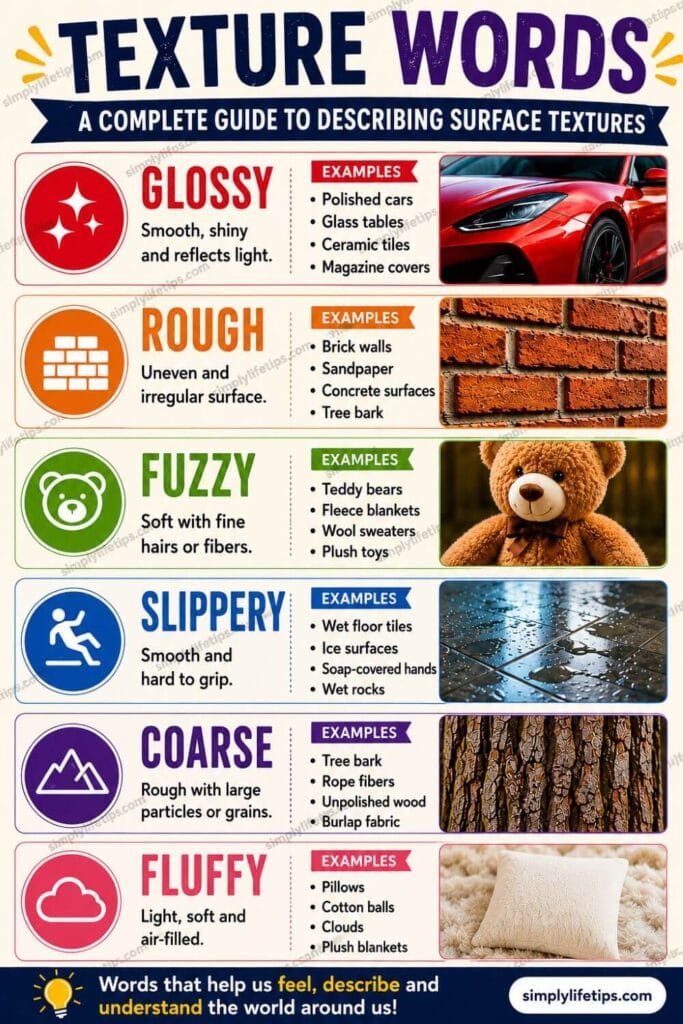
This visual guide summarizes the most common texture words used in everyday English. Whether you are a student, teacher, writer, or language learner, these descriptive words can help improve communication and vocabulary skills.
10 Texture Words
Glossy Texture
A glossy texture refers to a smooth and shiny surface that reflects light effectively. Objects with a glossy finish often appear clean, polished, and attractive.
Characteristics of Glossy Surfaces
- Smooth and reflective
- Shiny appearance
- Easy to clean
- Often associated with luxury and elegance
Examples of Glossy Textures
- Newly polished cars
- Glass tables
- Ceramic tiles
- Magazine covers
- Smartphone screens
Everyday Use
When someone says a car has a glossy finish, they mean the surface is highly polished and reflects light beautifully. Glossy surfaces are common in automotive paints, furniture coatings, and decorative materials.
Rough Texture
A rough texture has an uneven surface that feels coarse or irregular when touched. Rough surfaces create friction and are often less comfortable to touch than smooth surfaces.
Characteristics of Rough Surfaces
- Uneven texture
- Noticeable bumps and ridges
- Increased friction
- Natural and rugged appearance
Examples of Rough Textures
- Brick walls
- Sandpaper
- Concrete surfaces
- Tree bark
- Gravel roads
Everyday Use
Brick walls are excellent examples of rough textures. The uneven surface can easily be felt when running your hand across it. Rough textures are often used where grip and durability are important.
Fuzzy Texture
A fuzzy texture is covered with soft fibers or fine hairs that create a gentle and pleasant feeling.
Characteristics of Fuzzy Surfaces
- Soft and hairy
- Warm feeling
- Comfortable to touch
- Often associated with toys and fabrics
Examples of Fuzzy Textures
- Teddy bears
- Fleece blankets
- Wool sweaters
- Plush toys
- Certain winter clothing
Everyday Use
Children often enjoy fuzzy toys because they feel soft and comforting. Fuzzy textures are widely used in products designed for warmth and comfort.
Slippery Texture
A slippery texture has very little friction, making it difficult to maintain a firm grip or stable footing.
Characteristics of Slippery Surfaces
- Smooth surface
- Low friction
- Difficult to grip
- Can be dangerous when wet
Examples of Slippery Textures
- Wet floor tiles
- Ice surfaces
- Soap-covered hands
- Wet rocks
- Oily surfaces
Everyday Use
A wet floor becomes slippery because water reduces the friction between your shoes and the surface. This is why caution signs are often placed near freshly cleaned floors.
Coarse Texture
A coarse texture is rough and made up of large particles or pronounced irregularities. Coarse surfaces feel harsher than simply rough surfaces.
Characteristics of Coarse Surfaces
- Large, noticeable particles
- Harsh feeling
- Strong texture pattern
- Durable and natural appearance
Examples of Coarse Textures
- Tree bark
- Rope fibers
- Unpolished wood
- Burlap fabric
- Certain stone surfaces
Everyday Use
Tree bark is a perfect example of a coarse texture. Its deep grooves and rugged patterns make it feel significantly rougher than many other natural surfaces.
Fluffy Texture
A fluffy texture is extremely soft, light, and airy. Fluffy materials are often associated with comfort, warmth, and relaxation.
Characteristics of Fluffy Surfaces
- Soft and light
- Air-filled structure
- Comfortable feeling
- Warm and cozy appearance
Examples of Fluffy Textures
- Pillows
- Cotton balls
- Clouds
- Plush blankets
- Stuffed cushions
Everyday Use
A fluffy pillow provides comfort because its soft filling creates a light and cushioned feel. Fluffy textures are common in bedding, clothing, and decorative items.
Importance of Learning Texture Words
Understanding texture words improves communication skills and descriptive abilities. These words help students, writers, teachers, and professionals explain objects more accurately.
Benefits include:
- Enhanced vocabulary
- Better descriptive writing
- Improved observation skills
- More effective communication
- Greater understanding of product descriptions
For example, instead of simply saying a blanket is “nice,” you can describe it as fluffy, soft, and warm, creating a clearer image in the reader’s mind.
Texture Words Comparison Table
| Texture Word | Feel | Common Examples |
|---|---|---|
| Glossy | Smooth and shiny | Cars, glass, ceramics |
| Rough | Uneven and rugged | Bricks, concrete |
| Fuzzy | Soft with fibers | Teddy bears, fleece |
| Slippery | Smooth with low friction | Wet floors, ice |
| Coarse | Harsh and grainy | Tree bark, rope |
| Fluffy | Soft and airy | Pillows, blankets |
Conclusion
Texture words such as glossy, rough, fuzzy, slippery, coarse, and fluffy help us describe the world more accurately. From the glossy shine of a luxury car to the fluffy comfort of a pillow, each texture creates a unique sensory experience. Learning these descriptive words not only improves vocabulary but also enhances writing, communication, and observation skills.
FAQs about Texture Words
What are texture words?
Texture words are descriptive terms used to explain how an object’s surface feels when touched.
What is the difference between rough and coarse?
Rough means uneven, while coarse usually refers to a rough surface with larger and more pronounced particles.
What is an example of a glossy texture?
A polished car, glass window, or ceramic tile is a common example of glossy textures.
Why is a wet floor slippery?
Water reduces friction between your feet and the floor, making the surface slippery.
What objects are commonly fluffy?
Pillows, blankets, cotton balls, stuffed toys, and some winter clothing are commonly fluffy.
Related Articles

Mathukutty P V is a Blogger, YouTuber, and Content Writer and the founder of Simply Life Tips. After taking voluntary retirement in 2017, he embraced a free lifestyle focused on learning, personal growth, and sharing practical wisdom to help others live with more purpose and positivity.



