
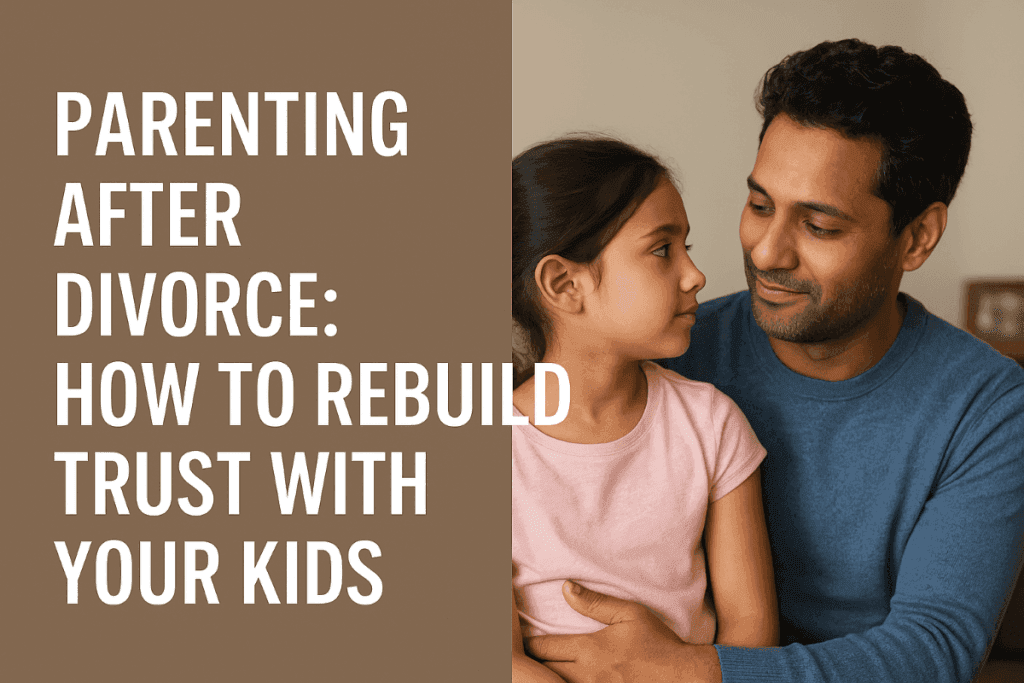
Divorce changes everything. For parents, it can feel like starting over; for children, it can shake their sense of safety and trust. Parenting after divorce is not only about managing new routines—it’s about rebuilding emotional bridges with your children. This process takes patience, empathy, and a deep commitment to showing that love remains constant even when life changes dramatically. Let’s look at how to reconnect with your kids after divorce. We will also examine one father’s story. It beautifully illustrates the power of patience and love.
Parenting After Divorce
After a divorce, the emotional landscape of a family changes dramatically. Children often struggle to understand why their world feels different, and parents feel uncertain about how to reconnect. This is where the real work of parenting after divorce begins. It involves restoring a sense of safety, rebuilding trust, and nurturing emotional healing. Trust, once shaken by separation or conflict, can be rebuilt through consistent love, empathy, and communication. It’s not about being perfect—it’s about being there. When children see their parents acting with patience and honesty despite pain, they start to feel secure again. The journey is slow. Yet, every small step—every kind word, fulfilled promise, and shared moment—brings a family closer to emotional recovery. These moments also lead to renewed trust.
An Emotional Story: Raj’s Journey to Rebuild Trust
Raj, a loving father of two, went through a painful divorce that left his family emotionally shaken. His daughter, Ananya, once his shadow, stopped talking to him and refused to visit his new home. Raj felt heartbroken but understood that pushing her would only make things worse.
Instead, he started writing her small notes—short, handwritten messages he left with her mother to pass on. Each note said something simple: “I miss our pancake Sundays,” or “I’m proud of how brave you are.”
Weeks passed with no reply. But one morning, Ananya sent him a drawing of their old Sunday breakfast. It wasn’t just a drawing—it was a sign that her heart was beginning to heal.
Raj used that moment to reconnect through consistent presence. He kept showing up for school events, even when she barely looked at him. Slowly, they began sharing quiet talks and later, their famous Sunday breakfasts returned. Raj’s patience, consistency, and gentle love rebuilt what divorce had broken—his daughter’s trust.
This story reflects the truth for many parents after divorce. Rebuilding trust isn’t about big gestures. It’s about small, steady acts of love.
Effects of Divorce on Children

Divorce can have a profound emotional impact on children, often leaving them feeling confused, anxious, and insecure. Their sense of stability is shaken as they navigate changes in their home, routines, and relationships. Younger children blame themselves for the separation. They think they did something wrong. Older ones struggle with anger, sadness, or resentment toward one or both parents. These emotions can lead to behavioural changes like withdrawal, irritability, or difficulty concentrating in school. For many children, the fear of losing love or attention from either parent becomes a silent source of distress.
The long-term effects of divorce on kids depend largely on how parents handle the transition. Constant conflict, inconsistent routines, or negative talk about the other parent can deepen emotional wounds. On the other hand, when parents cooperate respectfully, keep stability, and reassure their children of unconditional love, the impact softens. Children are incredibly resilient when they feel secure and supported. Parents can help their kids cope with the divorce through open communication, empathy, and consistent care. This support allows them to grow stronger emotionally and mentally from the experience.
Parenting After Divorce: Rebuilding Trust with Kids
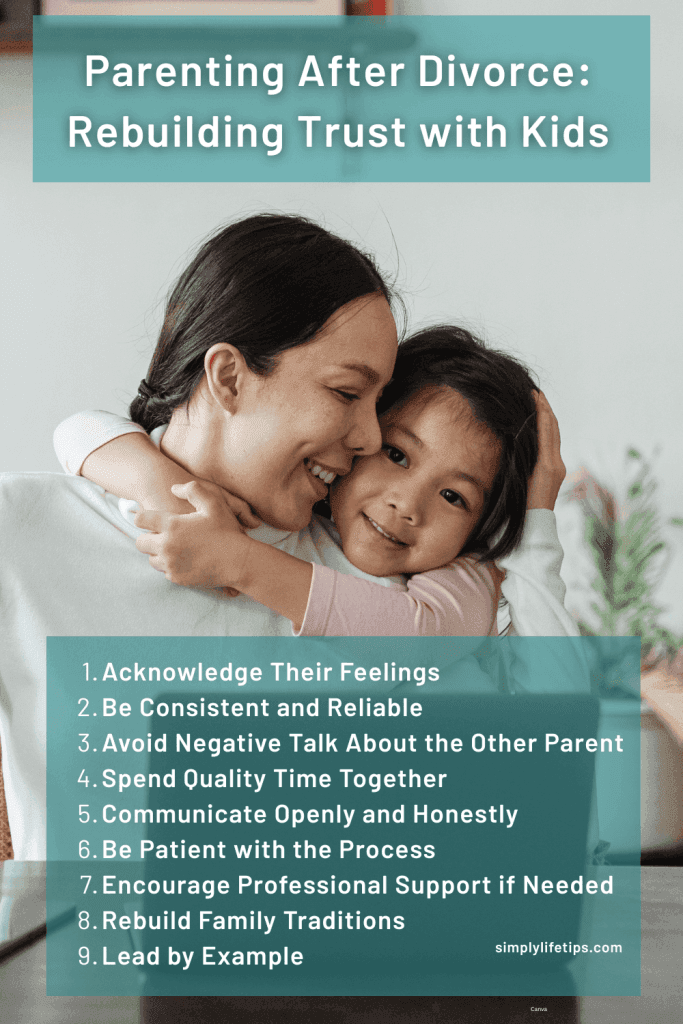
1. Acknowledge Their Feelings
After a divorce, children often carry anger, confusion, or guilt. Instead of dismissing their emotions, acknowledge them with compassion. For example, if your child says, “You left us,” respond with calm understanding. Say, “I know it feels that way, and I’m sorry you’re hurt. I love you and always will.” Validating their emotions helps them feel respected and safe to open up again. You can also teach children coping strategies as discussed in Positive Parenting Techniques for Emotional Well-being
2. Be Consistent and Reliable
Inconsistency damages trust. If you promise to call, visit, or attend an event—keep your word. Every fulfilled promise rebuilds your credibility. For example, keep bedtime routines. Make sure to have shared meals or enjoy weekly outings. Doing these gives your child a sense of normalcy and security amidst the changes. Like Raj, showing up repeatedly—without excuses—proves your love through action. For ideas on creating a stable home environment, see How Simplicity Contributes to Happiness
3. Avoid Negative Talk About the Other Parent
Speaking ill of your ex in front of your kids only confuses and hurts them. Children shouldn’t carry adult conflicts. Keep a neutral tone and focus on nurturing your child’s relationship with both parents. When your kids see you acting respectfully, it models emotional maturity and strengthens their trust in your integrity.
4. Spend Quality Time Together
Children equate time with love. Engage in meaningful activities—reading, playing, cooking, or even quiet conversations. The key is to be fully attentive. During these moments, put away distractions and listen genuinely. When your child feels your undivided attention, it reinforces emotional connection and trust. You can explore more bonding techniques in Essential Life Skills to Teach Kids.
5. Communicate Openly and Honestly
Honesty fosters healing. Discuss changes openly but in age-appropriate ways. Be clear about visitation schedules, living arrangements, or new routines. If your child asks tough questions, answer truthfully without blame. For example, say, “We decided not to live together, but we both love you deeply.” This transparency restores confidence and reduces anxiety.
6. Be Patient with the Process
Healing doesn’t happen overnight. Children resist or take time to reconnect. Don’t interpret withdrawal as rejection—it’s protection. Stay patient and consistent. Continue expressing love even when it’s not reciprocated right away. Over time, your persistence and empathy will gently rebuild the broken trust.
7. Encourage Professional Support if Needed
Sometimes, children need extra help processing their emotions. A child therapist can guide them through the healing process. Therapy also equips parents with communication strategies that nurture understanding. Seeking professional help is a sign of strength. It demonstrates that you’re willing to do what it takes for your child’s emotional health.
8. Rebuild Family Traditions
Traditions offer a sense of continuity. Keep old rituals alive and create new ones to represent new beginnings. Whether it’s a weekly movie night or a monthly family picnic, these rituals reinforce connection. Like Raj’s Sunday breakfasts, small traditions can become powerful symbols of stability and love.
9. Lead by Example
Your actions speak louder than words. Show your child that challenges can be faced with dignity and calmness. Show respect, forgiveness, and resilience. When they see you navigating difficult emotions responsibly, they learn that love doesn’t disappear—it adapts and grows stronger.
“Love heals faster when shown through consistent actions, not explanations.”
Conclusion
Parenting after divorce is about rediscovering connection through compassion, patience, and persistence. Trust, once broken, can be rebuilt when love is shown through consistent actions. Like Raj and Ananya, you can create new memories that heal old wounds. Remember, your children don’t need a perfect parent—they need a steady, loving one who never gives up on them.
Your love, even after divorce, can be their strongest source of stability and hope.
FAQs on Parenting After Divorce
1. How long does it take to rebuild trust with kids after divorce?
There’s no set time frame. It depends on the child’s emotional readiness and consistency from both parents. With patience and honesty, trust will gradually return.
2. Should I tell my kids the real reason for the divorce?
Share only what’s appropriate for their age. Avoid blame and focus on reassurance. Children need emotional safety more than explanations.
3. What if my child refuses to see me?
Stay calm and patient. Keep reaching out gently through letters, messages, or small gestures. Let them know your love is unconditional, even from afar.
4. How can I co-parent effectively with my ex?
Keep respectful communication focused only on your child’s well-being. Use parenting apps or mediation if direct communication is difficult.
5. Can new family traditions help rebuild trust?
Absolutely. Shared rituals create emotional security and remind children that love and togetherness still exist—just in a new form.
Remember, your sharing can make a positive impact! Please share this post across your social media and other networks, allowing others to gain from its content.
PVM
Read 51 Ways to Heal after Divorce — Tips to Heal and Rebuild

Mathukutty P V is a Blogger, YouTuber, and Content Writer and the founder of Simply Life Tips. After taking voluntary retirement in 2017, he embraced a free lifestyle focused on learning, personal growth, and sharing practical wisdom to help others live with more purpose and positivity.