
Misconceptions About Boundaries are one of the biggest reasons people struggle with relationships, emotional well-being, and self-respect. Many individuals grow up believing that setting limits is selfish, rude, or harmful to relationships. As a result, they constantly sacrifice their needs, tolerate unhealthy behavior, and experience resentment, stress, and burnout.
The truth is that healthy boundaries are not walls designed to keep people out. They are guidelines that help people understand how to treat one another with respect. When boundaries are misunderstood, relationships become confusing, exhausting, and emotionally draining.
Let’s explore some of the most common myths that prevent people from building healthy and respectful relationships.
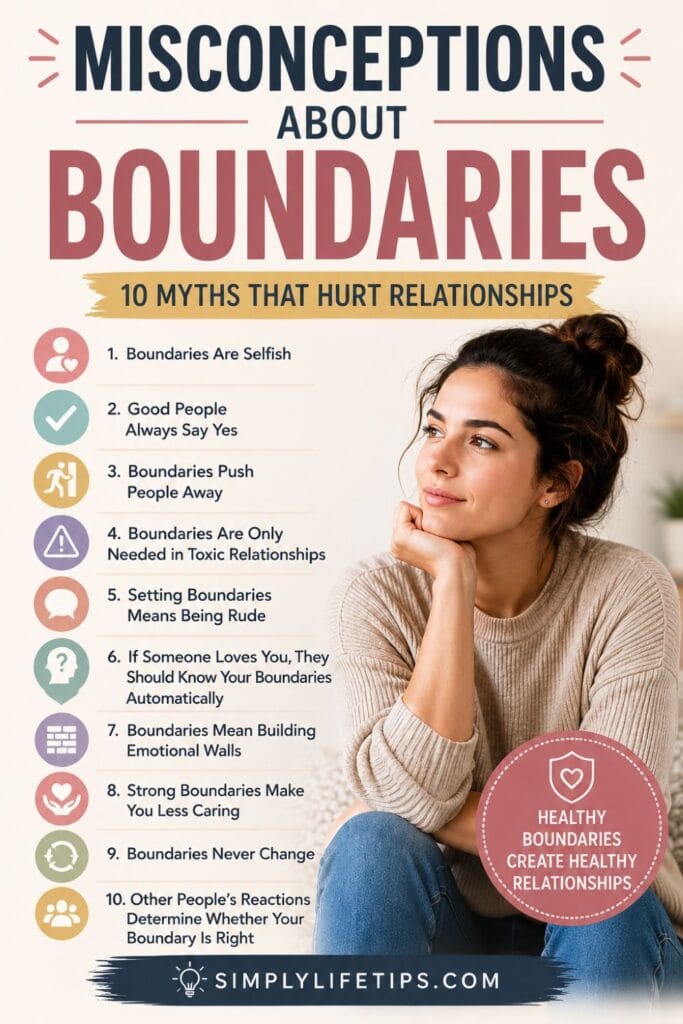
10 Misconceptions About Boundaries
1. Boundaries Are Selfish
One of the most widespread misconceptions about boundaries is that setting boundaries means putting yourself above everyone else.
In reality, boundaries help create balance. They allow you to care for others without neglecting your own needs. A person who never sets boundaries often becomes overwhelmed, frustrated, and emotionally exhausted.
For example, imagine a colleague who constantly asks you to complete their work. Saying yes every time may seem helpful initially, but eventually it can affect your performance and well-being. Setting a boundary protects both your productivity and the fairness of the relationship.
Healthy boundaries are an act of self-respect, not selfishness.
2. Good People Always Say Yes
Many people associate kindness with constant availability.
However, saying yes to everything is not kindness—it is often people-pleasing. Truly healthy relationships allow room for honesty and limitations.
A parent may love their child deeply yet still establish rules and expectations. Similarly, a friend can care about someone while declining requests that exceed their time, energy, or resources.
People who respect themselves understand that every yes to one thing is a no to something else.
Healthy relationships thrive on honesty, not endless compliance.
3. Boundaries Push People Away
Some fear that setting limits will cause others to leave.
Ironically, the opposite is usually true. Relationships often deteriorate when people suppress their feelings and allow resentment to build.
Imagine lending money repeatedly to a friend despite feeling uncomfortable. Eventually, frustration grows, and the friendship suffers. A clear boundary established early could have preserved trust and mutual respect.
Healthy boundaries improve relationships because expectations become clearer and misunderstandings decrease.
4. Boundaries Are Only Needed in Toxic Relationships
Many assume boundaries are necessary only when dealing with difficult people.
In reality, every healthy relationship requires boundaries. Even loving families, successful marriages, and strong friendships need clear expectations regarding time, communication, privacy, and responsibilities.
For example, a happily married couple may still establish boundaries regarding personal time, finances, or interactions with extended family.
Boundaries are not a sign of problems; they are a sign of maturity.
5. Setting Boundaries Means Being Rude
People often confuse firmness with aggression.
Being rude involves disrespecting others. Setting boundaries involves respecting yourself while treating others with dignity.
Setting boundaries in relationships involves clearly defining your personal limits and communicating your needs to ensure mutual respect and well-being.
Consider the difference between these statements:
“Leave me alone. You’re always bothering me.”
and
“I need some quiet time right now. Let’s talk later.”
The second response communicates a boundary clearly without attacking anyone.
Healthy boundaries can be kind, respectful, and compassionate.
6. If Someone Loves You, They Should Know Your Boundaries Automatically
Many people expect others to understand their limits without communication.
Unfortunately, people cannot read minds.
A spouse may not realize you need personal space after work. A friend may not know that late-night calls disturb your sleep. Unless expectations are communicated, misunderstandings are inevitable.
Healthy boundaries require clear communication.
Instead of assuming others know your needs, express them respectfully and directly.
7. Boundaries Mean Building Emotional Walls
Some individuals avoid vulnerability because they mistake boundaries for emotional distance.
Boundaries are not barriers. They simply define what behavior is acceptable.
Think of a house with doors and windows. Healthy boundaries allow people in while maintaining security. Emotional walls, on the other hand, keep everyone out.
People with strong boundaries often form deeper relationships because they feel safer expressing themselves authentically.
Boundaries create connection through safety and trust.
8. Strong Boundaries Make You Less Caring
Many compassionate individuals fear that boundaries will make them appear cold or uncaring.
The reality is that boundaries prevent emotional exhaustion and compassion fatigue.
Healthcare workers, teachers, caregivers, and parents often serve others more effectively when they establish healthy limits. Without boundaries, constant giving can lead to burnout.
When you protect your emotional energy, you become capable of helping others in a sustainable way.
9. Boundaries Never Change
Life circumstances change, and boundaries often change with them.
A new job, marriage, parenthood, illness, or personal growth journey may require different limits than before.
For example, someone who once enjoyed frequent social gatherings may later prioritize family time or personal wellness. Adjusting boundaries is a natural part of growth.
Healthy boundaries are flexible enough to adapt while remaining firm enough to protect well-being.
10. Other People’s Reactions Determine Whether Your Boundary Is Right
Many people judge their boundaries based on how others respond.
However, someone benefiting from your lack of boundaries may resist when you begin setting limits.
A coworker who relied on your extra help may feel disappointed. A friend accustomed to unlimited access to your time may object.
Their reaction does not automatically mean your boundary is wrong.
The true measure of a healthy boundary is whether it protects your values, well-being, and responsibilities while respecting others.
Not everyone will like your boundaries, but the right people will respect them.
Signs That You Need Stronger Boundaries
You may need healthier boundaries if you frequently:
- Feel guilty for saying no
- Feel responsible for everyone’s happiness
- Become emotionally exhausted often
- Resentful people after helping them
- Struggle to ask for what you need
- Allow others to invade your personal time
- Feel taken advantage of regularly
- Avoid difficult conversations
Recognizing these signs is often the first step toward healthier relationships.
How to Build Healthy Boundaries?
Building boundaries does not happen overnight. It is a skill developed through practice.
Start by:
- Identifying situations that cause stress or resentment
- Clarifying your personal values
- Communicating expectations clearly
- Using respectful but firm language
- Being consistent with your limits
- Accepting that not everyone will agree
- Practicing self-respect daily
Small boundaries established consistently are more effective than dramatic changes.
Quotes About Boundaries
“Daring to set boundaries is about having the courage to love ourselves.” — Brené Brown
“When we fail to set boundaries, we feel used and mistreated.”
“Healthy boundaries protect relationships rather than destroy them.”
FAQs – Misconceptions About Boundaries
What are boundaries in relationships?
Boundaries are personal limits that define acceptable behavior and protect emotional, mental, physical, and personal well-being within relationships.
Are boundaries selfish?
No. Healthy boundaries help individuals maintain self-respect, prevent burnout, and build more balanced relationships.
Why do people struggle with boundaries?
Many people fear rejection, conflict, guilt, or being perceived as selfish when they set limits.
Can boundaries improve relationships?
Yes. Clear boundaries reduce misunderstandings, build trust, and create healthier communication between people.
How can I set boundaries without hurting others?
Communicate your needs respectfully, remain calm, and focus on expressing your limits rather than criticizing others.
- Misconceptions About Mental Strength | 10 Myths That Hold People Back
- Misconceptions About Self-Love | 10 Common Myths That Hold People Back
Conclusion
The biggest misconceptions about boundaries stem from the belief that boundaries are selfish, rude, or relationship-damaging. In reality, healthy boundaries create clarity, trust, respect, and emotional safety. They help people protect their well-being while maintaining meaningful connections with others. When boundaries are understood correctly, they become one of the most powerful tools for building stronger relationships, improving self-respect, and living a more balanced life. Which of these boundary myths have you believed at some point in your life?
If this resonated with you, share it with someone who needs it.
PVM

Mathukutty P V is a Blogger, YouTuber, and Content Writer and the founder of Simply Life Tips. After taking voluntary retirement in 2017, he embraced a free lifestyle focused on learning, personal growth, and sharing practical wisdom to help others live with more purpose and positivity.