
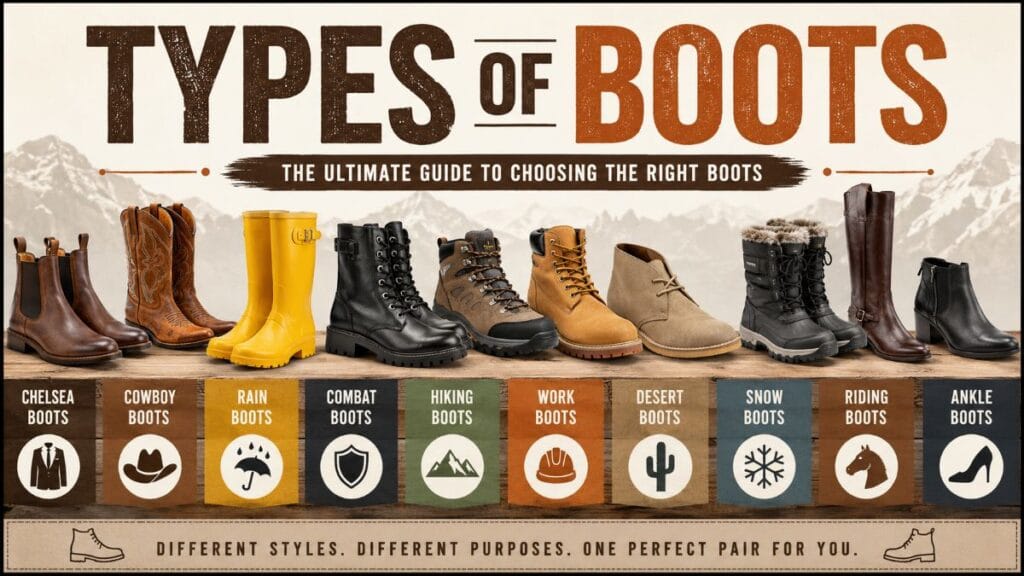
Types of boots are designed to meet different needs, from fashion and professional settings to outdoor adventures and harsh weather conditions. While many people choose boots based on appearance alone, the right pair should offer the perfect balance of comfort, protection, durability, and style. Whether you’re navigating city streets, hiking mountain trails, working on construction sites, or facing rainy and snowy weather, understanding the various types of boots can help you make a smarter buying decision.
Boots have evolved significantly over the years. What began as protective footwear for workers, soldiers, and riders has become an essential part of modern fashion and lifestyle. Today, there are countless styles available, each engineered for specific purposes. Choosing the wrong type can lead to discomfort, reduced performance, and unnecessary wear and tear.
This comprehensive guide explores the most popular types of boots, their unique features, ideal uses, advantages, and tips for selecting the perfect pair for your needs.
Key Takeaways
- Different types of boots are designed for specific environments and activities.
- Chelsea boots offer versatility and timeless style.
- Cowboy boots combine durability with Western-inspired fashion.
- Rain boots provide complete waterproof protection.
- Combat boots deliver excellent ankle support and rugged durability.
- Hiking boots are essential for outdoor adventures and uneven terrain.
- Work boots prioritize workplace safety and protection.
- Desert boots offer lightweight comfort for everyday wear.
- Snow boots keep feet warm and dry in freezing conditions.
- Riding boots are designed specifically for equestrian activities.
- Ankle boots are among the most versatile fashion boots available.
10 Popular Types of Boots and Their Uses
Choosing the right types of boots can make a significant difference in comfort, safety, and style. While all boots serve the basic purpose of protecting your feet, each type is designed for a specific environment, activity, or fashion preference. From sleek Chelsea boots and classic cowboy boots to rugged hiking boots and insulated snow boots, understanding their unique features can help you make a smarter footwear choice. The infographic below provides a quick visual overview of the most popular types of boots and their primary uses.
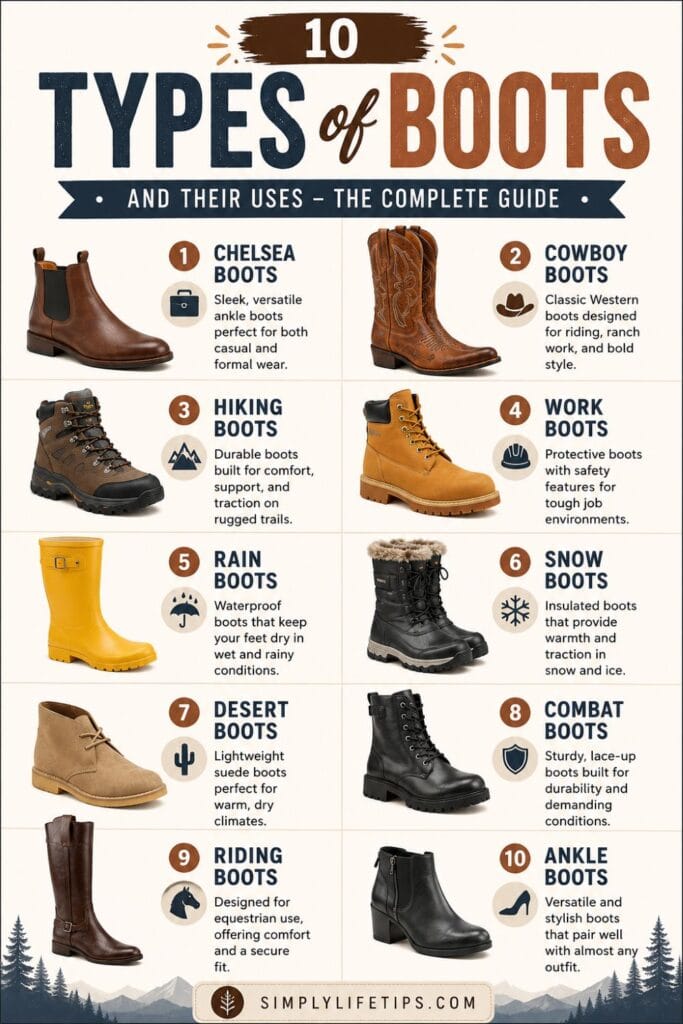
As shown in the infographic, different types of boots are built for different purposes. Chelsea boots offer timeless versatility, cowboy boots bring Western-inspired style, hiking boots provide superior traction on trails, and work boots prioritize safety in demanding environments. Rain boots protect against wet weather, snow boots keep feet warm in freezing temperatures, and riding boots are specially designed for equestrian activities. By understanding the strengths of each boot style, you can choose footwear that perfectly matches your lifestyle, activities, and comfort needs.
This guide explores each type of boot in greater detail, including its history, features, advantages, and ideal uses, helping you find the perfect pair for every occasion.
Understanding Different Types of Boots
Many people purchase boots without considering how and where they will be used. This often leads to discomfort, premature wear, and wasted money. Understanding the purpose of each type of boot helps ensure you select footwear that supports your activities and lifestyle.
For example, a pair of stylish Chelsea boots may look great at the office, but they won’t provide the traction and ankle support needed for a mountain hike. Similarly, hiking boots are excellent on rugged trails but may feel unnecessarily heavy for everyday office wear.
Choosing the right boots improves:
- Comfort
- Safety
- Durability
- Performance
- Foot health
- Overall confidence
Let’s explore the most popular types of boots and their unique advantages.
Chelsea Boots
Chelsea boots are one of the most versatile types of boots available today. Characterized by their elastic side panels and slip-on design, these boots combine elegance with practicality.
Originally developed during the Victorian era, Chelsea boots gained worldwide popularity during the 1960s and continue to remain a timeless footwear choice.
Key Features
- Elastic side panels
- Pull tabs for easy wear
- Ankle-high design
- Sleek silhouette
- No laces
History and Popularity of Chelsea Boots
Many people wonder why these boots are called Chelsea boots. The name comes from the fashionable Chelsea district of London, where the style became extremely popular during the 1950s and 1960s. Musicians, artists, and fashion influencers embraced the design, helping it gain worldwide recognition.
A Chelsea boot is a close-fitting ankle boot featuring elastic side panels and a pull tab at the back. Unlike many other types of boots, it has no laces or buckles, making it easy to slip on and off while maintaining a clean and sophisticated appearance.
One reason Chelsea boots remain popular today is their versatility. They can be worn casually with jeans and a T-shirt or dressed up with chinos, trousers, and even suits. This ability to transition between casual and formal settings makes them one of the most practical types of boots available.
Best Uses
Chelsea boots work exceptionally well for:
- Business casual attire
- Office environments
- Evening events
- Weekend outings
- Travel
Advantages
One of the biggest advantages of Chelsea boots is their versatility. They can easily transition from formal settings to casual occasions.
For example, a pair of black leather Chelsea boots pairs perfectly with a suit, while brown suede versions complement jeans and chinos.
Their slip-on design also makes them convenient for individuals who prefer hassle-free footwear.
Cowboy Boots
Cowboy boots are among the most recognizable types of boots in the world. Originally designed for ranch workers and horse riders in the American West, they have become both functional and fashionable.
Key Features
- Tall shaft
- Pointed toe
- Angled heel
- Decorative stitching
- Durable leather construction
The History of Cowboy Boots
Cowboy boots originated in the American West during the 19th century. They were designed for cattle ranchers and horse riders who needed durable footwear with a high shaft for leg protection and a raised heel to prevent slipping through stirrups. Today, cowboy boots are worn for both practical and fashion purposes.
Best Uses
Cowboy boots are ideal for:
- Horse riding
- Ranch work
- Country festivals
- Western fashion
- Outdoor events
Advantages
The distinctive heel design helps riders maintain stability in stirrups. Additionally, high-quality leather cowboy boots are known for their exceptional longevity.
Many premium cowboy boots can last decades when properly maintained.
Real-World Example
A ranch worker who spends several hours each day on horseback benefits greatly from the support and durability offered by cowboy boots.
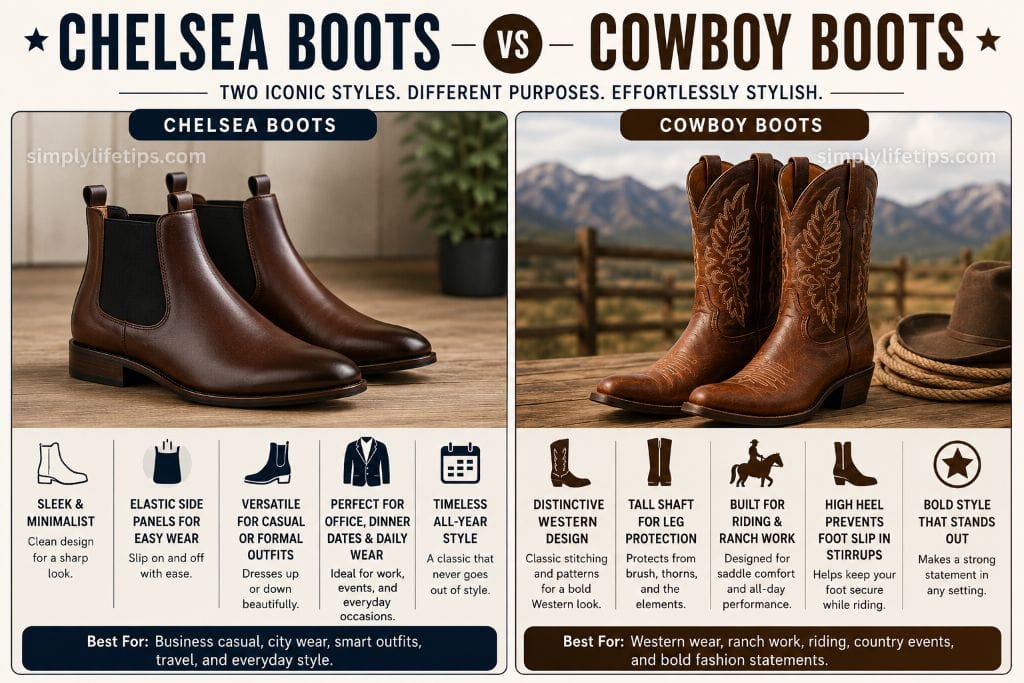
Chelsea boots and cowboy boots are two of the most recognizable types of boots. While Chelsea boots are known for their sleek, versatile design, cowboy boots stand out with their distinctive Western styling and riding heritage.
Rain Boots
Rain boots are specifically designed to keep feet dry during wet weather conditions. Also known as Wellington boots, they are typically made from waterproof rubber or synthetic materials.
Key Features
- Waterproof construction
- Slip-resistant soles
- Easy cleaning
- Tall protective shaft
Best Uses
Rain boots are perfect for:
- Monsoon seasons
- Gardening
- Farming
- Outdoor maintenance
- Flood-prone areas
Advantages
The primary benefit of rain boots is complete waterproof protection. Unlike leather footwear, they prevent moisture from penetrating the boot.
For people living in regions with heavy rainfall, rain boots can significantly improve comfort during daily activities.
Combat Boots
Combat boots were originally developed for military personnel operating in demanding environments. Today, they are widely used for both practical and fashion purposes.
Key Features
- High ankle support
- Durable leather or synthetic materials
- Thick soles
- Lace-up construction
- Rugged design
Best Uses
Combat boots are commonly used for:
- Outdoor adventures
- Security work
- Motorcycle riding
- Tactical training
- Casual street fashion
Advantages
The high ankle support reduces the risk of twists and sprains, especially on uneven surfaces. Their rugged construction also ensures long-term durability.
Security professionals and outdoor enthusiasts often prefer combat boots because they protect without sacrificing comfort.
Hiking Boots
Hiking boots are among the most practical types of boots for outdoor enthusiasts. Designed specifically for trekking, backpacking, and mountain adventures, these boots provide the support and protection needed for challenging terrain.
Unlike regular shoes, hiking boots are built to handle uneven surfaces, steep inclines, muddy trails, and rocky paths. They help reduce fatigue while protecting the feet from injuries.
Key Features
- Strong ankle support
- Durable construction
- Deep tread patterns
- Water-resistant or waterproof materials
- Cushioned midsoles
Why Hiking Boots Matter on the Trail?
Many beginners wonder whether hiking boots are really necessary. Unlike regular athletic shoes, hiking boots provide superior ankle support, better traction, and enhanced protection against rocks, roots, and uneven terrain. These features help reduce the risk of injuries during long hikes.
Best Uses
Hiking boots are ideal for:
- Mountain trekking
- Forest trails
- Camping trips
- Backpacking adventures
- Long-distance walking
Advantages
One of the biggest benefits of hiking boots is superior traction. The specially designed outsole provides excellent grip on rocks, dirt, mud, and wet surfaces.
Hiking boots also offer enhanced ankle stability, which is especially important when carrying a heavy backpack over uneven ground.
Not all rugged footwear is designed for the same purpose. Hiking boots, work boots, and combat boots may appear similar at first glance, but each is built to meet specific demands. Hiking boots focus on comfort, traction, and stability on challenging trails. Work boots prioritize workplace safety and protection from hazards, while combat boots emphasize durability, ankle support, and performance in demanding conditions. The comparison below highlights the key differences between these practical types of boots.
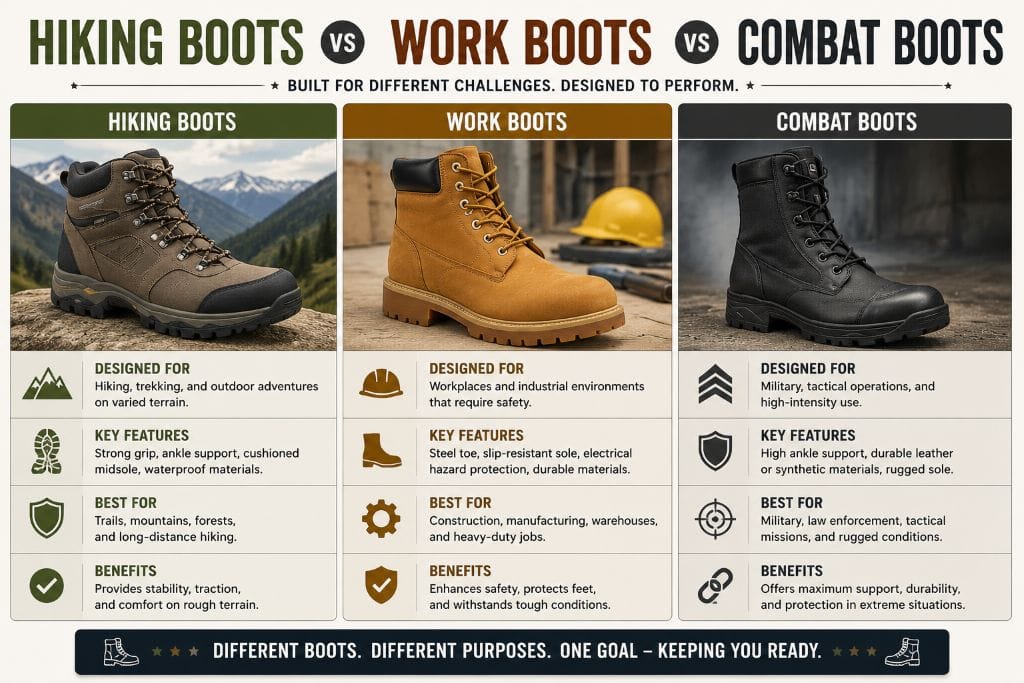
Choosing between hiking boots, work boots, and combat boots depends largely on how and where you plan to use them. Hikers benefit from enhanced traction and comfort on uneven terrain, workers require protective features such as steel toes and slip-resistant soles, while combat boots provide exceptional durability and ankle support for demanding environments. Understanding these differences can help you select footwear that delivers the right balance of comfort, protection, and performance.
Continue below to explore other specialized types of boots, including desert boots, snow boots, riding boots, and ankle boots.
Real-World Example
A trekker exploring the Western Ghats or the Himalayas can greatly benefit from the support and protection provided by quality hiking boots. They reduce the risk of slipping and help maintain comfort during long hikes.
Work Boots
Work boots are safety-focused types of boots designed for demanding workplaces. They are commonly worn by construction workers, factory employees, electricians, warehouse personnel, and others who work in potentially hazardous environments.
Key Features
- Steel-toe or composite toe protection
- Slip-resistant soles
- Puncture-resistant materials
- Oil-resistant outsoles
- Heavy-duty construction
Safety Features in Modern Work Boots
Modern work boots are designed to protect workers from workplace hazards. Depending on the job, they may include steel toes, composite toes, puncture-resistant midsoles, electrical hazard protection, and slip-resistant outsoles. These features help reduce workplace injuries and improve safety.
Best Uses
Work boots are essential for:
- Construction sites
- Industrial facilities
- Manufacturing plants
- Warehouses
- Mechanical workshops
Advantages
Safety is the primary reason people choose work boots. These boots help protect against falling objects, sharp materials, electrical hazards, and slippery surfaces.
Modern work boots are also designed with comfort in mind. Many include shock absorption systems and ergonomic support for workers who spend long hours on their feet.
Real-World Example
A construction worker carrying heavy materials throughout the day relies on steel-toe work boots to prevent serious foot injuries.
Desert Boots
Desert boots are lightweight and comfortable types of boots that have become a popular choice for casual wear. Originally developed for military personnel operating in desert environments, these boots are now widely appreciated for their simplicity and versatility.
Key Features
- Lightweight design
- Suede leather upper
- Crepe rubber sole
- Minimalist styling
- Breathable materials
Best Uses
Desert boots are suitable for:
- Everyday wear
- Casual office settings
- Travel
- Social gatherings
- Smart-casual outfits
Advantages
Desert boots are known for exceptional comfort. Their lightweight construction makes them easy to wear for extended periods without causing foot fatigue.
Their understated appearance also allows them to pair well with jeans, chinos, and casual trousers.
Real-World Example
Someone exploring a new city during a vacation may find desert boots more comfortable than heavier footwear options.
Snow Boots
Snow boots are specially designed types of boots that protect feet from cold temperatures, snow, ice, and slush. They are essential in regions that experience harsh winter conditions.
Key Features
- Thermal insulation
- Waterproof construction
- Thick outsoles
- High shaft protection
- Anti-slip tread patterns
How do snow boots keep feet warm?
Snow boots use insulated linings and waterproof materials to protect feet from freezing temperatures and moisture. Unlike regular boots, they are specifically designed to retain heat while providing traction on snow and ice-covered surfaces.
Best Uses
Snow boots are perfect for:
- Winter vacations
- Snow-covered regions
- Ski trips
- Cold-weather activities
- Ice-covered walkways
Advantages
Snow boots provide excellent warmth while keeping moisture out. The insulation helps maintain comfortable foot temperatures even in freezing conditions.
The aggressive tread design also improves stability on slippery surfaces, reducing the risk of falls.
Real-World Example
A traveler visiting Switzerland, Canada, or Kashmir during winter would benefit significantly from wearing insulated snow boots.
Although both rain boots and snow boots are designed to protect against wet conditions, they serve very different purposes. Rain boots focus on waterproof protection during rainy weather, while snow boots are built to provide warmth, insulation, and traction in freezing temperatures. The comparison below highlights the key differences between these weather-resistant types of boots.
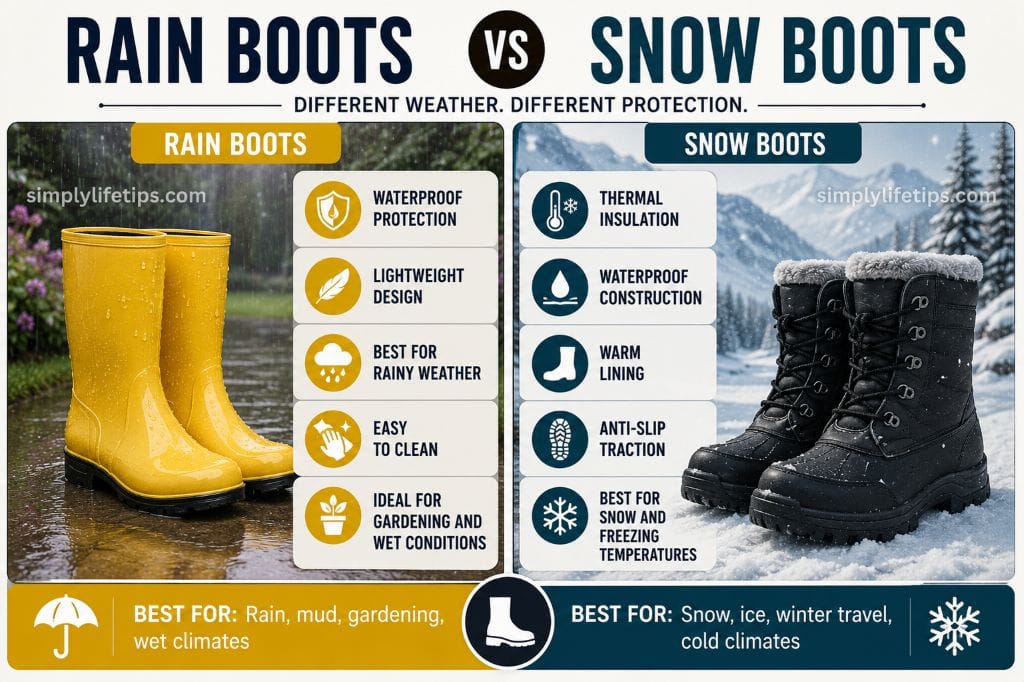
While both rain boots and snow boots are designed to keep your feet dry, they are built for very different weather conditions. Rain boots focus on waterproof protection and are ideal for wet, muddy, and rainy environments. Snow boots, on the other hand, combine waterproof materials with insulation and enhanced traction to keep feet warm and stable in freezing temperatures.
Choosing the right boot for the season is essential for comfort and safety. Wearing rain boots in snowy conditions may leave your feet cold and vulnerable to slipping, while snow boots can feel unnecessarily heavy and warm during rainy weather. Understanding these differences helps ensure you select the most suitable footwear for the climate and activities you encounter.
Continue reading to discover more specialized types of boots, including riding boots and ankle boots, and learn how each style serves a unique purpose.Riding Boots
Riding boots are specialized types of boots created specifically for horse riding and equestrian activities. Their design focuses on comfort, safety, and control while riding.
Key Features
- Tall shaft
- Low-riding heel
- Smooth exterior
- Durable leather construction
- Flexible fit
Best Uses
Riding boots are ideal for:
- Horse riding
- Equestrian competitions
- Riding schools
- Stable work
- Recreational riding
Advantages
The tall shaft protects the rider’s legs from friction against the saddle while helping maintain proper leg positioning.
Riding boots also improve communication between the rider and horse by allowing more precise leg movements.
Real-World Example
Professional equestrians rely on riding boots for both safety and performance during competitions.
Ankle Boots
Ankle boots are among the most fashionable and versatile types of boots. Extending just above the ankle, they are available in countless styles, materials, and heel heights.
Key Features
- Compact design
- Variety of heel options
- A wide range of materials
- Stylish appearance
- Comfortable fit
Best Uses
Ankle boots are suitable for:
- Daily wear
- Office environments
- Social events
- Travel
- Seasonal fashion
Advantages
Their versatility makes ankle boots a wardrobe essential. They can be paired with dresses, skirts, jeans, trousers, and even formal outfits.
Ankle boots also work well across multiple seasons, making them a practical investment.
Real-World Example
A pair of black leather ankle boots can easily transition from a business meeting during the day to a dinner outing in the evening.
Before making your final footwear decision, it can be helpful to compare two very different boot styles side by side. Riding boots are designed for equestrian activities and long-lasting support, while ankle boots focus on versatility, comfort, and everyday fashion. The comparison below highlights the key differences between these popular types of boots.
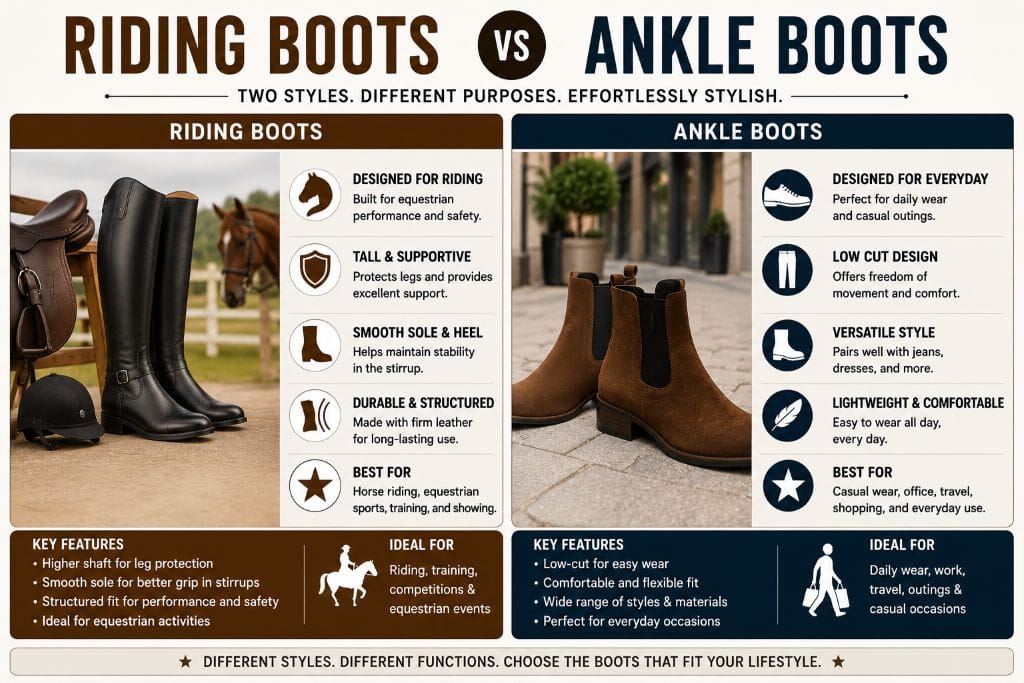
Although both styles are popular choices, riding boots and ankle boots are designed for entirely different needs. Riding boots prioritize support, durability, and safety for horseback riding and equestrian activities, while ankle boots focus on versatility and everyday wear. Their shorter design makes ankle boots easy to pair with jeans, dresses, skirts, and business-casual outfits, making them one of the most adaptable footwear options available.
How to Choose the Right Types of Boots?
With so many types of boots available, selecting the right pair requires careful consideration.
Consider Your Purpose
Start by identifying how you plan to use your boots.
Ask yourself:
- Are they for work?
- Do you need weather protection?
- Will you use them for outdoor activities?
- Are you primarily looking for style?
Evaluate Comfort
Comfort should always be a priority.
Look for:
- Proper arch support
- Cushioning
- Breathability
- Correct sizing
- Adequate toe room
Check Material Quality
The durability of boots largely depends on the materials used.
Popular options include:
- Full-grain leather
- Suede
- Rubber
- Synthetic materials
Premium materials often provide better longevity and comfort.
Match Boots to Climate
Different environments require different types of boots.
For example:
- Rainy climates → Rain boots
- Snowy regions → Snow boots
- Mountain trails → Hiking boots
- Professional settings → Chelsea boots
- Industrial workplaces → Work boots
Think Long-Term
A high-quality pair of boots may cost more initially but often lasts much longer, making it a better investment over time.
Boot Care Tips
Investing in quality boots is only half the equation. Proper maintenance is essential if you want your footwear to remain comfortable, attractive, and durable for many years. Different types of boots face different challenges, from mud and rain to snow, heat, and daily wear. Regular care not only extends their lifespan but also protects your investment.
Clean Your Boots After Every Use
One of the simplest yet most effective boot care habits is regular cleaning. Dirt, mud, salt, and debris can gradually damage materials if left unattended.
For leather boots, use a soft brush or a damp cloth to remove surface dirt. Avoid soaking leather in water, as excessive moisture can cause cracking and stiffness over time.
For hiking boots, remove mud as soon as possible, especially after trekking on wet trails. Mud that dries on the boot can weaken materials and damage stitching.
Rain boots and rubber boots can usually be cleaned with mild soap and water.
Pro Tip
Allow dirt to dry before brushing it off. Scrubbing wet mud can push debris deeper into the material.
Condition Leather Boots Regularly
Leather is a natural material that requires moisture to stay flexible and attractive. Without conditioning, leather can dry out, crack, and lose its appearance.
Apply a high-quality leather conditioner every few months or whenever the leather begins to look dry.
Benefits of conditioning include:
- Prevents cracking
- Maintains flexibility
- Improves appearance
- Extends boot lifespan
- Protects against minor moisture exposure
Chelsea boots, cowboy boots, riding boots, and many work boots especially benefit from regular conditioning.
Waterproof Your Boots
Water can be one of the biggest enemies of many types of boots. Even water-resistant footwear benefits from additional protection.
Apply waterproof sprays or wax treatments according to the boot material.
Waterproofing is particularly important for:
- Hiking boots
- Work boots
- Chelsea boots
- Desert boots
- Leather ankle boots
Regular waterproofing helps prevent stains, moisture damage, and premature wear.
Dry Boots Properly
Many people make the mistake of placing wet boots near heaters, fireplaces, or direct sunlight. While this may speed up drying, it can damage materials and cause cracking.
Instead:
- Remove insoles if possible
- Loosen laces
- Stuff boots with newspaper
- Allow them to air dry naturally
- Keep them in a well-ventilated area
The newspaper absorbs excess moisture and helps maintain the boot’s shape.
Protect Against Salt Damage
In snowy regions, road salt can severely damage leather boots.
After exposure to snow and salt:
- Wipe boots with a damp cloth
- Use a mixture of water and white vinegar to remove salt stains
- Condition the leather afterward
Ignoring salt stains can permanently damage the leather surface.
Store Boots Correctly
Proper storage is often overlooked but plays a major role in extending the life of boots.
When storing boots:
- Keep them in a cool, dry place
- Avoid humid environments
- Use boot trees or shoe inserts
- Store away from direct sunlight
- Avoid stacking heavy items on top
Boot trees help maintain shape and prevent creasing, especially in leather boots.
Rotate Your Footwear
Wearing the same boots every day can significantly shorten their lifespan.
Rotating between two or more pairs allows:
- Moisture to evaporate
- Materials to recover
- Insoles to dry completely
- Odors to reduce naturally
This simple habit can add years to your footwear.
Replace Insoles When Needed
Even high-quality boots eventually experience insole wear.
Replacing worn insoles can:
- Improve comfort
- Enhance support
- Reduce foot fatigue
- Eliminate odors
New insoles often make older boots feel almost new again.
Inspect Soles and Stitching Regularly
Small issues can become expensive problems if ignored.
Check your boots regularly for:
- Worn-out soles
- Loose stitching
- Cracked leather
- Damaged eyelets
- Separated outsoles
Addressing minor repairs early can prevent the need for full replacement.
Resole Quality Boots
Many premium boots can be resoled when the outsole wears out.
Resoling offers several advantages:
- Extends boot life
- Saves money
- Maintains comfort
- Preserves broken-in fit
High-quality work boots, cowboy boots, hiking boots, and riding boots are often excellent candidates for resoling.
Eliminate Odors Naturally
Boots can develop odors due to sweat and moisture accumulation.
To keep boots fresh:
- Allow them to air out after use
- Use odor-absorbing inserts
- Sprinkle baking soda inside overnight
- Wear moisture-wicking socks
Avoid storing damp boots in closed spaces, as this encourages bacterial growth.
Use the Right Care Products
Different materials require different treatments.
For example:
- Leather boots → Leather conditioner and polish
- Suede boots → Suede brush and protector spray
- Rubber boots → Mild soap and water
- Waterproof boots → Waterproof treatment sprays
Using the wrong product can damage the material rather than protect it.
Know When to Replace Your Boots
Even the best-maintained boots eventually reach the end of their lifespan.
Signs that replacement may be necessary include:
- Cracked midsoles
- Irreparable sole damage
- Significant loss of support
- Persistent discomfort
- Structural breakdown
Continuing to wear worn-out boots can lead to foot pain, poor posture, and reduced protection.
Proper boot care is an investment in comfort, performance, and durability. Regular cleaning, conditioning, waterproofing, correct storage, and timely repairs can dramatically extend the lifespan of your boots. Whether you own Chelsea boots, hiking boots, work boots, cowboy boots, or snow boots, a few minutes of maintenance can save you money and keep your footwear looking and performing at its best for years.
Whether you need specialized performance footwear or a stylish everyday boot, understanding the strengths of each style can help you make the right choice. From practical work boots and rugged hiking boots to elegant Chelsea boots and versatile ankle boots, every type of boot offers unique advantages for different lifestyles and environments.
As this comparison highlights, selecting the right boots is about matching the footwear to your specific needs, activities, and personal style. With so many options available, understanding the purpose and benefits of each boot type can help you make a more informed and confident purchasing decision.
Conclusion
Understanding the different types of boots can help you choose footwear that perfectly matches your lifestyle, activities, and environment. From stylish Chelsea boots and fashionable ankle boots to rugged hiking boots and protective work boots, every design serves a specific purpose.
The best types of boots are those that provide the right combination of comfort, durability, functionality, and style for your individual needs. By investing in quality footwear and maintaining it properly, you can enjoy better comfort, improved performance, and long-lasting value.
Fashion accessories and footwear often work together to complete an outfit. If you’re interested in expanding your style knowledge, explore our guide to different types of hats to learn about popular hat styles, their history, and how to choose the right one for different occasions.
FAQs – Types of Boots
What are the most popular types of boots?
The most popular types of boots include Chelsea boots, cowboy boots, hiking boots, combat boots, work boots, ankle boots, rain boots, snow boots, desert boots, and riding boots.
Which types of boots are best for everyday wear?
Chelsea boots, ankle boots, and desert boots are excellent choices for everyday use because they combine comfort, versatility, and style.
Are hiking boots suitable for daily walking?
Yes. Hiking boots can be used for daily walking, although they may feel heavier than casual footwear. They provide excellent support and durability.
What types of boots are best for rainy weather?
Rain boots are specifically designed for wet conditions and provide full waterproofing.
Which types of boots offer the best workplace safety?
Work boots with steel-toe or composite-toe protection are the best choice for hazardous work environments

Mathukutty P V is a Blogger, YouTuber, and Content Writer and the founder of Simply Life Tips. After taking voluntary retirement in 2017, he embraced a free lifestyle focused on learning, personal growth, and sharing practical wisdom to help others live with more purpose and positivity.



