
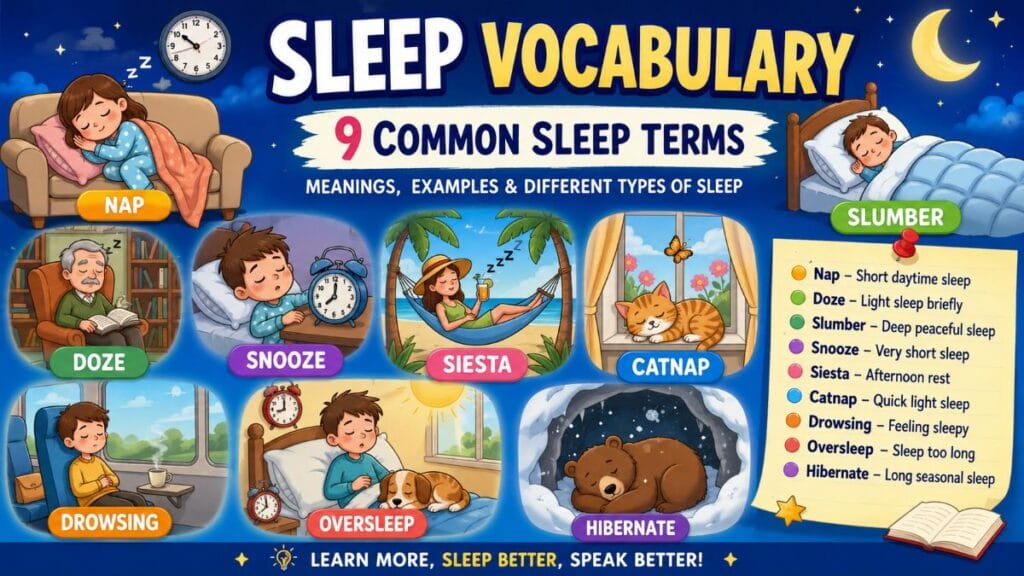
Sleep vocabulary is an essential part of learning English because sleep is a universal experience everyone can relate to. Whether you are talking about taking a short afternoon nap, accidentally oversleeping on a school day, or describing a baby’s deep slumber, using the right word makes your communication more precise and interesting.
Many people use words such as nap, doze, snooze, and slumber interchangeably. However, each term has its own unique meaning and is used in different situations. Understanding these differences not only improves vocabulary but also helps students become better readers, writers, and speakers.
In this guide, we will explore nine common sleep vocabulary words, their meanings, examples, and practical uses in everyday life.
9 Sleep Vocabulary Words
The following infographic provides a quick visual reference for the most commonly used sleep vocabulary words and their meanings.
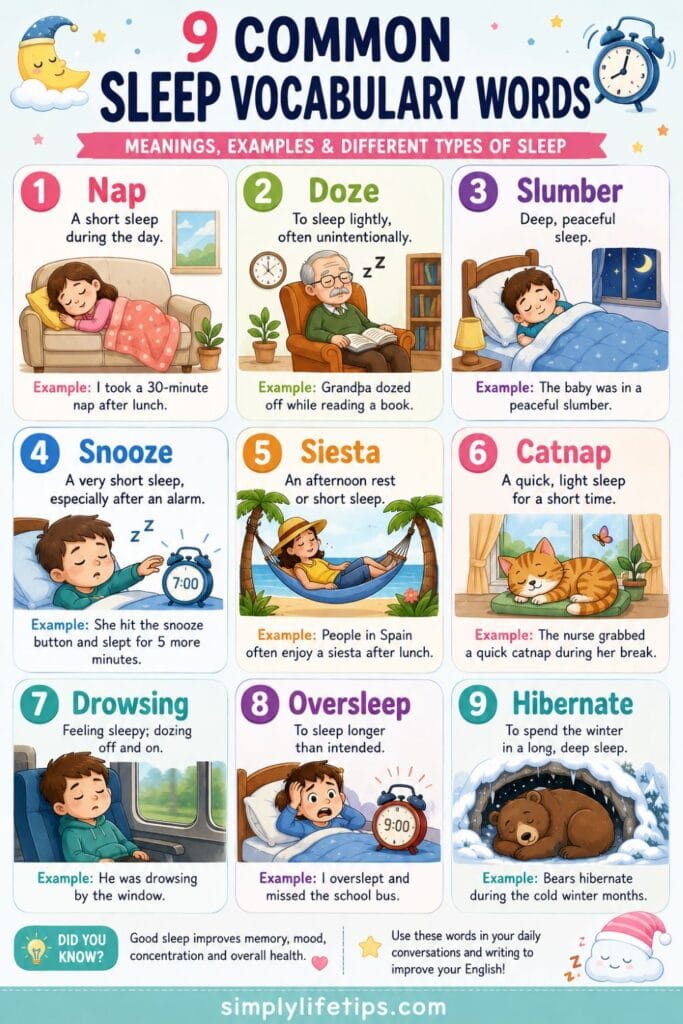
Save this infographic for future reference and share it with students, teachers, and English learners who want to expand their vocabulary in a fun and engaging way.
Importance of Learning Sleep Vocabulary
Learning sleep vocabulary offers several benefits for students and language learners. Sleep-related words are commonly used in everyday conversations, books, movies, health articles, and classroom discussions. Understanding these terms helps learners describe different sleeping habits more accurately and communicate their thoughts clearly. Instead of using the general word sleep repeatedly, students can choose more specific words such as nap, doze, slumber, or snooze depending on the situation. This not only improves speaking and writing skills but also makes communication more engaging and precise.
Sleep vocabulary also enhances reading comprehension because many stories, novels, and educational materials contain sleep-related expressions. When students understand these words, they can better grasp the meaning and emotions behind what they read. For example, knowing the difference between a peaceful slumber and a quick catnap helps readers visualize situations more clearly. Additionally, learning sleep vocabulary expands overall word knowledge, boosts confidence in using English, and encourages students to express themselves with greater accuracy. By mastering these common terms, learners build a stronger vocabulary foundation that supports academic success and everyday communication.
Improves Communication Skills
Using specific vocabulary allows people to express themselves more accurately. Instead of simply saying “I slept,” you can explain exactly what happened by saying “I took a nap” or “I dozed off.”
Enhances Reading Comprehension
Books, newspapers, and stories often contain sleep-related vocabulary. Understanding these words helps readers better understand the context and emotions being described.
Builds Writing Skills
Writers use a variety of sleep-related terms to make their content more engaging. Knowing these words helps students create richer and more descriptive writing.
Expands Vocabulary Knowledge
Each new word learned adds depth to a person’s language skills and confidence when speaking English.
1. Nap – A Short Daytime Sleep
A nap is a short sleep taken during the day, usually to refresh the body and mind. Unlike nighttime sleep, naps are generally brief and serve as a quick energy boost.
People of all ages take naps. Young children often nap daily, while adults may nap when they feel tired after work, study, or physical activity.
Characteristics of a Nap
- Usually taken during the day.
- Lasts between 10 minutes and one hour.
- Helps restore energy.
- Improves concentration and alertness.
Examples
- I took a 30-minute nap after lunch.
- The student took a quick nap before preparing for exams.
- My grandmother enjoys an afternoon nap every day.
Benefits of Napping
Research has shown that short naps can improve memory, mood, and productivity. Many successful professionals use power naps to maintain focus throughout the day.
2. Doze – Light Sleep for a Short Period
To doze means to sleep lightly, often unintentionally. A person who is dozing is not fully asleep and can wake up very easily.
Dozing often occurs when someone is tired but trying to stay awake.
Characteristics of Dozing
- Very light sleep.
- Usually unplanned.
- Easy to wake up.
- Often happens while sitting.
Examples
- Grandpa dozed off while reading a newspaper.
- The passenger dozed during the long train ride.
- The teacher noticed a student dozing in class.
Everyday Situations
Many people doze while watching television, riding a bus, or sitting in a comfortable chair after a long day.
3. Slumber – Deep and Peaceful Sleep
Slumber is a more formal or literary word for deep, restful sleep. It often creates an image of peacefulness and comfort.
Writers frequently use the word in novels, poems, and bedtime stories because it sounds gentle and soothing.
Characteristics of Slumber
- Deep sleep.
- Peaceful and uninterrupted.
- Often associated with comfort and relaxation.
- Commonly used in literature.
Examples
- The baby was in a peaceful slumber.
- After the exhausting hike, everyone fell into a deep slumber.
- The village remained in slumber during the quiet night.
Why do writers love this word?
Instead of simply saying “sleep,” the word “slumber” adds emotion and imagery, making descriptions more vivid and engaging.
4. Snooze – A Few Extra Minutes of Sleep
A snooze is a very short period of sleep, especially after an alarm clock rings.
Many modern alarm clocks and smartphones include a snooze button that delays the alarm for a few minutes.
Characteristics of Snoozing
- Very brief sleep.
- Usually happens in the morning.
- Often lasts 5–10 minutes.
- Associated with alarm clocks.
Examples
- She hit the snooze button twice before getting up.
- I enjoyed a quick snooze before leaving for work.
- The student took a short snooze on the bus.
Interesting Fact
Although many people enjoy using the snooze button, sleep experts often recommend getting up when the alarm first rings because repeated snoozing can make people feel groggier.
5. Siesta – An Afternoon Rest
A siesta is a short rest or sleep taken in the afternoon, particularly after lunch.
The tradition of taking a siesta is common in several countries where afternoons can be very hot.
Characteristics of a Siesta
- Occurs after lunch.
- Can include sleeping or simply resting.
- Common in certain cultures.
- Helps restore energy.
Examples
- The traveler enjoyed a relaxing siesta under a tree.
- Some workers take a brief siesta during hot afternoons.
- A short siesta helped her feel refreshed.
Cultural Importance
In countries such as Spain and parts of Latin America, the siesta has historically been part of daily life. It allows people to rest during the warmest part of the day before returning to work.
6. Catnap – A Quick Light Sleep
A catnap is a very short and light sleep that provides quick refreshment.
The term comes from cats, which are famous for taking multiple short naps throughout the day.
Characteristics of a Catnap
- Lasts only a few minutes.
- Light sleep.
- Provides quick relaxation.
- Often taken unexpectedly.
Examples
- The nurse grabbed a catnap during her break.
- I took a catnap before attending the evening event.
- The student enjoyed a catnap after school.
Benefits of a Catnap
Even a short catnap can improve alertness, reduce stress, and increase productivity.
7. Drowsing – Being Sleepy and Half Awake
Drowsing refers to the state of feeling sleepy and drifting in and out of sleep.
It is the stage between being fully awake and completely asleep.
Signs of Drowsiness
- Heavy eyelids.
- Frequent yawning.
- Difficulty concentrating.
- Slow reactions.
Examples
- He sat drowsing near the window.
- The warm weather made everyone feel drowsy.
- Students often become drowsy after staying up late.
Common Causes
- Lack of sleep.
- Long working hours.
- Certain medications.
- Warm environments.
8. Oversleep – Sleeping Longer Than Intended
Oversleeping means sleeping beyond the planned wake-up time.
Almost everyone oversleeps occasionally, especially after a tiring day or a late night.
Characteristics of Oversleeping
- Missing the intended wake-up time.
- Sleeping longer than necessary.
- Often caused by fatigue or poor sleep habits.
Examples
- I overslept and missed my morning class.
- She overslept because her alarm battery died.
- He overslept after studying all night.
Possible Consequences
Frequent oversleeping can affect productivity, punctuality, and daily routines.
How to Avoid Oversleeping?
- Maintain a regular sleep schedule.
- Set multiple alarms if necessary.
- Avoid staying up too late.
- Create a bedtime routine.
9. Hibernate – Long Seasonal Sleep
Hibernate refers to a prolonged period of inactivity and sleep-like rest during winter.
Unlike humans, some animals hibernate to survive cold weather and food shortages.
Animals That Hibernate
- Bears
- Ground squirrels
- Hedgehogs
- Bats
- Some reptiles
Examples
- Bears hibernate during winter.
- Many animals hibernate to conserve energy.
- The squirrel prepared food before hibernation.
Why do animals hibernate?
During winter, food can become scarce. Hibernation allows animals to slow their metabolism and survive until conditions improve.
Sleep Vocabulary Comparison Table
| Word | Meaning | Typical Duration |
|---|---|---|
| Nap | Short daytime sleep | 10–60 minutes |
| Doze | Light sleep | Few minutes |
| Slumber | Deep peaceful sleep | Several hours |
| Snooze | Extra sleep after the alarm | 5–10 minutes |
| Siesta | Afternoon rest | 20–90 minutes |
| Catnap | Quick light sleep | Few minutes |
| Drowsing | Feeling sleepy | Temporary |
| Oversleep | Sleep longer than planned | Variable |
| Hibernate | Long seasonal sleep | Weeks or months |
How Can Students Practice Sleep Vocabulary?
Learning sleep vocabulary is not just about memorizing definitions. The best way to remember new words is to use them regularly in reading, writing, speaking, and listening activities. When students actively practice vocabulary, the words become a natural part of their everyday language. Here are some effective ways to master sleep-related vocabulary and improve English communication skills.
Create Sentences Using Sleep Vocabulary
One of the easiest and most effective ways to learn new words is by creating original sentences. Writing sentences helps students understand how each word is used in real-life situations and improves sentence construction skills.
Instead of simply memorizing that a nap means a short daytime sleep, students should use the word in a meaningful sentence.
Examples:
- I took a short nap after returning from school.
- My grandfather often dozes off while reading the newspaper.
- The baby was in a peaceful slumber.
- I pressed the snooze button three times this morning.
- Bears hibernate during winter.
Students can challenge themselves by writing two or three sentences for each word. This activity improves vocabulary retention and develops writing confidence.
Keep a Vocabulary Journal
A vocabulary journal is a personal notebook dedicated to learning new words. Recording vocabulary regularly helps students build a strong word bank that can be reviewed anytime.
For each sleep vocabulary word, students can include:
- The word itself.
- Its meaning.
- A sample sentence.
- A synonym or related word.
- A small drawing or illustration.
Example Journal Entry:
Word: Catnap
Meaning: A short, light sleep.
Sentence: I took a catnap before starting my evening homework.
Similar Words: Nap, Snooze
Maintaining a vocabulary journal encourages organized learning and helps students track their progress over time.
Use the Words in Daily Conversations
Speaking new words aloud is one of the fastest ways to remember them. Students should try to use sleep vocabulary naturally when talking with family members, friends, or classmates.
For example, instead of saying:
“I slept for a little while.”
They can say:
“I took a quick catnap after lunch.”
Instead of saying:
“I was very sleepy in class.”
They can say:
“I felt drowsy during the afternoon lesson.”
The more frequently students use these words in conversation, the more comfortable and confident they become in applying them correctly.
Read Books, Stories, and Articles
Reading exposes students to vocabulary in context. When students encounter sleep-related words in books, magazines, blogs, or news articles, they learn how the words are naturally used by writers.
For instance:
- Fairy tales often use the word slumber.
- Health articles frequently mention naps and oversleeping.
- Travel articles may discuss afternoon siestas in different cultures.
Students should keep a list of unfamiliar sleep-related words they encounter while reading and look up their meanings. This habit expands vocabulary and improves reading comprehension.
Practice Through Story Writing
Creative writing is another excellent way to reinforce vocabulary learning. Students can write short stories that include several sleep vocabulary words.
Example Story Idea:
A student accidentally oversleeps after taking a catnap, rushes to school feeling drowsy, and later takes a nap after returning home.
By incorporating vocabulary into stories, students learn how different words relate to one another and how they can be used naturally within a narrative.
Play Vocabulary Games
Learning vocabulary becomes much more enjoyable when combined with games and interactive activities.
Popular vocabulary games include:
- Word searches
- Crossword puzzles
- Vocabulary bingo
- Flashcards
- Matching games
- Online vocabulary quizzes
For example, students can create flashcards with the word on one side and the meaning on the other. Regular review of these cards strengthens memory and helps prepare for exams.
Role-Play Everyday Situations
Role-playing allows students to practice vocabulary in realistic scenarios.
Examples:
- A conversation between two friends discussing their sleep habits.
- A doctor advising a patient who frequently oversleeps.
- A traveler explaining the tradition of a siesta in another country.
Role-playing improves speaking skills, pronunciation, and confidence while making vocabulary practice more engaging.
Watch Educational Videos and Listen Carefully
Many educational videos, documentaries, and English-learning channels discuss sleep and health topics. Listening to native speakers use sleep vocabulary helps students understand pronunciation, tone, and usage.
Students can:
- Write down new words they hear.
- Pause videos and repeat sentences.
- Practice using the words in their own examples.
This method combines listening and speaking practice, making vocabulary learning more effective.
Create a Sleep Vocabulary Chart
Visual learners often benefit from charts and diagrams. Students can create a colorful chart displaying sleep vocabulary words, meanings, and illustrations.
For example:
| Word | Meaning |
|---|---|
| Nap | Short daytime sleep |
| Doze | Light sleep briefly |
| Slumber | Deep peaceful sleep |
| Snooze | Very short sleep |
| Siesta | Afternoon rest |
| Catnap | Quick light sleep |
| Drowsy | Feeling sleepy |
| Oversleep | Sleep too long |
| Hibernate | Long seasonal sleep |
Displaying the chart near a study desk provides constant exposure to the vocabulary and aids long-term memory.
Review and Revise Regularly
Vocabulary learning is most effective when students review words frequently. Revisiting sleep vocabulary once or twice a week helps transfer the words from short-term memory to long-term memory.
Students can:
- Take self-quizzes.
- Ask friends or parents to test them.
- Rewrite sentences using the words.
- Review vocabulary journals.
Consistent revision ensures that the vocabulary remains fresh and easy to recall.
The secret to mastering sleep vocabulary is regular practice. Reading, writing, speaking, listening, and playing educational games all help reinforce learning. By using words such as nap, doze, slumber, snooze, siesta, catnap, drowsy, oversleep, and hibernate in daily activities, students can significantly improve their English vocabulary and communication skills while making learning enjoyable and meaningful.
FAQs about Sleep Vocabulary
What is sleep vocabulary?
Sleep vocabulary includes words and expressions used to describe sleep, rest, tiredness, and sleeping habits.
What is the difference between a nap and a catnap?
A nap is generally longer, while a catnap is a very short and light sleep.
Is dozing the same as sleeping?
No. Dozing is a light form of sleep where a person can wake up easily.
Why do people take siestas?
People take siestas to rest and regain energy, especially during hot afternoons.
Which sleep vocabulary word means sleeping too much?
Oversleeping means sleeping longer than planned or necessary.
Conclusion
Sleep vocabulary helps learners understand the many ways people and animals rest. Words such as nap, doze, slumber, snooze, siesta, catnap, drowsing, oversleep, and hibernate each describe a specific type of sleep or rest. By learning these terms and practicing them in daily conversations, students can strengthen their English vocabulary and express themselves more clearly.
Related Articles
- Powerful Affirmations For Better Sleep: Your Path To Restful Nights
- Help Your Teen Get Enough Sleep: Effective Strategies
- Help Your Children Sleep: Guiding Bedtime Bliss
If this resonated with you, share it with someone who needs it.
PVM

Mathukutty P V is a Blogger, YouTuber, and Content Writer and the founder of Simply Life Tips. After taking voluntary retirement in 2017, he embraced a free lifestyle focused on learning, personal growth, and sharing practical wisdom to help others live with more purpose and positivity.



