
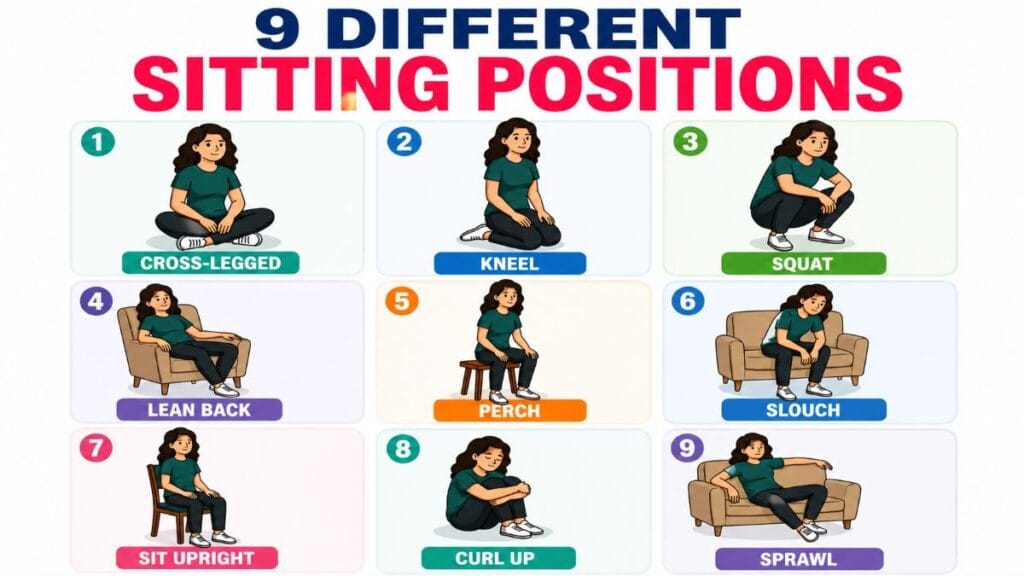
Different sitting positions are useful vocabulary words for students, English learners, and anyone who wants to improve their communication skills. We sit in different ways every day, but many people do not know the correct English terms for these common sitting postures. Learning these words helps improve speaking, writing, and descriptive skills.
10 Different Sitting Positions
Understanding different sitting positions in English can improve vocabulary, communication skills, and body language awareness. This infographic introduces nine common sitting postures that students and English learners can easily recognize and use in daily conversations.

Now that you know these common sitting positions, try using them in sentences and everyday conversations. Learning practical vocabulary like cross-legged, squat, slouch, and sit upright helps make your English more natural, descriptive, and engaging.
Understanding the vocabulary for sitting positions helps learners describe body language accurately. These words are commonly used in classrooms, workplaces, healthcare settings, fitness training, and everyday conversations.
For example, a teacher may ask students to sit upright, a fitness instructor may ask participants to squat, and a doctor may observe whether a patient tends to slouch. Knowing these terms makes communication clearer and more precise.
1. Cross-Legged
A person sits cross-legged when both legs are crossed in front of the body while sitting on the floor. This is one of the most common sitting positions used during meditation, yoga, prayer, storytelling sessions, and informal gatherings.
Many children naturally sit cross-legged during classroom activities or while playing on the floor. This position can be comfortable for short periods because it allows the body to relax while maintaining balance.
Example:
The children sat cross-legged on the floor while listening to their teacher read a story.
2. Kneel
To kneel means to sit or rest on one or both knees. People often kneel during prayer, religious ceremonies, gardening, or when working close to the ground.
Kneeling can show respect, humility, or concentration. It is commonly seen in places of worship and during certain cultural or traditional events. Workers such as gardeners and mechanics may also kneel while performing specific tasks.
Example:
She knelt beside the flower bed to remove weeds from the garden.
3. Squat
A squat is a position where a person bends their knees and lowers their body while keeping their feet flat on the ground. In many countries, squatting is a common resting posture.
People may squat while waiting, exercising, cleaning, or picking up objects from the ground. Athletes frequently practice squats because they strengthen the legs and improve balance.
Example:
The boy squatted beside the stream to watch the fish swimming.
4. Lean Back
When someone leans back, they rest their body against the back of a chair or sofa in a relaxed manner. This posture often indicates comfort, relaxation, or confidence.
People usually lean back while watching television, reading a book, listening to music, or taking a break after a busy day. However, excessive leaning back for long periods may not provide ideal support for the lower back.
Example:
After finishing his work, he leaned back in his chair and relaxed.
5. Perch
To perch means to sit lightly on the edge of a chair, bench, or stool. This posture often suggests that the person is ready to stand up quickly or is only sitting temporarily.
People frequently perch when waiting for a short meeting, listening carefully, or feeling slightly uncomfortable in a situation. The position requires balance because only part of the body is supported by the seat.
Example:
She perched on the edge of the chair while waiting for her interview.
6. Slouch
A person slouches when they sit with their shoulders and back rounded forward instead of maintaining a straight posture. Slouching is common when people are tired, bored, or distracted.
Although it may feel comfortable in the short term, regular slouching can contribute to poor posture, neck pain, and back discomfort. Teachers and parents often remind children not to slouch while studying.
Example:
The student slouched in his chair after a long day of exams.
7. Sit Upright
To sit upright means sitting with the back straight and shoulders properly aligned. This is generally considered one of the healthiest sitting positions because it supports good posture.
Sitting upright improves breathing, concentration, and spinal alignment. Teachers, office workers, and healthcare professionals often encourage this posture for better health and productivity.
Example:
The teacher asked everyone to sit upright during the lesson.
8. Curl Up
When a person curls up, they pull their knees close to their chest and wrap their arms around their legs. This posture often provides a sense of comfort, warmth, and security.
People commonly curl up while resting, reading, feeling cold, or experiencing sadness. It is a natural position that many individuals adopt when they want to feel relaxed or protected.
Example:
The child curled up on the couch with a blanket and a storybook.
9. Sprawl
To sprawl means to sit or lie in a relaxed, spread-out manner, often taking up a large amount of space. This posture usually reflects complete relaxation or tiredness.
People may sprawl on a sofa after a busy day, stretch out while watching television, or relax during weekends. Although comfortable, sprawling may appear informal in professional or public settings.
Example:
After the football match, the players sprawled across the couches in the locker room.
How Body Language Relates to Different Sitting Positions?
Sitting positions often communicate emotions and attitudes without words. Someone sitting upright may appear attentive and confident, while a person who slouches might seem tired or uninterested. A curled-up posture may indicate comfort or sadness, whereas sprawling often signals relaxation.
Understanding these subtle signals can help improve communication skills and social awareness. Teachers, employers, and healthcare professionals often observe body language to better understand how people feel.
Tips for Maintaining Healthy Sitting Posture
Good posture plays an important role in overall health and well-being. Whether studying, working, or relaxing, following proper sitting habits can reduce discomfort and improve concentration.
- Keep your back straight and supported.
- Place both feet flat on the floor when using a chair.
- Avoid slouching for long periods.
- Take regular breaks and stretch every hour.
- Adjust your chair and desk to a comfortable height.
- Practice sitting upright while studying or working.
These simple habits can help prevent back pain and promote better posture over time.
Why Students Should Learn These Words?
Learning sitting position vocabulary improves both spoken and written English. Students can use these words when describing people, writing stories, giving presentations, or understanding instructions.
For example, instead of saying “He sat strangely,” a student can write, “He squatted beside the river,” or “He perched on the edge of the chair.” Such vocabulary makes descriptions more vivid and accurate.
FAQs about Different Sitting Positions
What is the meaning of sitting cross-legged?
Sitting cross-legged means crossing both legs in front of the body while sitting on the floor.
Is squatting considered a sitting position?
Yes. Squatting is a common posture where the knees are bent and the body is lowered close to the ground.
What does slouching mean?
Slouching means sitting with a rounded back and shoulders instead of maintaining a straight posture.
Why is sitting upright important?
Sitting upright supports spinal health, improves breathing, and enhances concentration.
How can students practice sitting position vocabulary?
Students can create sentences, observe people’s postures, use the words in conversations, and write descriptions using the vocabulary.
Conclusion
Different sitting positions are an important part of everyday English vocabulary. Words such as cross-legged, kneel, squat, lean back, perch, slouch, sit upright, curl up, and sprawl help learners describe body posture clearly and naturally. By understanding these terms and practicing them in sentences, students can improve their vocabulary, communication skills, and awareness of body language. Learning these simple yet practical words makes English more descriptive, engaging, and useful in daily life.
Related Articles
- Hand Vocabulary for Students | Learn the Parts of the Hand Easily
- Types of Shoes | The Ultimate Guide to Popular Shoe Styles and Their Uses
- Different Types of Hats | History, Styles, and Uses of Popular Hats
If this resonated with you, share it with someone who needs it.
PVM

Mathukutty P V is a Blogger, YouTuber, and Content Writer and the founder of Simply Life Tips. After taking voluntary retirement in 2017, he embraced a free lifestyle focused on learning, personal growth, and sharing practical wisdom to help others live with more purpose and positivity.



