
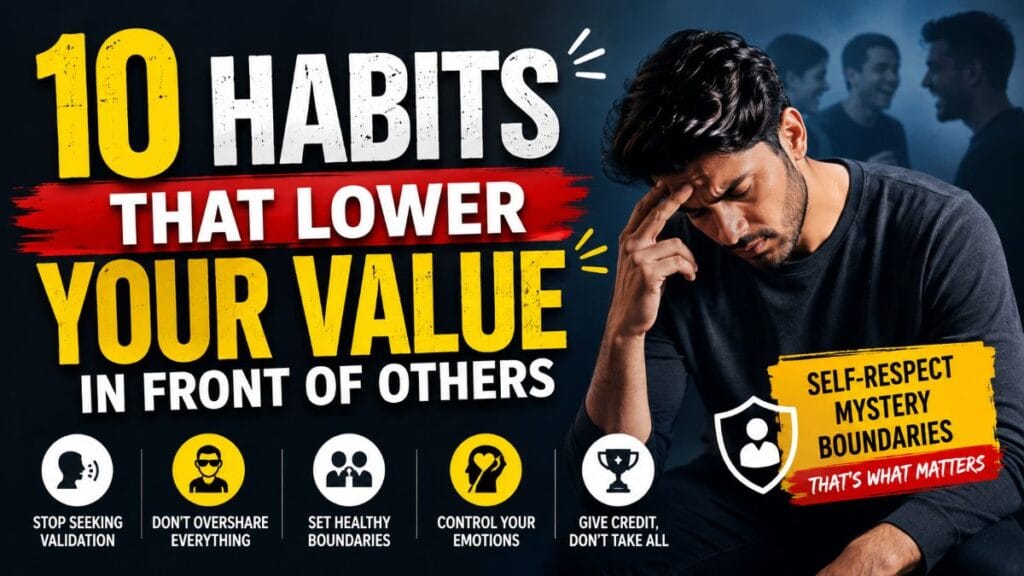
Habits That Lower Your Value can quietly affect the way people see and treat you. Respect is not something that can be demanded; it is earned through behavior, confidence, and self-respect. Unfortunately, many people unknowingly engage in habits that make them appear less confident, less trustworthy, or overly dependent on others’ approval.
The good news is that these habits can be changed. By developing stronger boundaries, better communication skills, and greater emotional control, you can increase the respect and value others place on you. Here are ten common habits that lower your value and what you can do instead.
10 Habits That Lower Your Value
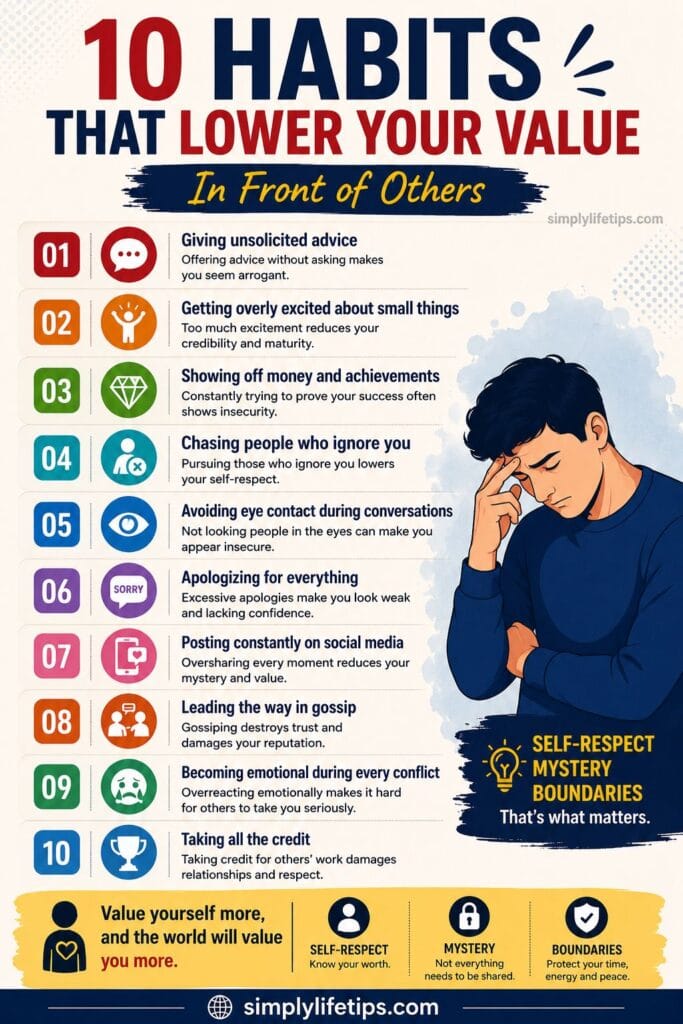
1. Giving Unsolicited Advice
One of the most common habits that lower your value is offering advice when nobody has asked for it. While your intentions may be good, people often prefer understanding and support before receiving solutions.
For example, when a friend shares a problem, immediately telling them what they should do can make them feel judged instead of understood.
A better approach is to listen carefully and ask whether they would like your opinion. This shows respect for their ability to make decisions and makes your advice more valuable when it is finally given.
2. Getting Overly Excited About Small Things
Enthusiasm is positive, but excessive excitement over every minor event can reduce your credibility.
Imagine someone who reacts to every small achievement as if it were a life-changing event. Over time, people may stop taking their reactions seriously because everything receives the same level of excitement.
Emotionally balanced people know when to celebrate and when to remain composed. This maturity often earns greater respect from others.
3. Showing Off Money and Achievements
Success speaks loudly on its own. Constantly trying to prove your success often has the opposite effect.
People who frequently display their wealth, expensive purchases, salary details, or personal achievements may appear insecure rather than confident. Genuine confidence comes from knowing your worth without needing validation from others.
For example, a successful business owner who quietly focuses on growth often earns more admiration than someone who constantly boasts about income and possessions.
4. Chasing People Who Ignore You
Respect begins with respecting yourself.
If someone repeatedly ignores your messages, avoids conversations, or shows little interest in maintaining a relationship, constantly chasing their attention can lower your perceived value.
This does not mean being arrogant or rude. It means recognizing when your efforts are not appreciated and directing your energy toward people who genuinely value your presence.
Healthy relationships involve mutual interest and effort.
5. Avoiding Eye Contact During Conversations
Eye contact is a powerful communication tool. It signals confidence, honesty, and engagement.
People who avoid eye contact while speaking may unintentionally appear nervous, uncertain, or lacking confidence. Whether in personal conversations, business meetings, or interviews, maintaining comfortable eye contact helps establish trust.
For example, job candidates who confidently maintain eye contact often create stronger impressions than those who constantly look away.
The Power of Eye Contact in Child Development | Emotional Oxygen Every Child Needs
6. Apologizing Excessively
Saying sorry when you make a mistake is important. However, constantly apologizing for things that do not require an apology is one of the major habits that lowers your value.
Many people say:
- Sorry for asking a question.
- Sorry for taking up your time.
- Sorry for sharing my opinion.
These situations usually do not require an apology.
Instead of apologizing unnecessarily, express appreciation. For example, replace “Sorry for bothering you” with “Thank you for your time.”
This simple shift makes you appear more confident and self-assured.
7. Posting Constantly on Social Media
Social media can help people stay connected, but oversharing every detail of your life can reduce your sense of mystery and make your content less meaningful.
People are naturally curious about individuals who maintain some privacy. Constant updates every few minutes may create the impression that you are seeking constant attention or validation.
Rather than posting everything, focus on sharing content that provides value, inspiration, or genuine insight.
Quality consistently outperforms quantity.
How Social Media Addiction Will Destroy Your Health And Life
8. Leading the Way in Gossip
Gossip may seem harmless, but it often damages both relationships and reputations.
People who regularly discuss others behind their backs eventually lose trust. If you gossip about one person, others may assume you will gossip about them as well.
Respected individuals focus on ideas, solutions, and meaningful conversations rather than spreading rumors.
In workplaces, especially, avoiding gossip can significantly improve your professional reputation.
9. Becoming Emotional During Every Conflict
Emotions are natural, but allowing emotions to control every reaction can lower how seriously others take you.
When someone disagrees with you, criticizes you, or challenges your opinion, responding with excessive anger, tears, or emotional outbursts may weaken your position.
Emotionally intelligent people pause, think, and respond calmly. They understand that strength is not the absence of emotion but the ability to manage it effectively.
The ability to remain calm under pressure is one of the most respected qualities a person can possess.
10. Taking All the Credit
Nothing damages trust faster than taking credit for work that involved other people.
Whether at work, in business, or within a family, people appreciate those who recognize and acknowledge contributions from others.
Great leaders understand that success is often a team effort. By sharing credit generously, you build loyalty, trust, and long-term respect.
Ironically, those who share credit often receive more respect than those who try to claim it all for themselves.
Why Self-Respect, Mystery, and Boundaries Matter?
Most habits that lower your value are rooted in a desire for approval, attention, or validation.
Three important qualities help prevent these behaviors:
Self-Respect helps you recognize your worth without depending on other people’s opinions.
Mystery reminds you that not every achievement, thought, or personal detail needs to be shared publicly.
Boundaries protect your time, energy, emotions, and personal space from being taken for granted.
When these three qualities are present, people naturally treat you with greater respect.
How to Stop the Habits That Lower Your Value?
Improving your image and reputation does not require becoming someone else. Small changes can make a significant difference.
- Listen more than you speak.
- Avoid seeking constant validation.
- Maintain healthy personal boundaries.
- Control emotional reactions.
- Share achievements with humility.
- Practice confident body language.
- Give credit generously.
- Stay away from gossip.
- Develop genuine self-confidence.
- Respect yourself first.
These habits not only improve how others see you but also strengthen your own sense of self-worth.
Conclusion
Habits That Lower Your Value often seem harmless, but they can significantly influence how people perceive and treat you. Respect is built through confidence, emotional maturity, self-respect, and healthy boundaries. The more you value yourself, the less you will feel the need to seek validation from others.
Remember, losing respect is easy, but earning it takes time, consistency, and character. Focus on strengthening your self-respect, maintaining healthy boundaries, and developing genuine confidence, and others will naturally begin to see your true value.
Which of these habits have you noticed most often in people around you?
FAQs – Habits That Lower Your Value
What are the biggest habits that lower your value?
Excessive apologizing, gossiping, oversharing on social media, seeking validation, and constantly chasing people who ignore you are among the most common habits.
Why does oversharing reduce respect?
Oversharing can make a person appear attention-seeking and reduce the sense of privacy and mystery that often contributes to respect and admiration.
Does avoiding eye contact affect confidence?
Yes. Poor eye contact can make a person appear nervous or uncertain, while healthy eye contact generally signals confidence and trustworthiness.
How can I build more self-respect?
Set clear boundaries, stop seeking approval from everyone, keep your promises to yourself, and focus on personal growth rather than external validation.
Can these habits be changed?
Absolutely. With self-awareness and consistent effort, anyone can replace these habits with behaviors that build confidence, respect, and stronger relationships.

Mathukutty P V is a Blogger, YouTuber, and Content Writer and the founder of Simply Life Tips. After taking voluntary retirement in 2017, he embraced a free lifestyle focused on learning, personal growth, and sharing practical wisdom to help others live with more purpose and positivity.


