

Invest in yourself because you are the greatest asset you will ever have in life. Many people spend years investing money in businesses, luxury items, or other people while completely ignoring their own growth and well-being. However, true success begins when a person starts improving themselves physically, mentally, emotionally, and financially.
Unlike material investments that may lose value over time, self-investment continuously produces rewards throughout life. Better health increases energy, better knowledge creates opportunities, and stronger discipline improves long-term success.
People who choose to invest in themselves usually become more confident, productive, financially secure, and emotionally balanced. They understand that every improvement they make today helps create a better future tomorrow.
This article explains why you should invest in yourself and explores practical ways to improve your health, time management, financial habits, learning, discipline, and overall personal development.
What does it mean to invest in yourself?
Investing in yourself means making conscious efforts to improve your physical health, mental well-being, knowledge, skills, habits, and overall quality of life so you can build a better future. It involves activities such as exercising regularly, learning new skills, managing time wisely, saving money, reading books, setting goals, and developing positive habits. When you invest in yourself, you increase your confidence, productivity, opportunities, and ability to handle challenges successfully. Unlike material investments that may lose value over time, self-investment continues to provide lifelong benefits in both personal and professional life.
Why Should You Invest in Yourself?
Many individuals underestimate their own value because they fail to recognize how powerful personal growth can be. Your mindset, habits, knowledge, and discipline shape almost every result you experience in life.
When you invest in yourself, you become more capable of handling challenges, solving problems, and creating opportunities. Self-investment strengthens both confidence and independence.
For example, imagine two people working in the same company. One spends free time reading books, learning new skills, exercising, and improving communication abilities. The other wastes most evenings scrolling endlessly through social media and avoiding growth opportunities. After several years, the first person is far more likely to receive promotions, better opportunities, and financial stability.
Self-investment also improves self-respect. When people make consistent efforts to improve themselves, they naturally begin valuing themselves more.
Another important benefit is adaptability. The world changes rapidly, and people who continue learning and growing can adjust more effectively to new situations and opportunities.
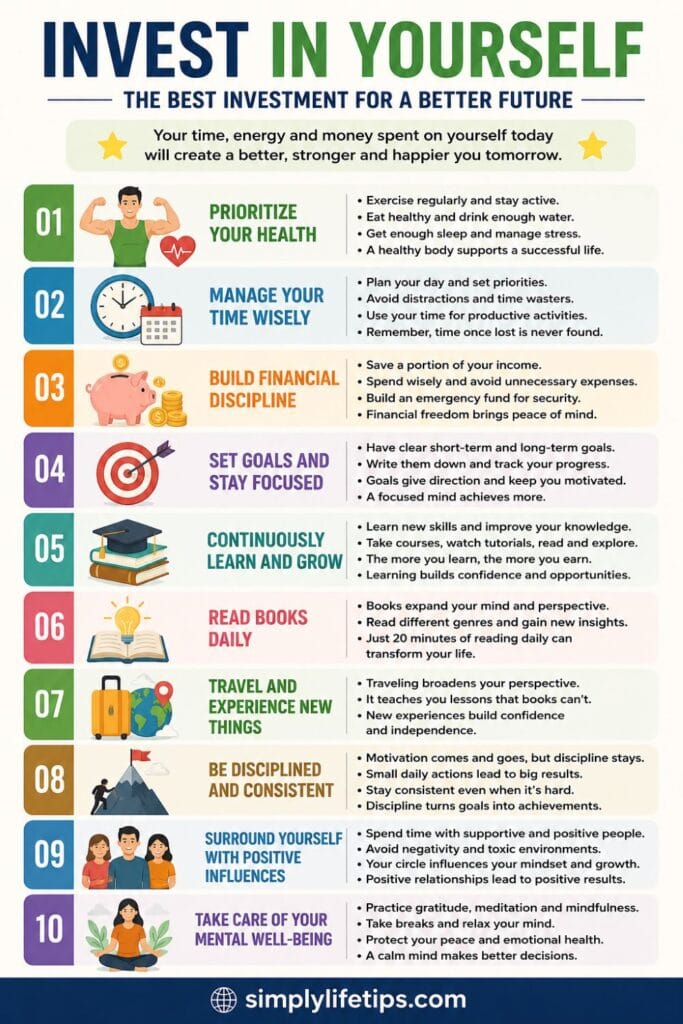
Ways to Invest in Yourself
Through Health and Self-Care
The first and most important area where you should invest in yourself is health and self-care. Without good health, it becomes difficult to enjoy success, maintain productivity, or achieve long-term goals.
In the past, exercise was often considered important only for athletes or fitness enthusiasts. Today, people increasingly understand that health is essential for everyone. This is why traditional gyms have evolved into health clubs and fitness centers focused on overall wellness.
If you have neglected your health because of busy schedules or stress, now is the best time to change. Your body supports every responsibility and dream you carry. Ignoring it eventually leads to physical and emotional exhaustion.
Regular exercise provides many benefits:
- Better energy levels
- Improved concentration
- Reduced stress and anxiety
- Stronger immunity
- Better sleep
- Increased confidence
You do not need extreme fitness routines to begin. Small daily habits create significant improvements over time:
- Walking regularly
- Stretching daily
- Drinking enough water
- Eating balanced meals
- Reducing processed food
- Sleeping properly
For example, an office worker who begins exercising every morning may notice improved productivity and reduced stress during work hours. Similarly, students who maintain physical fitness often perform better academically because exercise improves brain function.
Mental health is equally important. Self-care includes protecting emotional well-being, avoiding toxic environments, and spending time with positive influences.
Health should never be treated as an expense. It is one of the most valuable investments you can make in your future.
By Managing Time Wisely
Time is one of the most valuable resources in life because it can never be recovered once lost. This is why effective time management is a powerful form of self-investment.
Many people waste valuable hours through:
- Oversleeping
- Endless phone usage
- Social media addiction
- Unnecessary conversations
- Poor planning
- Procrastination
Successful individuals understand that productivity is not about being busy all day. It is about using time intentionally and efficiently.
A practical way to improve time management is daily planning. Organize your day according to priorities and focus on meaningful tasks.
For example:
- Morning for exercise and planning
- Work hours for important tasks
- Evening for learning or family
- Night for reading and preparation
A student preparing for exams who wastes three hours daily on distractions loses over one thousand hours in a year. Imagine how much knowledge and improvement could happen during that time. Effective Time Management for Students
Another important principle is reducing distractions. Constant notifications and unnecessary browsing silently consume huge portions of life.
Remember that there are two things people can never regain: time and reputation. Use both wisely.
Through Financial Discipline
Financial discipline is another important area where people should invest in themselves. No matter how much you earn, developing the habit of saving creates security and independence.
Many individuals spend everything they earn without thinking about future needs. This habit eventually creates financial pressure and emotional stress.
Even small savings matter. The habit of saving consistently is more important than the amount saved initially.
Practical financial habits include:
- Saving part of every income
- Tracking expenses
- Avoiding unnecessary spending
- Building an emergency fund
- Planning future investments
For example, two friends earning similar salaries may experience very different futures depending on their financial habits. One spends everything immediately, while the other saves consistently and plans wisely. During emergencies or opportunities, the financially disciplined person experiences less stress and greater freedom.
Savings create peace of mind because financially prepared individuals feel more secure about the future.
Learning financial literacy is also part of self-investment. Understanding budgeting, investing, and money management improves long-term stability.
By Setting Clear Goals
People without goals often live without direction. Goals create focus, motivation, and purpose. They help individuals understand what they truly want from life.
When you invest in yourself through goal setting, you increase clarity and productivity.
People with goals usually:
- Stay more motivated
- Make better decisions
- Use time effectively
- Develop stronger discipline
- Experience greater satisfaction
For example, a student who dreams of becoming a doctor studies with greater commitment because they have a meaningful objective. Similarly, entrepreneurs with clear business goals make smarter strategic decisions.
Good goals should be:
- Specific
- Realistic
- Measurable
- Time-based
- Meaningful
Instead of saying:
“I want success.”
Say:
“I want to improve my communication skills and achieve a promotion within two years.”
Writing goals down increases commitment and accountability. Many successful people review their goals regularly to stay focused.
Purpose-driven individuals usually feel more fulfilled because their efforts align with meaningful progress.
Through Learning
Continuous learning is one of the most powerful ways to invest in yourself. The world changes constantly, and people who stop learning often struggle to adapt.
Learning new skills improves:
- Confidence
- Creativity
- Career opportunities
- Communication abilities
- Problem-solving skills
- Adaptability
For example, learning digital marketing, coding, leadership, or public speaking can create entirely new opportunities.
Learning does not always require expensive education. There are many affordable ways to grow:
- Reading books
- Watching educational videos
- Taking online courses
- Listening to podcasts
- Learning from mentors
- Attending workshops
Even practical life skills such as cooking, budgeting, or language learning improve independence and confidence.
People who continue learning remain mentally active and open-minded. They are more prepared to handle change and uncertainty.
Through Reading
Reading is one of the simplest yet most powerful habits for personal growth. Books provide knowledge, wisdom, and perspectives that may otherwise take years to learn through experience.
Reading improves:
- Vocabulary
- Focus
- Creativity
- Critical thinking
- Emotional intelligence
- Communication skills
Successful individuals across many industries consistently emphasize the importance of reading.
For example:
- Biographies teach perseverance and leadership
- Financial books improve money management
- Motivational books encourage discipline
- Business books develop strategic thinking
Even reading for twenty minutes daily can produce major long-term benefits.
Reading also reduces stress because it allows the mind to focus deeply instead of constantly reacting to distractions and notifications.
Books can become lifelong mentors, guiding people toward better decisions and stronger thinking.
Through Travel and New Experiences
Traveling is another valuable way to invest in yourself because it expands perspective and understanding.
People who never leave familiar environments often develop limited thinking. Travel exposes individuals to different cultures, lifestyles, and ideas.
Travel teaches:
- Independence
- Confidence
- Flexibility
- Cultural understanding
- Gratitude
- Problem-solving
For example, visiting rural villages may help people appreciate simplicity and resilience. Traveling to advanced cities may inspire innovation and ambition.
Travel does not always require expensive international vacations. Even local trips can refresh the mind and provide valuable experiences.
New experiences stimulate creativity and emotional growth. They help people become more adaptable and open-minded.
Through Discipline
Motivation is temporary, but discipline creates lasting results. Many individuals feel inspired occasionally but fail to remain consistent.
Discipline means continuing positive actions even when motivation disappears.
Examples include:
- Exercising daily
- Saving money consistently
- Reading regularly
- Managing time properly
- Learning continuously
For example, a writer who writes every day eventually completes books. A student who studies consistently usually performs better than someone who studies only when inspired.
Small, disciplined actions repeated over time create extraordinary transformation.
Successful people rely more on systems and habits than on temporary emotions.
Positive Environments Help You Invest in Yourself
The people and environments around you strongly influence your mindset and habits. Negative influences reduce motivation and confidence, while positive environments encourage growth.
Choose relationships that:
- Encourage improvement
- Respect your goals
- Support discipline
- Promote positivity
- Inspire growth
For example, spending time with ambitious and responsible people often motivates individuals to improve themselves.
Positive influences can also include:
- Books
- Mentors
- Educational content
- Professional communities
- Inspirational podcasts
Protecting your environment is part of self-investment because your surroundings shape behavior and thinking.
Key Takeaways
- Invest in yourself first because personal growth creates long-term success, confidence, and stability.
- Health is the foundation of a productive and successful life, so prioritize exercise, sleep, nutrition, and self-care.
- Time management is essential because lost time can never be recovered. Plan your day wisely and avoid distractions.
- Financial discipline builds security through regular savings, budgeting, and smart spending habits.
- Clear goals provide direction and help maintain focus, motivation, and purpose in life.
- Continuous learning improves confidence and creates new opportunities for personal and professional growth.
- Reading books expands knowledge and develops critical thinking, communication skills, and creativity.
- Travel and new experiences broaden perspective and help develop adaptability, confidence, and gratitude.
- Discipline is more important than motivation because consistent habits create lasting transformation.
- Positive environments and relationships matter because the people around you influence your mindset, habits, and future success.
FAQs – Invest in Yourself
Why should you invest in yourself first?
You should invest in yourself first because personal growth improves every area of life, including health, career, confidence, relationships, and financial stability.
What is the best way to start self-investment?
Start with simple habits such as exercising regularly, reading daily, managing time wisely, and learning new skills.
How does time management help personal growth?
Time management improves productivity, reduces stress, and helps people focus on meaningful goals instead of distractions.
Can small savings really make a difference?
Yes. Consistent small savings build financial security and prepare people for emergencies and future opportunities.
How do reading and travel improve life?
Reading increases knowledge and critical thinking, while travel expands perspective and helps people become more adaptable and open-minded.
Conclusion
Invest in yourself because you are the foundation of your future success, happiness, and stability. Every improvement you make in health, discipline, learning, savings, and mindset creates long-term benefits that continue throughout life.
The most successful individuals are not always the luckiest or wealthiest. They are often the people who consistently work on improving themselves, while others ignore their potential.
You do not need dramatic overnight changes. Small, consistent actions eventually create extraordinary transformation. Exercise regularly, manage your time wisely, save money carefully, continue learning, and protect your mental and physical health.
Every positive habit strengthens your future. Every new skill increases your opportunities. Every disciplined action builds confidence and success.
When you choose to invest in yourself, you are building a stronger, wiser, healthier, and more meaningful life.
What is the first step you will take today to invest in yourself?
If this resonated with you, share it with someone who needs it.
PVM

Mathukutty P V is a Blogger, YouTuber, and Content Writer and the founder of Simply Life Tips. After taking voluntary retirement in 2017, he embraced a free lifestyle focused on learning, personal growth, and sharing practical wisdom to help others live with more purpose and positivity.


