
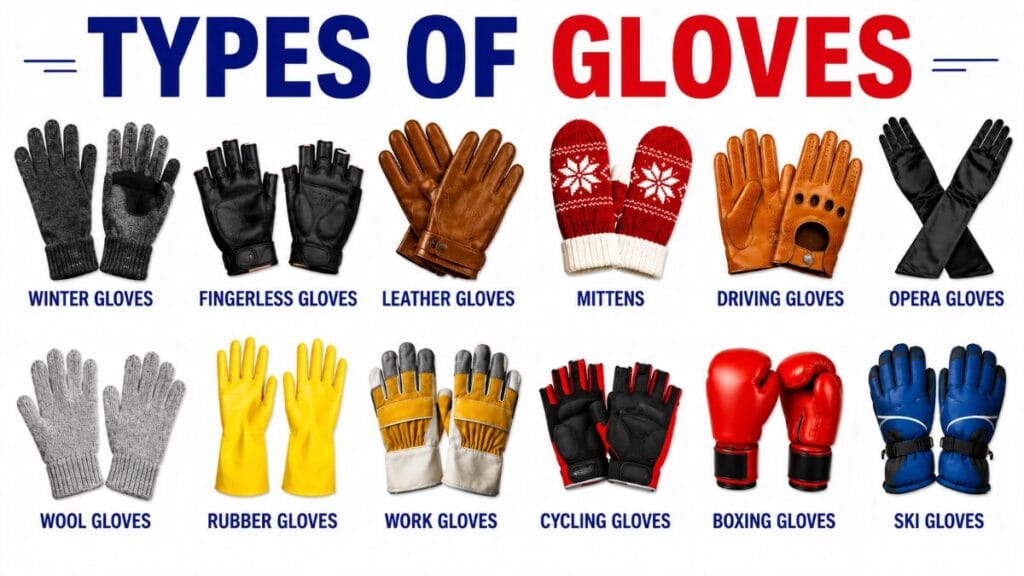
Learning the names of types of gloves in English is an excellent way to improve everyday vocabulary and understand the different types of gloves used for protection, sports, fashion, work, and winter activities. Gloves are an important part of daily life, helping people stay warm, safe, comfortable, and stylish. Whether you are a student, language learner, traveler, or professional, knowing the names of various gloves can make communication easier and more accurate.
Gloves come in many shapes, sizes, and materials. Some are designed to protect hands from cold weather, while others are used in sports, industrial work, driving, cleaning, or formal events. This comprehensive guide introduces the most common types of gloves in English, their uses, examples, and interesting facts.
What Are Gloves?
Gloves are protective coverings worn on the hands. Most gloves have separate spaces for each finger and thumb, while some styles, such as mittens, group fingers together. Gloves serve several purposes, including protecting hands from cold temperatures, injuries, chemicals, germs, friction, and rough surfaces.
People wear various types of gloves in a wide range of situations, from outdoor winter activities and sports competitions to workplace tasks and formal occasions. The design and material of a glove depend on its intended use.
Importance of Learning the Types of Gloves
Learning about types of gloves helps students and English learners expand their knowledge of clothing and accessory terms. It improves reading comprehension, speaking skills, and writing ability. Understanding the differences between various glove types also helps when shopping, traveling, studying workplace safety, or discussing sports equipment.
For example, knowing the difference between “mittens” and “winter gloves” or between “work gloves” and “rubber gloves” allows learners to communicate more clearly and accurately.
Types of Gloves Names in English
1. Winter Gloves
Winter gloves are specially designed to keep hands warm during cold weather. They are usually made from insulated materials such as fleece, wool, polyester, or synthetic fabrics that trap heat and prevent cold air from reaching the skin.
People commonly wear winter gloves while walking outdoors, traveling in snowy regions, hiking, or participating in winter activities.
Example: I wear winter gloves whenever I go outside during the cold season.
2. Fingerless Gloves
Fingerless gloves cover the palm and wrist while leaving the fingers exposed. They provide warmth while allowing users to perform tasks requiring finger movement and precision.
These gloves are popular among cyclists, musicians, photographers, and computer users.
Example: She wore fingerless gloves so she could use her phone easily.
3. Leather Gloves
Leather gloves are made from natural or synthetic leather and are valued for their durability, comfort, and stylish appearance. They are commonly used for fashion, driving, and protection from cold weather.
Many leather gloves include soft inner linings for additional warmth and comfort.
Example: He purchased a pair of leather gloves to wear with his winter coat.
4. Mittens
Mittens are hand coverings where all fingers share one compartment, while the thumb remains separate. Because the fingers stay together, mittens often provide more warmth than traditional gloves.
Children frequently wear mittens while playing in snowy conditions.
Example: The child wore wool mittens while building a snowman.
5. Driving Gloves
Driving gloves are designed to improve grip, reduce hand fatigue, and increase comfort while operating a vehicle. They often feature soft leather, ventilation holes, and flexible materials.
Driving gloves are particularly useful during long journeys and performance driving.
Example: The driver wore driving gloves to improve his control of the steering wheel.
6. Opera Gloves
Opera gloves are elegant, long gloves that extend beyond the wrist and sometimes reach the elbow. They are traditionally worn with formal evening gowns and special occasion attire.
Opera gloves became popular during the nineteenth century and remain associated with sophistication and elegance.
Example: She completed her formal outfit with a pair of white opera gloves.
7. Wool Gloves
Wool gloves are knitted hand coverings made from natural wool fibers. They provide warmth, softness, and comfort during cool or cold weather.
Many handmade gloves are produced using wool because of its excellent insulating properties.
Example: My grandmother knitted wool gloves for the winter season.
8. Rubber Gloves
Rubber gloves are waterproof gloves designed to protect hands from chemicals, dirt, germs, and cleaning products. They are commonly used in homes, hospitals, laboratories, and industries.
Disposable rubber gloves are widely used in healthcare settings to maintain hygiene.
Example: Always wear rubber gloves when handling strong cleaning chemicals.
9. Work Gloves
Work gloves are durable protective gloves designed for physically demanding tasks. They protect hands from cuts, abrasions, splinters, and rough surfaces.
Construction workers, gardeners, mechanics, and warehouse employees often wear work gloves.
Example: The construction worker used heavy-duty work gloves while lifting materials.
10. Cycling Gloves
Cycling gloves are specially designed for bicycle riders. They improve grip, reduce vibration, and help prevent hand fatigue during long rides.
Many cycling gloves feature padded palms and breathable materials.
Example: Cycling gloves make long-distance rides more comfortable.
11. Boxing Gloves
Boxing gloves are padded gloves used in boxing and other combat sports. They protect the hands, wrists, and opponents during training and competitions.
Modern boxing gloves contain layers of protective foam padding.
Example: The athlete wore boxing gloves during the championship match.
12. Ski Gloves
Ski gloves are insulated and waterproof gloves used for skiing and snowboarding. They protect hands from freezing temperatures, snow, and moisture.
These gloves often include reinforced palms and adjustable wrist straps.
Example: Ski gloves kept my hands warm throughout the mountain trip.
History and Evolution of Gloves
The use of gloves dates back thousands of years. Ancient civilizations such as Egypt, Greece, and Rome used gloves for ceremonial, practical, and protective purposes. During medieval times, knights wore armored gloves known as gauntlets for protection in battle.
By the Renaissance period, gloves became symbols of wealth and status. Wealthy individuals often wore beautifully decorated gloves made from fine fabrics and leather. During the Industrial Revolution, specialized work gloves emerged to protect workers in factories and construction sites.
Today, technological advancements have led to the development of touchscreen gloves, heat-resistant gloves, chemical-resistant gloves, and sports-specific gloves designed for maximum performance and safety.
Common Materials Used to Make Gloves
Different types of gloves are made from a variety of materials, each selected for specific features such as warmth, flexibility, durability, comfort, or protection. Understanding these materials helps users choose the most suitable gloves for their needs.
Wool
Wool is one of the oldest and most popular materials used for making gloves. It is obtained from the fleece of sheep and is highly valued for its natural insulating properties. Wool fibers trap air, creating a layer of warmth that helps keep hands comfortable even in cold temperatures. Wool gloves are soft, breathable, and capable of retaining heat even when slightly damp. They are commonly worn during winter, outdoor walks, and cold-weather activities. Handmade knitted gloves are often made from wool because of its comfort and warmth.
Example: Wool gloves are ideal for staying warm during chilly mornings and winter evenings.
Leather
Leather is a durable and flexible material commonly used in premium-quality gloves. It offers excellent protection against wind, minor abrasions, and everyday wear and tear. Leather gloves are often chosen for their stylish appearance and long lifespan. They are widely used for fashion, driving, motorcycling, and outdoor activities. High-quality leather gloves become softer and more comfortable over time while maintaining their durability.
Example: Leather gloves are a popular choice for drivers because they provide a secure grip and a sophisticated look.
Rubber
Rubber is a waterproof material that creates a strong protective barrier against liquids, chemicals, and dirt. Rubber gloves are commonly used in households, healthcare facilities, laboratories, and industrial environments. Their waterproof nature helps keep hands dry while preventing contact with harmful substances. Some rubber gloves are reusable, while others are designed for single-use applications.
Example: Rubber gloves protect hands while washing dishes or handling cleaning chemicals.
Cotton
Cotton is a lightweight, breathable, and comfortable material that is gentle on the skin. Cotton gloves are often used for light-duty tasks, skin protection, and everyday wear. Because cotton allows air circulation, it helps reduce sweating and discomfort during prolonged use. Cotton gloves are also commonly worn underneath heavier gloves to provide additional comfort.
Example: Cotton gloves are frequently used when handling delicate items such as jewelry or photographs.
Synthetic Fabrics
Synthetic materials such as polyester, nylon, spandex, and acrylic are widely used in modern glove manufacturing. These fabrics offer excellent durability, flexibility, and moisture resistance. Many sports gloves, winter gloves, and work gloves contain synthetic materials because they are lightweight and easy to maintain. Some advanced synthetic fabrics also provide waterproofing, wind resistance, and enhanced grip.
Example: Most modern ski gloves use synthetic fabrics to keep hands warm and dry in snowy conditions.
Foam Padding
Foam padding is commonly incorporated into sports gloves to provide cushioning and impact absorption. Materials such as memory foam, EVA foam, and polyurethane foam help protect hands from repeated impacts and reduce the risk of injuries. Foam padding is especially important in boxing gloves, cycling gloves, and certain work gloves where shock absorption is necessary.
Example: Boxing gloves use thick foam padding to protect both the boxer and the opponent during training and competition.
Benefits of Wearing Proper Types of Gloves
Gloves offer numerous advantages beyond simple hand coverage. They play a vital role in personal safety, comfort, hygiene, and performance across various environments and activities.
Protection from Cold Weather
One of the most common reasons people wear gloves is to protect their hands from low temperatures. Winter gloves, wool gloves, and mittens help retain body heat and reduce exposure to cold air. This protection helps prevent discomfort, numbness, and conditions such as frostbite in extremely cold climates. Properly insulated gloves allow people to remain comfortable during outdoor activities even in harsh winter weather.
Example: Hikers and skiers wear insulated gloves to keep their hands warm in freezing conditions.
Improved Safety
Many occupations involve tasks that can cause hand injuries. Work gloves provide an additional layer of protection against cuts, burns, splinters, abrasions, and rough surfaces. Construction workers, mechanics, gardeners, and factory employees often rely on specialized gloves to reduce workplace risks and improve safety.
Example: Construction workers wear reinforced work gloves to protect their hands while handling heavy materials.
Enhanced Sports Performance
Sports gloves are designed to improve grip, comfort, and control during physical activities. They help athletes maintain a firm hold on equipment while reducing hand fatigue and discomfort. Many sports gloves also include padding to absorb shocks and vibrations, allowing for better performance and injury prevention.
Example: Cyclists wear padded gloves to reduce pressure on their hands during long rides.
Better Hygiene
Gloves play an essential role in maintaining cleanliness and preventing contamination. Medical professionals, food handlers, and laboratory workers frequently wear disposable gloves to reduce the spread of germs and bacteria. Gloves also protect users from direct contact with potentially harmful substances.
Example: Healthcare workers wear disposable gloves during patient examinations to maintain hygiene standards.
Fashion and Style
In addition to their practical uses, gloves have long been associated with elegance and fashion. Leather gloves, opera gloves, and designer gloves can enhance an outfit and create a sophisticated appearance. Fashion gloves are often chosen to complement formal clothing while also providing comfort and protection.
Example: A pair of elegant leather gloves can add a refined touch to a winter outfit.
Protection Against Chemicals and Hazardous Materials
Certain gloves are specifically designed to protect hands from dangerous chemicals, oils, solvents, and industrial substances. These specialized gloves are commonly used in laboratories, manufacturing facilities, and chemical processing plants. Wearing appropriate protective gloves significantly reduces the risk of skin irritation and injury.
Example: Laboratory technicians wear chemical-resistant gloves when handling hazardous substances.
Improved Grip and Control
Many gloves are designed with textured surfaces or special materials that enhance grip. This feature is particularly useful for drivers, athletes, construction workers, and individuals working in wet or slippery conditions. Better grip improves efficiency, safety, and overall performance.
Example: Driving gloves help drivers maintain better control of the steering wheel during long journeys.
Reduced Hand Fatigue
Gloves with ergonomic designs and padded features help reduce stress on the hands during repetitive tasks. This benefit is especially valuable for cyclists, weightlifters, mechanics, and workers who use tools for extended periods.
Example: Padded cycling gloves help reduce hand fatigue during long-distance rides.
Protection from Sun and Environmental Conditions
Some gloves are designed to protect hands from excessive sunlight, wind, dust, and other environmental factors. Outdoor workers and athletes often wear gloves to shield their skin from harsh conditions while maintaining comfort.
Example: Outdoor workers wear protective gloves to prevent sun exposure and skin damage during long working hours.
Increased Confidence and Comfort
Knowing that hands are protected allows people to perform tasks more confidently and comfortably. Whether handling machinery, participating in sports, or working in challenging weather conditions, gloves provide reassurance and improve overall efficiency.
Example: Proper work gloves allow employees to handle tools with greater confidence and safety.
How to Choose the Right Gloves?
Choosing the correct gloves depends on your intended use.
For cold weather, select insulated winter gloves or mittens. For household cleaning, choose waterproof rubber gloves. Construction and gardening tasks require durable work gloves. Cyclists and athletes should use gloves designed specifically for their sport.
Always ensure the gloves fit properly. Gloves that are too tight may restrict movement, while loose gloves can reduce effectiveness and comfort.
Types of Gloves Table
| Glove Type | Main Use | Material |
|---|---|---|
| Winter Gloves | Cold weather protection | Fleece, polyester |
| Fingerless Gloves | Flexibility and warmth | Wool, cotton |
| Leather Gloves | Fashion and protection | Leather |
| Mittens | Maximum warmth | Wool, fleece |
| Driving Gloves | Better steering grip | Leather |
| Opera Gloves | Formal occasions | Satin, silk |
| Wool Gloves | Warmth | Wool |
| Rubber Gloves | Cleaning and hygiene | Rubber |
| Work Gloves | Safety and protection | Leather, synthetic |
| Cycling Gloves | Cycling comfort | Synthetic fabrics |
| Boxing Gloves | Combat sports | Leather, foam |
| Ski Gloves | Winter sports | Waterproof materials |
Interesting Facts About Types of Gloves
Gloves have been symbols of status, authority, and fashion throughout history. Ancient kings and nobles often wore decorative gloves. The phrase “throwing down the glove” originated from medieval challenges to duels. Modern touchscreen gloves contain conductive fibers that allow users to operate smartphones without removing them. Some industrial gloves are designed to resist extreme heat, electricity, and hazardous chemicals.
How Students Can Practice Glove Vocabulary?
Students can strengthen their understanding of glove vocabulary through practical activities. Create sentences using each glove type. Maintain a vocabulary journal with definitions and examples. Match glove pictures with their names. Use flashcards for revision and participate in classroom discussions about clothing and safety equipment.
Another effective exercise is describing when and where each glove type would be used. This helps learners connect vocabulary with real-life situations.
Sentences Using Types of Gloves
Winter gloves protect my hands from freezing temperatures. Fingerless gloves allow me to type comfortably. Leather gloves look elegant and stylish. Mittens keep children’s hands warm during snowy weather. Driving gloves improve steering wheel control. Opera gloves are often worn at formal events. Wool gloves are soft and comfortable. Rubber gloves protect hands during cleaning. Work gloves prevent injuries at construction sites. Cycling gloves reduce hand fatigue on long rides. Boxing gloves protect athletes during matches. Ski gloves keep hands dry and warm on snowy mountains.
12 Types of Gloves Infographic
Gloves are used for protection, warmth, sports, work, and fashion. Learning the names of different glove types helps students expand their English vocabulary and understand their practical uses in everyday life. This infographic introduces twelve common types of gloves along with their primary functions.
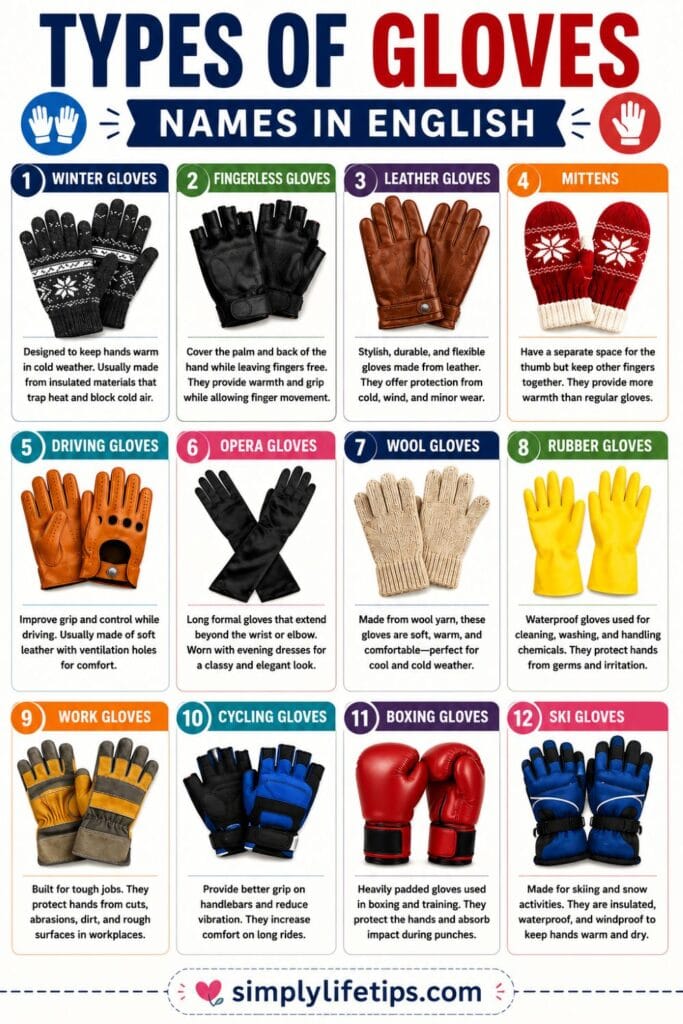
Now that you have learned the different types of gloves, try using these vocabulary words in your daily conversations and writing exercises. Understanding the purpose of each glove type will improve your English vocabulary while providing practical knowledge about clothing, sports equipment, and safety gear. This visual guide serves as a quick reference for students, teachers, and language learners.
Conclusion
Understanding the different types of gloves in English is useful for students, language learners, travelers, workers, and sports enthusiasts. From winter gloves and mittens to work gloves and boxing gloves, each type is designed for a specific purpose. Learning these glove names expands vocabulary, improves communication skills, and provides practical knowledge for everyday life. By studying glove vocabulary and practicing regularly, learners can become more confident and fluent in English.
Related Articles
- Hand Vocabulary for Students | Learn the Parts of the Hand Easily
- 10 Essential Office Stationery Items Every Student Should Know
- Different Types of Watches | A Complete Guide to Watch Styles and Their Uses
FAQs about Types of Gloves
What are winter gloves used for?
Winter gloves are designed to keep hands warm and protected during cold weather.
Are mittens warmer than gloves?
Yes, mittens are generally warmer because the fingers stay together and share body heat.
Why do cyclists wear cycling gloves?
Cycling gloves improve grip, reduce vibration, and increase comfort during rides.
What are rubber gloves used for?
Rubber gloves protect hands from water, chemicals, dirt, and germs.
What are opera gloves worn with?
Opera gloves are typically worn with formal dresses and evening gowns during special occasions.
If this resonated with you, share it with someone who needs it.
PVM

Mathukutty P V is a Blogger, YouTuber, and Content Writer and the founder of Simply Life Tips. After taking voluntary retirement in 2017, he embraced a free lifestyle focused on learning, personal growth, and sharing practical wisdom to help others live with more purpose and positivity.



