

False accusations are rarely random. The moment you calmly realise “that’s not me” marks the beginning of clarity. It fosters understanding rather than confusion. There is a quiet instant when someone says something untrue about you. Instead of reacting emotionally, you know it does not align with your values or behavior. You pause, think, and replay events. That pause reveals your integrity. Reflective people naturally look inward before pointing outward.
What Is a False Accusation?
A false accusation is a claim made against someone. It is not based on truth, facts, or actual behavior. It happens when a person is blamed for something they did not do or for intentions they do not hold. False accusations can be spoken openly. They can also be implied subtly. In both cases, they place responsibility where it does not belong.
Ignore Baseless Comments And Prove Your Personality
For example, accusing a dedicated employee of being lazy despite consistent performance is a false accusation. Blaming a partner for emotional distance is another. The real issue is unexpressed stress in the accuser. False accusations are often less about reality and more about misunderstanding. They can stem from projection, fear, or the need to shift discomfort away from oneself. This is why they can feel confusing and emotionally heavy to the person receiving them.
A false accusation is a claim or allegation of wrongdoing that is untrue or unsubstantiated.False accusations are also known as groundless accusations, unfounded accusations, false allegations, false claims or unsubstantiated allegations. Wikipedia
Why Reflective People Pause Instead of Reacting?
Reflective individuals question themselves because fairness matters to them, and harmony is part of how they live. When an accusation arises, self-examination feels automatic rather than forced. For example, a colleague accused of being uncooperative mentally review past teamwork, communication, and effort. They do this not out of guilt but out of responsibility. This habit is healthy because it shows emotional maturity. It becomes problematic only when reflection turns into unnecessary self-blame.
When a False Accusation Feels Heavy?
A key signal appears when the accusation does not settle internally. This happens because it has no connection to your lived actions or principles. It simply sits there creating confusion. It’s like being accused of dishonesty when you consistently value transparency. This mismatch creates discomfort because your mind tries to resolve something that has no internal root. This is often the first sign that the issue did not originate with you.
Never Speak About Things Unclear To You
False Accusations as Emotional Transfer
Many false accusations act as a transfer of discomfort. Responsibility is moved away from where it belongs and placed onto someone safer, often the more conscientious person. For example, a manager who mishandled a decision subtly blame a team member for “lack of initiative.” This serves to relieve the manager’s own discomfort. Once the accusation exists, they feel lighter while you feel burdened. This explains why these moments feel unsettling rather than instructive.
Listening to the Body Before the Mind
Your body often recognises misaligned blame before your thoughts do. It does this through tension, heaviness, or a quiet inner resistance. This sensation is not denial but self-trust returning. You feel uneasy accepting blame that is not yours. Your mind still searches for reasons to accommodate it. Learning to respect this signal prevents long-term emotional exhaustion.
How Awareness Protects Your Peace?
Awareness shifts the focus from proving innocence to recognizing what is being handed to you. Choose not to carry it. For instance, instead of over-explaining to clear your name, you calmly state facts or disengage. This preserves dignity without escalating conflict. This grounded response often diffuses the situation more effectively than defense. It removes fuel from misplaced blame.
How To Overcome The Hurt From Negative Opinions
What Are the Effects of False Accusations?
False accusations can deeply affect a person’s emotional and mental well-being. They create confusion and self-doubt. This is especially true for individuals who are naturally reflective and responsible. Over time, repeated false blame can lead to anxiety. It reduces self-confidence. It also causes emotional exhaustion as the person keeps trying to fix something that was never theirs to resolve. They can also damage relationships and reputation, erode trust, and create a constant sense of being on guard. In some cases, false accusations shift focus away from real issues. This allows unresolved problems to persist. Meanwhile, the accused carries the emotional weight. This can quietly impact personal growth, peace of mind, and overall emotional health.
How Do You Handle False Accusations?
How do you handle false accusations when they come unexpectedly and challenge your sense of self? Do you pause to think? Or do you feel pressured to explain yourself even when you know the blame does not belong to you? These moments quietly test your self-trust, boundaries, and clarity. They invite you to notice whether you respond from calm awareness or from the need to be understood.
Handle false accusations by pausing first. Don’t react emotionally. Check whether the claim truly aligns with your values and consistent actions. Clarity comes from self-trust rather than defence. Focus on facts instead of emotional tone. Respond briefly and calmly without over-explaining. Avoid trying to convince someone who is not seeking truth. If the accusation feels misplaced, recognise it as emotional transfer rather than personal failure. Set clear boundaries. Disengage when necessary. Most importantly, trust your inner alignment. When you know who you are through your behaviour, you do not need to carry blame that was never yours.
False Accusation – Practical Tips to Respond
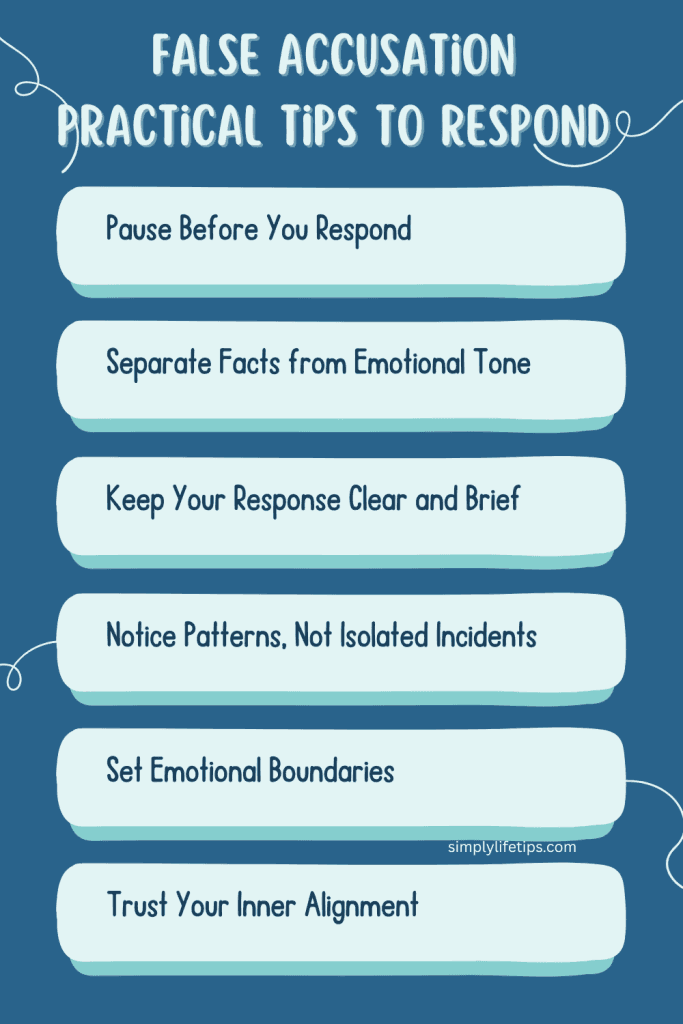
Pause Before You Respond
Give yourself a moment instead of reacting instantly. A pause allows emotions to settle. It helps you assess whether the accusation truly reflects your actions. For example, taking a breath before replying to a sudden workplace blame prevents defensive reactions. This approach can help avoid escalating the situation.
Separate Facts from Emotional Tone
Focus only on what can be proven or clearly stated. Avoid engaging with the emotional charge behind the words. Respond with specific examples of your actions. Do this rather than reacting to anger or frustration expressed by the accuser.
Keep Your Response Clear and Brief
State your position calmly without over-explaining. Excessive justification often makes you carry guilt that is not yours. For instance, saying “I completed the task as agreed on Monday” is stronger than a long defensive explanation.
Notice Patterns, Not Isolated Incidents
Decide if this is a repeated behaviour. Consider whether it is a one-time misunderstanding. Frequent false accusations often signal unresolved issues or discomfort in the other person. These are usually not a problem with you.
Set Emotional Boundaries
Know when to disengage if the conversation turns into blame-shifting or emotional dumping. Calmly end the discussion when it becomes repetitive or unproductive. This approach protects your mental peace.
Trust Your Inner Alignment
Rely on your consistent values and actions as your anchor. When your behaviour aligns with who you are, you avoid accepting responsibility. It’s crucial to not accept responsibility for something that was never yours.
Never Judge A Person Without Knowing The Truth
Conclusion
False accusations lose power when you stop trying to resolve what was never about truth. Instead, recognize the transfer at play. Clarity grows from awareness. This awareness lets you keep what is yours and leave behind what is not, quietly, confidently, and without drama.
1. Why do false accusations feel so disturbing even when untrue?
They disturb because they create misplaced responsibility. This forces you to carry emotional weight that does not belong to you. It conflicts with your internal sense of fairness.
2. Does self-reflection mean I should always question myself?
Healthy reflection checks alignment with values. Still, repeated self-doubt in the face of misaligned blame is a sign to trust yourself. It suggests you should trust yourself rather than dig deeper.
3. Are false accusations intentional or unconscious?
Often they are unconscious attempts to relieve discomfort, guilt, or insecurity rather than deliberate attacks.
4. Should I always defend myself against false accusations?
Not always. Calm clarity or disengagement can be more effective than explanation. This is true when truth is not the goal of the accusation.
5. How can I strengthen self-trust in such situations?
By listening to bodily signals, observing patterns, and reminding yourself of consistent actions rather than isolated claims.
Thank you for taking the time to explore this post. I sincerely hope you found the insights valuable and actionable. If this content resonated with you, please consider sharing it. Your support enables me to share knowledge and inspiration with others in our community.
PVM

Mathukutty P V is a Blogger, YouTuber, and Content Writer and the founder of Simply Life Tips. After taking voluntary retirement in 2017, he embraced a free lifestyle focused on learning, personal growth, and sharing practical wisdom to help others live with more purpose and positivity.