Cutting off parents has become one of the most painful and least discussed shifts in modern family life, and this blog explores why adult children are cutting off their parents and the quiet cost of a culture that values self-care over repair. Across homes and generations, silence is replacing conversation, distance is replacing dialogue, and many adult children are choosing emotional separation as a way to cope with unresolved pain. While some estrangements are necessary for safety and mental health, many are born from unaddressed misunderstandings, unmet emotional needs, and a cultural narrative that frames separation as strength rather than loss. This blog looks beyond blame to understand the deeper reasons behind this growing pattern.
Why is Cutting Off Parents Increasing Today?
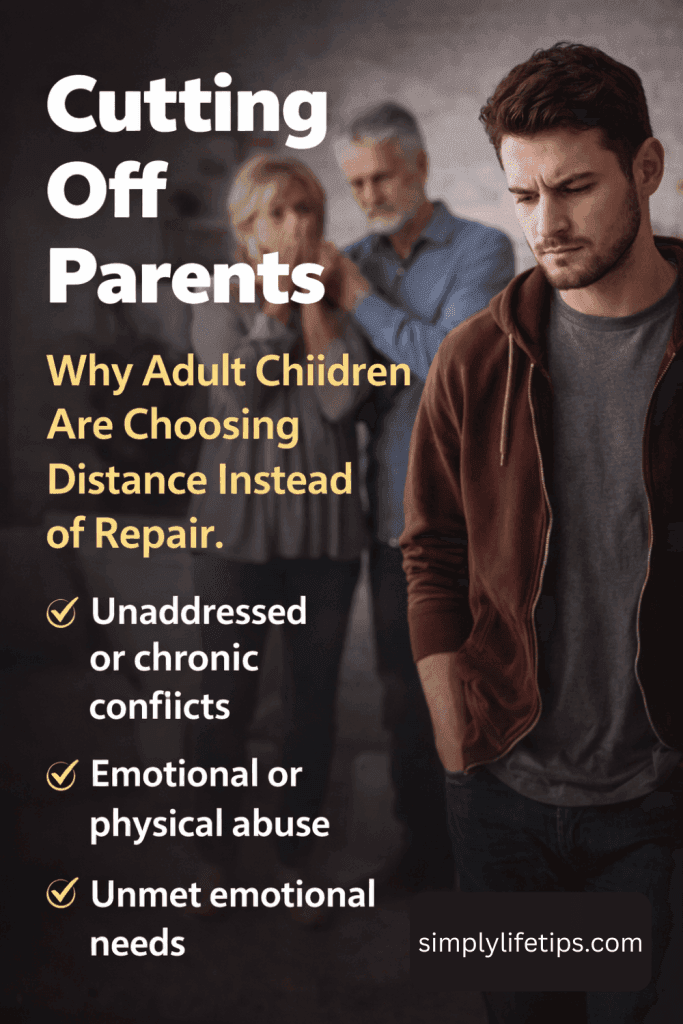
Cutting off parents is increasing because modern culture often prioritises individual emotional comfort over relational endurance, making distance feel like a valid solution to long-standing family tension. Adult children grow up hearing that peace means removing anything that causes discomfort, including relationships that require effort, patience, or emotional vulnerability. When conflict arises with parents, especially around expectations, boundaries, or past hurts, walking away can appear easier than engaging in slow, uncomfortable repair. Over time, avoidance becomes normalised, and estrangement is reframed as empowerment rather than a last resort.
The Influence of Self-Care Culture on Family Bonds
Self-care culture has reshaped how adult children interpret emotional discomfort, often equating any relational strain with harm. Cutting off parents is sometimes encouraged under the belief that protecting mental health requires eliminating difficult relationships. While self-care is essential, it becomes damaging when it excludes accountability, dialogue, and mutual growth. Families are complex systems, and healing within them often requires patience, empathy, and repair, not just boundaries. When self-care lacks balance, it can quietly erode intergenerational bonds.
Cultivating Empathy In Children: The Path To A Kinder World
Unresolved Childhood Pain and Emotional Memory

Many adult children are cutting off their parents because unresolved childhood pain resurfaces in adulthood with new clarity. Emotional neglect, harsh criticism, favouritism, or lack of validation can leave lasting imprints that only become fully understood later in life. Without guidance on how to process these emotions constructively, cutting off parents may feel like the only way to stop the pain. Distance becomes a coping mechanism when communication feels unsafe or futile.
Communication Breakdown Between Generations
Cutting off parents often follows years of failed communication rather than sudden decisions. Parents and adult children may speak different emotional languages shaped by generational values, cultural expectations, and life experiences. When parents dismiss feelings as overreactions or adult children perceive advice as control, frustration grows. Without skills for active listening and emotional repair, silence slowly replaces conversation, and distance feels inevitable.
Communication Barriers in Parenting: How to Break Them and Build Stronger Bonds
Social Validation of Estrangement
Adult children cutting off parents often find validation online, where estrangement stories are shared without nuance. While these spaces provide support for genuine trauma, they can also simplify complex family dynamics into narratives of villains and victims. This validation can unintentionally discourage reconciliation, and repairing seems unnecessary or even harmful. When cutting off parents is applauded without context, the long-term emotional cost is rarely discussed.
The Quiet Emotional Cost of Cutting Off Parents
Cutting off parents carries a quiet emotional cost that often appears years later. While initial relief may follow distance, unresolved grief, guilt, and identity confusion can surface over time. Adult children may struggle during life milestones, parenting moments, or personal crises when parental presence is deeply missed. Parents, too, carry silent grief, often without closure or understanding. Estrangement rarely ends pain; it usually redistributes it.
When Distance Is Necessary Versus Avoidant?
It is important to acknowledge that cutting off parents is sometimes necessary, especially in cases of abuse, addiction, or ongoing harm. This blog does not minimise those realities. However, many estrangements occur not because repair is impossible, but because it feels emotionally demanding. Distinguishing between protective distance and avoidant withdrawal helps families make decisions rooted in healing rather than fear.
Choosing Repair Without Losing Self-Respect
Repair does not mean returning to unhealthy patterns or ignoring boundaries. Adult children can seek healing through honest conversations, mediated dialogue, or gradual reconnection that respects emotional safety. Cutting off parents should be a last option, not the first response to discomfort. Repair allows both generations to grow, learn, and redefine their relationship with maturity and compassion.
Caring For Ageing Parents: A Story Of Handprints On The Wall
Conclusion
Cutting off parents reflects a deeper cultural struggle between self-protection and relational repair. While self-care is vital, families heal not through silence but through courageous conversation and emotional accountability. When adult children and parents choose understanding over avoidance, they preserve not just relationships, but shared history, identity, and belonging. Healing may be slow, but repair offers something distance never can—closure with connection.
Ageing Parents And Your Role As A Supportive Caregiver
FAQs – Cutting off parents
Why are adult children cutting off their parents more today?
Adult children are cutting off parents more often due to cultural emphasis on self-care, emotional autonomy, and intolerance for discomfort. Many lack tools for conflict resolution and choose distance as a coping strategy. Social validation of estrangement also reinforces this choice.
Is cutting off parents always unhealthy?
Cutting off parents is sometimes necessary in cases of abuse or ongoing harm. However, when done to avoid unresolved emotions rather than protect safety, it can lead to long-term emotional consequences. Context and intention matter deeply.
Do parents usually know why they are cut off?
In many cases, parents are left confused and unaware of the specific reasons. Communication breakdown often precedes estrangement, leaving both sides without closure. This lack of clarity intensifies grief on both ends.
Can relationships heal after estrangement?
Yes, healing is possible when both sides are willing to reflect, listen, and seek support. Repair may require time, boundaries, or professional guidance, but reconciliation can happen gradually and respectfully.
How can families prevent cutting off parents?
Families can prevent estrangement by fostering open communication, validating emotions, and addressing conflicts early. Teaching emotional repair skills and normalising discomfort in relationships helps preserve long-term bonds.
Thank you for taking the time to explore this post. I sincerely hope you found the insights valuable and actionable. If this content resonated with you, please consider sharing it. Your support enables me to share knowledge and inspiration with others in our community.
PVM

Mathukutty P V is a Blogger, YouTuber, and Content Writer and the founder of Simply Life Tips. After taking voluntary retirement in 2017, he embraced a free lifestyle focused on learning, personal growth, and sharing practical wisdom to help others live with more purpose and positivity.