
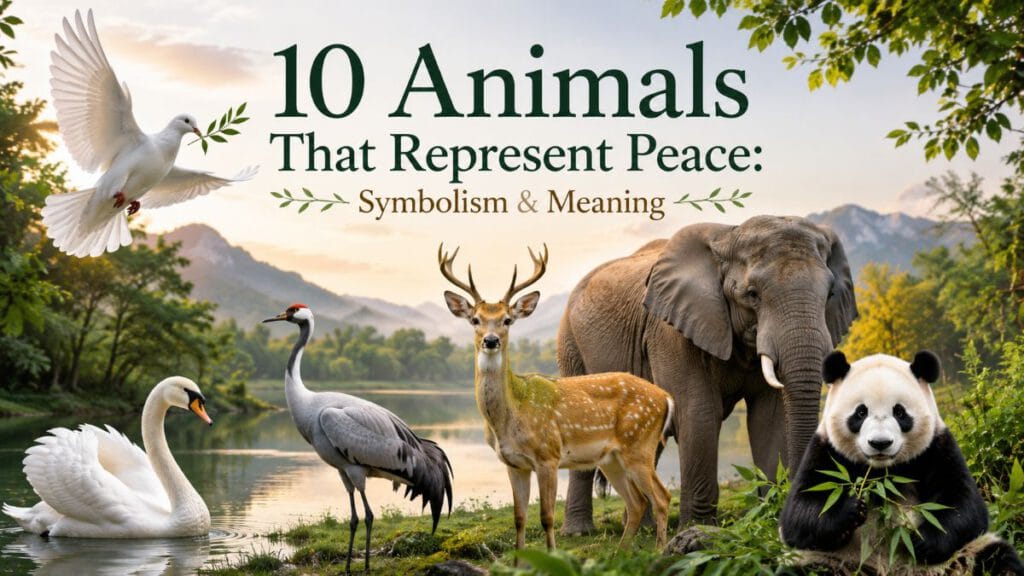
Animals that represent peace have fascinated people across cultures for generations. The dove is perhaps the best-known example, but it is far from the only animal associated with peace, harmony, kindness, and peaceful living.
A swan gliding across a quiet lake, an elephant moving calmly through its herd, or a crane standing gracefully in a wetland can all evoke a sense of calm. Over time, people have connected these and other animals with ideas such as friendship, wisdom, compassion, loyalty, and hope.
Animal symbolism can vary from one culture to another. A crane, for example, has special meaning in Japan, while the elephant carries important cultural and spiritual associations in India. These traditions show how people have used animals to express values that are difficult to put into words.
In this article, you’ll discover 10 animals that represent peace and explore the symbolism and cultural meanings associated with each one. You’ll also find a simple lesson from each animal that we can apply to everyday life.
10 Animals That Represent Peace at a Glance
Here are 10 animals commonly associated with peace, harmony, and other positive qualities:
- 🕊️ Dove – Peace and hope
- 🪽 Crane – Longevity and good fortune
- 🦌 Deer – Gentleness and compassion
- 🐬 Dolphin – Joy and cooperation
- 🐘 Elephant – Wisdom and peaceful strength
- 🐼 Panda – Friendship and balance
- 🦋 Butterfly – Transformation and hope
- 🦉 Owl – Wisdom and patience
- 🐑 Sheep – Innocence and calmness
- 🦢 Swan – Love and harmony
Why Do Animals Represent Peace?
Animals have long been associated with peaceful qualities because of their behavior, appearance, and place in different cultures. Some animals are seen as gentle and calm, while others symbolize wisdom, cooperation, harmony, or strength without aggression.
For example, the dove is widely associated with peace and hope, while the deer is often linked with gentleness and compassion. Elephants can represent wisdom, strength, and peaceful leadership, while cranes are associated with longevity and harmony in some Asian traditions.
The meaning of an animal can vary between cultures and traditions. These symbols often reflect qualities people value, such as patience, kindness, cooperation, and harmony.
Animals That Represent Peace in Different Cultures
The meaning of an animal can change depending on the culture and tradition. A creature that represents wisdom in one place may be connected with longevity, friendship, or spiritual peace somewhere else.
Here are some examples of how different traditions connect animals with peaceful values:
| Culture | Animal | Symbolism |
|---|---|---|
| Christianity | Dove | Peace, hope, and new beginnings |
| Japan | Crane | Peace, longevity, and good fortune |
| China | Panda | Friendship, harmony, and conservation |
| India | Elephant | Wisdom, peace, and strength |
| Buddhism | Deer | Compassion, serenity, and spiritual awakening |
| Ancient Greece | Owl | Wisdom, patience, and thoughtful decisions |
These examples show why animal symbolism cannot always be reduced to one fixed meaning. The same animal can carry several messages, shaped by history, religion, folklore, and local traditions.
What Can We Learn From Animals That Represent Peace?
The symbolism attached to peaceful animals can also offer practical lessons for everyday life. We do not have to copy an animal’s behavior literally to appreciate what it represents.
The deer, for example, can remind us to approach others with gentleness. The owl suggests taking time to observe before making a decision, while the elephant represents the value of strength combined with patience. The dolphin’s strong social bonds can also serve as a reminder of the importance of cooperation.
These simple ideas can be useful at home, at school, at work, and in our relationships. When disagreements arise, listening carefully, thinking before reacting, and treating people with respect can often prevent a small problem from becoming a larger conflict.
In that sense, animal symbolism is more than a collection of interesting traditions. It can encourage us to think about the qualities we want to bring into our own lives.
1. Dove – The Universal Symbol of Peace
If you ask people to name an animal associated with peace, the dove is probably the first one that comes to mind. A white dove carrying an olive branch has become a familiar image of peace, reconciliation, and hope.
The association has deep cultural and religious roots. In Christian tradition, the dove can represent hope and new beginnings. Over time, the image of the dove has also appeared in peace movements and campaigns that promote unity and reconciliation.
Part of the dove’s appeal comes from its gentle appearance and graceful flight. Unlike some symbols that need a long explanation, a white dove can communicate the idea of peace almost instantly.
Fun Fact
Doves are attentive parents. Both male and female doves take part in caring for their young.
The dove remains one of the clearest examples of how an animal can become a powerful symbol of an idea shared across cultures.
2. Crane – A Symbol of Longevity and Harmony
The crane has a special place in several Asian traditions, where it is associated with longevity, good fortune, wisdom, and harmony. Its tall posture and graceful movements have helped give the bird an image of quiet dignity.
In Japan, the crane is especially meaningful. It is often connected with long life and good fortune, while traditional artwork frequently uses cranes to express beauty and balance. Similar associations can be found in Chinese traditions.
The crane’s symbolism is also connected with the way it moves through its surroundings. Watching a crane standing quietly in a wetland or moving slowly through shallow water can easily evoke a sense of calm.
Fun Fact
Cranes are known for their elaborate courtship dances. They may stretch their wings, bow, jump, and toss objects into the air during these displays.
The crane is a good reminder that peace does not always have to mean complete stillness. Sometimes it can be expressed through balance, grace, and a sense of connection with the world around us.
Read more about cranes in the Encyclopaedia Britannica.
3. Deer – A Symbol of Gentleness and Serenity
The deer is often associated with gentleness, compassion, and a quiet connection with nature. Its graceful movements and cautious behavior have made it a natural symbol of peacefulness in many traditions.
Deer also have an important place in Buddhist symbolism. They are often depicted near sacred teachings, where they are connected with compassion, serenity, and spiritual awakening.
There is something naturally calming about seeing deer moving quietly through a forest or meadow. Their presence can remind us that strength does not always need to be loud or forceful. Sometimes it can be seen in being alert, patient, and gentle.
Fun Fact
Deer rely heavily on their sense of smell and hearing to detect possible danger. These sharp senses help them stay aware of their surroundings.
The deer therefore represents a quieter side of peace—one connected with gentleness, awareness, and respect for the natural world.
4. Dolphin – A Symbol of Joy and Friendly Harmony
Dolphins are often associated with friendship, cooperation, intelligence, and joyful interaction. Their playful behavior and strong social bonds make them an interesting symbol of peaceful relationships.
Dolphins live in social groups and communicate with one another using a variety of sounds, including whistles and clicks. Their ability to cooperate within their groups has contributed to the positive symbolism often associated with them.
In stories and cultural traditions, dolphins have also been viewed as helpful or protective creatures of the sea. Their energetic movements and social nature give them a very different expression of peace from the quiet stillness associated with animals such as the deer or swan.
Fun Fact
Dolphins communicate using whistles and clicks. Some dolphins even develop distinctive signature whistles that help identify individuals.
The dolphin reminds us that peaceful relationships can include communication, cooperation, play, and a willingness to work together.
5. Elephant – Strength Combined With Peaceful Wisdom
The elephant is a powerful example of how strength and gentleness can exist together. Despite its enormous size, the animal is often associated with wisdom, patience, family bonds, and peaceful leadership.
Elephants live in close social groups and depend on cooperation within their herds. In several Asian cultural and religious traditions, they are also connected with wisdom, stability, and spiritual strength.
This combination makes the elephant especially interesting as a symbol of peace. It suggests that being strong does not mean being aggressive. Real strength can also involve patience, self-control, and caring for others.
Fun Fact
Elephants can remember important places such as water sources and familiar routes for many years. Their impressive memory helps them navigate their environment.
The elephant offers a simple lesson: strength is most valuable when it is guided by wisdom and used with care.
6. Panda – A Symbol of Gentle Peace and Friendship
The giant panda has become closely associated with friendship, conservation, and peaceful relations. Its calm appearance and distinctive black-and-white coat have made it one of the world’s most recognizable animals.
Pandas also have an interesting place in international relations. China has used pandas as part of what is often called “panda diplomacy,” with pandas being sent to other countries as a gesture of friendship and goodwill.
Beyond diplomacy, the panda can represent a quieter idea of peace: finding balance and protecting the natural world. Its dependence on bamboo and its role in conservation remind us that peaceful coexistence also includes caring for the environment.
Fun Fact
Giant pandas spend much of their day eating bamboo. They may spend around 12 hours a day feeding because bamboo provides relatively little energy.
The panda’s symbolism combines friendship with a reminder that people and nature are connected.
7. Butterfly – A Symbol of Peaceful Transformation
The butterfly is often associated with transformation, renewal, hope, and new beginnings. Its life cycle gives this symbolism a natural connection with change: what begins as a caterpillar eventually becomes a completely different form.
That transformation has made the butterfly a popular symbol of personal growth and positive change. Its delicate wings and quiet movement also give it a gentle quality that fits naturally with ideas of calm and serenity.
The butterfly can therefore represent a different kind of peace—not simply the absence of conflict, but the sense of moving forward after a period of change.
Fun Fact
Butterflies taste with their feet. Special sensory receptors on their legs help them identify whether a plant is suitable for feeding or laying eggs.
If you want to explore this remarkable transformation in more detail, read our guide to the life cycle of a butterfly.
Learn more about butterflies and their fascinating life cycles from National Geographic Kids.
8. Owl – A Symbol of Wisdom and Patience
The owl is strongly associated with wisdom and careful observation. Rather than acting immediately, an owl watches its surroundings closely, which makes it a fitting symbol for patience and thoughtful decision-making.
In ancient Greek culture, the owl was associated with Athena, the goddess of wisdom. This connection helped establish the owl as a familiar symbol of knowledge and sound judgment.
There is also a useful lesson here for peaceful relationships. Taking a moment to listen and understand a situation before reacting can prevent unnecessary arguments. Sometimes a thoughtful response is more valuable than a quick one.
Fun Fact
Owls have unusually flexible necks and can rotate their heads up to about 270 degrees. This allows them to look in different directions without moving their bodies.
The owl reminds us that understanding a situation clearly is often the first step toward making a better decision.
9. Sheep – A Symbol of Innocence and Calmness
Sheep are often associated with innocence, gentleness, humility, and quiet living. Their calm appearance and tendency to stay together in groups have helped give them symbolic meanings connected with trust and community.
In religious and cultural traditions, sheep can represent qualities such as humility and compassion. Their herd behavior also provides an interesting reminder of how cooperation can help a community function.
The symbolism of the sheep is much simpler than that of some of the other animals on this list. Rather than representing wisdom or strength, it points toward a quieter way of living—being caring, patient, and considerate of others.
Fun Fact
Sheep have surprisingly good memories. They can recognize and remember individual faces, including those of other sheep and people.
The sheep reminds us that peaceful living can sometimes be as simple as treating others with patience and kindness.
10. Swan – A Symbol of Grace and Harmony
The swan has long been admired for its elegance and graceful movement across lakes and rivers. Because of this striking appearance, it is often associated with love, loyalty, beauty, and harmony.
In many cultural traditions, the swan represents a peaceful and graceful way of living. Its calm movement across the water creates a strong visual image of serenity, while its long-standing association with pairs of swans has contributed to its connection with loyalty and lasting relationships.
The swan offers a different perspective on peace from the dove. While the dove is strongly associated with peace and reconciliation, the swan is more closely connected with the beauty of harmony and enduring relationships.
Fun Fact
Many swan species form long-term pair bonds, and partners may remain together for many years.
The swan reminds us that peaceful relationships are built not only on affection, but also on loyalty, patience, and mutual care.
If you enjoy learning about birds, explore our guide to bird names in English to discover more fascinating bird species.
Summary Table
| Animal | Symbolism | Key Lesson |
|---|---|---|
| Dove | Peace and hope | Promote unity and reconciliation |
| Swan | Love and harmony | Value loyalty and mutual care |
| Crane | Longevity and harmony | Live with balance and grace |
| Elephant | Wisdom and peaceful strength | Use strength with patience |
| Panda | Friendship and balance | Protect nature and build goodwill |
| Deer | Gentleness and compassion | Treat others with care |
| Dolphin | Friendship and cooperation | Communicate and work together |
| Butterfly | Transformation and hope | Embrace positive change |
| Owl | Wisdom and patience | Think before reacting |
| Sheep | Innocence and calmness | Be humble and considerate |
Conclusion
Animals that represent peace show how people have used nature to express ideas such as hope, wisdom, friendship, loyalty, and compassion. The dove may be the clearest symbol of peace, but the other animals on this list offer their own perspectives.
The crane points toward longevity and harmony. The elephant combines strength with patience, while the deer represents gentleness. The dolphin highlights cooperation, the butterfly reflects change, and the owl encourages thoughtful decisions. The panda, sheep, and swan each add their own ideas about friendship, calmness, loyalty, and balance.
Animal symbolism also reminds us that meanings can vary between cultures. What matters most is the positive quality behind the symbol and the way it encourages us to think about our relationships with other people and the natural world.
You don’t need to see a dove or another peaceful animal to put these ideas into practice. Listening before reacting, treating people with respect, cooperating with others, and caring for nature are small choices that can make everyday life more peaceful.
Frequently Asked Questions (FAQs)
What are the most common animals that represent peace?
The dove is the best-known animal associated with peace. Other animals commonly connected with peaceful ideas include the swan, crane, elephant, panda, deer, dolphin, butterfly, owl, and sheep.
Why do animals represent peace in different cultures?
Animals can take on symbolic meanings through religion, mythology, folklore, art, and cultural traditions. Their behavior or appearance may lead people to associate them with qualities such as wisdom, friendship, hope, harmony, or compassion.
Which animal is the best-known symbol of peace?
The dove is widely recognized as the most familiar animal symbol of peace. A white dove carrying an olive branch is especially associated with peace, hope, and reconciliation.
Which bird symbolizes peace and harmony?
The dove is widely recognized as one of the best-known animal symbols of peace. A white dove carrying an olive branch is especially associated with peace, hope, and reconciliation.
What can we learn from animals that represent peace?
These animals can remind us of useful qualities such as patience, cooperation, compassion, thoughtful decision-making, and respect for others. Their symbolism can encourage us to build more positive relationships and care for the natural world.

Mathukutty P V is a Blogger, YouTuber, and Content Writer and the founder of Simply Life Tips. After taking voluntary retirement in 2017, he embraced a free lifestyle focused on learning, personal growth, and sharing practical wisdom to help others live with more purpose and positivity.



