

Understanding the types of stress can help you identify what is affecting you and decide what to do about it. Physical, psychological, emotional, occupational, financial, social, and environmental stress are seven useful categories for understanding everyday pressures. They are practical descriptions rather than a universally accepted medical classification.
Stress is a normal part of life, but constant pressure can make even simple tasks feel difficult. Poor sleep, financial worries, workplace demands, relationship problems, and everyday responsibilities can gradually affect how you feel and function.
Sometimes, the source of stress is obvious. You may feel anxious before an important meeting or worry about an unexpected bill. At other times, several small pressures build up until you feel exhausted, irritable, or unable to concentrate.
In this article, you will learn how these seven types of stress may appear in daily life, examples of common triggers, and practical steps that may help you cope.
Stress can affect different parts of your life, from physical health and emotions to work, finances, and relationships. The following infographic summarizes seven common types of stress and their possible warning signs. Use it as a quick guide to identify everyday pressures and explore practical ways to manage them.
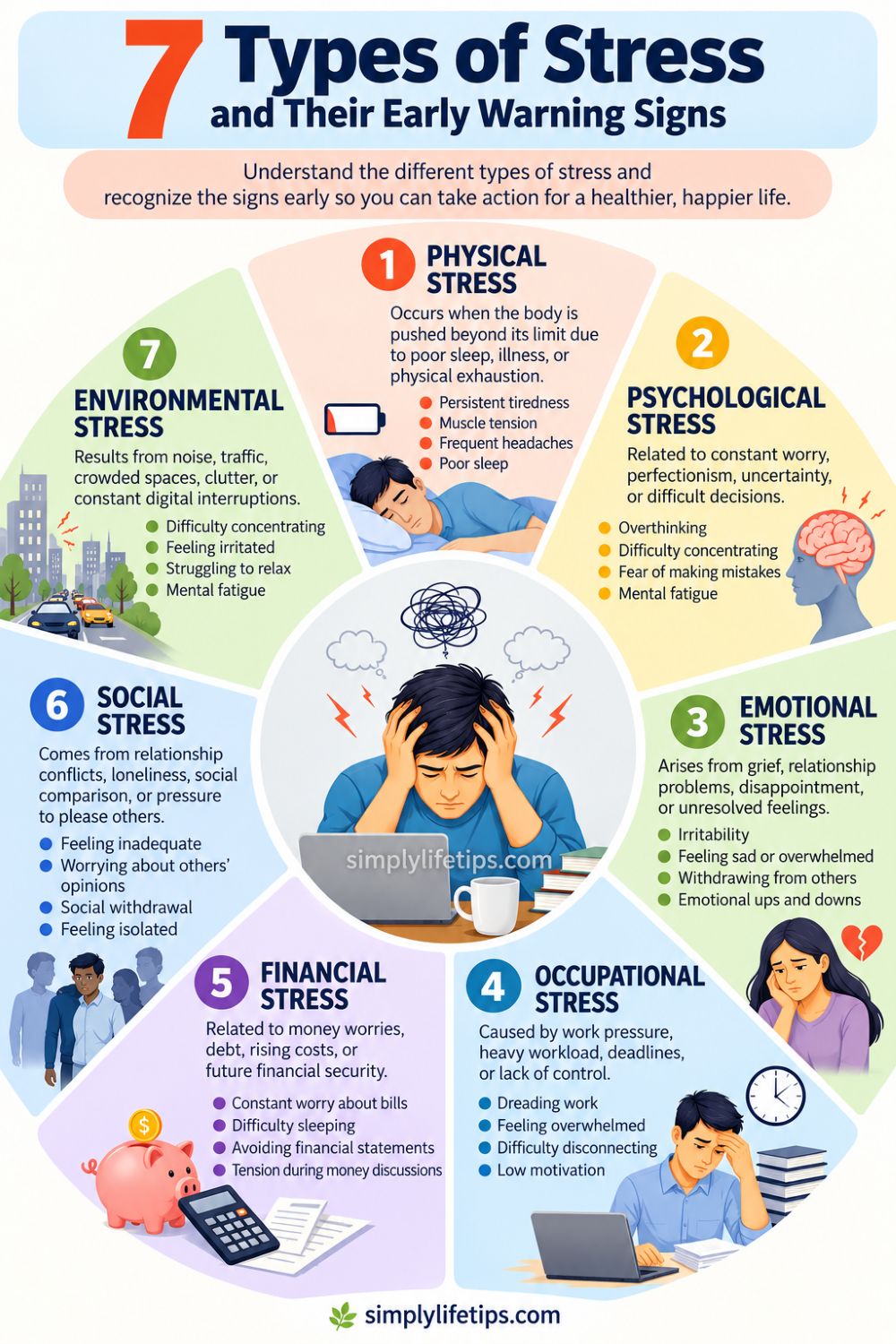
These types of stress can overlap, and the warning signs may vary from person to person. Recognizing what is causing pressure is a useful first step toward managing it. Read on to learn more about each type of stress, with everyday examples and practical coping strategies.
What Are the Types of Stress?
Stress is the body’s physical and mental response to a challenge or demand. It may help you respond to a short-term challenge, but persistent stress without adequate recovery can affect your well-being. The Cleveland Clinic explains the common symptoms, causes, and management of stress in its guide to stress.
The seven types discussed here focus on the sources of everyday pressure. They can overlap, so you may experience more than one at a time.
1. Physical Stress
Physical stress occurs when your body faces demands that make rest and recovery more difficult. Poor sleep, illness, physical exhaustion, long working hours, and demanding routines may contribute to physical strain.
For example, a person who works late, sleeps poorly, and wakes up early to care for family members may feel tired throughout the day. Even routine tasks can become harder when the body does not get enough recovery time.
Common signs of physical stress
- Persistent tiredness or low energy.
- Muscle tension, headaches, or body aches.
- Difficulty concentrating when exhausted.
- Changes in sleep patterns.
- Feeling physically drained by ordinary activities.
These symptoms can have other causes, so do not automatically assume that stress is responsible.
How to manage physical stress
Prioritize adequate sleep, take regular breaks, eat balanced meals, and include physical activity that suits your abilities. If your schedule is demanding, look for small opportunities to rest instead of waiting until you feel completely exhausted.
For example, if you spend most of the day sitting at a computer, take short movement breaks and stretch when comfortable. If household responsibilities leave you exhausted, consider sharing tasks with other family members.
You can also read our guide to exercise and brain health for ideas on incorporating physical activity into your routine.
2. Psychological Stress
Psychological stress can develop when you feel overwhelmed by worries, uncertainty, difficult decisions, or expectations. Perfectionism and repeatedly thinking about possible problems may make everyday situations feel more demanding.
For example, an employee who worries constantly about making mistakes may struggle to relax even after completing a task. A student may spend so much time worrying about an examination that concentrating on revision becomes difficult.
Common signs of psychological stress
- Overthinking ordinary decisions.
- Worrying excessively about the future.
- Difficulty concentrating.
- Fear of making mistakes.
- Feeling mentally exhausted.
How to manage psychological stress
Separate problems you can influence from those outside your control. Break large tasks into smaller steps and focus on the next practical action rather than trying to solve everything at once.
For example, instead of worrying about an entire week’s workload, write down the three most important tasks for tomorrow. Complete them one at a time and review what can reasonably wait.
It may also help to challenge unrealistic expectations. You do not have to do everything perfectly to make meaningful progress.
Writing down your worries can also help you organize your thoughts and manage mental stress.
3. Emotional Stress
Emotional stress may arise from grief, disappointment, relationship difficulties, loneliness, unresolved conflict, or feelings that are difficult to express.
A person experiencing emotional stress may continue working and meeting responsibilities while privately feeling hurt, worried, or overwhelmed. Difficult emotions can affect concentration, sleep, patience, and relationships.
For example, someone dealing with a family disagreement may repeatedly replay conversations in their mind. Even when the disagreement is not happening, the unresolved feelings may continue to affect their day.
Common signs of emotional stress
- Feeling unusually irritable or overwhelmed.
- Becoming tearful more easily than usual.
- Withdrawing from supportive people.
- Finding it difficult to explain your feelings.
- Reacting strongly to everyday frustrations.
How to manage emotional stress
Give yourself time to recognize what you are feeling. Talking with a trusted person, writing down your thoughts, or engaging in a calming activity may help you process difficult experiences.
You do not have to pretend everything is fine when it is not. If emotional difficulties persist or interfere with daily life, consider speaking with a qualified mental health professional.
4. Occupational Stress
Occupational stress is pressure associated with work or other demanding responsibilities. Heavy workloads, unrealistic deadlines, workplace conflict, job insecurity, and a lack of control can all contribute.
This type of stress does not affect only people employed in offices. Business owners, students, caregivers, and people managing demanding household responsibilities may also experience pressure from competing demands.
For example, an employee may finish the day’s work but continue checking messages late into the evening. A caregiver may feel that there is never enough time to complete everything that needs attention.
Common signs of occupational stress
- Dreading work or daily responsibilities.
- Difficulty disconnecting after working hours.
- Feeling that the workload never ends.
- Becoming impatient or irritable.
- Struggling to concentrate or complete tasks.
How to manage occupational stress
Identify which tasks are genuinely urgent and which can wait. Set reasonable boundaries around work where possible, take breaks, and discuss unrealistic expectations with the appropriate person.
For example, if you have five tasks due on the same day, clarify priorities instead of silently trying to complete all five at once. Delegate tasks when appropriate and allow yourself time away from work.
If the main source of pressure is a lack of control over your schedule, even a simple daily plan may help you identify where changes are possible.
5. Financial Stress
Financial stress occurs when concerns about money create persistent pressure. Debt, rising living costs, uncertain income, unexpected expenses, and worries about future financial security can all contribute.
Financial concerns can affect anyone, regardless of income. For example, a household may earn a regular salary but struggle with loan repayments, school expenses, medical bills, and increasing everyday costs.
Common signs of financial stress
- Frequently worrying about bills or debt.
- Difficulty sleeping because of money concerns.
- Avoiding financial statements or bills.
- Feeling anxious about ordinary spending.
- Experiencing tension during money-related conversations.
How to manage financial stress
Start by understanding your financial position. List your income, essential expenses, upcoming bills, and outstanding debts. A clear overview may help you identify which issues need immediate attention.
For example, if several bills are due during the same week, plan their payment dates and review whether any nonessential expenses can be reduced. If debt is difficult to manage, consider seeking qualified financial advice.
Do not expect to resolve every financial concern immediately. Focus first on the steps within your control, such as organizing expenses, contacting creditors when necessary, and developing a realistic plan.
Learning practical steps toward financial freedom may also help you build greater confidence in managing money.
6. Social Stress
Social stress can arise from relationship conflict, loneliness, social comparison, pressure to please others, or concern about other people’s opinions.
Social media may contribute when people compare their everyday lives with carefully selected photographs and achievements shared online. These comparisons can create unrealistic expectations about success, relationships, appearance, and happiness.
For example, someone may feel unsuccessful after seeing other people’s travel photographs or career announcements, even though they understand that social media does not show the whole picture.
Common signs of social stress
- Feeling inadequate after comparing yourself with others.
- Agreeing to things you do not want to do.
- Worrying excessively about other people’s opinions.
- Feeling isolated despite being around people.
- Feeling exhausted by social expectations.
How to manage social stress
Build relationships with people who respect your boundaries and make you feel comfortable. Practice saying no to unreasonable demands without feeling that you must explain every decision.
For example, if you are already tired, you can politely decline an invitation and arrange another time to meet. If certain online accounts repeatedly make you feel inadequate, consider muting them or reducing your time on those platforms.
Healthy relationships should allow room for your needs as well as the needs of others.
7. Environmental Stress
Environmental stress comes from conditions in your surroundings. Persistent noise, traffic, crowded spaces, uncomfortable temperatures, clutter, and frequent digital interruptions may make it harder to concentrate or relax.
For example, someone who works from home beside a noisy road may find it difficult to focus. A person who receives constant phone notifications may struggle to complete tasks without interruption.
Common signs of environmental stress
- Difficulty concentrating in noisy surroundings.
- Feeling irritated by repeated interruptions.
- Struggling to relax at home.
- Feeling overwhelmed by clutter.
- Becoming mentally tired in crowded or distracting environments.
How to manage environmental stress
Identify which environmental pressures you can reasonably change. Reduce unnecessary notifications, organize one small area, use suitable hearing protection when appropriate, or find a quieter place for focused work.
For example, if phone notifications interrupt your work, silence nonessential alerts for a set period. If your living space feels cluttered, begin with one desk or shelf rather than trying to organize the entire home in one day.
Small changes can make your surroundings more comfortable without requiring a major lifestyle change.
How to Recognize Which Type of Stress Is Affecting You
Stress does not always fit into one category. Financial worries may disturb sleep, workplace pressure may affect relationships, and emotional difficulties may make everyday responsibilities feel more demanding.
Ask yourself these questions:
- Physical: Am I getting enough sleep and recovery?
- Psychological: Am I spending too much time worrying about things I cannot control?
- Emotional: Is there a difficult feeling or unresolved problem I need to address?
- Occupational: Are my responsibilities realistic?
- Financial: Do I understand my current financial situation and next steps?
- Social: Am I trying too hard to please others or comparing myself with them?
- Environmental: Are noise, clutter, or constant interruptions affecting my peace?
You do not need to answer every question at once. Identifying one major source of pressure can be a useful starting point.
The National Institute of Mental Health’s stress fact sheet also explains how stress can affect people and offers suggestions for coping.
7 Practical Ways to Manage Everyday Stress
Recognizing the types of stress is only the first step. Small, consistent actions may help you manage everyday pressure.
1. Protect Your Sleep
Maintain a regular sleep schedule where possible and create a relaxing bedtime routine. Reduce stimulating activities before bed and give yourself enough time to rest.
Read more about how to improve brain health for additional habits that support overall well-being.
2. Move Your Body Regularly
Walking, stretching, cycling, or another suitable physical activity may help improve mood and reduce tension. Start at a comfortable level rather than turning exercise into another source of pressure.
3. Break Large Problems Into Smaller Tasks
When everything feels urgent, identify the next practical step. Completing one manageable task can help you regain a sense of direction.
4. Set Healthy Boundaries
Decide what you can reasonably take on. Communicate limits respectfully and avoid accepting extra responsibilities simply because you feel guilty saying no.
5. Make Time for Supportive Relationships
Talk with someone you trust, spend time with supportive people, or take part in activities that help you feel connected. You do not have to handle every difficult situation alone.
6. Reduce Unnecessary Distractions
Silence nonessential notifications, take breaks from social media, and create a calmer space for important tasks. Protecting your attention may make daily responsibilities feel more manageable.
7. Seek Professional Support When Needed
If stress persists, becomes overwhelming, or interferes with your daily life, consider speaking with a qualified healthcare or mental health professional. The NHS guide to managing stress offers further guidance on symptoms, coping strategies, and when to seek support.
For more practical ideas, explore these stress management techniques to help build resilience in everyday life.
You can also explore these small daily habits for a stress-free life to make stress management part of your routine.
When Should You Take Stress Seriously?
Stress is a common human experience, but persistent or overwhelming stress deserves attention.
Consider seeking professional support if you experience ongoing sleep difficulties, significant changes in mood, persistent anxiety, difficulty functioning at work or home, or loss of interest in activities you normally enjoy.
Do not assume that every physical symptom is caused by stress. Seek medical advice for persistent or concerning symptoms, especially if they are new or worsening.
If you feel unable to keep yourself safe or experience thoughts of self-harm, seek urgent help through local emergency services or a crisis support service.
Conclusion
The seven types of stress discussed in this article—physical, psychological, emotional, occupational, financial, social, and environmental—offer a practical way to examine the pressures affecting everyday life.
You may recognize yourself in several categories, and that is not unusual. The important step is to identify what is weighing on you and choose one realistic action to address it.
You do not have to fix everything today. Protecting your rest, setting boundaries, simplifying responsibilities, and asking for help when needed can all be part of a healthier approach to daily stress.
Frequently Asked Questions About Types of Stress
1. What are the types of stress?
Seven useful categories of everyday stress are physical, psychological, emotional, occupational, financial, social, and environmental stress. These categories describe common sources of pressure rather than a formal medical classification.
2. How many types of stress are there?
There is no single universally accepted number of types of stress. Some health sources classify stress by duration, such as acute, episodic acute, and chronic stress. This article groups common everyday stressors into seven practical categories.
3. What are the common signs of stress?
Possible signs include fatigue, sleep difficulties, irritability, persistent worry, muscle tension, difficulty concentrating, and changes in behavior. These symptoms may have other causes, so persistent concerns should be discussed with a healthcare professional.
4. Can a person experience several types of stress at once?
Yes. For example, financial worries may affect sleep and relationships, while workplace pressure may contribute to emotional exhaustion. Different stressors can overlap and make one another harder to manage.
5. What is the best way to manage stress?
There is no single method that works for everyone. Adequate sleep, regular physical activity, realistic planning, supportive relationships, and healthy boundaries may help. Persistent or severe stress may require professional support.
Disclaimer: This article is for educational purposes only and is not a substitute for professional medical or mental health advice.

Mathukutty P. V. is the founder of Simply Life Tips. He shares practical advice and useful insights on personal growth, health, well-being, technology, and everyday living. His goal is to help readers build positive habits and make informed decisions. He believes in continuous learning and sharing knowledge to help people live healthier, happier, and more meaningful lives.