
Career confusion is something almost everyone experiences at some point in life. Whether you are a student choosing your first profession, a graduate searching for the right job, or an experienced professional considering a career change, feeling uncertain about your future is completely common. Career confusion can leave you feeling anxious, overwhelmed, and stuck, but it doesn’t have to define your future. With the right mindset, self-awareness, and planning, you can gain clarity and confidently move toward a fulfilling career.
Choosing a career is one of the most important decisions in life, but it doesn’t have to be a one-time decision. Many successful people changed careers several times before finding work they truly enjoyed. This guide explains why career confusion happens, how to recognize it, and practical ways to overcome it.
What Is Career Confusion?
Career confusion is a state of uncertainty where you struggle to decide which career path to pursue or whether your current job aligns with your goals, interests, values, and abilities.
It can happen because of:
- Too many career choices
- Fear of making the wrong decision
- Pressure from family or society
- Lack of self-awareness
- Changing interests
- Rapid technological changes
- Job market uncertainty
Career confusion is not a sign of failure. Instead, it often indicates that you’re carefully considering your future rather than making impulsive decisions.
Why Is Career Confusion So Common Today?
Many people struggle to choose a career because they are surrounded by endless possibilities. Exploring different professions is an important part of discovering which path aligns with your interests, strengths, and long-term goals.
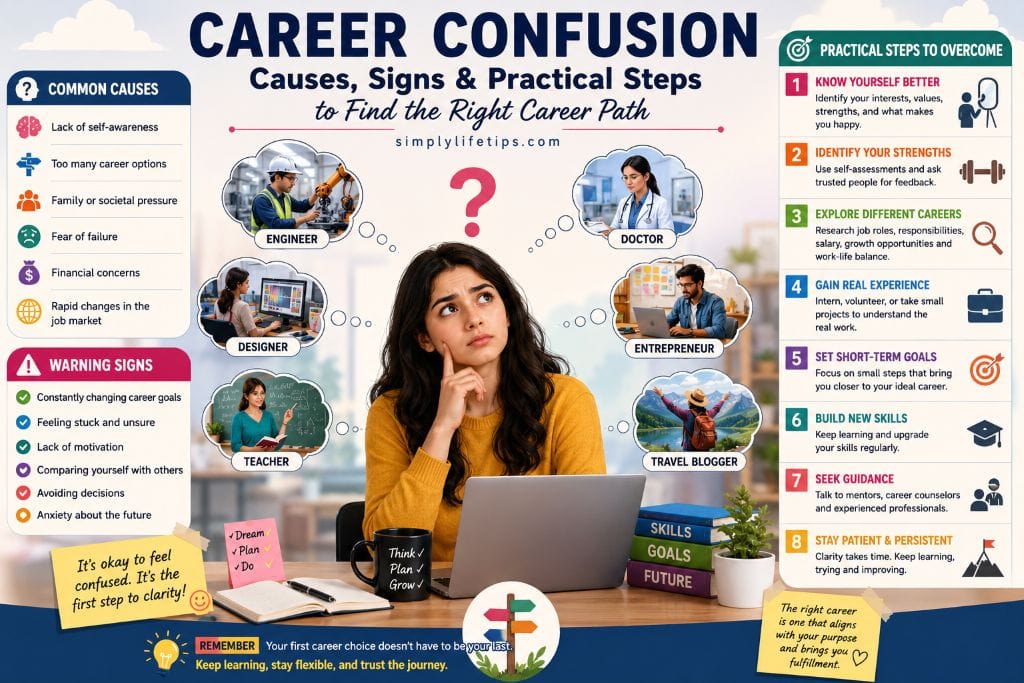
Rather than feeling overwhelmed by numerous career options, use them as opportunities to learn more about yourself. Research, practical experience, and continuous skill development will gradually help you identify the career path that best fits your personality and aspirations.
Today’s world offers more career opportunities than ever before. While having choices is beneficial, having too many options often leads to decision paralysis.
Several modern factors contribute to career confusion.
Information Overload
The internet exposes us to thousands of career options every day. One person recommends becoming a software developer, another promotes digital marketing, while someone else claims entrepreneurship is the only path to success.
Instead of providing clarity, endless information often creates more confusion.
Social Media Comparisons
Social media highlights people’s achievements but rarely shows their struggles.
Seeing friends get promotions, start businesses, or travel the world may make you question your own career choices, even when you’re progressing at your own pace.
Family Expectations
Parents or relatives sometimes encourage careers they believe offer stability or prestige, such as medicine, engineering, law, or government jobs.
While their intentions are usually positive, following someone else’s dream instead of your own may lead to dissatisfaction.
Fear of Failure
Many people avoid making career decisions because they’re afraid of choosing incorrectly.
Ironically, avoiding decisions often delays success more than making imperfect choices.
Changing Job Markets
Automation, artificial intelligence, remote work, and emerging industries constantly reshape employment opportunities.
A career that seemed secure ten years ago may require completely different skills today.
Signs You Are Experiencing Career Confusion
Recognizing career confusion is the first step toward overcoming it.
Common signs include:
Constantly Changing Career Goals
One week you want to become a teacher.
The next week you’re considering graphic design.
A month later you’re researching government jobs.
Frequent changes often indicate uncertainty rather than genuine passion.
Feeling Stuck
You know you want something different but cannot identify what that “something” is.
This creates frustration and inactivity.
Comparing Yourself with Others
You regularly compare your progress with classmates, colleagues, or friends.
Instead of feeling inspired, these comparisons make you doubt your own choices.
Lack of Motivation
When you’re unsure about your career direction, even small tasks can feel meaningless because you don’t see how they contribute to your future.
Fear of Making Decisions
You postpone applications, interviews, or educational opportunities because you’re waiting for complete certainty.
Unfortunately, certainty rarely comes before taking action.
Feeling Anxious About the Future
Career confusion often leads to stress, overthinking, poor sleep, and reduced confidence.
These emotional effects can make decision-making even more difficult.
Common Causes of Career Confusion
Many people believe they must choose between passion and a high-paying career. In reality, the best career decisions consider four important factors—what you love, what you’re good at, what pays well, and what gives your work meaning.
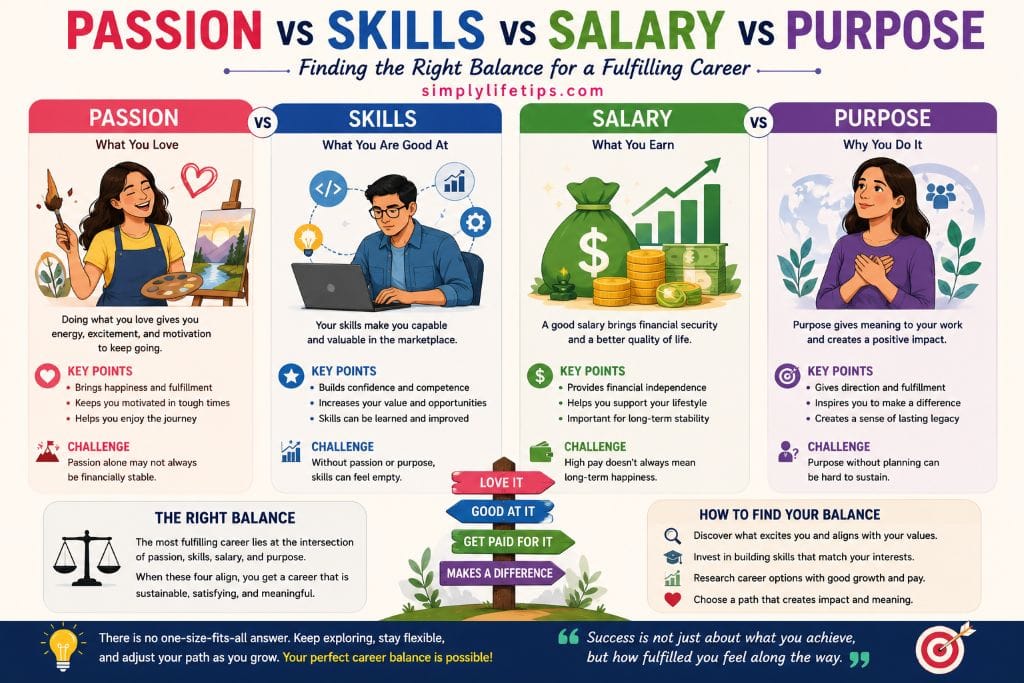
Focusing on only one factor can lead to disappointment. For example, pursuing passion without developing skills may limit opportunities, while choosing a high salary without purpose can reduce job satisfaction. Aim to find a career that offers the best balance between passion, skills, salary, and purpose for long-term success and fulfillment.
Understanding the root causes can help you address them more effectively.
Lack of Self-Awareness
Many people know what jobs exist but don’t fully understand themselves.
Ask yourself:
- What activities energize me?
- What am I naturally good at?
- What values matter most?
- What kind of work environment suits me?
Without answering these questions, career decisions become much harder.
Too Many Options
Psychologists often refer to the “paradox of choice.”
Having hundreds of career possibilities may actually reduce satisfaction because you’re constantly wondering if another option is better.
External Pressure
Society often measures success using salary, job titles, or prestige.
Choosing a career solely to impress others rarely leads to long-term happiness.
Financial Concerns
Many people prioritize immediate income over long-term satisfaction.
While financial stability is important, ignoring your interests completely may lead to burnout.
Negative Past Experiences
A bad internship, toxic workplace, failed exam, or job rejection can create self-doubt that affects future decisions.
One negative experience doesn’t define your entire career.
Career Confusion at Different Stages of Life
Career confusion isn’t limited to young adults.
Career Confusion After School
Students often struggle because they have limited exposure to different professions.
Choosing a field without understanding daily job responsibilities can increase uncertainty later.
Career Confusion After Graduation
Many graduates discover that their degree doesn’t match their interests or available job opportunities.
This realization is common and doesn’t mean their education was wasted.
Transferable skills gained during education remain valuable.
Career Confusion in Your 20s
People in their twenties often explore different jobs while discovering their strengths.
Changing directions during this stage is perfectly normal.
If you’re still in school, exploring different career paths after high school can help you understand the opportunities available before making a long-term decision.
Career Confusion in Your 30s
Responsibilities such as family, mortgages, and financial commitments can make career changes feel risky.
However, many professionals successfully transition into more meaningful careers during this decade.
If you’re preparing to enter the workforce, following practical career advice for job seekers can improve your confidence and help you make informed career decisions.
Career Confusion in Your 40s and Beyond
Some individuals seek greater purpose after years in the same profession.
Experience, maturity, and transferable skills often make career transitions easier than expected.
Remember that you don’t always need to resign immediately. You may be able to transform your career without leaving your job by building new skills and exploring opportunities gradually.
How to Overcome Career Confusion?
Career clarity develops through action rather than endless thinking.
Know Yourself Better
List your:
- Interests
- Skills
- Strengths
- Weaknesses
- Personal values
- Preferred lifestyle
Patterns often emerge when you honestly evaluate yourself.
Career clarity begins with understanding yourself. Before choosing a profession, take time to identify your strengths, interests, values, personality, and long-term goals. Honest self-assessment helps you make career decisions based on who you are rather than external expectations.
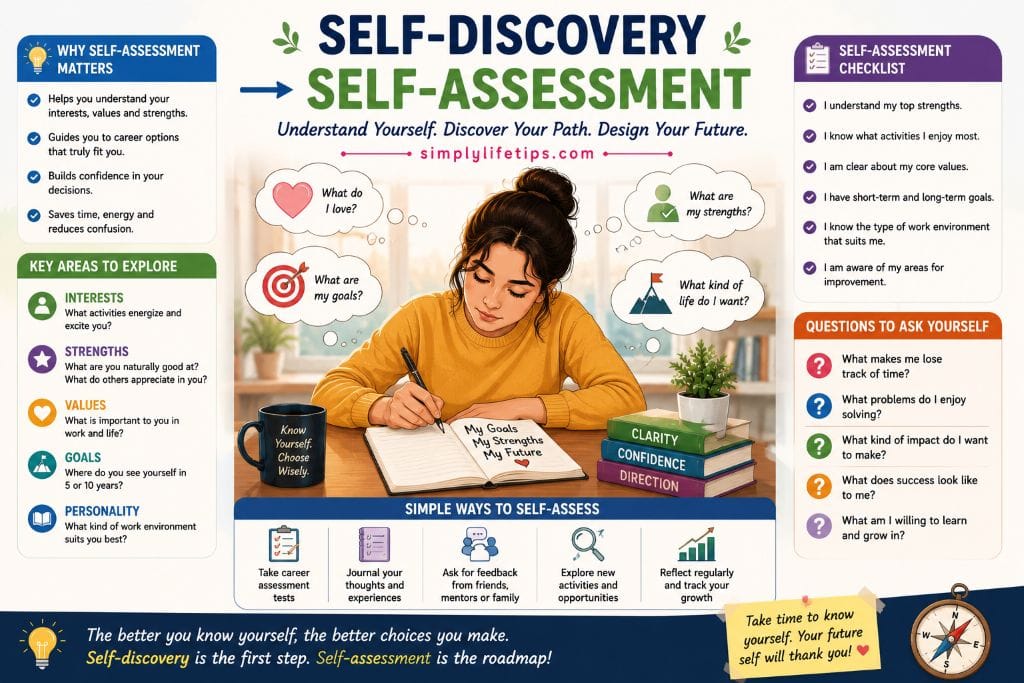
There is no universally perfect career, only the one that best fits your unique abilities and aspirations. Regular self-reflection, feedback from trusted mentors, and career assessments can reveal opportunities that align with both your personal fulfillment and professional success.
If you’re unsure which path to take, our guide on how to choose the right career can help you evaluate your strengths, interests, values, and long-term goals before making an informed decision.
Identify Your Strengths
Ask trusted friends, family members, teachers, or colleagues:
“What do you think I’m naturally good at?”
Others sometimes recognize talents that you overlook.
Explore Different Careers
Instead of making assumptions, research careers thoroughly.
Learn about:
- Daily responsibilities
- Required qualifications
- Salary expectations
- Growth opportunities
- Work-life balance
Informational interviews and job shadowing can provide valuable insights.
Exploring career options is one of the most effective ways to overcome career confusion. Instead of limiting yourself to familiar professions, research different industries, talk to professionals, and gain practical experience to discover careers that match your personality, skills, and aspirations.
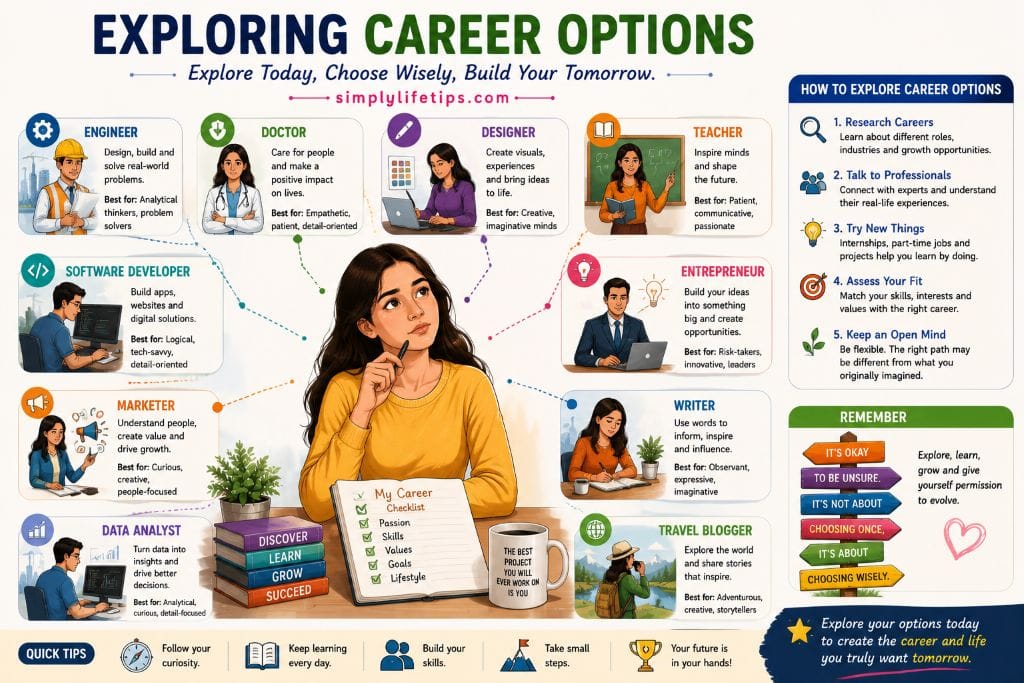
The perfect career rarely appears overnight. Every profession you explore teaches you something about yourself, helping you eliminate unsuitable choices and move closer to a career that provides both personal satisfaction and professional growth.
Take Career Assessment Tests
Career aptitude assessments can reveal occupations that match your personality and interests.
While no test should determine your future completely, they can provide useful direction.
Gain Real Experience
Volunteer, freelance, intern, or complete short projects.
Experience often eliminates confusion faster than research alone.
For example, someone considering teaching could tutor students for a few weeks before pursuing formal training.
Set Short-Term Goals
Instead of deciding your entire future today, focus on the next three to six months.
Examples include:
- Completing an online course
- Updating your resume
- Learning a new skill
- Networking with professionals
- Applying for internships
Small achievements build confidence.
Stop Comparing Yourself
Everyone’s timeline is different.
Some people find their ideal career early.
Others discover it after several career changes.
Both journeys are valid.
Accept That No Career Is Perfect
Every profession includes challenges.
Instead of searching for the perfect career, look for one that aligns with your values, strengths, and long-term goals.
Build New Skills
Continuous learning increases confidence and creates more opportunities.
Popular skills include:
- Communication
- Leadership
- Problem-solving
- Digital literacy
- Project management
- Artificial intelligence tools
- Data analysis
These skills remain valuable across many industries.
Seek Professional Guidance
You don’t have to navigate career confusion alone. A mentor, career counselor, teacher, or experienced professional can offer practical advice, share real-world experiences, and help you see opportunities you might otherwise overlook.
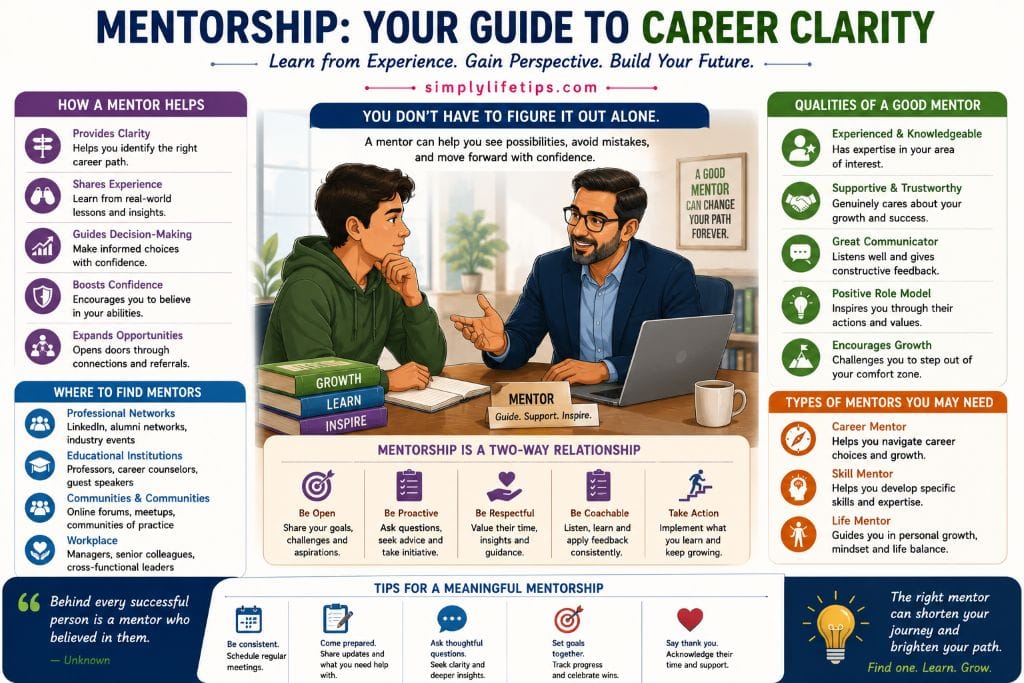
The right mentor won’t choose your career for you, but they can help you ask the right questions, avoid common mistakes, and build confidence in your decisions. Their guidance can shorten your learning curve and encourage you to move forward with greater clarity and purpose.
Career counselors, mentors, coaches, and experienced professionals can provide objective advice based on your abilities and goals.
Sometimes an outside perspective helps you see possibilities you hadn’t considered.
Learning to develop emotional intelligence can improve self-awareness, communication, and confidence when making important career decisions.
Feeling overwhelmed by career choices? The following infographic summarizes the key causes of career confusion and practical strategies to help you identify your strengths, explore career options, and confidently choose a path that aligns with your interests and goals.
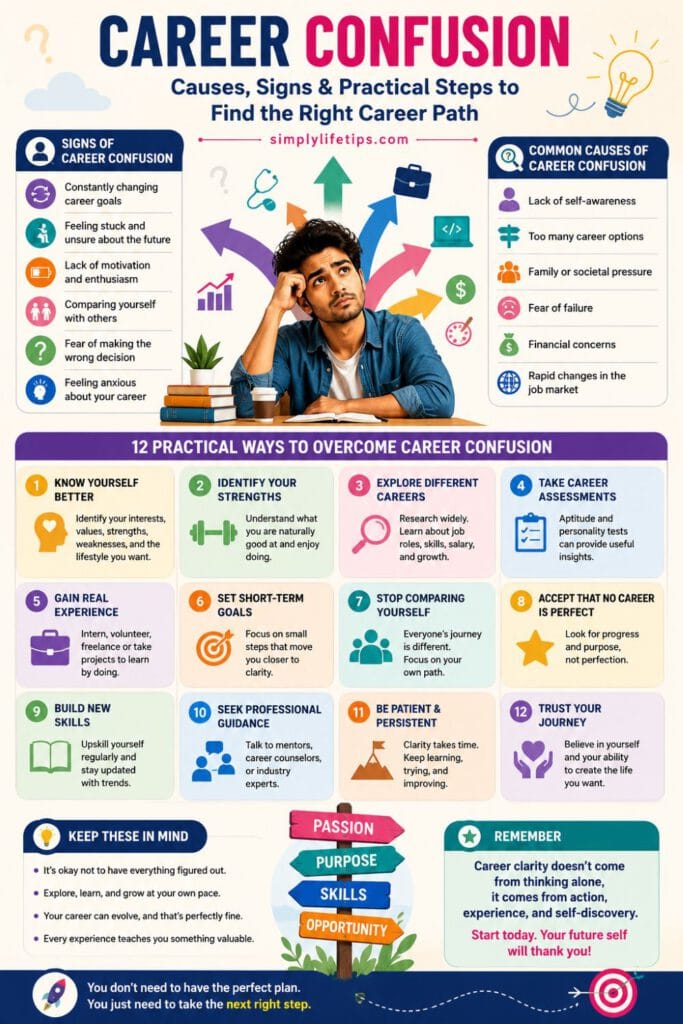
Career clarity rarely happens overnight. By understanding the reasons behind your uncertainty and taking consistent action, you can gradually build confidence and make better career decisions. Use these tips as a quick reference whenever you feel unsure about your professional direction.
Mistakes to Avoid During Career Confusion
Avoid these common pitfalls.
Waiting for the Perfect Answer
Perfect certainty rarely exists.
Most successful careers evolve.
Following Trends Blindly
A popular career may not suit your personality.
Choose based on compatibility rather than popularity.
Ignoring Your Interests
Financial security matters, but ignoring what motivates you can reduce long-term satisfaction.
Aim for a balance between passion, practicality, and opportunity.
Giving Up Too Soon
Career exploration requires patience.
One unsuccessful interview or rejected application doesn’t mean you’re on the wrong path.
Building Confidence While Choosing a Career
Confidence grows through consistent action.
Start by celebrating small wins.
Complete a certification.
Attend networking events.
Speak with professionals.
Apply for opportunities even if you don’t meet every requirement.
Each experience strengthens your confidence and improves your decision-making abilities.
Remember that successful careers are rarely built overnight.
When Should You Consider Changing Careers?
A career change may be worth considering if:
- You feel consistently unhappy at work.
- Your values no longer align with your job.
- There are limited growth opportunities.
- Your mental or physical health is suffering.
- You’re excited about learning something new.
- Your interests have changed significantly.
Changing careers doesn’t mean starting from zero.
Many existing skills transfer successfully into new industries.
Career transformation doesn’t happen overnight. As you gain self-awareness, explore opportunities, build new skills, and take action, uncertainty gradually gives way to confidence and clarity. The journey from confusion to a fulfilling career is built one informed decision at a time.
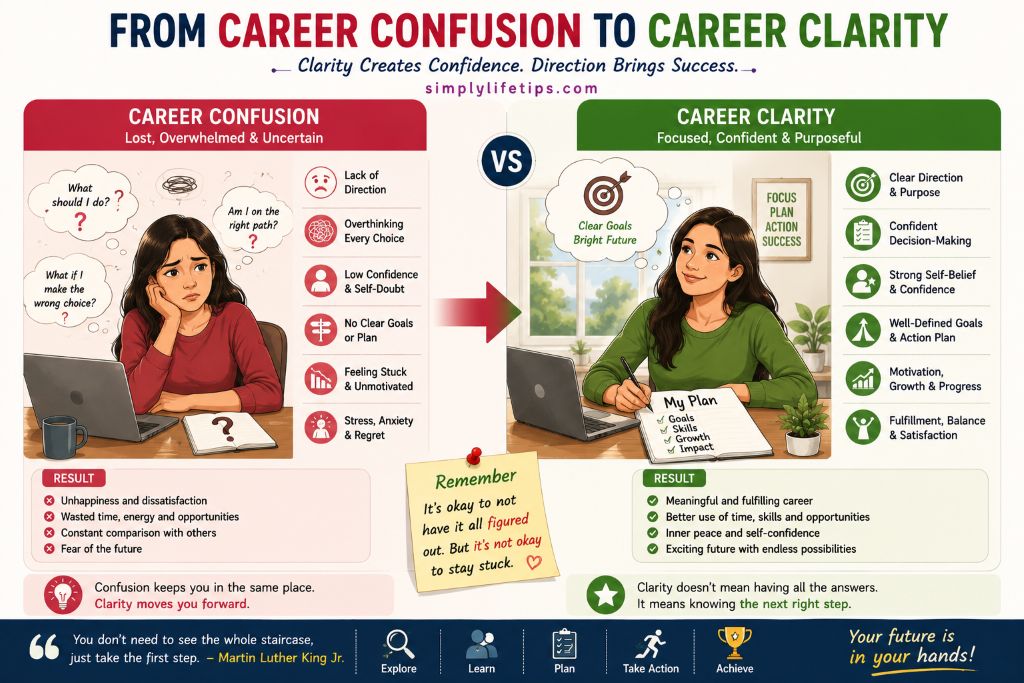
Remember that career clarity doesn’t mean having every detail of your future planned. It means understanding your strengths, setting meaningful goals, and confidently taking the next step. Small, consistent actions today can lead to a rewarding and purposeful career tomorrow.
Conclusion
Career confusion is a natural part of personal and professional growth. It doesn’t mean you’re incapable of succeeding or that you’ve fallen behind. In many cases, uncertainty is simply a sign that you’re thinking carefully about building a meaningful future.
The key is to stop waiting for perfect clarity and start taking small, consistent steps. Learn about yourself, explore different opportunities, develop new skills, and gain real-world experience. Every action provides valuable information that brings you closer to the right career path.
Remember, your first career choice does not have to be your last. Many successful people changed direction multiple times before finding work they truly enjoyed. What matters most is continuous learning, adaptability, and the willingness to move forward even when everything isn’t completely certain.
Career clarity comes from consistent learning and action. Developing the right habits and learning to build a success mindset will help you move forward with greater confidence.
Career Confusion Is Temporary – Inspirational Quote
Finding the right career is a journey, not a race. Even if you’re feeling uncertain today, every skill you learn, every experience you gain, and every small action you take brings you closer to a career that aligns with your strengths and aspirations.
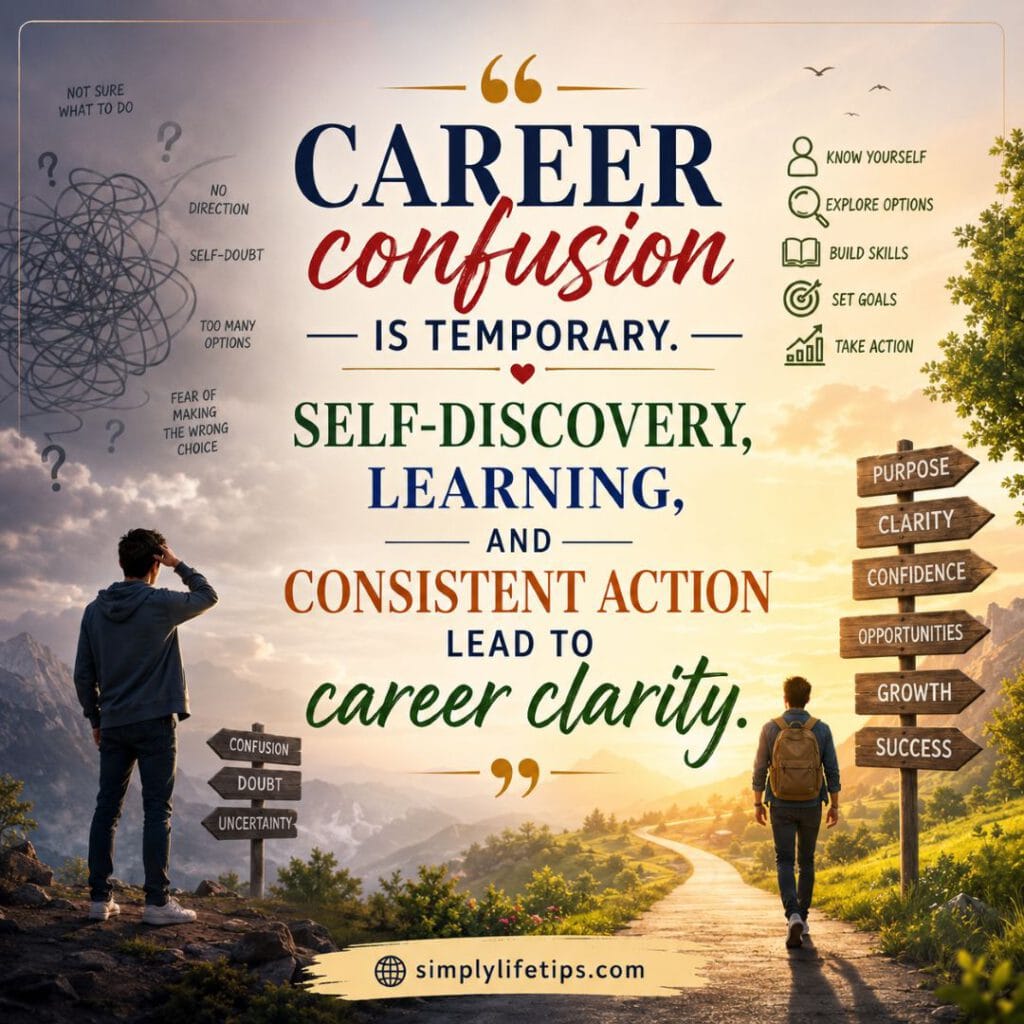
Whenever career confusion returns, remember this message. Clarity doesn’t appear overnight—it grows through curiosity, continuous learning, and persistence. Keep moving forward, trust the process, and let each step bring you closer to a fulfilling and meaningful career.
Frequently Asked Questions
Is career confusion normal?
Yes. Career confusion is common among students, graduates, professionals, and people considering career changes. It is a normal part of career development.
How long does career confusion last?
There is no fixed timeline. Career confusion may last a few weeks or several months depending on your willingness to explore options, gain experience, and make informed decisions.
Can career aptitude tests help?
Career assessments can provide useful insights into your interests, personality, and strengths, but they should be combined with real-world experience and personal reflection.
Should I change careers if I’m unhappy?
If your dissatisfaction is consistent and your job no longer aligns with your values, strengths, or goals, exploring a career change may be worthwhile after careful planning.
What is the first step to overcome career confusion?
Start by understanding yourself. Identify your interests, strengths, values, and long-term goals before researching careers that match them.
References:
- National Career Service (NCS), Ministry of Labour & Employment, Government of India – Career guidance, career counselling, job search, and occupational information.
- U.S. Bureau of Labor Statistics – Occupational Outlook Handbook – Occupational outlook, education requirements, salary, and career information.
- American Psychological Association (APA) – Decision-making, stress, confidence, and career-related psychology.

Mathukutty P V is a Blogger, YouTuber, and Content Writer and the founder of Simply Life Tips. After taking voluntary retirement in 2017, he embraced a free lifestyle focused on learning, personal growth, and sharing practical wisdom to help others live with more purpose and positivity.