
Do you know misconceptions about emotional maturity that hold you back? Have you ever met someone who appeared calm, confident, and wise, only to discover later that they struggled with emotional challenges just like everyone else?
Many people misunderstand what emotional maturity truly means. Some assume it is about never getting angry. Others believe it means always being positive, avoiding conflicts, or keeping emotions hidden. These beliefs create unrealistic expectations and can prevent genuine emotional growth.
The truth is that emotional maturity is not perfection. It is the ability to understand, manage, and express emotions in healthy ways while maintaining respect for yourself and others. When we let go of common myths, we become better equipped to build stronger relationships, make wiser decisions, and handle life’s challenges effectively.
Misconceptions About Emotional Maturity
Understanding the misconceptions about emotional maturity is essential because these myths often create unnecessary pressure and confusion. True emotional maturity is not about becoming emotionless or flawless. Instead, it involves self-awareness, responsibility, empathy, and continuous personal growth. Let’s explore some of the most common misunderstandings.
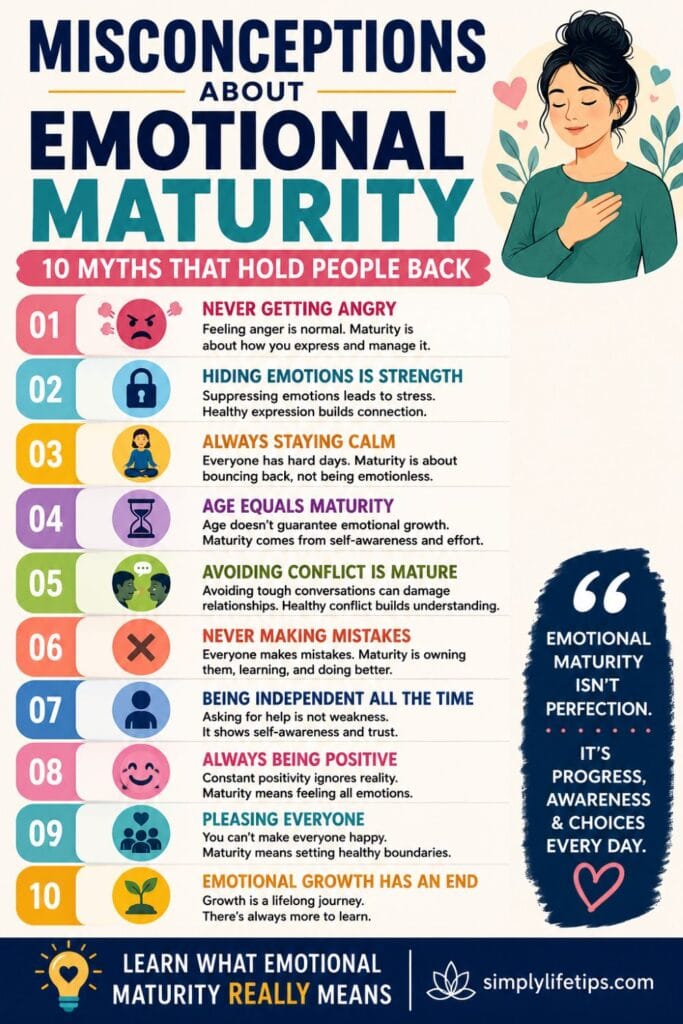
1. Emotional Maturity Means Never Getting Angry
One of the biggest misconceptions is that emotionally mature people never feel anger.
In reality, anger is a natural human emotion. Emotionally mature individuals experience anger just like everyone else. The difference lies in how they respond. Instead of lashing out, blaming others, or acting impulsively, they pause, assess the situation, and communicate their feelings constructively.
For example, a mature employee who feels unfairly criticized at work may discuss the issue calmly rather than starting an argument or holding a grudge.
2. Emotional Maturity Means Suppressing Emotions
Many people believe that hiding emotions is a sign of strength.
However, suppressing emotions often leads to stress, resentment, anxiety, and emotional exhaustion. Emotional maturity involves acknowledging feelings rather than pretending they do not exist.
A mature person can say, “I feel disappointed,” or “That hurt me,” without feeling ashamed. Healthy emotional expression helps build trust and stronger relationships.
3. Emotionally Mature People Always Stay Calm
While emotionally mature individuals often manage stress effectively, they are not immune to emotional reactions.
Everyone has moments of frustration, sadness, fear, or overwhelm. Emotional maturity is not about never losing composure; it is about recovering thoughtfully and taking responsibility for your actions afterward.
Even highly respected leaders sometimes experience emotional moments. Their maturity is reflected in how they handle those situations.
4. Emotional Maturity Comes Automatically With Age
Age and emotional maturity are not the same thing.
Some young people demonstrate remarkable emotional wisdom, while some older adults continue to struggle with emotional regulation and self-awareness.
Emotional maturity develops through experience, reflection, learning, and personal responsibility. Simply getting older does not guarantee emotional growth.
5. Emotional Maturity Means Avoiding Conflict
Many people mistake conflict avoidance for emotional maturity.
In reality, avoiding important conversations can damage relationships. Emotionally mature individuals understand that healthy conflict can lead to understanding, growth, and stronger connections.
For example, instead of ignoring a recurring issue in a marriage, a mature partner addresses it respectfully and seeks a solution together.
6. Emotionally Mature People Never Make Mistakes
Another common myth is that emotionally mature individuals always know the right thing to do.
The truth is that everyone makes mistakes. Emotional maturity is demonstrated by the willingness to admit errors, apologize sincerely, learn lessons, and improve future behavior.
Growth often comes from recognizing and correcting mistakes rather than avoiding them altogether.
7. Emotional Maturity Means Being Independent All the Time
Society often glorifies complete independence.
However, emotionally mature people recognize when they need support. Asking for help is not a weakness; it reflects self-awareness and confidence.
Whether seeking advice, emotional support, or professional guidance, mature individuals understand the value of healthy interdependence.
8. Emotional Maturity Means Always Being Positive
Positive thinking can be helpful, but constant positivity is neither realistic nor healthy.
Emotionally mature people allow themselves to experience difficult emotions without guilt. They understand that sadness, grief, disappointment, and frustration are normal parts of life.
Rather than denying reality, they face challenges honestly while maintaining hope and resilience.
9. Emotional Maturity Means Pleasing Everyone
Many people assume that being emotionally mature requires making everyone happy.
In reality, emotionally mature individuals understand the importance of boundaries. They know that trying to satisfy everyone often leads to stress, burnout, and resentment.
They make decisions based on values, fairness, and long-term well-being rather than seeking universal approval.
10. Emotional Maturity Is a Destination
Perhaps the most harmful misconception is believing that emotional maturity is a final achievement.
Emotional growth is an ongoing process. Life continuously presents new challenges, relationships, responsibilities, and experiences that require adaptation.
Even emotionally mature individuals continue learning, reflecting, and growing throughout their lives.
Signs of True Emotional Maturity
Instead of focusing on myths, it helps to recognize what emotional maturity actually looks like:
- Taking responsibility for actions and choices.
- Managing emotions without hurting others.
- Practicing empathy and understanding different perspectives.
- Setting Healthy Boundaries in Relationships
- Accepting constructive feedback.
- Communicating honestly and respectfully.
- Learning from mistakes.
- Adapting to change with resilience.
- Maintaining self-awareness.
- Seeking growth rather than perfection.
Why Emotional Maturity Matters?
Emotional maturity affects every area of life. It improves relationships, strengthens leadership abilities, reduces unnecessary conflicts, and supports mental well-being.
People who develop emotional maturity often find it easier to navigate workplace challenges, family dynamics, friendships, and personal setbacks. They become better decision-makers because emotions inform their choices without controlling them.
Most importantly, emotional maturity creates inner stability, allowing individuals to face life’s uncertainties with greater confidence and wisdom.
Quote
“Emotional maturity is not the absence of emotions; it is the wisdom to handle them well.”
FAQs
What is emotional maturity?
Emotional maturity is the ability to understand, manage, and express emotions responsibly while maintaining healthy relationships and making thoughtful decisions.
Can emotional maturity be learned?
Yes. Emotional maturity develops through self-awareness, reflection, life experiences, feedback, and intentional personal growth.
Is emotional maturity the same as emotional intelligence?
They are related but different. Emotional intelligence involves recognizing and understanding emotions, while emotional maturity includes applying that understanding in healthy and responsible ways.
Why do people misunderstand emotional maturity?
Many cultural messages associate maturity with emotional suppression, perfection, or constant positivity, creating unrealistic expectations.
How can I become more emotionally mature?
Practice self-awareness, take responsibility for mistakes, communicate honestly, develop empathy, establish boundaries, and view challenges as opportunities for growth.
Conclusion
The most common misconceptions about emotional maturity often paint an unrealistic picture of what it means to be emotionally healthy. Emotional maturity is not about being perfect, emotionless, or endlessly positive. It is about understanding yourself, managing emotions responsibly, respecting others, and continuing to grow through life’s experiences. When we replace myths with a more accurate understanding, we create space for genuine personal development and stronger, healthier relationships.
What misconception about emotional maturity do you think people believe most often?
References
If this resonated with you, share it with someone who needs it.
PVM

Mathukutty P V is a Blogger, YouTuber, and Content Writer who transitioned into a “Free Lifestyle” after choosing voluntary retirement in 2017. He is the founder of Simply Life Tips, a mission-driven platform dedicated to inspiring others through practical wisdom and life lessons. Driven by a love for continuous learning and self-growth, Mathukutty shares knowledge gathered from years of reflection to help his readers live with more purpose and positivity.