

Stay mentally strong in today’s demanding world by learning how to manage pressure, protect your energy, and maintain a positive mindset. Work stress, personal challenges, and moments of isolation can test your resilience—but mental strength is built through consistent habits, not luck.
If you’ve ever wondered how to stay mentally strong or even how to stay mentally strong when you are alone, the answer lies in small, intentional actions practiced daily. Let’s explore seven powerful ways to build lasting resilience.
Why Mental Strength Matters?
To stay mentally strong, you must understand why it matters in the first place. Mental strength helps you remain stable during uncertainty, make better decisions under pressure, and maintain emotional balance.
Without it, even small challenges can feel overwhelming. With it, even difficult situations become manageable. For example, two people can face the same problem—one breaks down, while the other adapts and grows. The difference is in mindset.
Developing mental strength improves not only your work performance but also your relationships and personal well-being. It gives you the confidence to move forward, even when things don’t go as planned.
How to Stay Mentally Strong Alone?
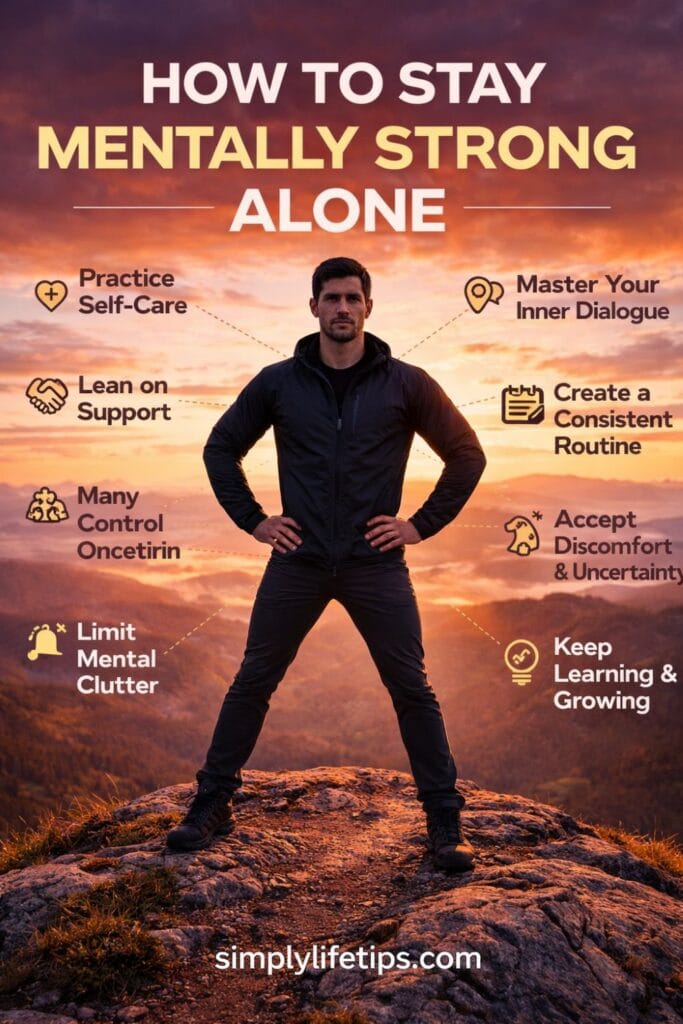
7 Proven Ways to Stay Mentally Strong
1. Set Boundaries
To stay mentally strong, you must protect your time and energy. Without boundaries, burnout becomes inevitable.
Setting boundaries means recognizing your limits and respecting them. Saying no is not selfish—it is necessary for maintaining focus and productivity.
For example, if you are already overloaded with tasks, taking on additional work reduces your effectiveness. By setting clear limits, you ensure that your energy is directed toward meaningful priorities.
Boundaries create space for clarity, reduce stress, and help you stay in control of your mental state.
2. Pause and Reflect
One key answer to how to stay mentally strong is learning to pause before reacting.
When emotions run high, immediate reactions often lead to regret. Taking a moment to reflect allows you to respond thoughtfully instead of impulsively.
For instance, if you receive unexpected criticism, pausing helps you evaluate the feedback objectively rather than reacting defensively.
This habit strengthens emotional intelligence and helps you make better decisions under pressure.
3. Focus on What You Can Control
If you want to stay mentally strong, focus your energy where it matters.
Worrying about things beyond your control drains mental energy. Instead, concentrate on your actions, attitude, and effort.
For example, you cannot control office politics or sudden changes, but you can control how you respond and adapt.
This mindset reduces anxiety and improves your ability to handle challenges effectively.
4. Reframe Challenges
A powerful way to stay mentally strong is by changing how you view difficulties.
Challenges are not just obstacles—they are growth opportunities. Reframing helps you turn setbacks into learning experiences.
For example, if a project fails, instead of feeling defeated, analyze what went wrong and improve your approach next time.
This shift builds confidence and prepares you for future challenges.
5. Take Care of Your Body
Your physical health directly impacts your ability to stay mentally strong.
Sleep, exercise, and nutrition are essential for maintaining focus and emotional balance.
For example:
- Proper sleep improves decision-making
- Exercise reduces stress
- Healthy food supports brain function
Ignoring your body weakens your mental resilience, while caring for it strengthens your overall well-being.
6. Nelson Mandela’s life is a shining example of courage, sacrifice, and leadership. Nelson Mandela’s inspiring success story continues to inspire the world with the power of forgiveness and the strength of moral conviction.
6. Practice Daily Gratitude
If you want to understand how to stay mentally strong when you are alone, gratitude is a powerful tool.
When you are alone, your thoughts can become overwhelming. Gratitude helps shift your focus toward positivity.
For example, writing down three things you are thankful for each day can change your mindset from negative to balanced.
This habit builds emotional stability and helps you stay grounded, even in solitude.
7. Lean on Support
Even though independence is important, staying mentally strong does not mean doing everything alone.
Talking to a mentor, friend, or colleague can provide new perspectives and emotional support.
For example, discussing a stressful situation with someone you trust can reduce mental pressure and help you find solutions faster.
Connection strengthens resilience and reminds you that you are not alone in your journey.
8. Master Your Inner Dialogue
To stay mentally strong, you must pay close attention to how you talk to yourself. Your inner dialogue shapes your confidence, decisions, and emotional stability more than any external factor.
Many people struggle not because of their situation, but because of the negative narrative running in their minds. Thoughts like “I can’t handle this” or “I’m not good enough” slowly weaken your mental resilience.
To change this, start replacing negative thoughts with constructive ones. For example, instead of saying “This is too hard,” shift to “This is challenging, but I can figure it out.” This small change builds confidence and keeps your mind focused on solutions rather than problems.
Over time, a strong inner dialogue becomes your greatest support system, especially when you are alone.
9. Create a Consistent Routine
Consistency is a powerful way to stay mentally strong. When your daily routine is structured, your mind experiences less chaos and more clarity.
A simple routine that includes focused work time, short breaks, physical activity, and reflection can significantly improve your mental stability. Without structure, your mind tends to wander, leading to stress and reduced productivity.
For example, starting your day with a clear plan helps you stay in control, while ending your day with reflection allows you to learn and reset. These habits may seem small, but they create long-term mental strength.
Routine reduces decision fatigue and gives your mind a sense of direction and control.
10. Accept Discomfort and Uncertainty
If you truly want to learn how to become mentally strong, you must become comfortable with discomfort. Growth never happens in comfort zones.
Challenges, failures, and uncertainty are part of life. Avoiding them weakens your resilience, while facing them builds strength.
For example, taking on a difficult project at work may feel overwhelming at first, but it pushes you to develop new skills and confidence. Similarly, dealing with uncertainty teaches patience and adaptability.
Instead of resisting discomfort, accept it as a necessary part of growth. This mindset reduces fear and helps you move forward with confidence.
11. Limit Mental Clutter
One overlooked way to stay mentally strong is by reducing unnecessary mental noise. Too much information, distractions, and overthinking can exhaust your mind.
Constant notifications, excessive social media use, and multitasking reduce your ability to focus. Over time, this leads to mental fatigue and stress.
To improve this, create boundaries around your attention. Allocate specific times for checking messages, avoid unnecessary distractions, and focus on one task at a time.
A clear mind is a strong mind. When you reduce clutter, you improve your ability to think clearly and make better decisions.
12. Strengthen Emotional Control
Emotional control is essential if you want to stay mentally strong in challenging situations. This does not mean suppressing emotions—it means managing them effectively.
For example, feeling frustrated is natural, but reacting impulsively can create bigger problems. Learning to pause, understand your emotions, and respond calmly helps you maintain control.
Techniques like deep breathing, journaling, or simply stepping away from a stressful situation can help you regain composure.
When you control your emotions, you control your actions—and that is the foundation of mental strength.
13. Keep Learning and Growing
A strong mindset is built through continuous learning. If you want to stay mentally strong, adopt a growth-oriented approach to life.
Every experience—whether success or failure—offers an opportunity to learn. Instead of fearing mistakes, treat them as lessons.
For example, if something doesn’t go as planned, analyze what happened and identify areas for improvement. This approach turns setbacks into stepping stones.
Growth keeps your mind active, adaptable, and resilient. It ensures that you are always moving forward, regardless of circumstances.
FAQs – Stay Mentally Strong
How to stay mentally strong every day?
Practice small habits like setting boundaries, maintaining a healthy routine, and focusing on what you can control. Consistency is key.
How to stay mentally strong when you are alone?
Build routines, practice gratitude, and engage in self-reflection to maintain a positive mindset even in solitude.
Why is it important to stay mentally strong?
Mental strength helps you handle stress, make better decisions, and maintain emotional balance during challenges.
Can anyone develop mental strength?
Yes, mental strength is a skill that can be developed through daily practice and discipline.
What are quick ways to improve mental strength?
Pause before reacting, focus on solutions, maintain physical health, and surround yourself with supportive people.
Conclusion
To stay mentally strong, you don’t need extraordinary talent—you need consistent habits and the right mindset. By setting boundaries, reflecting before reacting, focusing on what you can control, reframing challenges, taking care of your body, practicing gratitude, and seeking support, you build resilience step by step.
Mental strength grows with practice, especially during difficult times and moments of solitude.
How will you start strengthening your mindset today?
If this resonated with you, share it with someone who needs it.
PVM

Mathukutty P V is a Blogger, YouTuber, and Content Writer and the founder of Simply Life Tips. After taking voluntary retirement in 2017, he embraced a free lifestyle focused on learning, personal growth, and sharing practical wisdom to help others live with more purpose and positivity.



