

Family relationships play an important role in our happiness, emotional well-being, and sense of belonging. Healthy family relationships provide love, encouragement, and support during life’s challenges. However, differences in expectations, communication problems, and misunderstandings can sometimes create tension between family members. Understanding these challenges helps us build stronger connections, establish healthy boundaries, and maintain harmony at home.
Every family is unique. Some experience disagreements between spouses, while others face challenges involving parents, children, siblings, or extended relatives. Although disagreements are a normal part of family life, learning to handle them with respect and empathy can make a meaningful difference.
Let’s explore common family relationship challenges, learn from a relatable family story, and discover practical ways to build stronger, healthier family bonds.
Understanding Family Relationships Through a Real-Life Scenario
Family relationships can become complicated when love, expectations, and responsibilities conflict. A husband, for example, may struggle to balance his commitment to his wife with his responsibilities towards his mother. Although both relationships are important, differences in expectations can create misunderstandings, emotional stress, and tension at home.
Understanding each person’s feelings, communicating openly, and establishing healthy boundaries can help families manage these challenges. The following short story illustrates how conflicting expectations can affect family relationships and why mutual respect is essential for lasting harmony.
A Family Story: A Husband Caught Between His Wife and Mother
“I want both my mother and my wife to be happy,” the husband sighed, feeling torn between two important relationships in his life.
Every morning, as he left for work, he worried about the disagreements that might arise at home. His phone frequently rang with calls from his wife and mother, each hoping he would listen to her concerns and understand her point of view.
Both women loved him, but they had different expectations of their relationship with him. His mother wanted to maintain the close bond they had shared for years, while his wife wanted to feel valued and respected as his life partner.
To his mother, he was her beloved son, someone she had cared for and supported throughout his life. To his wife, he was her companion, confidant, and partner in building a future together. As their expectations clashed, he found himself struggling to keep peace between them.
His wife sometimes felt that her needs were taking second place to his mother’s wishes. His mother, meanwhile, worried that marriage was changing the close relationship she had always enjoyed with her son. Neither fully understood how the other felt, and their misunderstandings gradually created tension throughout the household.
The husband tried to satisfy both sides, but avoiding difficult conversations only prolonged the problem. He began to realise that he could not resolve every disagreement by pleasing everyone. He needed to listen patiently, communicate honestly, and establish reasonable boundaries while treating both women with respect.
The situation offered an important lesson about family relationships: love does not have to become a competition. A son can continue to love and support his mother while building a strong marriage. Similarly, a wife can respect her husband’s relationship with his mother while expecting her own needs and boundaries to be honoured.
With patience, empathy, and open communication, families can begin to understand one another’s concerns. Although not every disagreement can be resolved immediately, a willingness to listen and make fair decisions can create opportunities for greater harmony.
Ultimately, healthy fam
Understanding Family Relationships and Managing Conflict
Family relationships can become strained when love, responsibilities, and personal expectations come into conflict. The challenge is not always a lack of affection; sometimes, family members simply have different ideas about what they need from one another. Understanding these differences can help families resolve disagreements and build stronger connections.
Recognising the Need for Love and Acceptance
Most people want to feel loved, respected, and valued by their family. However, these needs can sometimes be expressed through complaints, unreasonable expectations, or attempts to control decisions.
For example, a mother may feel neglected when her married son spends more time with his wife, while the wife may feel overlooked when their household decisions are influenced by his mother. Both may be seeking reassurance, but their reactions can create further misunderstandings.
The first step towards resolving such conflicts is to listen without immediately blaming either person. Understanding the feelings behind a disagreement can make it easier to find a fair solution.
Respecting Family Roles and Responsibilities
Healthy family relationships require an understanding that relationships can change as people move through different stages of life. Marriage, parenthood, and caring for ageing parents can introduce new responsibilities and expectations.
A married couple needs space to make decisions about their household, finances, and future. At the same time, maintaining a loving relationship with parents remains important.
Respecting these different responsibilities does not mean choosing one relationship over another. It means recognising that each relationship has its own needs and boundaries.
Communicating Clearly and Setting Boundaries
Clear communication can prevent small misunderstandings from becoming persistent family disputes. Instead of expressing frustration through criticism, family members should explain their concerns calmly and listen to different perspectives.
For example, a husband might tell his mother, “I love you and want to spend time with you, but my wife and I also need to make some decisions privately.” Such a statement communicates affection while establishing a reasonable boundary.
Boundaries should be applied consistently and respectfully. They help family members understand expectations without making anyone feel that love and support must be withdrawn.
The Husband’s Role in Resolving Conflict
When disagreements arise between a wife and mother, the husband can help by listening to both sides and addressing the actual problems rather than simply trying to keep everyone happy.
He should support his marriage, treat his mother with respect, and avoid making promises that undermine either relationship. If a boundary is crossed, he should address the issue calmly instead of allowing resentment to accumulate.
For practical guidance on addressing disagreements between spouses, read Most Common Marriage Problems and Solutions.
Turning Family Conflicts into Opportunities for Growth
Family disagreements do not always mean that relationships are failing. When handled constructively, they can help people understand one another’s needs, improve communication, and establish healthier expectations.
However, resolving conflict requires effort from everyone involved. One person cannot create lasting harmony alone if others refuse to communicate or respect reasonable boundaries.
Families can begin making progress by acknowledging mistakes, sharing responsibilities fairly, and focusing on practical solutions rather than repeatedly revisiting past arguments.
For more ideas on handling everyday family challenges, explore Most Common Family Problems and How to Deal with Them.
Ultimately, healthy family relationships depend on more than affection. They require mutual respect, honest communication, appropriate boundaries, and a willingness to understand different perspectives. These habits can help families manage disagreements while preserving the connections that matter to them.
Building healthy family relationships takes patience, understanding, and consistent effort. Simple habits such as listening carefully, respecting boundaries, resolving disagreements calmly, and spending quality time together can make a meaningful difference. The following infographic highlights seven practical ways to strengthen family bonds and create a more supportive home environment.
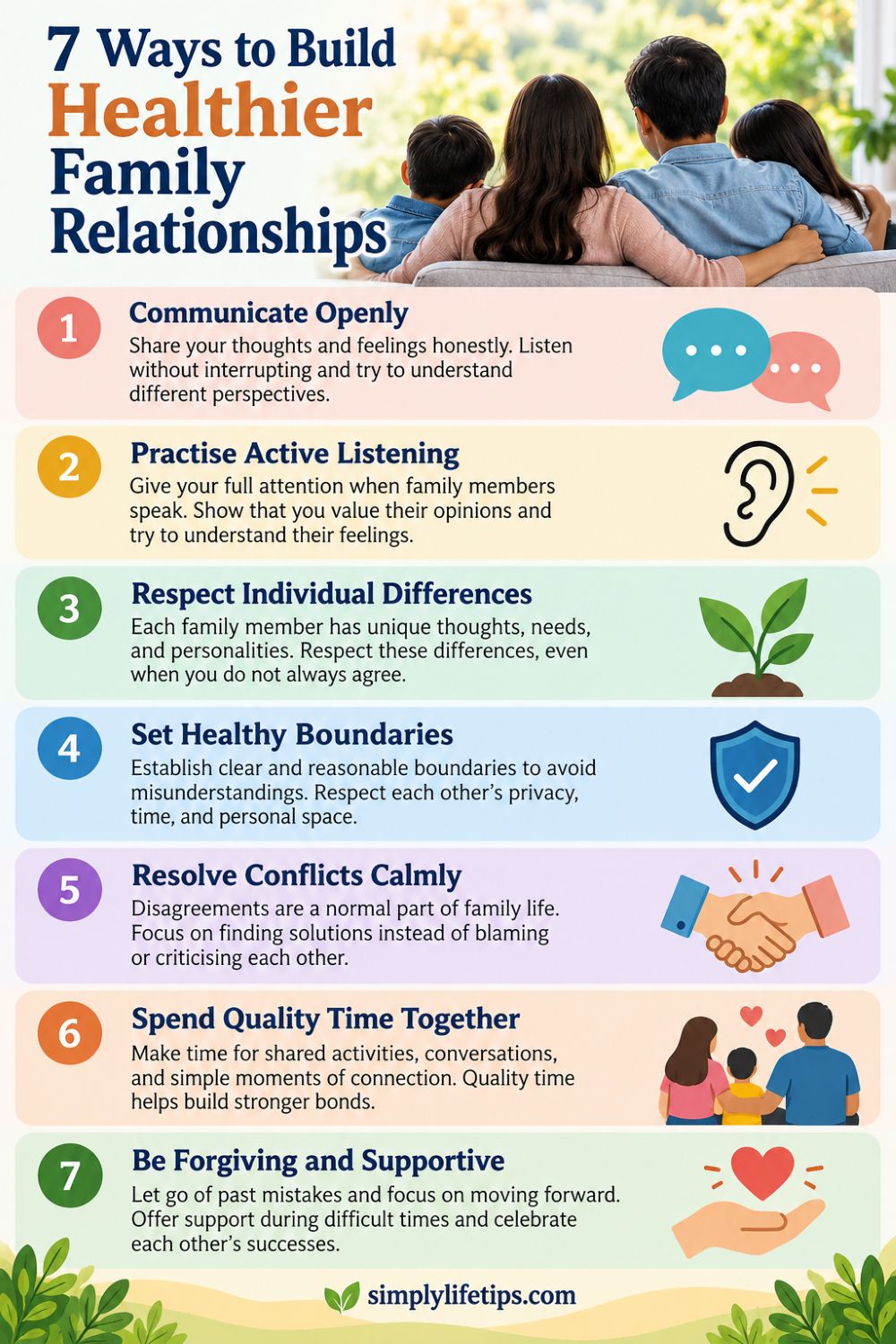
Healthy family relationships grow when everyone feels heard, respected, and supported. Start by practising one or two of these habits in your daily life, and gradually build on them. Even small, consistent changes can improve communication, reduce misunderstandings, and bring family members closer together.
Conclusion
Family relationships play an important role in our happiness, emotional well-being, and sense of belonging. Although disagreements and misunderstandings are a normal part of family life, they do not have to weaken the bonds we share with our loved ones.
Open communication, mutual respect, healthy boundaries, and a willingness to understand different perspectives can help families overcome challenges. When a husband feels caught between his wife and mother, for example, the solution is not necessarily to choose one over the other. Instead, it involves balancing responsibilities, respecting individual needs, and addressing conflicting expectations fairly.
Building strong family relationships takes patience, understanding, and consistent effort. By listening to one another and resolving conflicts constructively, families can develop deeper trust and create a more supportive home environment.
How do you maintain healthy family relationships when your loved ones have different expectations?
Frequently Asked Questions
1. Why are family relationships important?
Family relationships provide emotional support, love, companionship, and a sense of belonging. Healthy family relationships can help people cope with challenges, develop trust, and feel connected to others.
2. What are the common problems in family relationships?
Common family relationship problems include communication difficulties, misunderstandings, conflicting expectations, financial stress, unequal responsibilities, and a lack of personal boundaries. Open communication and mutual respect can help address these challenges.
3. How can we maintain good family relationships?
You can maintain good family relationships by listening carefully, communicating honestly, respecting individual differences, spending quality time together, and resolving disagreements calmly. Small, consistent acts of kindness can also strengthen family bonds.
4. How can a husband balance his relationship with his wife and mother?
A husband can balance these relationships by respecting his mother while supporting his marital partnership. Clear communication, fair decisions, and healthy boundaries can help prevent misunderstandings and ensure that both relationships receive appropriate care and respect.
5. How can family relationship problems be resolved?
Family relationship problems can be addressed by identifying the cause of the disagreement, listening to everyone’s concerns, accepting responsibility for mistakes, and finding practical solutions. When conflicts persist, a qualified family counsellor may help family members communicate more effectively.

Mathukutty P. V. is the founder of Simply Life Tips. He shares practical advice and useful insights on personal growth, health, well-being, technology, and everyday living. His goal is to help readers build positive habits and make informed decisions. He believes in continuous learning and sharing knowledge to help people live healthier, happier, and more meaningful lives.