

Effective study habits for students are the secret tools that turn an average learner into a top achiever. Most people think being smart is something you are born with, but the truth is that success comes from how you train your mind every day. By looking at nature, we can learn powerful ways to work harder, stay focused, and grow faster.
In this guide, we will look at five simple but life-changing lessons. We will use the examples of the crow, the crane, and the dog to show you how to master your education and reach your goals.
5 Effective Study Habits for Students to Boost Grades
5 Effective Study Habits for Students to Boost Grades focus on simple, consistent actions that improve concentration, memory, and understanding without burnout. Start by using focused “Crane” attention, where even one hour of deep study works better than several distracted hours. Build the habit of setting small daily goals, such as mastering one concept or reviewing key points, to create steady progress. Support learning by reading for a few minutes, listening to educational content, or quietly reflecting on what you studied, as this strengthens memory connections. Finally, balance rest with gentle challenge by pushing yourself slightly outside your comfort zone each day, because real academic growth happens when effort and focus work together.
1. Put in Effort Like a Crow
All of us have heard the childhood story of the thirsty crow who flew around searching for water. At last, the crow found a pitcher with some water inside, but the level was too low for its beak to reach. Instead of giving up, the crow paused, thought carefully, and came up with a clever idea. It began picking up small pebbles one by one and dropping them into the pitcher. Slowly, as each pebble went in, the water level rose higher and higher. Through patience, effort, and smart thinking, the crow finally reached the water and quenched its thirst.

Have you ever seen a crow trying to get food? It never gives up. If one way doesn’t work, it tries another. This is called “persistence.” To build effective study habits for students, you must be willing to put in the work, even when it feels difficult.
- The Lesson: Don’t be afraid of hard work. If a math problem is tough, don’t close the book. Keep trying until you “drop enough pebbles” to reach the solution.
- Example: Imagine you are practising a musical instrument. Your fingers might hurt, and the notes might sound wrong. A “crow-like” student practices the same three bars over and over until they are perfect.
- Tip: Use the “One More” Rule. Whenever you feel like quitting, do just one more problem or read one more paragraph. This small extra effort builds a strong brain.
2. Focus Like a Crane
The intense focus of the crane can be seen when it stands on one leg, completely still, watching the water with unwavering attention. As small fish swim past, the crane does not react or rush; it waits patiently for the right moment, knowing that settling for the small catch will cost it the bigger one. It’s one-pointed focus teaches an important lesson about patience, clarity, and discipline.
In the same way, life constantly presents distractions—minor conflicts, temporary problems, health worries, or financial pressures that demand attention but do not always deserve our full focus. When we chase every small disturbance, we lose sight of what truly matters. Learning to let the small things pass and staying focused on meaningful goals helps us grow stronger, wiser, and more purposeful in life.

In today’s world, your phone and the internet are like “ripples” in the water that try to distract you. To succeed, you must learn to ignore them.
- The Lesson: Focus on one thing at a time. When you study, your phone should be away, and your mind should be 100% on your book.
- Example: If you are writing an essay, don’t check your messages every two minutes. Like the crane, wait until you have “caught your fish” (finished your paragraph) before you move or look away.
- Tip: Try Single-Tasking. Close every tab on your computer except the one you need. Give all your energy to that one task for 25 minutes.
3. Be Alert Like a Dog
All of us have seen how a dog sleeps with its eyes closed, yet remains alert to even the slightest sound or movement around it. This natural awareness teaches an important lesson about attentiveness in life. Those who truly wish to gain knowledge and pursue something meaningful must practice alertness, even while going about their daily routines. We may be engaged in our work or resting, but we should not become mentally dull or unaware. There is always something to learn from people, situations, objects, and surroundings, and true learning happens only when we stay observant, mindful, and alert to what life is constantly trying to teach us.

A dog can be resting, but if there is a tiny sound at the door, its ears move instantly. It is always aware of what is happening. Being an alert student means you are always “awake” to new information and opportunities.
- The Lesson: Pay attention to the small details. Listen closely to what your teachers say, even when they aren’t writing on the board.
- Example: An alert student hears the teacher say, “This might be on the test later,” and immediately puts a star next to that note. They notice when they are getting confused and ask a question right away instead of waiting.
- Tip: Practice Active Listening. Instead of just hearing words, try to summarise what someone said in your head. This keeps your brain “awake” and ready.
4. Nourish Your Mind
Just like your body needs healthy food to grow strong, your mind also needs healthy information to think clearly and perform well. When you constantly consume “junk” content that offers no learning or meaning, your brain becomes tired, distracted, and less capable of deep thinking. Over time, this weakens focus, memory, and motivation. Nourishing your mind with meaningful reading, thoughtful videos, and useful knowledge strengthens concentration and understanding. This habit plays a vital role in building effective study habits for students, because a well-fed mind learns faster, remembers better, and stays curious longer.
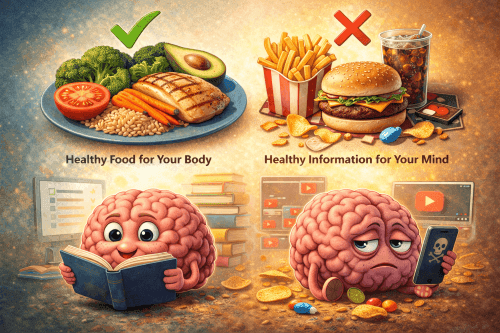
- The Lesson: Choose “high-quality” inputs. Read books that challenge you, talk to people who are smarter than you, and learn things that make you think.
- Example: Instead of spending three hours on social media, spend 30 minutes reading a biography or a science article. Feed your brain the “vitamins” it needs to grow strong.
- Tip: Set an “Information Budget”. Allow yourself some fun videos, but make sure you spend at least some time every day learning something new that is not for school.
5. Leave Your Comfort Zone
Your comfort zone is the space where you feel safe, familiar, and in control, but real learning rarely happens there. When you only choose what feels easy, your mind stops stretching, and growth slows down. Progress begins the moment you challenge yourself to try something slightly difficult, unfamiliar, or uncomfortable. Those small discomfort signals that your brain is learning, adapting, and building new skills. Stepping outside your comfort zone—little by little—helps you grow stronger, more confident, and better prepared to handle bigger challenges in life.
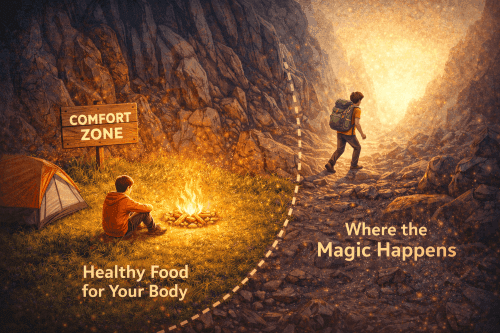
- The Lesson: Do things that scare you or feel “too hard.” This is how your brain builds new connections.
- Example: If you are shy, try raising your hand to answer a question. If you are bad at drawing, take an art class. Leaving your comfort zone turns you into a person who can handle any challenge.
- Tip: Follow the “Scary Task First” rule. Do the hardest or scariest thing on your to-do list as soon as you wake up. Once it’s done, everything else will feel easy!

Quick Summary Table
| Quality | Animal | What to do? |
| Effort | Crow | Never give up on a hard task. |
| Focus | Crane | Block out distractions completely. |
| Alertness | Dog | Always be aware of new info. |
| Nourishment | Mind | Read and watch “smart” things. |
| Growth | Comfort Zone | Do things that feel a bit hard. |
Daily Student Success Checklist
“Effort of a Crow, Focus of a Crane, Alertness of a Dog.”
1. 🐦 Crow Effort (Persistence)
- [ ] The “One More” Challenge: When I wanted to quit, did I do one more problem, page, or minute of work?
- [ ] Problem Solving: Did I tackle a difficult task instead of skipping it?
2. 🦢 Crane Focus (Deep Work)
- [ ] Distraction-Free Zone: Did I put my phone away and close extra tabs for at least 25 minutes?
- [ ] Single-Tasking: Did I work on ONLY one goal at a time today?
3. 🐕 Dog Alertness (Awareness)
- [ ] Active Listening: Did I catch a key detail in class or while reading that I usually would have missed?
- [ ] Self-Check: Did I stop to ask myself, “Do I actually understand what I just read?”
4. 🧠 Mind Nourishment (Quality Inputs)
- [ ] Brain Food: Did I spend at least 15–30 minutes reading or watching something educational (not social media)?
- [ ] Digital Diet: Did I avoid “junk” content for at least one hour before bed?
5. 🚀 Growth (Leaving the Comfort Zone)
- [ ] The “Scary” Task: Did I do the hardest thing on my list first?
- [ ] New Attempt: Did I try something new or speak up when I felt shy?
📈 Weekly Reflection
At the end of the week, answer these three simple questions:
- Which animal was I most like this week? (Crow, Crane, or Dog?)
- What was my biggest “win” outside of my comfort zone?
- One thing I will nourish my mind with next week is: ____________________
How to use this:
- Morning: Pick your “Scary Task” (Comfort Zone).
- Afternoon: Use “Crane Focus” for your hardest subjects.
- Evening: “Nourish your mind” before sleeping to help your brain process the day.
Conclusion
Mastering effective study habits for students doesn’t happen overnight. It is about making small changes every day. By working like the crow, focusing like the crane, and staying alert like the dog, you will find that school becomes much easier. Remember to feed your mind good things and never be afraid to try something new. You have the power to be an amazing student!
Frequently Asked Questions (FAQ)
1. How do I start using these habits if I’m feeling lazy?
Start with the Crow mindset, because building Effective Study Habits for Students begins by focusing on one small action instead of trying to change everything at once. Choose a single study task today and give it your full attention and effort, even if it feels simple. Once you begin, consistency grows naturally, making effective study habits easier to maintain over time.
2. Why is focus more important than how many hours I study?
One hour of “Crane” focus is far more effective than five hours of distracted studying, because deep attention allows the brain to process and store information more efficiently. When you concentrate without interruptions, your mind forms stronger memory connections and understands concepts faster. This level of focus is a key part of building Effective Study Habits for Students that lead to better recall and long-term learning.
3. What are some simple ways to nourish my mind?
Read a book for 10 minutes, listen to a podcast on history or science, or spend a few quiet moments reflecting on what you learned today to strengthen Effective Study Habits for Students. These small learning moments help your brain organise information and improve understanding without pressure. Simple reflection and focused input each day make learning deeper, calmer, and more lasting.
4. Is it okay to be in my comfort zone sometimes?
Yes, everyone needs rest, but try to spend at least a little time each day doing something that feels slightly challenging, because that is where real progress begins. Stepping just outside your comfort zone strengthens focus, discipline, and confidence over time. This balance between rest and effort is essential for building Effective Study Habits for Students that lead to steady growth.
5. How can I stay alert in a boring class?
Try to find one interesting thing the teacher says, or challenge yourself to take the neatest notes possible, because small goals keep your mind active and engaged. Giving your brain a clear focus prevents it from drifting into a “deep sleep” during class. This simple strategy supports Effective Study Habits for Students by turning passive listening into active learning.
References: Five Qualities of a Student As Described In Our Shastras
Thank you for taking the time to explore this post. I sincerely hope you found the insights valuable and actionable. If this content resonated with you, please consider sharing it. Your support enables me to share knowledge and inspiration with others in our community.
PVM

Mathukutty P V is a Blogger, YouTuber, and Content Writer and the founder of Simply Life Tips. After taking voluntary retirement in 2017, he embraced a free lifestyle focused on learning, personal growth, and sharing practical wisdom to help others live with more purpose and positivity.



