
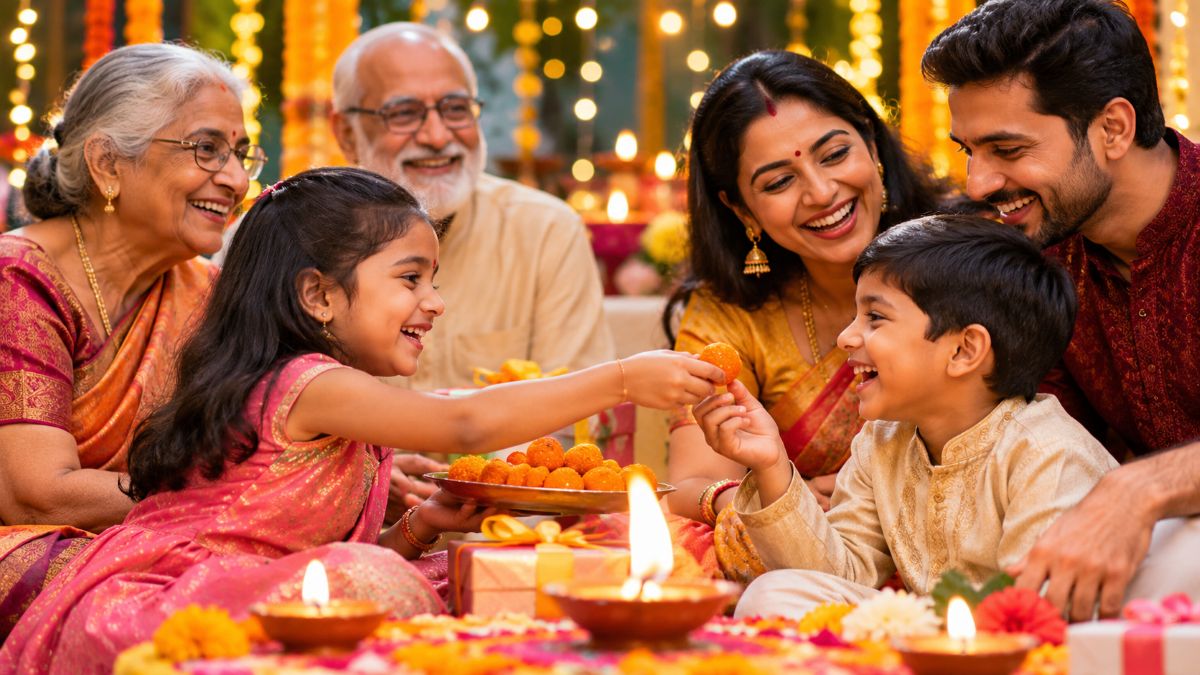
Sharing happiness is one of the simplest ways to make life more meaningful. A genuine smile, a kind word, a thoughtful gesture, or a helping hand can brighten someone’s day and create a lasting connection. Although we often search for happiness through personal achievements and material comforts, some of life’s greatest joys come from making others happy.
Festivals make this experience even more special. Whether it is Diwali, Christmas, Eid, Onam, or Vishu, celebrations bring families, friends, and communities together. They give us opportunities to reconnect with loved ones, express gratitude, share what we have, and spread happiness.
However, the true beauty of festivals goes beyond decorations, delicious food, new clothes, and expensive gifts. Their deeper meaning lies in strengthening relationships, showing compassion, and remembering people who may need our love and support.
Have you ever wondered why helping others makes you feel happy? Why does a small act of kindness sometimes bring greater satisfaction than receiving an expensive gift?
The connection between kindness, happiness, and emotional wellbeing is fascinating. Even neuroscience offers interesting insights into how positive social interactions influence our brains and behaviour.
Let’s explore how sharing happiness during festivals strengthens relationships, encourages kindness, and makes life more meaningful. We will also discover simple ways to spread joy during celebrations and throughout the year.
What Does Sharing Happiness Really Mean?
Sharing happiness means extending our joy, kindness, and positive feelings to other people. It involves recognising that happiness becomes more meaningful when we include others in our moments of joy.
Sharing happiness does not require expensive gifts, grand celebrations, or extraordinary achievements. Often, the smallest gestures create the greatest impact.
Visiting an elderly neighbour who lives alone, sharing food with someone who cannot afford a celebration, encouraging a friend who is going through a difficult period, or listening patiently to someone who needs emotional support are simple examples of sharing happiness.
These actions remind people that they are valued and cared for.
Happiness takes different forms. Sometimes it comes from personal achievements, while at other times it comes from meaningful relationships, shared experiences, and helping others.
Explore more about the different types of happiness and how to cultivate them.
How Sharing Happiness Through Festivals Strengthens Relationships
Festivals create opportunities for sharing happiness, reconnecting with loved ones, strengthening relationships, and spreading kindness through meaningful celebrations.
Here are some ways festivals make our lives happier.
1. Bringing Families Together
Modern life often keeps family members busy with work, education, and personal responsibilities. Festivals provide an opportunity to pause and spend meaningful time together.
Families clean and decorate their homes, prepare traditional dishes, participate in rituals, and enjoy meals together.
These shared experiences strengthen family relationships and create memories that remain with us long after the celebrations end.
Sometimes, the greatest happiness comes from sitting together, sharing stories, laughing, and enjoying one another’s company.
2. Sharing Sweets, Food, and Gifts
Exchanging sweets, food, and gifts is a common tradition during many festivals.
These gestures are not simply about giving material things. They express affection, appreciation, and the happiness of remembering someone.
A small box of sweets shared with a neighbour or a thoughtful gift given to a friend can strengthen relationships.
Similarly, sharing food with people who cannot afford a festive meal makes celebrations more meaningful.
The value of a gift does not depend on its price. What matters is the love and consideration behind it.
3. Reconnecting with Friends and Relatives
Busy schedules and geographical distances sometimes keep people away from one another. Festivals provide opportunities to reconnect with friends and relatives.
Visiting loved ones, making phone calls, exchanging greetings, and sharing meals help maintain meaningful relationships.
A simple festival greeting can remind someone that they are remembered and appreciated.
These connections contribute to emotional wellbeing and reduce feelings of loneliness.
4. Creating a Sense of Community
Festivals bring neighbours and communities together. People exchange greetings, participate in celebrations, visit one another, and share cultural traditions.
These interactions create a sense of belonging and strengthen social relationships.
Meaningful social connections are important for emotional and physical well-being. The World Health Organization explains the importance of social connection and its role in people’s lives.
5. Encouraging Kindness and Generosity
Festivals remind us that happiness should not be limited to those who can afford expensive celebrations.
Many people experience financial difficulties, illness, loneliness, or other challenges. Some may not have family members or friends with whom they can celebrate.
We can make a difference by sharing food, supporting disadvantaged families, visiting elderly people, and helping those who need assistance.
A small act of generosity can make a festival memorable for someone who might otherwise feel forgotten.
6. Creating Beautiful Memories
Festivals provide opportunities to create experiences that stay in our memories.
Children remember decorating homes, lighting lamps, wearing new clothes, enjoying special food, and spending time with family.
Adults cherish reunions, traditional celebrations, conversations, and moments of togetherness.
These positive memories can bring happiness even years later.
7. Offering Hope and New Beginnings
Many festivals symbolise hope, renewal, goodness, and the victory of positive values.
They remind us that difficult times do not last forever and that every new beginning offers growth opportunities.
A festival can encourage us to forgive, reconnect with loved ones, appreciate life, and approach the future with renewed optimism.
How Diwali Brings Happiness and Spreads Hope
Diwali, popularly known as the Festival of Lights, is one of India’s most joyful celebrations. Homes glow with beautiful lamps, colourful decorations brighten streets, families prepare delicious sweets, and friends exchange gifts and greetings.
But the happiness of Diwali goes far beyond decorations, shopping, and fireworks. Its deeper beauty lies in bringing people together and encouraging us to share love, kindness, and hope.
1. Lighting Lamps and Spreading Positivity
One of the most beautiful symbols of Diwali is lighting lamps.
A small flame can illuminate a dark room. Similarly, a small act of kindness can bring hope into someone’s difficult life.
A person struggling with failure may need encouragement. Someone experiencing loneliness may need a caring conversation. A family facing hardship may need practical support.
We may not be able to solve every problem, but we can help someone feel less alone.
2. Sharing Happiness with Everyone
Diwali celebrations become more meaningful when we include people who may not have the resources to celebrate.
Sharing sweets, clothes, food, or other essentials with families in need can bring happiness to both the giver and the receiver.
A thoughtful gesture can remind someone that they are not forgotten.
3. Strengthening Family Relationships
Diwali allows families to spend quality time together.
Decorating homes, preparing traditional dishes, lighting lamps, visiting relatives, and enjoying festive meals create a feeling of togetherness.
These experiences strengthen emotional connections and bring generations closer.
4. Encouraging Forgiveness and New Beginnings
Festivals can also remind us to let go of unnecessary anger, misunderstandings, and resentment.
Reconnecting with someone after a disagreement, offering an apology, or accepting an apology can bring emotional relief.
Forgiveness does not mean accepting harmful behaviour or abandoning healthy boundaries. It means choosing peace and understanding wherever possible.
5. Making Celebrations More Meaningful
The true spirit of Diwali should not depend on how much money we spend.
A simple celebration with family, a visit to an elderly neighbour, or sharing a meal with someone in need can be more meaningful than expensive decorations and gifts.
Let the light of Diwali inspire us to bring hope and happiness into other people’s lives.
What Does Neuroscience Say About Sharing Happiness?
Why do we sometimes feel happier after helping someone?
The answer involves several interconnected brain processes tied to reward, motivation, emotions, and social relationships.
The Role of Dopamine
Dopamine is a neurotransmitter involved in motivation, learning, and reward processing.
Acts of generosity may engage the brain’s reward-related systems, which are involved in motivation and the experience of reward. This may help explain why some people experience satisfaction after helping others.
However, happiness is not controlled by a single chemical. It involves complex interactions between the brain, body, emotions, and environment.
The Importance of Social Connection
Positive social interactions are associated with emotional wellbeing.
Feeling supported, appreciated, and connected to others can help people cope with everyday stress.
For example, spending meaningful time with family or friends during a festival may create feelings of belonging and emotional security.
Kindness and Emotional Wellbeing
Compassionate actions and supportive relationships may help people manage difficult emotions and stressful experiences.
A kind word, a thoughtful gesture, or practical support can make someone feel valued and understood.
Hope is not a cure for every problem, and kindness cannot eliminate all suffering. However, positive relationships and meaningful social interactions can contribute to a healthier emotional life.
For further reading, explore research on the relationship between prosocial behaviour and wellbeing.
You can also learn more about happiness-related hormones and how to support emotional wellbeing.
The Beautiful Paradox of Happiness
One of life’s most interesting lessons is that happiness does not always grow when we focus exclusively on ourselves.
Sometimes, we discover greater satisfaction when we make someone else happy.
Consider these situations. A parent feels happy when a child achieves something meaningful. A friend experiences joy when helping someone overcome a difficult situation. A volunteer feels fulfilled after supporting people in need. A neighbour feels satisfied after helping an elderly person.
In each situation, happiness comes not only from personal benefit but also from contributing to another person’s well-being.
This does not mean we should ignore our own needs or sacrifice our wellbeing to please everyone. Healthy happiness includes self-care, personal boundaries, and caring relationships.
The beautiful lesson is that happiness can grow when it is shared rather than treated as something we must keep exclusively for ourselves.
As we learn to appreciate life’s simple pleasures, we also discover how to find happiness in everyday life.
10 Simple Ways to Share Happiness During Festivals and Throughout the Year
Sharing happiness does not require expensive gifts, grand celebrations, or extraordinary efforts. Small acts of kindness, thoughtful gestures, and genuine concern for others can make a meaningful difference.
Whether during Diwali, Christmas, Eid, Onam, Vishu, or an ordinary day, we have countless opportunities to bring smiles to people’s faces.
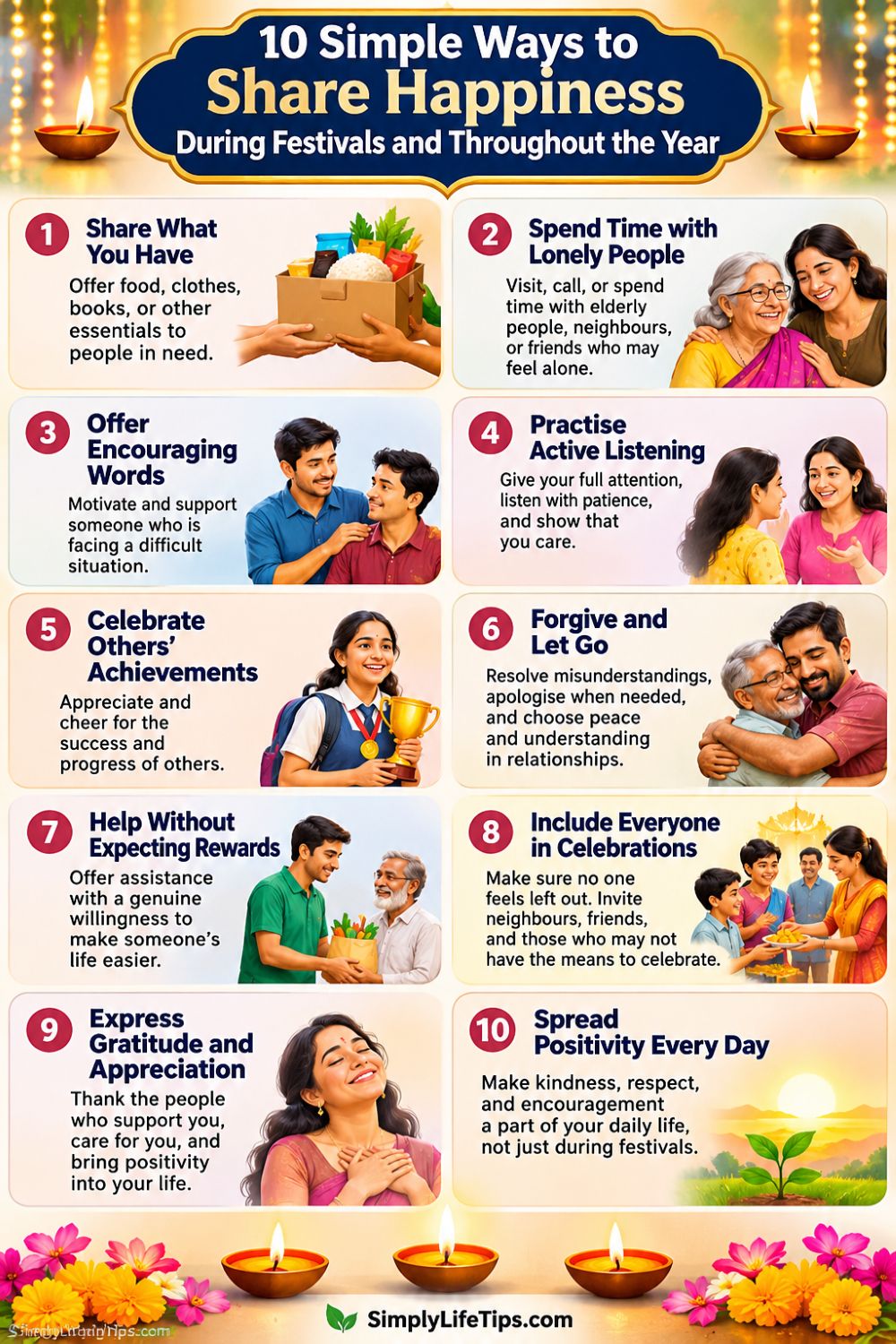
Here are ten simple ways to spread happiness and make life more meaningful.
1. Share What You Have
One of the simplest ways to share happiness is by offering what we have to people who need it. Sharing food, clothes, books, educational materials, or other useful items can make a positive difference in someone’s life.
During festivals, we can prepare an extra meal, share sweets with neighbours, or contribute essential supplies to families facing financial difficulties. We do not have to be wealthy to help others. Even a small contribution, given with genuine concern, can bring comfort and happiness to someone in need.
For example, a family celebrating Diwali can prepare an additional food parcel and share it with a struggling neighbour. Such a thoughtful gesture may make the festival special for someone who cannot afford a celebration.
Remember, the value of sharing lies not in how much we give but in the kindness behind our actions.
2. Spend Time with People Who Feel Lonely
Loneliness can affect people of all ages, particularly elderly individuals, people living alone, and those who have lost loved ones. During festivals, when many families celebrate together, some people may feel especially isolated.
A visit, a friendly conversation, or a simple phone call can make them feel remembered and valued. Instead of assuming that people are comfortable being alone, take a little time to connect with them.
Invite a neighbour to join a celebration, visit an elderly relative, or spend time with someone who needs companionship. You could also arrange a small gathering where people living alone can enjoy a meal and conversation.
Sometimes, your presence can be more valuable than an expensive gift.
3. Offer Encouraging Words
Words have the power to influence people’s emotions and attitudes. A few sincere words of encouragement can help someone regain confidence during difficult times.
People facing failure, financial problems, health challenges, or personal disappointments may feel discouraged and lose hope. Instead of criticising them or comparing their situation with others, offer understanding and encouragement.
Remind them of their strengths, appreciate their efforts, and help them recognise that setbacks do not define their entire lives.
A simple message such as “I believe in you” or “You are not alone” may provide the emotional support someone needs to keep moving forward.
Never underestimate the power of a kind word. It costs nothing, yet it can make a meaningful difference in someone’s life.
4. Practise Active Listening
Sometimes, people do not need advice, solutions, or expensive gifts. They simply need someone willing to listen.
Active listening means giving another person your full attention, understanding their feelings, and responding with patience rather than judgement.
When a friend shares a personal problem, avoid interrupting or immediately offering solutions. Allow them to express their thoughts and feelings freely. Ask thoughtful questions and show genuine interest in what they are saying.
For example, if a colleague is experiencing difficulties at work, listening patiently may help them feel understood and supported. You do not always need to provide an answer. Sometimes, being present is enough.
This simple habit strengthens relationships, builds trust, and helps people feel respected. Remember, listening with compassion is one of the most meaningful ways to share happiness and emotional support.
5. Celebrate Other People’s Achievements
Genuine happiness also means finding joy in the success of others.
When a friend receives a promotion, a child performs well in school, or a family member achieves an important goal, celebrate their success sincerely.
Avoid unnecessary comparisons, jealousy, or negative comments. A congratulatory message, a warm smile, or a few appreciative words can make someone feel recognised and encouraged.
For example, when a friend starts a new business, offer your support and wish them success. When a child achieves something meaningful, appreciate their effort rather than focusing only on the result.
Supporting other people’s achievements creates positive relationships and a healthy environment where everyone feels motivated to grow.
Happiness becomes more meaningful when we can celebrate not only our own achievements but also the progress and success of others.
6. Forgive and Let Go of Unnecessary Resentment
Unresolved disagreements, anger, and misunderstandings can damage relationships and affect emotional wellbeing.
Festivals often provide opportunities to reconnect with relatives, friends, and neighbours with whom we may have lost contact.
When appropriate, take the initiative to apologise, forgive, or have an honest conversation to resolve misunderstandings. Letting go of unnecessary resentment can bring emotional relief and create opportunities for new beginnings.
For example, if a disagreement has created distance between family members, a sincere festival greeting or a willingness to talk may open the door to reconciliation.
However, forgiveness does not mean accepting harmful behaviour or abandoning personal boundaries. It means choosing peace and understanding wherever possible.
Sometimes, a sincere apology or a willingness to reconnect can restore happiness in a relationship.
7. Help Others Without Expecting Rewards
True kindness comes from helping others without constantly expecting something in return.
Offer assistance because someone needs it, not because you want recognition, praise, or a favour in return.
You might help a neighbour carry groceries, guide someone who is unfamiliar with an area, support a student with learning difficulties, or assist an elderly person with everyday tasks.
During festivals, you can volunteer at a community kitchen, help distribute essential supplies, or support a charitable activity.
These actions may appear small, but they can make someone’s day easier. When we help others with genuine concern, we develop compassion and strengthen our connection with the community.
The satisfaction of knowing that we have made a positive difference can itself be rewarding.
8. Include Everyone in Celebrations
Festivals are more enjoyable when everyone feels welcome and included. However, some people may feel left out because of financial difficulties, social isolation, family problems, or personal circumstances.
Make an effort to remember those who might otherwise be forgotten.
Invite a neighbour to join a festive meal, share sweets with people who live alone, or organise simple community activities that welcome everyone.
Avoid judging people based on their financial position, social background, or lifestyle. Not everyone can afford new clothes, expensive gifts, or elaborate celebrations.
The happiness of a celebration should not depend on expensive arrangements. A warm welcome, a shared meal, and genuine companionship can make any festival special.
When everyone feels included, the joy of celebrating becomes greater.
9. Express Gratitude and Appreciation
We often become so occupied with our daily responsibilities that we forget to appreciate the people who make our lives better.
Family members, friends, teachers, colleagues, neighbours, and even strangers may contribute to our happiness in different ways.
Take time to acknowledge their efforts and express genuine gratitude. Thank someone who helped you during a difficult period, appreciate a family member who takes care of you, or recognise a colleague who supported your work.
A sincere thank-you message, a warm conversation, or a thoughtful gesture can make someone feel valued.
Festivals provide particularly good opportunities to express appreciation. Instead of focusing only on receiving gifts, remember the people who have brought happiness into your life.
Gratitude strengthens relationships and helps us recognise the positive things we sometimes take for granted.
Gratitude brings more joy by shifting our focus to the positive. Discover its benefits and simple ways to practise gratitude every day.
10. Spread Positivity Every Day
Sharing happiness should not be limited to festivals or special occasions. We can make it a regular part of our everyday lives.
Start with simple habits such as greeting people warmly, appreciating others, helping someone who needs assistance, avoiding unnecessary criticism, and treating everyone with respect.
When you encounter someone having a difficult day, offer encouragement instead of judgement. When someone makes a mistake, respond with understanding rather than harsh criticism. When you experience something good, share your happiness with the people around you.
You can also spread positivity through responsible social media use by sharing encouraging messages, useful information, and inspiring experiences instead of negativity and unnecessary arguments.
These small habits gradually create a more supportive environment at home, at work, and in the community.
Remember, happiness should not be an occasional celebration. It can become a way of living when we make kindness, gratitude, and compassion part of our everyday behaviour.
Why Sharing Happiness Makes Life More Meaningful
Material possessions can provide comfort and temporary pleasure. However, meaningful relationships, emotional support, and positive experiences often contribute to a deeper sense of fulfilment.
Consider two different situations.
In the first, you purchase an expensive gift for yourself and enjoy the excitement of receiving something new.
In the second, you use the same money to buy essential supplies for a struggling family and see their happiness.
Both experiences may bring pleasure, but the second can create an additional feeling of purpose and connection.
This does not mean material possessions are unimportant. Rather, it reminds us that happiness has many dimensions, and helping others can be one meaningful source of satisfaction.
Research published in Psychological Bulletin in 2020 examined the relationship between prosocial behaviour (actions intended to benefit others) and personal wellbeing. The meta-analysis included 201 studies involving 198,213 participants and found a modest positive association between helping others and wellbeing. These findings suggest that acts of kindness, generosity, and helping others may contribute to personal wellbeing, although the benefits can vary between individuals and circumstances.
Read the research on prosocial behaviour and wellbeing.
Conclusion
Sharing happiness makes life more meaningful. A kind word, a helping hand, or a thoughtful gesture can brighten someone’s day.
Festivals such as Diwali, Christmas, Eid, Onam, and Vishu remind us to strengthen relationships, spread kindness, and support those who need us. Let this spirit continue throughout the year through love, compassion, and generosity.
Like a lamp lighting another lamp, happiness grows when we share it with others. The greatest joy is not just celebrating our own happiness but helping others experience it too.
What is one small act of kindness you can do today to share happiness?
Frequently Asked Questions (FAQs)
1. What does sharing happiness mean?
Sharing happiness means spreading joy through kindness, compassion, generosity, encouragement, and meaningful interactions. It involves making others feel valued, supported, and appreciated.
2. How do festivals bring happiness?
Festivals bring happiness by bringing families and communities together, encouraging generosity, strengthening relationships, and creating memorable experiences. They also provide opportunities to reconnect with loved ones and help people in need.
3. How does sharing happiness benefit us?
Sharing happiness can strengthen relationships, encourage positive emotions, increase social connection, and create a sense of purpose. Helping others may also contribute to our emotional well-being.
4. How can we share happiness with others?
We can share happiness by helping people in need, spending time with loved ones, listening patiently, appreciating others, offering encouragement, and performing simple acts of kindness.
5. Why is Diwali associated with happiness and hope?
Diwali is associated with light, joy, renewal, and the victory of good over evil. Lighting lamps, sharing sweets, exchanging gifts, and celebrating with loved ones make the festival an opportunity to spread happiness and hope.
References
- World Health Organization – Social Connection.
- Hui, B. P. H., et al. (2020). Rewards of kindness? A meta-analysis of the relationship between prosociality and well-being. Psychological Bulletin. Research publication.
- Press Information Bureau, Government of India – Diwali and its cultural significance.

Mathukutty P. V. is the founder of Simply Life Tips. He shares practical advice and useful insights on personal growth, health, well-being, technology, and everyday living. His goal is to help readers build positive habits and make informed decisions. He believes in continuous learning and sharing knowledge to help people live healthier, happier, and more meaningful lives.