

Personal growth is not simply about gaining knowledge, acquiring qualifications or achieving professional success. It is also about understanding people, recognising our abilities, developing patience and learning to take responsibility for our own lives. Sometimes, we fail to move forward not because we lack talent or opportunities, but because certain misconceptions influence our thoughts and decisions.
However, personal development is not always what we imagine. Understanding common misconceptions about personal growth can help us develop a realistic approach to self-improvement.
Many people have the education, skills and potential to achieve great things. Yet they remain behind because they trust others blindly, constantly seek approval, depend too much on relationships or underestimate their own abilities.
Success in life requires more than knowledge. It requires the right attitude, emotional strength, self-confidence and the willingness to make independent decisions.
Personal growth involves learning from everyday experiences and understanding the values that guide our decisions. Explore these most important life lessons to discover more ways to lead a meaningful life.
7 Important Life Lessons for Personal Growth
Here are seven important life lessons that can help you develop personally, overcome common mistakes and move towards a more successful and meaningful life.
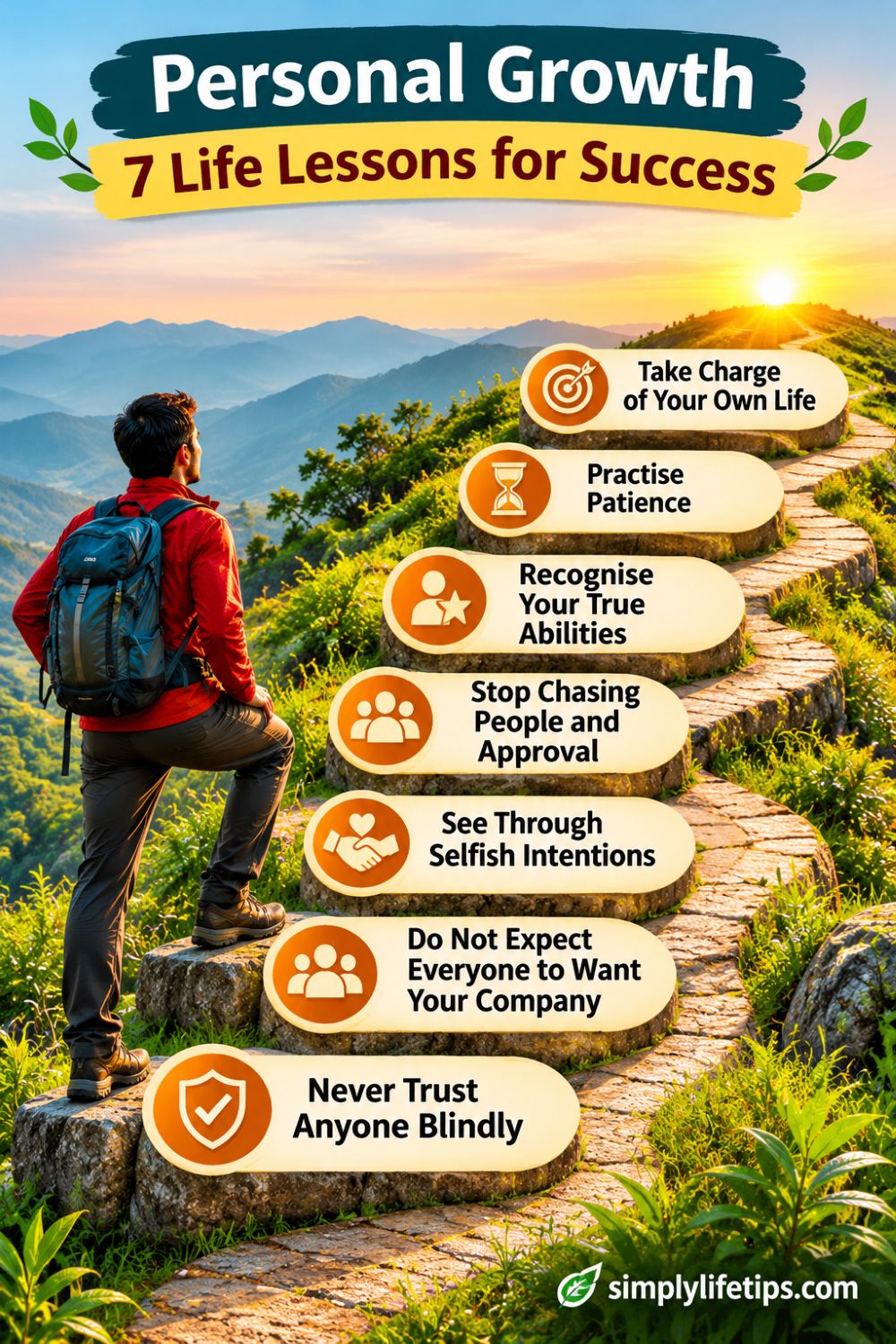
1. Never Trust Anyone Blindly
Trust is essential for building healthy relationships. We need people we can depend on, whether they are family members, friends, colleagues or business partners. However, trusting someone completely without considering human limitations can sometimes lead to disappointment.
You may know someone who appears so trustworthy that you believe you can depend on them with your eyes closed. They may genuinely care about you and have no intention of hurting you. Nevertheless, everyone is human, and human beings can make mistakes.
Circumstances can change people’s decisions. Someone who promises to help you today may be unable to do so tomorrow. Even a well-intentioned person can make a decision that negatively affects your life.
Therefore, maintain a small margin of caution even when dealing with people you trust.
For example, if you are planning a business with a close friend, do not depend entirely on verbal promises. Discuss responsibilities, maintain proper records and make important decisions carefully. This does not mean you suspect your friend; it means you understand the importance of responsibility.
Remember: Trust people, but do not surrender your judgement. Healthy relationships need both trust and sensible boundaries.
2. Do Not Expect Everyone to Want Your Company
We all have people we like spending time with. We may wish to travel with them, watch a film together, share our happiness or enjoy special occasions in their company.
However, not everyone will feel the same way about us.
Someone may repeatedly decline our invitations. They may have personal commitments, different interests or simply prefer spending time elsewhere. We should respect their choices instead of constantly trying to get their attention.
If someone repeatedly avoids spending time with you, accept the situation gracefully. It may be that you value their company more than they value yours.
There is no need to feel disappointed or question your self-worth because someone does not want to accompany you.
For example, imagine that you invite a friend to a weekend trip several times, but they always make excuses. Instead of repeatedly asking, make your own plans. You can enjoy the trip with other friends or even travel independently.
Remember: Your happiness should not depend on whether other people choose to spend time with you.
3. Recognise People Who Approach You Only for Benefits
Not everyone who behaves affectionately towards you has genuine concern for your well-being. Some people maintain relationships because they expect financial assistance, professional support, personal favours or other benefits.
They may appear sincere when they need something from you. However, their behaviour may change when you are no longer able to provide what they want.
This does not mean everyone who asks for help is selfish. Genuine relationships involve mutual support. The important thing is to recognise the difference between sincere affection and relationships based entirely on personal benefits.
For example, someone may frequently contact you when they need financial help or professional assistance but disappear when you need support. If this pattern continues, it is worth reconsidering how much time and energy you invest in that relationship.
Learn to observe people’s actions rather than judging them only by their words.
Do not assume that everyone approaches you with affection and good intentions. At the same time, avoid becoming suspicious of everyone.
Remember: Genuine relationships are built on mutual respect, trust and care, not merely personal benefits.
Some experiences teach us important truths about human behaviour and relationships. Discover more life lessons no one tells you to understand these valuable lessons.
4. Stop Chasing People and Learn to Value Yourself
One common mistake we make in life is constantly chasing people, opportunities and approval.
We sometimes spend too much time trying to impress others, win their affection or convince them to recognise our value. Unfortunately, the more desperately we seek someone’s attention, the more disappointed we may become.
There is an important difference between making an effort and chasing something desperately.
Whether it is a relationship, an opportunity or a personal goal, pursue it with confidence and self-respect. Do not force situations or sacrifice your dignity just to gain acceptance.
For example, if you are always the person who initiates conversations, makes plans and tries to maintain a friendship, take a step back occasionally. Give others the opportunity to make an effort too.
Similarly, in professional life, concentrate on developing your skills and delivering quality work rather than constantly seeking appreciation.
Learn to attract opportunities through your abilities, behaviour, confidence and positive attitude.
Remember: Do not chase people for attention or approval. Develop your own value and allow genuine relationships and opportunities to grow naturally.
5. Recognise Your True Abilities
One of the major obstacles to personal growth is failing to recognise our own abilities.
Many people underestimate their talents or never make an effort to discover what they are capable of achieving. As a result, they waste valuable time following others instead of developing their own potential.
Recognising your strengths is only the beginning of self-improvement. Learn how to refine yourself and develop your potential through continuous learning and positive changes.
Today, many young people spend hours watching social media reels, entertainment videos and comedy clips created by others. Entertainment is not necessarily harmful, but excessive consumption can take time away from learning, creativity and personal development.
Developing a positive mindset can help you overcome self-doubt and build confidence. You can also practise positive affirmations for personal growth to encourage a more constructive outlook.
We were not born merely to repeat what others have already done. Each individual has different abilities, interests and opportunities.
Instead of trying to become a copy of another person, discover what makes you different.
For example:
- If you enjoy writing, develop your writing skills and explore blogging.
- If you are interested in technology, learn new digital skills.
- If you enjoy helping people, explore opportunities to contribute to your community.
- If you have creative abilities, experiment with photography, design, music or other artistic activities.
Do not assume that your present abilities represent the limits of your potential. You can develop new skills through practice, learning and experience.
Remember: Recognising your abilities is the first step. Making proper use of them is what creates progress.
Sometimes, our own negative thoughts and habits prevent us from reaching our potential. Learn how to overcome self-sabotaging behaviour and stop holding yourself back.
Recognising your abilities and continuously developing your skills are essential parts of personal growth. Explore more insights on personal growth and professional development to understand how continuous learning can help you achieve your personal and career goals.
6. Understand That Patience Is Essential for Success
Enthusiasm and hard work are important, but they do not guarantee immediate results. Many worthwhile achievements require time, consistent effort and patience.
We sometimes become disappointed when our efforts do not produce quick results. We may abandon a goal simply because we cannot see immediate progress.
However, everything has its own natural pace of development.
Think about how a chick develops inside an egg. It needs a specific period before it is ready to emerge. No amount of impatience can make the natural process happen instantly.
Developing resilience helps us cope with challenges, adapt to difficult situations and continue working towards our goals.
Success in life follows a similar principle.
For example, building a successful blog requires research, quality content, search engine optimisation, consistency and time. Publishing a few articles does not guarantee immediate traffic. Similarly, learning a new language, developing a business or improving physical fitness requires regular effort over an extended period.
History also reminds us that major achievements rarely happen overnight. They are often the result of preparation, persistence and the combined efforts of many people.
However, patience does not mean sitting idle and waiting for success. It means continuing to work towards your goals without expecting instant results.
Remember: Be patient with the process, but remain consistent with your efforts.
7. Take Charge of Your Own Life
Many people may genuinely wish for your happiness, success and well-being. Parents, friends, teachers and mentors can offer valuable advice and support. Nevertheless, you should never hand over complete control of your life to someone else.
The wisdom we gain through life should also be shared with younger generations. Explore these 16 life lessons every grandchild should learn to understand how valuable guidance can shape the next generation.
You are responsible for your decisions, priorities and future.
Think of life as travelling in a vehicle. If you sit comfortably in the back seat while someone else controls the steering wheel, the journey will follow the direction chosen by that person.
But when you take the steering wheel into your own hands, you can decide which direction to take and where you want to go.
Similarly, if you allow others to make all your important decisions, you may eventually find yourself living according to their expectations rather than your own aspirations.
For example, you may choose a career simply because your friends have selected it. You may follow someone else’s business decisions without considering your own interests or abilities. You may even postpone your dreams because you are afraid of what others will think.
Listen to advice, consider different opinions and learn from experienced people. However, make your final decisions after carefully evaluating your circumstances, interests and long-term goals.
Taking charge of your life also means accepting responsibility when things go wrong instead of blaming others for every failure.
Remember: Other people can guide you, support you and encourage you, but you must take responsibility for your own journey.
Parents also have an important responsibility to prepare children for life’s challenges by teaching them important life lessons from an early age.
How to Apply These Personal Growth Lessons in Everyday Life
Understanding these lessons is only the beginning. Real personal growth happens when we put them into practice.
Here are a few simple habits that can help you apply these ideas in daily life.
- Think before trusting: Avoid making important decisions based entirely on promises or emotions.
- Respect other people’s choices: Do not force relationships or constantly seek attention.
- Set healthy boundaries: Learn to say no when necessary.
- Discover your strengths: Identify your interests and spend time developing your abilities.
- Manage your time: Reduce unnecessary social media consumption and invest more time in meaningful activities.
- Practise patience: Focus on consistent improvement rather than immediate results.
- Take responsibility: Make independent decisions and accept the consequences of your actions.
You do not need to change everything in one day. Start with one lesson, practise it consistently and gradually develop better habits.
If you want to make meaningful changes in your daily routine, explore these practical personal growth tips to improve your habits, mindset and productivity.
Conclusion
Personal growth is a continuous journey of learning, understanding and improving ourselves. We do not always fail because we lack knowledge, talent or opportunities. Sometimes, our expectations, misplaced trust, lack of patience and dependence on others prevent us from reaching our full potential.
Learn to trust wisely, respect relationships, recognise your abilities and remain patient with your progress. Most importantly, never allow someone else to take complete control of your life.
You cannot control every situation or every person around you, but you can control how you respond to challenges and make decisions about your future.
Your life is your responsibility. Take the steering wheel, recognise your potential and move forward with confidence.
Life teaches us different lessons at different stages of life. You can also explore these valuable life lessons after 50 for more insights into living a meaningful life.
What is the one life lesson you believe everyone should learn to achieve personal growth and success?
Frequently Asked Questions (FAQs)
1. What is personal growth?
Personal growth is the continuous process of improving your knowledge, skills, behaviour, confidence and understanding of yourself. It helps you become more capable of handling challenges and making better decisions.
2. Why is personal growth important for success?
Personal growth helps individuals recognise their strengths, overcome weaknesses, develop confidence and make informed decisions. These qualities contribute to both personal and professional success.
3. What are the most important life lessons for success?
Some important life lessons include trusting wisely, respecting relationships, recognising your abilities, practising patience, maintaining self-confidence and taking responsibility for your decisions.
4. How can I improve myself every day?
You can improve yourself by learning something new, managing your time effectively, developing healthy habits, setting realistic goals and reflecting on your daily experiences.
5. What is the first step towards personal growth?
The first step is self-awareness. Understand your strengths, weaknesses, interests and goals. Once you recognise where you are and where you want to go, you can begin making meaningful improvements.

Mathukutty P. V. is the founder of Simply Life Tips. He shares practical advice and useful insights on personal growth, health, well-being, technology, and everyday living. His goal is to help readers build positive habits and make informed decisions. He believes in continuous learning and sharing knowledge to help people live healthier, happier, and more meaningful lives.


